Entrevista concedida à Revista Brasileira de Preservação Digital por meio do editor Gildenir Carolino Santos, também bibliotecário e pesquisador do Grupo de Pesquisa e Estudos sobre Preservação Digital – Dríade, via e-mail em dezembro de 2020.
Le groupe-projet "Construire la bibliodiversité” du Comité pour la science ouverte présente dans son rapport final ses travaux portant sur trois thématiques principales : le financement de la science ouverte et les critères d’exemplarité qui s’y rapportent ; les relations internationales et la valorisation de leurs travaux ; les préconisations à propos du Plan S.
A gestao, a disponibilizacao e a preservacao dos dados de pesquisas sao preocupacoes cada vez mais centrais para os pesquisadores, as instituicoes de pesquisas e tambem para as agencias de fomento e revistas cientificas. Todos esses tem o objetivo de desenvolver boas praticas de pesquisa que permitam a verificacao e a reutilizacao dos dados, a valorizacao dos trabalhos de construcao de conjuntos de dados e o desenvolvimento de novas maneiras de pesquisar utilizando dados ja produzidos. Este artigo apresenta as diferentes etapas do ciclo de vida dos dados e mostra as iniciativas internacionais e nacionais tomadas para desenvolver esse campo que tem grande interesse para a area da saude.
Com o proposito de identificar novos desafios para a pesquisa em sistemas agroflorestias (SAFs), o trabalho pretende explorar a literatura tecnico-cientifica publicada na area para caracterizar conjuntos de informacoes sobre as autorias e suas instituicoes, os tipos de publicacao, os principais temas abordados, as areas de producao, a evolucao temporal descrita, o mapeamento das regioes de estudo e em execucao e as politicas publicas envolvidas. O corpus principal de analise identificado sao as dez edicoes do Congresso Brasileiro de Sistemas Agroflorestais (CBSAFs) que sera comparado com outras fontes de informacao bibliografica nacionais e internacionais (Base de Dados da Pesquisa Agropecuaria, SciELO, Base de Dissertacoes e Teses do IBICT e CAPES, Web of Science e Scopus). Com os resultados pretende-se corroborar para o desenvolvimento e a evolucao dos SAFs no Brasil.
Semantics refers to the description of the meaning of data, made possible by “semantic resources” (aka “semantic structures”) aiming at making explicit the information that may help to find, understand, and reuse data(sets). Semantics may also make explicit the entities and relations the data embody. Granted that no data is ever produced or distributed without some attempts to describe its meaning (all databases have column names, all documents have a title and often some ways to indicate what topics they are about), the level of semantic richness, accuracy, shareability and reusability of the resources used vary greatly.
A la fois source et lieu de stockage d’information, les entrepots de donnees jouent un role cle dans le mouvement de l’open science. Le choix de l’entrepot est essentiel pour mettre a disposition des donnees FAIR (Facilement trouvables, Accessibles, Interoperables et Reutilisables) et pour repondre a l’obligation faite aux etablissements publics d’ouvrir a tous leurs donnees. Il est donc important de connaitre les fonctionnalites et les conditions d’utilisation de ces services, et d’integrer le depot dans le cycle de vie de ses donnees. Cette presentation a ete suivie d'un atelier permettant de decouvrir, grâce a des travaux pratiques, comment ces fonctionnalites sont mises en œuvre dans les deux entrepots Zenodo et Dataverse.
A gestão, a disponibilização e a preservação dos dados de pesquisas são preocupações cada vez mais centrais para os pesquisadores, as instituições de pesquisas e também para as agências de fomento e revistas cientificas. Todos esses têm o objetivo de desenvolver boas práticas de pesquisa que permitam a verificação e a reutilização dos dados, a valorização dos trabalhos de construção de conjuntos de dados e o desenvolvimento de novas maneiras de pesquisar utilizando dados já produzidos. Este artigo apresenta as diferentes etapas do ciclo de vida dos dados e mostra as iniciativas internacionais e nacionais tomadas para desenvolver esse campo que tem grande interesse para a área da saúde.
This poster proposes the use of a Dublin Core metadata standard to present and make available the models generated by the species distribution modeling tool openModeller, in order to facilitate interoperability of the data generated by tool itself or other modeling tools. One of the problems of the other current tools of species distribution modeling is that they generate models with their bespoke standards that mean the models cannot be used in other tools. Among the existing tools for species distribution modeling, openModeller stands out with some advantages over other species distribution modeling tools because it allows different formats for data input of occurrence of species, environmental data and parameters for the algorithms thus supporting users and users group in reach your goals without needing to know different platforms and modeling tools.
A producao tecnico-cientifica internacional em Agroecologia, cuja fundamentacao esta ancorada nas bases de dados bibliograficas internacionais, o Web of Science (WoS) e o Scopus. Quando comecamos a estudar a producao internacional, encontramos menos de 150 textos de pesquisadores brasileiros em mais de 2.500 artigos em Agroecologia (OLLIVIER et al., 2011, ALENCAR; AVENTURIER, 2013), que representa um numero pequeno em relacao a dinâmica de producao de conhecimento em Agroecologia no Brasil. A analise de Alencar e Aventurier, em 2014, mostrou que existem mais de 8.000 textos sobre o assunto publicados em congressos, artigos de revistas, dissertacoes e teses que estao sendo coletados e armazenados para estudos dos projetos “Repositorio de acesso livre para agroecologia e agricultura orgânica do Brasil” (FAPESP, projeto 2009/54940-9) e “Agroecologia na Franca e no Brasil: entre redes cientificas, movimentos sociais e politicas publicas” (CAPES/COFECUB, projeto 716/2011). Embora a historia da Agroecologia no Brasil tenha se manifestado com abundância de atividades, principalmente nos congressos em agroecologia, a sua visibilidade nao corresponde a dinâmica da producao tecnico-cientifica internacional (ALENCAR, AVENTURIER, 2013).
Background and purpose[br/] [br/] Since its launch in 2006, Internet platform has rapidly expanded. Despite being behind services like Facebook (1.3 billion active users) and WhatsApp (500 million), this platform currently has about 284 million active users worldwide, with 500 million Tweets being sent out every day, in more than 35 different languages (Twitter, 2015). In 2014 the eMarketer Consultancy predicted that should reach 300 million monthly active users by 2016, and pass the 400 million mark at the end of 2018. As a phenomenon of the digital era, generates a new type of research data that has received a good deal of attention in the academic literature. It has turned into a popular subject research that has been widely investigated in the academic world in different fields ranging from the Social Sciences to Health Sciences, addressing various questions, methods approaches, and covering multiple data sets. Bruns & Weller (2014) pointed out that scientific publications with Twitter explicitly in the title are as follows: 1,400 on Scopus, 470 on Web of Science (WoS) and another 10,000 available via Google Scholar. In turn, Zimmer & Proferes (2014) conducted a content analysis study with a set of 382 academic publications that used from 2006 to 2012. This study provides the first findings of a bibliometric study which was conducted to describe the scientific literature available on Twitter.[br/][br/] Methods[br/][br/] The bibliometric research was carried out for the indexed literature in the period from 2006 (when was released) until 2014, and only included articles with the word Twitter in the title, abstract and/or keywords. Analysis was conducted on the basis of the results from Scopus database, which has a wider coverage than WoS. The 2,338 documents retrieved were analyzed according to the average growth in number of publications per year, journal titles, authorship, affiliations, countries and subject area.[br/][br/] Findings[br/][br/] The academic literature with as research subject has been an average growth rate of 52.23% per year. Journal titles with more than 10 publications in this subject were as follows: PLOS One (n=46); Computers in Human Behavior (n=37); Journal of Medical Internet Research (n=37); First Monday (n=36); Information Communication and Society (n=35); Public Relations Review (n=34); Estudios Sobre El Mensaje Periodistico (n=19); Social Science Computer Review (n=18); E-content (n=17); Cutting Edge Technologies in Higher Education (n=16); New Media and Society (n=15); Expert Systems with Applications (n=14); ACM Transactions on Intelligent Systems and Technology, Journal of Communication, Government Information Quarterly, and PC World San Francisco CA, 13 articles each; Journal of the American Society for Information Science and Technology, and Online Wilton Connecticut with 12 articles each; American Behavioral Scientist (n=11); Cyberpsychology Behavior and Social Networking, Proceedings of the ASIST Annual Meeting, and Studies in Computational Intelligence, with 10 articles each.[br/][br/][br/] The most prolific authors were H. W. Park with 13 articles and A. Bruns, with 12 ones. The institutions with more than 15 contributions were Yeungnam University (n=30); Queensland University of Technology (n=22); Pennsylvania State University, University of Oxford and University of Toronto (n=18 each); University of Texas at Austin (n=17); University of Maryland and Indiana University (n=16 each); Seoul National University, University College London, Carnegie Mellon University, University at Buffalo State at University of New York, with 15 articles each. The following countries had more than 50 articles: the United States with 912 publications (39% of the total sample); the United Kingdom, 216 (9.23%); Spain, 148 (6.33%); Australia, 119 (5.1%); South Korea, 116 (4.9%); China, 99 (4.23%); Canada, 98 (4.2%); Germany, 65 (2.8%); Japan, 63 (2.7%); and The Netherlands, 51 (2.2%). The subject areas with most contributions are the Social Sciences, with 1,014 articles (43.27% of the total), followed by Computer Science with 826 (35.3%) and Medicine with 327 (13.98%). [br/][br/] Discussion and concluding remarks[br/][br/] The first findings indicated that there was a steady growth in the academic literature which include as subject research in the period from its foundation in 2006 to 2014. There is a long tail of journal titles that have published articles on this subject, with 22 titles leading to more than 10 publications, all of them in English, apart from a single title in Spanish. Two authors stand out in terms of number of articles, and various institutions have made contributions, most of them being universities from North America (United States and Canada) and Europe (United Kingdom, Spain, Germany and The Netherlands), although Asia (China, Japan and South Korea) and Oceania (Australia) also stood out. The findings are continuing to be analyzed for more details such as what subject-areas are being researched, the analytical methodologies that are employed and the tools used, as well as the citation impact and the network from the cited references.[br/][br/] References[br/] Bruns, A. & Weller, K. (2014). Data Analytics – Or: the Pleasures and Perils of Studying Twitter. Aslib Journal of Information Management, 66:3. DOI: http://dx.doi.org/10.1108/AJIM-02-2014-0027. eMarketer Consultancy (2014). Emerging Markets Drive User Growth Worldwide. Accessed 9 Jan. 2015 from: http://www.emarketer.com/Article/Emerging-Markets-Drive-Twitter-User-Growth-Worldwide/1010874#sthash.pxPo8DI3.dpuf. Twitter Inc. (2015). About. Accessed 9 Jan. 2015 from: https://about.twitter.com/company. Zimmer, M. & Proferes, N. J. (2014). A topology of research: disciplines, methods, and ethics. Aslib Journal of Information Management, 66:3, pp. 250-261.
This study analyzes the scientific collaboration between Brazil and France in the area of Agricultural Sciences through bibliometric indicators of activity and binding (co-authorship) between 2004 and 2013. The data retrieved from the database Scopus were processed with the software VantagePoint®. The results suggest that the cooperation arising from co-authorship between the two countries has evolved at an average rate of 148.1 articles per year, an average annual growth of 11.79%, with Taxonomy, Amazon, Eucalyptus and Cerrado being the leading subject areas in number of publications. We have highlighted the journals that have the highest number of published records as well as the Brazilian and French institutions in which there is a greatest degree of collaboration. The study shows important factors that emerge from the scientific partnership between Brazil and France and underlines the importance of the role of bibliometrics as a useful tool in assisting the study of scientific cooperation.
Illustration avec 2 vocabulaires : le Thesaurus ANAEE et le Referentiel des mots cles Prodinra.
This study analyzes the scientific collaboration between Brazil and France in the area of Agricultural Sciences through bibliometric indicators of activity and binding (co-authorship) between 2004 and 2013. The data retrieved from the database Scopus were processed with the software VantagePoint (R). The results suggest that the cooperation arising from co-authorship between the two countries has evolved at an average rate of 148.1 articles per year, an average annual growth of 11.79%, with Taxonomy, Amazon, Eucalyptus and Cerrado being the leading subject areas in number of publications. We have highlighted the journals that have the highest number of published records as well as the Brazilian and French institutions in which there is a greatest degree of collaboration. The study shows important factors that emerge from the scientific partnership between Brazil and France and underlines the importance of the role of bibliometrics as a useful tool in assisting the study of scientific cooperation.
Um recurso imprescindível ao desenvolvimento da Ciência Aberta é ter padrões mínimos de informação sobre Política de Acesso Aberto nas instruções aos autores. Foram analisadas n=93 instruções aos autores de periódicos de Ciências da Saúde da Coleção SciELO Brasil. Observou-se que os periódicos estão disponíveis na Web, possuem ISSN Versão online, não contemplam informações divulgação em recursos digitais, refletem o modelo impresso em suas diretrizes, não informam sobre a disseminação da produção científica por meio de redes sociais, revistas secundárias e repositórios institucionais ou temáticos. A ausência de tais estímulos nas instruções aos autores não apoia as Políticas de Acesso Aberto. INSTRUCTIONS TO AUTHORS CAN ENCOURAGE THE OPEN ACCESS IN BRAZIL?AbstractAn essential resource for the development of the Open Science is to have minimum standards of information about Open Access Policy in the guidelines. Were analyzed n = 93 instructions to journal authors of Health Sciences Collection SciELO Brazil. It was observed that the journals are available on the web, have ISSN online version, does not include disclosure information in digital resources, reflect the printed pattern in its guidelines, do not report on the dissemination of scientific production through social networks, secondary journals and repositories institutional or thematic. The absence of such stimuli in the guidelines does not support the Open Access Policies.
Le developpement rapide et constant des technologies de l’information scientifique et technique (IST) impose aux professionnels de ce secteur une veille technologique leur permettant d’en suivre les evolutions, d’anticiper ou de proposer des changements, de faire des choix eclaires. Afin d’aider les differents poles de competence en IST a organiser, partager, diffuser et valoriser les resultats de cette veille, le pole « Technologies de l'information scientifique et technique » a mis en place un dispositif nomme « Observatoire des Technologies ». Celui-ci repose sur un reseau de veilleurs qui utilisent divers outils, partagent des sources d’information et diffusent une information filtree et enrichie sur un blog commun. Cet article decrit l’organisation humaine et technique sur laquelle s’appuie ce dispositif.
In this article we explore the relationship between Agro-ecology and Organic Agriculture. The debate within scientific communities in different parts of the world and the analysis of positions or discourses of researchers and articles indicate that different combinations, exchanges and interactions between Organic Agriculture and Agro-ecology are underway. In this regard, and initially based on review of the literature, we look at the ongoing interaction between these two styles of agricultural practices. We then move on to analyze emerging controversies and present a synthesis of two case studies which illustrate the practical applications of agro-ecological principles, evaluating practices and ethical values and relating them to familial or entrepreneurial logics of production. We conclude that the relations between agricultural styles cannot be reduced to a simple opposition between a scientific field and a practical domain. A variety of elements must be taken into account, amongst which we emphasize the degree of socio-cultural integration (values) to society, practices and market participation. Studies within Brazil provide evidence of the diversity of current relationships, whether inclusive or exclusive, and of the fluidity marking concepts of agro-ecology and organic agriculture.
 Sibele Fausto合作论文数Escola de Comunicações e Artes, Universidade de São Paulo4
 Guillaume Ollivier合作论文数Ingénieur d'Etude Méthodes4
 Moacir Roberto Darolt合作论文数3Maria Cleofas Faggion de Alencar合作论文数3
 Alfio Brandenburg合作论文数3
 Sophie Aubin合作论文数INRAE3Diane Le Hénaff合作论文数2
 Ricardo Arcanjo合作论文数2
 Stephane Bellon合作论文数2
 Claire Lamine合作论文数Unité Eco-Innov (INRA – Paris), INRA 78850 Thiverval-Grignon France2
 Lucimar Santiago de Abreu合作论文数Embrapa Environment2
 Maria de Cleofas Faggion Alencar合作论文数2m n stavrakakis合作论文数1Hugues Leiser合作论文数1Marie Pellen合作论文数1
 Cornelia Helmstedt合作论文数1jenny beyer合作论文数1rodriguez toquero合作论文数1camilla mathiesen合作论文数1
 christine ollendorff合作论文数1jeanluc de ochandiano合作论文数1
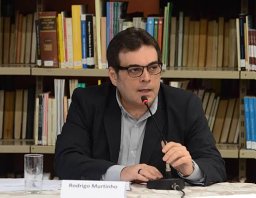 rodrigo murtinho合作论文数oswaldo cruz foundation1
 Julie Giovacchini合作论文数Centre Jean Pépin1
 Despoina Bouza合作论文数Laboratory of Viticulture, Agricultural University of Athens1
 Juliana Gonçalves Reis合作论文数Fundacao Oswaldo Cruz, Programa Posgrad Saude Publ & Meio Ambiente1Anne Toulet合作论文数Computational Biology Institute (IBC) of Montpellier, France1
 Katerina Biniari合作论文数Faculty of Crop Science, Agricultural University of Athens1
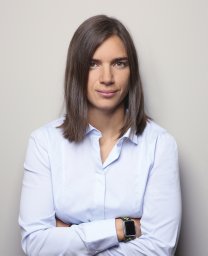 Maritina Stavrakaki合作论文数School of Plant Sciences, Agricultural University of Athens1
 Guojian Xian (鲜国建)合作论文数1
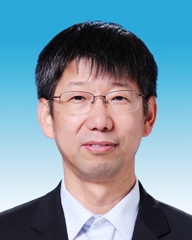 Xuefu Zhang (张学福)合作论文数Institute of Agricultural Information, Chinese Academy of Agricultural Sciences1Ivo Pierozzi Jr.合作论文数1
 David Martín-Moncunill合作论文数1
 D. Fournier合作论文数1
 Nikos Manouselis合作论文数Greek Research & Technology Network (GRNET)1
 Denis Jerome合作论文数Laboratoire de Physique des Solides, Université Paris-Sud Orsay1
 Ferdinando Villa合作论文数University of Vermont1Charilaos Tsetsekas合作论文数1Th Fournier合作论文数CRTBT-CNRS1
 Allan Leck Jensen合作论文数Danish Institute of Agricultural Sciences;Department of Agricultural Systems;Department of Agricultural Systems, Danish Institute of Agricultural Sciences1
 Caterina Caracciolo合作论文数Food and Agriculture Organization of the UN (FAO), Rome Italy1
 Patrice Buche合作论文数Centre Occitanie-Montpellier, Institut National de Recherche pour l’Agriculture l’Alimentation et l’Environnement1
 Erick Antezana合作论文数NTNU, Norwegian University of Science and Technology1Effie Tsiflidou合作论文数1
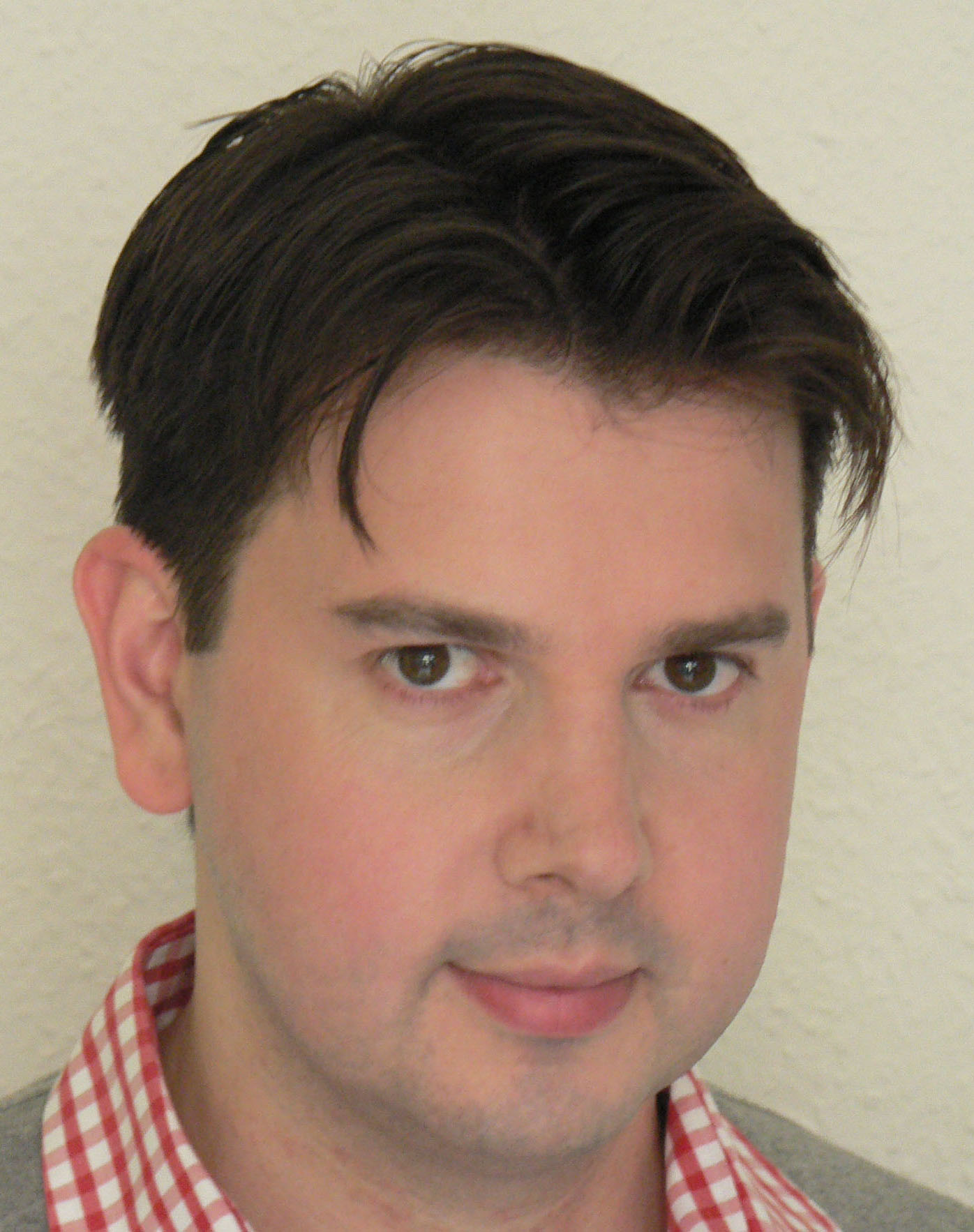 Jean François Lutz合作论文数Institut Charles Sadron, Centre National De la Recherche Scientifique, Université De Strasbourg1
 Salvador Sánchez Alonso合作论文数Pontifical University of Salamanca1
 Brandon Whitehead合作论文数University of Auckland1
 Petros Belsis合作论文数Technological Educational Institute of Athens1
 Antonis Koukourikos合作论文数Universita degli Studi1Françoise Dosba合作论文数1




