With increased autonomy in marine vessels, autonomous surface vessels (ASVs) and conventionally manned vessels need to coexist at sea. Any relocation needs to include collision avoidance according to the traffic rules at sea, COLREGs. Here, a local collision-avoidance planner for an archipelago environment is presented. The optimization-based local planner presented considers a predefined nominal path and upon detection of other vessels, a COLREGs-aware maneuver is computed. The maneuver adapts to the available space and includes a return to the nominal plan. The irregular available space for maneuvers is approximated with a local convex area. The planner was evaluated both in simulations and in field experiments.
In this paper, Safety Control Barrier Functions (SCBFs) were used to adjust the null-space compliant behavior of a redundant robot to improve safety in Human-Robot Collaboration (HRC) without modifying the robot behavior with respect to its main Cartesian task. A Lyapunov function was included in an energy storage formulation compatible with strict passivity to provide global asymptotic stability guarantees for the null-space compliance variation, and the necessary conditions for stability were formulated as inequality constraints of the optimization problem used for the null-space compliance variation. Experimental validation was performed using a Franka Emika Panda robot for a collaborative assembly application and its results showed that safety can be improved by using SCBFs simultaneously to the optimization of the robot configuration, while employing a single degree of freedom.
This article discusses challenges, experiences and lessons learned so far while transforming a masonry build system based mostly on manual labour into a robot automated build system. Our motivation for selection of this masonry process is to try out how robot automation could impact the architects in their design work by providing a tool to directly manipulate wall expression down to individual brick level. Such manipulation is often much too costly for manual labour today. Moreover, masonry is a challenging application to automate. Understanding the manual processes involved and transforming them into automation equivalents faces several challenges; among them handling and distribution of the different materials involved, selection of tooling, sensing for handling of variation and digital tooling for the programming of the process. A novel parallel-kinematic manipulator (PKM) with computerized numerical control (CNC) is used as target for experiments, because the performance properties in stiffness, workspace and accuracy will allow us to extend work into further construction processes involving heavy and dirty manual labour.
Traditional power reduction techniques such as DVFS or RAPL are challenging to use with web services because they significantly affect the services’ latency and throughput. Previous work suggested the use of controllers based on control theory or machine learning to reduce performance degradation under constrained power. However, generating these controllers is challenging as every web service applications running in a data center requires a power-performance model and a fine-tuned controller. In this paper, we present DDPC, a system for autonomic data-driven controller generation for power-latency management. DDPC automates the process of designing and deploying controllers for dynamic power allocation to manage the power-performance trade-offs for latency-sensitive web applications such as a social network. For each application, DDPC uses system identification techniques to learn an adaptive power-performance model that captures the application’s power-latency trade-offs which is then used to generate and deploy a Proportional-Integral (PI) power controller with gain-scheduling to dynamically manage the power allocation to the server running application using RAPL. We evaluate DDPC with two realistic latency-sensitive web applications under varying load scenarios. Our results show that DDPC is capable of autonomically generating and deploying controllers within a few minutes reducing the active power allocation of a web-server by more than 50% compared to state-of-the-art techniques while maintaining the latency well below the target of the application.
We propose an observer for rotational dynamics subject to directional and gyroscopic measurements, which simultaneously estimates the gyroscopic biases and attitude rates. We show uniform almost global asymptotic and local exponential stability of the resulting error dynamics, implying robustness against bounded disturbances. This robustness is quantified with respect to a popular nonlinear complementary filter in quantitative simulation studies, and we explore how the measurement noise propagates to the asymptotic errors as a function of tuning. This is an extended version of a paper with the same title (to appear at IFAC WC 2023). Additional mathematical details are provided in this extended version.
PurposeThis study aims to enable robotic friction stir welding (FSW) in practice. The use of robots has hitherto been limited, because of the large contact forces necessary for FSW. These forces are detrimental for the position accuracy of the robot. In this context, it is not sufficient to rely on the robot’s internal sensors for positioning. This paper describes and evaluates a new method for overcoming this issue.Design/methodology/approachA closed-loop robot control system for seam-tracking control and force control, running and recording data in real-time operation, was developed. The complete system was experimentally verified. External position measurements were obtained from a laser seam tracker and deviations from the seam were compensated for, using feedback of the measurements to a position controller.FindingsThe proposed system was shown to be working well in overcoming position error. The system is flexible and reconfigurable for batch and short production runs. The welds were free of defects and had beneficial mechanical properties.Research limitations/implicationsIn the experiments, the laser seam tracker was used both for control feedback and for performance evaluation. For evaluation, it would be better to use yet another external sensor for position measurements, providing ground truth.Practical implicationsThese results imply that robotic FSW is practically realizable, with the accuracy requirements fulfilled.Originality/valueThe method proposed in this research yields very accurate seam tracking as compared to previous research. This accuracy, in turn, is crucial for the quality of the resulting material.
Bettan - Industrial robot and application for Finja Exakt build system Maike Klöckner , Mathias Haage , Ronny Andersson , Klas Nilsson , Anders Robertsson , Helena Eriksson Pages 86-93 (2023 Proceedings of the 40th ISARC, Chennai, India, ISBN 978-0-6458322-0-4, ISSN 2413-5844) Abstract: This paper reports on efforts to create a robotized construction build system, based on the Finja Exakt manual build system. The equipment used is a generic off-the-shelf industrial arm robot integrated with a spindle crane carrier for mobility. The approach offers technical, safety and usability challenges as well as integration and business challenges for placing a generic industrial robot onsite as part of an automation solution. The question we address is if a robotized build system is a viable niche for industrial robotics in construction. In this paper the question is partially answered by reporting on an industrial robot partially adopted for work on a construction site with evaluation of individual processes in a build system. Keywords: construction robotics, build system automation, Finja Exakt build system DOI: https://doi.org/10.22260/ISARC2023/0014 Download fulltext Download BibTex Download Endnote (RIS) TeX Import to Mendeley Presentation Video: https://youtu.be/D2ZzvF5i9p4
Prior results on target localization and circumnavigation with bearing measurements in \mathbb R 2 are extended with integral action, resulting in a control system that is robust to bounded load disturbances on the control inputs. Such disturbances may arise in practice due to modeling errors and need to be considered to ensure small tracking errors. The control inputs are modeled as the system velocities in the bearing and orthogonal bearing directions, facilitating an implementation on both aerial and ground vehicles. This is demonstrated in a simulation example, followed by an experimental application with ground-based vehicle circumnavigation, highlighting the performance and importance of using the proposed controllers.
We present a trajectory tracking controller for a quadrotor unmanned aerial vehicle (UAV) configured on $\text{SU}(2) \times \mathbb{R}^{3}$ , and relate this result to a family of geometric tracking controllers on $\text{SO}(3) \times \mathbb{R}^{3}$ . The theoretical results are verified in several simulation examples, and the controller is subsequently implemented in practice and integrated with a simultaneous localization and mapping (SLAM) system through an onboard extended Kalman filter (EKF). The proposed con-trol system can be used for inventorying tasks in a supermarket environment without the need for external positioning systems.
This paper investigates the stabilization of underactuated vehicles moving in a three-dimensional vector space. The vehicle's model is established on the matrix Lie group SE(3), which describes the configuration of rigid bodies globally and uniquely. We focus on the kinematic model of the underactuated vehicle, which features an underactuation form that has no sway and heave velocity. To compensate for the lack of these two velocities, we construct additional rotation matrices to generate a motion of rotation coupled with translation. Then, the state feedback is designed with the help of the logarithmic map, and we prove that the proposed control law can exponentially stabilize the underactuated vehicle to the identity group element with an almost global domain of attraction. Later, the presented control strategy is extended to set-point stabilization in the sense that the underactuated vehicle can be stabilized to an arbitrary desired configuration specified in advance. Finally, simulation examples are provided to verify the effectiveness of the stabilization controller.
Kinesthetic teaching allows human operators to reprogram part of a robot’s trajectory by manually guiding the robot. To allow kinesthetic teaching, and also to avoid any harm to both the robot and its environment, Cartesian impedance control is here used for trajectory following. In this paper, we present an online method to modify the compliant behavior of a robot toward its environment, so that undesired parts of the robot’s workspace are avoided during kinesthetic teaching. The stability of the method is guaranteed by a well-known passivity-based energy-storage formulation that has been modified to include a strict Lyapunov function, i.e., its time derivative is a globally negative-definite function. Safety Control Barrier Functions (SCBFs) that consider the rigid-body dynamics of the robot are formulated as inequality constraints of a quadratic optimization (QP) problem to ensure forward invariance of the robot’s states in a safe set. An experimental evaluation using a Franka Emika Panda robot is provided.
Collaborative robots have been designed to per-form tasks where human cooperation may occur. Additionally, undesired collisions can happen in the robot’s environment. A contact classifier may be needed if robot trajectory recalculation is to be activated depending on the source of robot–environment contact. For this reason, we have evaluated a fast contact detection and classification method and we propose necessary modifications and extensions so that it is able to detect a contact in any direction and distinguish if it has been caused by voluntary human cooperation or by accidental collision with a static obstacle for kinesthetic teaching applications. Robot compliance control is used for trajectory following as an active strategy to ensure safety of the robot and its environment. Only sensor data that are conventionally available in commercial collaborative robots, such as joint-torque sensors and joint-position encoders/resolvers, are used in our method. Moreover, fast contact detection is ensured by using the frequency content of the estimated external forces, whereas external force direction and sense relative to the robot’s motion is used to classify its source. Our method has been experimentally proven to be successful in a collaborative assembly task for a number of different experimentally recorded trajectories and with the intervention of different operators.
We consider the problem of cooperative motion coordination for multiple heterogeneous mobile vehicles subject to various constraints. These include nonholonomic motion constraints, constant speed constraints, holonomic coordination constraints, and equality/inequality geometric constraints. We develop a general framework involving differential-algebraic equations and viability theory to determine coordination feasibility for a coordinated motion control under heterogeneous vehicle dynamics and different types of coordination task constraints. If a coordinated motion solution exists for the derived differential-algebraic equations and/or inequalities, a constructive algorithm is proposed to derive an equivalent dynamical system that generates a set of feasible coordinated motions for each individual vehicle. In case studies on coordinating two vehicles, we derive analytical solutions to motion generation for two-vehicle groups consisting of car-like vehicles, unicycle vehicles, or vehicles with constant speeds, which serve as benchmark coordination tasks for more complex vehicle groups. The motion generation algorithm is well-backed by simulation data for a wide variety of coordination situations involving heterogeneous vehicles. We then extend the vehicle control framework to deal with the cooperative coordination problem with time-varying coordination tasks and leader-follower structure. We show several simulation experiments on multi-vehicle coordination under various constraints to validate the theory and the effectiveness of the proposed schemes.
We present a trajectory tracking controller for a quadrotor unmanned aerial vehicle (UAV) configured on $SU(2)\times R^3$, and relate this result to a family of geometric tracking controllers on $SO(3)\times R^3$. The theoretical results are complemented by simulation examples, and the controller is subsequently implemented in practice and integrated with a simultaneous localization and mapping (SLAM) system through an extended Kalman filter (EKF). This facilitates the operation of the UAV without external motion capture systems, and we demonstrate that the proposed control system can be used for inventorying tasks in a supermarket environment without external positioning systems.
This paper concerns trajectory tracking control of attitude dynamics configured on SU(2). Inspired by a popular geometric tracking controller on SO(3), differential geometric tools are used to derive both continuous and discontinuous attitude controllers on the SU(2) manifold, relating these to pre-existing controllers operating with imaginary quaternion errors. Additionally, a robustness result is given for the controllers on SU(2), which is illustrated by simulation examples.
This paper concerns the robustness of attitude controllers for dynamics configured on the SO(3) manifold and poses a set of bilinear matrix inequalities to find an optimal controller tuning with respect to (i) the ultimate bound of the error-state trajectories when perturbed by naturally arising disturbances, and (ii) the worst-case decay rate of the tracking errors. The presented optimization problem can be solved both to generate a robust tuning for experimental applications, and also to facilitate qualitative comparisons of different attitude controllers present in the literature. To solve the tuning problem, we propose an algorithm based on alternating semidefinite programming, with local linearizations of an upper bound of the associated cost function. The soundness of this approach is illustrated by comparison to an interior-point method. The algorithm is subsequently used to provide insights for the tuning of the considered controllers, and finally demonstrated by a closed-loop simulation example.
We present a trajectory tracking controller for a quadrotor unmanned aerial vehicle (UAV) configured on $SU(2)\times R^3$, and relate this result to a family of geometric tracking controllers on $SO(3)\times R^3$. The theoretical results are complemented by simulation examples, and the controller is subsequently implemented in practice and integrated with a simultaneous localization and mapping (SLAM) system through an extended Kalman filter (EKF). This facilitates the operation of the UAV without external motion capture systems, and we demonstrate that the proposed control system can be used for inventorying tasks in a supermarket environment without external positioning systems.
We present a trajectory tracking controller for a quadrotor unmanned aerial vehicle (UAV) configured on SU(2)× R^3, and relate this result to a family of geometric tracking controllers on SO(3)× R^3. The theoretical results are complemented by simulation examples, and the controller is subsequently implemented in practice and integrated with a simultaneous localization and mapping (SLAM) system through an extended Kalman filter (EKF). This facilitates the operation of the UAV without external motion capture systems, and we demonstrate that the proposed control system can be used for inventorying tasks in a supermarket environment without external positioning systems.
In this paper we consider distributed adaptive stabilization for uncertain multivariable linear systems with a time-varying diagonal matrix gain. We show that uncertain multivariable linear systems are stabilizable by diagonal matrix high gains if the system matrix is an H-matrix with positive diagonal entries. Based on matrix measure and stability theory for diagonally dominant systems, we consider two classes of uncertain linear systems, and derive a threshold condition to ensure their exponential stability by a monotonically increasing diagonal gain matrix. When each individual gain function in the matrix gain is updated by state-dependent functions using only local state information, the boundedness and convergence of both system states and adaptive matrix gains are guaranteed. We apply the adaptive distributed stabilization approach to adaptive synchronization control for large-scale complex networks consisting of nonlinear node dynamics and time-varying coupling weights. A unified framework for adaptive synchronization is proposed that includes several general design approaches for adaptive coupling weights to guarantee network synchronization.
 Rolf Johansson合作论文数Department of Automatic Control, Faculty of Engineering LTH, Lund University;Robotics Laboratory, Lund University156
 Anton Shiriaev合作论文数Department of Engineering Cybernetics, Norwegian University of Science and Technology;Automatic Control Department, Lund University36
 Klas Nilsson合作论文数Lund University, Sweden34
 Leonid B. Freidovich合作论文数Department of Applied Physics and Electronics, Umeå University23
 Marcus Greiff合作论文数Lund University22
 Bjorn Olofsson合作论文数22Maria Kihl合作论文数Lund University20
 Andreas Stolt合作论文数17
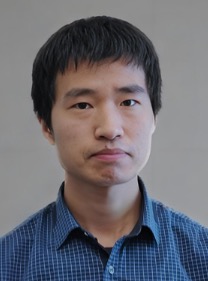 Zhiyong Sun (孙志勇)合作论文数School of Advanced Manufacturing and Robotics, Peking University;College of Engineering, Peking University16
 Juan Gómez Ortega合作论文数Escuela Superior de Ingenieros Industriales, Universidad de Sevilla14
 Javier Gámez García合作论文数13Olof Sornmo合作论文数12Magnus Linderoth合作论文数12Isolde Dressler合作论文数12Mathias Haage合作论文数Department of Computer Science, Lund University11
 Martin Karlsson合作论文数Örebro Universitet;Built Robotics11
 Fredrik Bagge Carlson合作论文数10M. Kihl合作论文数Lund University10Karl Berntorp合作论文数9Tomas Olsson合作论文数9
 Torgny Brogardh合作论文数9
 M. Mahdi Ghazaei Ardakani合作论文数9
 Angel Valera合作论文数Department of Systems Engineering and Control C/Vera, University of Valencia8Manfred Dellkrantz合作论文数7
 Karl Erik Årzén合作论文数Faculty of Engineering, Lund University7
 Karl Johan Åström合作论文数Department of Automatic Control, Lund University7martin ansbjerg kjaer合作论文数6
 Erjen Lefeber合作论文数Department of Mechanical Engineering, Eindhoven University of Technology6bertil aspernas合作论文数5
 Amani, P.合作论文数Dept. of Electr. & Inf. Technol., Lund Univ.;c;Dept. of Electr. & Inf. Technol., Lund Univ.5
 Björn Wittenmark合作论文数Department of Automatic Control, Lunds Universitet5Martin Mellado合作论文数5
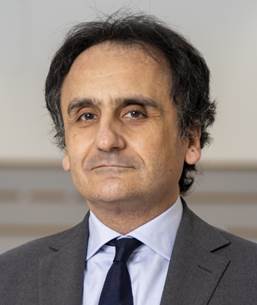 Paolo Rocco合作论文数Dipartimento di Elettronica, Informazione e Bioingegneria, Politecnico di Milano5
 Johan Åkesson合作论文数Department of Automatic;Lund Institute of Technology;Department of Automatic, |Lund Institute of Technology5Jose Solaz合作论文数5
 Holger Giese合作论文数System Analysis and Modeling Group, Hasso Plattner Insitute, Potsdam University5Ranko Zotovic Stanisic合作论文数Universidad politécnica de valencia5Jang Ho Cho合作论文数4
 Julian M. Salt Ducaju合作论文数LTH, Lund Univ4Patrik Persson合作论文数Lund Univ, Ctr Math Sci, Lund, Sweden4lars cederqvist合作论文数4
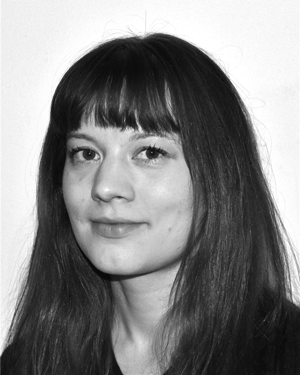 Maj Stenmark合作论文数4
 Jeffrey O Kephart合作论文数Agents and Emergent Phenomena group
Thomas J. Watson Research Center, Hawthorne, NY USA4
Jeffrey O Kephart合作论文数Agents and Emergent Phenomena group
Thomas J. Watson Research Center, Hawthorne, NY USA4 Helios De Rosario合作论文数4
 Andrea Zanchettin合作论文数Smart Robots;I-RIM Istituto di Robotica e Macchine Intelligenti;Dipartimento di Elettronica, Informazione e Bioingegneria, Politecnico di Milano4
 Tarek Abdelzaher合作论文数Department of Computer Science, University of Illinois at Urbana Champaign4Francesc Benimeli合作论文数4
 Gunnar Bolmsjo合作论文数Department of Production and Materials Engineering, Lund University4
 Martina Maggio合作论文数Lund University4




