We present the generation of approximated coherent state superpositions - referred to as Schrödinger cat states - by the process of subtracting single photons from picosecond pulsed squeezed states of light at 830 nm. The squeezed vacuum states are produced by spontaneous parametric down-conversion (SPDC) in a periodically poled KTiOPO4 crystal while the single photons are probabilistically subtracted using a beamsplitter and a single photon detector. The resulting states are fully characterized with time-resolved homodyne quantum state tomography. Varying the pump power of the SPDC, we generated different states which exhibit non-Gaussian behavior.
It has been shown that entanglement distillation of Gaussian entangled states by means of local photon subtraction can be improved by local Gaussian transformations. Here we show that a similar effect can be expected for the distillation of an asymmetric Gaussian entangled state that is produced by a single squeezed beam. We show that for low initial entanglement, our largely simplified protocol generates more entanglement than previous proposed protocols. Furthermore, we show that the distillation scheme also works efficiently on decohered entangled states as well as with a practical photon subtraction setup.
We present a scheme for the amplification of Schrodinger cats that collapses two smaller states onto their constructive interference via a homodyne projection. We analyze the performance of the amplification in terms of fidelity and success rate when the input consists of either exact coherent state superpositions or of photon-subtracted squeezed vacua. The impact of imprecise homodyne detection and of impure squeezing is quantified. We also assess the scalability of iterated amplifications.
Coherent state superpositions, also known as Schrödinger cat states, are widely recognized as promising resources in quantum information, quantum metrology, as well as fundamental tests. These states are hard to produce deterministically and most schemes for their probabilistic generation can only attain amplitudes too small for practical use. This is for example the case for photon-subtracted squeezed vacuum (PSSV), which can be used to approximate cat states of amplitude no larger than y = 1.5 if the fidelity is to be maintained above 95%. One way to reach larger amplitudes is to start with pairs of small cats and then to interfere them on a balanced beam splitter. The projective measurement of one of the outputs is used to herald a larger cat resulting from the constructive interference of the initial states. The scheme proposed here uses the projection |x = 0〉〈x = 0| as the heralding condition. Homodyning is proposed, as opposed to photon counting, because homodyne detection has high a quantum efficiency, and - as demonstrated in the paper - can be tuned to increase the success probability of the amplification without heavily compromising the output's fidelity.
We experimentally verify the quantum non-Gaussian character of a conditionally generated noisy squeezed single-photon state with positive Wigner function. Employing an optimized witness based on probabilities of squeezed vacuum and squeezed single-photon states we prove that the state cannot be expressed as a mixture of Gaussian states. In our experiment, the non-Gaussian state is generated by conditional subtraction of a single photon from squeezed vacuum state. The state is probed with a homodyne detector and the witness is determined by averaging a suitable pattern function over the measured homodyne data. Our experimental results are in good agreement with a theoretical fit obtained from a simple yet realistic model of the experimental setup.
We discuss and make an experimental test of a probabilistic Hadamard gate for coherent state qubits. The scheme is based on linear optical components, nonclassical resources, and the joint projective action of a photon counter and a homodyne detector. We experimentally characterize the gate for the coherent states of the computational basis by full tomographic reconstruction of the transformed output states. Based on the parameters of the experiment, we simulate the fidelity for all coherent state qubits on the Bloch sphere.
By means of a hybrid detector we suggest and implement two protocols. We theoretically propose a feasible loophole-free violation of Bell's inequality and we experimentally realize a Hadamard transform of coherent superposition states.
We use squeezed states of light to implement a robust continuous variable quantum key distribution scheme and an optical Hadamard gate based on coherent state qubits.
 Ulrik Lund Andersen合作论文数Department of Physics, Technical University of Denmark;Max-Planck-Institut Für Die Physik Des Lichts9
 Amine Laghaout合作论文数6
 Ruifang Dong (董瑞芳)合作论文数中国科学院国家授时中心5
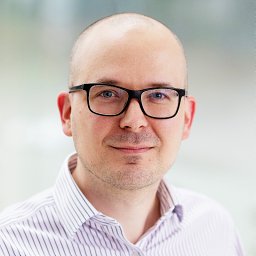 Miroslav Jezek合作论文数Department of Optics, Palacký University5
 Jonas S. Neergaard-Nielsen合作论文数National Institute of Information and Communications Technology3christian kragh合作论文数1
 Petr Marek合作论文数Dept Opt, Palacky Univ1Lars S. Madsen合作论文数1
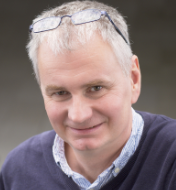 Radim Filip合作论文数Department of Optics, Faculty of Science, Palacky University1Gunnar Björk合作论文数Department of Applied Physics, Royal Institute of Technology1
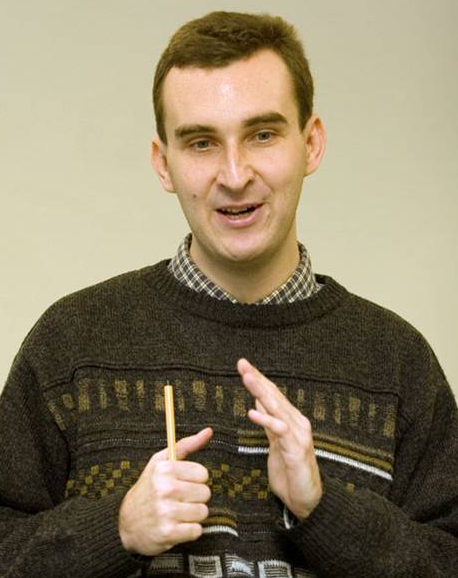 Jaromír Fiurášek合作论文数Katedra optiky, Přírodovědecká fakulta, Univerzita Palackého v Olomouci1
 Mikael Lassen合作论文数Institute of Optics , Information and Photonics;Universit y of Erlangen-Nuremberg;Institute of Optics , Information and Photonics, Universit y of Erlangen-Nuremberg1James R Rigas合作论文数1L Mista合作论文数1
 Leonid A. Krivitsky合作论文数Institute of Materials Research and Engineering (IMRE), 2 Fusionopolis Way, #08-03 Innovis,
Singapore1
Leonid A. Krivitsky合作论文数Institute of Materials Research and Engineering (IMRE), 2 Fusionopolis Way, #08-03 Innovis,
Singapore1




