Reliable identification of microplastic fibers is crucial for environmental monitoring but remains analytically challenging. We report the first explainable deep-learning framework for classifying microplastic and natural microfibers using exclusively polarization-based features obtained from polarization-resolved digital holographic microscopy. From multiplexed holograms, the complex Jones matrix of each fiber was reconstructed to extract polarization eigen-parameters describing optical anisotropy. Statistical descriptors of nine polarization characteristics formed a 72-dimensional feature vector for a total of 296 fibers spanning six material classes, including polyamide 6, polyethylene terephthalate, polyamide 6.6, polypropylene, cotton, and wool. The designed fully-connected deep neural network achieved an accuracy of 96.7 % on the validation data, surpassing that of common machine-learning classifiers. Explainable artificial intelligence analysis with Shapley additive explanations identified eigenvalue-ratio quantities as dominant predictors, revealing the physical basis for classification. An additional reduced-feature model with the preserved architecture, exploiting only these most significant eigenvalue-based characteristics, retained high accuracy (93.3 %), thereby confirming their dominant role while still outperforming common machine-learning classifiers. These results establish polarization-based features as distinctive optical fingerprints and demonstrate an explainable deep-learning approach for automated microplastic fiber identification.
Molecular fluorescence microscopy is a leading approach to super-resolution and nanoscale imaging in life and material sciences. However, super-resolution fluorescence microscopy is often bottlenecked by system-specific calibrations and long acquisitions of sparsely blinking molecules. We present a deep-learning approach that reconstructs super-resolved images directly from a single diffraction-limited camera frame. The model is trained exclusively on synthetic data encompassing a wide range of optical and sample parameters, enabling robust generalization across microscopes and experimental conditions. Applied to dense terrylene samples with 150 ms acquisition time, our method significantly reduces reconstruction error compared to Richardson-Lucy deconvolution and ThunderSTORM multi-emitter fitting. The results confirm the ability to resolve emitters separated by 35 nm at 580 nm wavelength, corresponding to sevenfold resolution improvement beyond the Rayleigh criterion. By delivering unprecedented details from a single short camera exposure without prior information and calibration, our approach enables plug-and-play super-resolution imaging of fast, dense, or light-sensitive samples on standard wide-field setups.
Super-resolution imaging has revolutionized the study of systems ranging from molecular structures to distant galaxies. However, existing super-resolution methods require extensive calibration and retraining for each imaging setup, limiting their practical deployment. We introduce a device-agnostic deep-learning framework for super-resolution imaging of point-like emitters that eliminates the need for calibration data or explicit knowledge of optical system parameters. Our model is trained on a diverse, numerically simulated dataset encompassing a broad range of imaging conditions, enabling generalization across different optical setups. Once trained, it reconstructs super-resolved images directly from a single resolution-limited camera frame with superior accuracy and computational efficiency compared to state-of-the-art methods. We experimentally validate our approach using a custom microscopy setup with ground-truth emitter positions. We also demonstrate its versatility on astronomical and single-molecule localization microscopy datasets, achieving unprecedented resolution without prior information. Our findings establish a pathway toward universal, calibration-free super-resolution imaging, expanding its applicability across scientific disciplines.
Characterization of quantum states and devices is paramount to quantum science and technology. The characterization consists of individual measurements, which must be precisely known. A mismatch between actual and assumed constituent measurements limits the accuracy of this characterization. We show that such a mismatch introduces reconstruction artifacts in quantum state tomography. We use these artifacts to detect and quantify the mismatch, gaining information about the actual measurement operators. It consequently allows the mitigation of systematic errors in both quantum measurement and state preparation, improving the precision of state control and characterization. The practical utility of our approach is experimentally demonstrated.
We demonstrate a device-agnostic deep learning approach for super-resolution single-emitter microscopy. The presented method is calibration-free and directly predicts super-resolved images independently of the optical system.
Noiseless quantum amplifiers are probabilistic quantum devices that enhance amplitude of coherent states without adding any noise, which has far reaching applications in quantum optics and quantum information processing. Here, we report on experimental implementation of an advanced noiseless quantum amplifier for coherent states of light that is based on conditional addition of two photons followed by conditional subtraction of two photons. We comprehensively characterize the noiselessly amplified coherent states via quantum state tomography and analyze the amplification gain and noise properties of the amplifier. We observe very good agreement between the experiment and theoretical predictions. Our work reveals that sequences of multiple photon additions and subtractions represent an efficient and experimentally feasible alternative to multiplexing that was originally proposed to boost the performance of noiseless quantum amplifiers. Beyond noiseless quantum amplification, our experiment represents a significant step forward towards engineering complex quantum operations on traveling light beams by coherent combinations of various sequences of multiphoton additions and subtractions.
Polarization of light carries vital information in numerous scientific disciplines, including biomedical imaging, optical diagnostics, and environmental sensing. However, accurate polarization measurements in constrained spaces, under low-light conditions, and at high speeds remain a severe challenge. A compact, all-fiber polarization sensor capable of single-shot, real-time operation with single-photon sensitivity and long-term stability is presented. The sensor leverages intermodal interference within a short segment of a few-mode fiber, coupled to an array of single-photon detectors. The recorded detections are processed by a neural network, enabling precise reconstruction of complete polarization information for fully and partially polarized states. This robust architecture allows for thousands of polarization state measurements per second while achieving exceptional accuracy with Stokes error below 0.01, and even lower at higher photon fluxes. This technology is demonstrated through diverse experimental scenarios, such as resolving structural details in biological tissues with a spatial resolution of 6 mu m, characterizing rapid polarization transitions, and monitoring micro-scale birefringence in living or moving specimens.
We address the problem of precise polarization measurement in challenging conditions. To resolve this problem, we introduce a single-shot all-fiber method based on intermodal interaction aided by deep-learning, providing accuracy down to a single-photon level.
Revealing the structural and functional organization of biological samples at submicrometer scales requires high-resolution imaging techniques that provide real-time, quantitative information. However, resolving and analyzing unlabeled biological structures at the subcellular level from a single-shot image remain challenging. We introduce a novel incoherent quantitative phase imaging technique based on lateral shearing digital holographic microscopy, with shearing distances exceeding the coherence area of the employed illumination-a regime not previously achieved and exploited. This strategy consequently ensures artifact-free, high-accuracy, and high-resolution quantitative phase reconstructions. This regime extends single-shot lateral shearing digital holographic microscopy toward incoherent illumination, thus increasing the space-time bandwidth product of the method. The practical common-path geometry also provides enhanced vibration resistance, which is essential for consistent time-lapse measurements. We verify the scalability and effectiveness of the method by investigating samples via multiple condenser-objective pairs, providing a wide range of lateral resolutions and fields of view, thereby ensuring its applicability for various microscope settings. We experimentally verify long-term phase stability and unprecedented phase-reconstruction accuracy. Finally, we use our method to investigate biological samples, including cheek cells, diatoms, and yeast cells, highlighting its potential for dynamic label-free analysis at the organelle level. These results establish our approach as a powerful tool for quantitative phase imaging, enabling high-precision investigations across a wide range of scientific applications. (c) 2025 Optica Publishing Group under the terms of the Optica Open Access Publishing Agreement
We present a universal deep-learning method that reconstructs super-resolved images of quantum emitters from a single camera frame measurement. Trained on physics-based synthetic data spanning diverse point-spread functions, aberrations, and noise, the network generalizes across experimental conditions without system-specific retraining. We validate the approach on low- and high-density In(Ga)As quantum dots and strain-induced dots in 2D monolayer WSe_2, resolving overlapping emitters even under low signal-to-noise and inhomogeneous backgrounds. By eliminating calibration and iterative acquisitions, this single-shot strategy enables rapid, robust computational super-resolution for nanoscale characterization and quantum photonic device fabrication.
Randomness is a key feature of quantum physics. Heisenberg's uncertainty principle reveals existence of an intrinsic noise, usually explored through Gaussian squeezed states. Due to their insufficiency for quantum advantage, the focus is currently shifting towards genuinely quantum non-Gaussian states. However, while the genuine quantum behavior comes naturally to discrete variable systems, its preparation and verification is difficult in the continuous ones. Simultaneously, a unifying theoretical framework based on the continuous nature is missing. Here, we introduce nonlinear squeezing as a general framework to describe and verify genuine quantumness in noise of continuous quantum states. Using this approach, we certify the non-Gaussianity of experimentally prepared multi-photon-added coherent states of light for the first time. Chiefly, we demonstrated the nonlinear squeezing corresponding to third- and fifth-order quantum nonlinearities, going significantly beyond the current state-of-the-art in quantum technology. This framework advances quantum science and supports the development of quantum technologies by uncovering intricate quantum properties in cutting-edge experiments.
A quantum-light source that delivers photons with a high brightness and a high degree of entanglement is fundamental for the development of efficient entanglement-based quantum-key distribution systems. Among all possible candidates, epitaxial quantum dots are currently emerging as one of the brightest sources of highly entangled photons. However, the optimization of both brightness and entanglement currently requires different technologies that are difficult to combine in a scalable manner. In this work, we overcome this challenge by developing a novel device consisting of a quantum dot embedded in a circular Bragg resonator, in turn, integrated onto a micromachined piezoelectric actuator. The resonator engineers the light-matter interaction to empower extraction efficiencies up to 0.69(4). Simultaneously, the actuator manipulates strain fields that tune the quantum dot for the generation of entangled photons with corrected fidelities to a maximally entangled state up to 0.96(1). This hybrid technology has the potential to overcome the limitations of the key rates that plague QD-based entangled sources for entanglement-based quantum key distribution and entanglement-based quantum networks.
Energy extraction from a measured quantum system is a cornerstone of information thermodynamics as illustrated by Maxwell's demon. The nonequilibrium physics of many-particle systems is additionally strongly influenced by quantum statistics. We here report the first experimental realization of a quantum demon in a many-particle photonic setup made of two identical thermal light beams. We show that single-photon measurements combined with feedforward operation may deterministically increase the mean energy of one beam faster than energy fluctuations, thus improving the thermodynamic stability of the device. We moreover demonstrate that bosonic statistics can enhance the energy output above the classical limit, and further analyze the counterintuitive thermodynamics of the demon using an information-theoretic approach. Our results underscore the pivotal role of many-particle statistics for enhanced energy extraction in quantum thermodynamics.
The increasing complexity of recent photonic experiments challenges the development of efficient multichannel coincidence counting systems with high-level functionality. Here, we report a coincidence unit able to count detection events ranging from single to 16 -fold coincidences with full channel -number resolution. The device operates within sub-100-ps coincidence time windows, with a maximum input frequency of 1.5 GHz and an overall jitter of less than 10 ps. The unit high-level timing performance renders it suitable for quantum photonic experiments employing low -timing -jitter single -photon detectors. Additionally, the unit can be used in complex photonic systems to drive feed -forward loops. We demonstrate the developed coincidence counting unit in photon -number -resolving detection to directly quantify the statistical properties of light, specifically coherent and thermal states, with a fidelity exceeding 0.999 up to 60 photons.
Conditional addition of photons represents a crucial tool for optical quantum state engineering and it forms a fundamental building block of advanced quantum photonic devices. Here we report on experimental implementation of the conditional addition of several photons. We demonstrate the addition of one, two, and three photons to input coherent states with various amplitudes. The resulting highly nonclassical photon-added states are completely characterized with time-domain homodyne tomography, and the nonclassicality of the prepared states is witnessed by the negativity of their Wigner functions. We experimentally demonstrate that the conditional addition of photons realizes approximate noiseless quantum amplification of coherent states with sufficiently large amplitude. We also investigate certification of the stellar rank of the generated multiphoton-added coherent states, which quantifies the non-Gaussian resources required for their preparation. Our results pave the way towards the experimental realization of complex optical quantum operations based on combination of multiple photon additions and subtractions.
Full quantum state characterization requires a tomographic procedure performed on a limited number of copies. Our experimental demonstration of one- and two-qubit overcomplete tomographic measurements (up to 400 separable projections) outper-forms state-of-the-art approaches.
We demonstrate a new method for optimal bidirectional control of complex physical systems. Employing a set of collaborative neural networks, our approach exhibits unprecedented accuracy, even at the single-photon level.
Probabilistic heralded Gaussification of quantum states of light is an important ingredient of protocols for distillation of continuous variable entanglement and squeezing. An elementary step of the heralded Gaussification protocol consists of interference of two copies of the state at a balanced beam splitter, followed by conditioning on the outcome of a suitable Gaussian quantum measurement on one output mode. When iterated, the protocol either converges to a Gaussian state or diverges. Here, we report on experimental investigation of the convergence properties of iterative heralded Gaussification. We experimentally implement two iterations of the protocol, which requires simultaneous processing of four copies of the input state. We utilize the phase-randomized coherent states as the input states, which greatly facilitates the experiment because these states can be generated deterministically, and their mean photon number can easily be tuned. We comprehensively characterize the input and partially Gaussified states by balanced homodyne detection and quantum state tomography. Our experimental results are in good agreement with theoretical predictions and they provide new insights into the convergence properties of heralded quantum Gaussification.
Full quantum state characterization requires a tomographic procedure performed on a limited number of copies. Our experimental demonstration of one- and two-qubit overcomplete tomographic measurements (up to 400 separable projections) outperforms state-of-the-art approaches, showcasing significant error reduction.
 Ivo Straka合作论文数42
 Jaromír Fiurášek合作论文数Katedra optiky, Přírodovědecká fakulta, Univerzita Palackého v Olomouci41
 Miloslav Dusek合作论文数Department of Optics, Palacký University Olomouc;Faculty of Science, Palacký University Olomouc30
 Radim Filip合作论文数Department of Optics, Faculty of Science, Palacky University28
 Michal Mičuda合作论文数23
 Robert Starek合作论文数Dept Opt, Palacky Univ Olomouc18Martina Miková合作论文数17
 Josef Hloušek合作论文数Fac Sci, Palacky Univ16M Miková合作论文数15M. Micuda合作论文数14
 Ana Predojevic合作论文数12
 Martin Bielak合作论文数Dept Opt, Palacky Univ11
 Dominik Vasinka合作论文数10
 Radim Hošák合作论文数Dept Opt, Palacky Univ10
 Christian Schneider合作论文数Institute of Physics, Carl von Ossietzky Universität Oldenburg8
 Michal Sedlak合作论文数Research Center for Quantum Information;Slovak Academy of Sciences;Research Center for Quantum Information, Slovak Academy of Sciences8
 Sven Höfling合作论文数Gottfried-Landwehr-Labor fuer Nanotechnologien, University of Würzburg8
 Ulrik Lund Andersen合作论文数Department of Physics, Technical University of Denmark;Max-Planck-Institut Für Die Physik Des Lichts8Michal Neset合作论文数7Dominik Koutný合作论文数6
 Laia Gines合作论文数Sch Phys & Astron, Cardiff Univ6Magdalena Moczała合作论文数Wroclaw University of Technology6
 Lachman Lukáš合作论文数Department of Optics, Palacký University6
 Zdeněk Hradil合作论文数Department of Optics, Palacky University Olomouc6Jan Grygar合作论文数5Švarc Vojtěch合作论文数5
 Helena Fikerova合作论文数5
 Michal Dudka合作论文数5
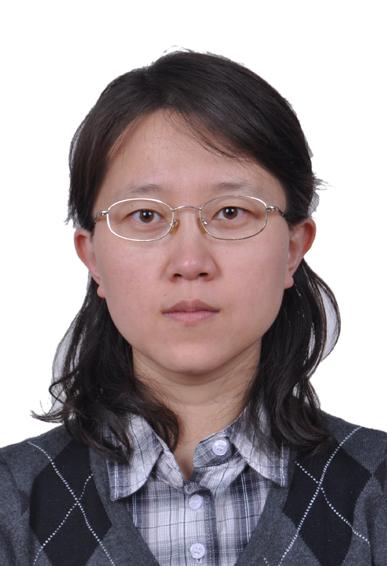 Ruifang Dong (董瑞芳)合作论文数中国科学院国家授时中心5Anders Tipsmark合作论文数5
 Huber Tobias合作论文数Institut für Experimentalphysik, Universität Innsbruck5Lukáš Slodička合作论文数5Nováková Martina合作论文数4P Obšil合作论文数4
 Petr Marek合作论文数Dept Opt, Palacky Univ4L Podhora合作论文数Dept Opt, Palacky Univ4
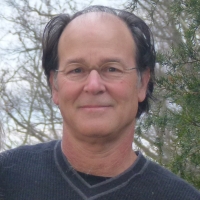 Glenn S. Solomon合作论文数Department of Physics, University of Adelaide/Joint Quantum Institute & University of Maryland/Physical Measurements Laboratory, National Institute of Standards and Technologies4
 Gregor Weihs合作论文数Institute for Quantum Computing, University of Waterloo4Jaroslav Rehacek合作论文数Department of Optics and Quantum Optics Laboratory, Palacký University Olomouc;Department of Optics, Faculty of Science, Palacky University4Amine Laghaout合作论文数4Jan Bilek合作论文数3
 David Dlaka合作论文数3
 Junior R. Gonzales-Ureta合作论文数Dept Phys, Stockholm Univ3
 Andrew Young合作论文数HH Wills Physics Laboratory, School of Physics, University of Bristol;School of Electrical, Electronic and Mechanical Engineering, University of Bristol3Jiri Fadrny合作论文数2J. Mika合作论文数2Jaromír Mika合作论文数2
 Glib Mazin合作论文数2Jaromir Behal合作论文数2




