In 2008, Sweden introduced a policy change to limit the number of days for sickness benefits (SB). This study aimed to elucidate the characteristics of those who reached the maximum entitlement period for receiving sickness benefits (MEPSB) and their future main source of income. Methods: All 5,309,759 individuals, aged 20–63 and residents of Sweden in 2009 were followed from July 2008 to July 2010 regarding SB-days and date of MEPSB and then categorised into three groups: I) no SB-days, II) ongoing SB-days, and III) MEPSB. Mean numbers of SB-days 2.5 years before and 2 years after the policy change and main source of income in 2011 were assessed. Associations between sociodemographic factors, occupation and paid work as main source of income were estimated by odds ratio (OR). Results: A total of 0.7% reached MEPSB in 2010. The mean numbers of SB-days before and after the policy change were higher in the MEPSB group than in the other two groups. In the MEPSB group, 14% had their main source of income from paid work in 2011; this was more common among women born in Sweden (OR = 1.29), people living with a partner and children (women OR = 1.29; men OR = 1.48), and those with occupations representing high educational levels. Conclusions: One out of seven individuals with MEPSB in 2010 had their main source of income from paid work in 2011, although they had a long-term SB before and after the policy change. Further research is warranted to address the long-term effects of this policy change.
Aim: The aim of this study was to analyze possible changes in the gender composition of occupations in Sweden, using register data covering the whole working population. Methods: Cross tabulations on gender by occupation were computed and comparisons made of numbers and proportions of women and men aged 20–64 years to illustrate occupational gender-segregation categories in 2003 and 2011, respectively. All of those in working ages, employed in 2003 and 2011 (4.2 resp 4.7 millions individuals), were included. Differences in the distribution of women and men in all occupations were summarized using two gender-segregation indexes from 2003 and 2011, separately. Results: The proportion of women increased in the gender-integrated (⩾40–<60% women) occupations. Also, the proportion of women in high-skilled professional occupations in the male-dominated category increased, as well as the proportion of men in mostly low-skilled female-dominated occupations, mainly in the service sector. The gender-segregation of occupations measured by the Index of Dissimilarly and the Karmel and MacLachlan Index was lower in 2011 than in 2003. Conclusions: The process of de-segregation has continued during our study period, from 2003 to 2011. The proportion of women increased in occupations that demand higher education, both in gender-integrated and in male-dominated occupations, which can contribute to a decrease in the level of sickness absence for women. Men increased their proportion in low-skilled, female-dominated occupations – a group with high levels of sickness absence or disability pension.
The occupational gender segregation of the labour market is very strong, both in Sweden and in North America. Nevertheless, there is little knowledge on how this is associated with employees’ future employment or morbidity. The objectives of this study were to explore age, period, and cohort effects on future employment and morbidity in terms of sickness absence (SA) or disability pension (DP) among women and men employed in numerically gender-segregated or gender-integrated occupations. Based on Swedish nationwide register data, three population-based cohorts of all people living in Sweden, with a registered occupation, and aged 20–56 years at inclusion in 1985 (N = 3,183,549), 1990 (N = 3,372,152), or 2003 (N = 3,565,579), respectively, were followed prospectively for 8 years each. First, descriptive statistics of employment and SA/DP at follow-up were calculated, related to level of gender segregation/integration of occupation at inclusion. Second, differences between birth cohorts (those born in 1929–1983, respectively) were estimated within each of the periods 1985–1993, 1990–1998, and 2003–2011, using mean polish analyses. Women and men in gender-segregated occupations differed in relation to future employment rates and SA/DP. However, these differences decreased over time. Furthermore, the results show a birth cohort effect; those born in 1943–1956 remained in employment to a higher extent and also had lower rates of SA/DP than all other birth cohorts. Differences between people in the five categories of gender-segregated occupations decreased over time. Although age and period are important when explaining the outcome, also birth cohort effects have to be considered, both from a public and an occupational health perspective.
Background: Although the labour market is characterized by a strong numerical gender segregation of occupations, there is little knowledge about the associations of this with the future labour market situation for an individual person. Objectives: This study aimed to elucidate whether working in a gender-segregated or gender-integrated occupation is associated with future labour market attachment and sickness absence or disability pensions among women and men. Methods: We used a population-based prospective cohort study with univariate and multiple logistic regression analyses stratified by gender, including all people living in Sweden aged 20–56 years and in paid work in 2003 ( n=3,239,989). They were followed up eight years later with regard to employment status, sickness absence and disability pension. Results: Women and men employed in extremely female-dominated occupations in 2003 had the highest employment levels and the lowest unemployment levels at follow up in 2011. When adjusting for age, level of education and sector of employment, the highest odds ratios (ORs) for not being employed in 2011 were found for women working in extremely male-dominated occupations in 2003 (OR 1.27; 95% CI 1.21–1.33) and for men in female-dominated occupations (OR 1.42; 95% CI 1.39–1.45) relative to those in gender-integrated occupations. Women in extremely male-dominated occupations had the highest ORs for sickness absence or the receipt of a disability pension at follow up (OR 1.26; 95% CI 1.17–1.36) and men in female-dominated occupations had the highest OR 1.15 (95% CI 1.11–1.20). Conclusions: For both women and men, the gender composition of the occupation they work in seems to be of importance for their future labour market attachment and sickness absence or receipt of a disability pension.
PurposeThe study examines various combinations of levels of social isolation in private life and peripheral work position as predictors of disability pension (DP). A second aim was to test the potential interaction effects (above additivity) of social isolation and peripheral work position on the future risk of DP, and to provide results for men and women by age.MethodThe study was based on a sample of 45567 women and men from the Swedish population who had been interviewed between 1992 and 2007. Further information on DP and diagnoses was obtained from the Swedish Social Insurance Agency's database (1993-2011). The studied predictors were related to DP using Cox's proportional hazard regression. The analyses were stratified on sex and age (20-39 years, 40-64 years), with control for selected confounders.ResultsIncreased risks of DP were found for most combinations of social isolation and peripheral work position in all strata. The hazard ratios (HRs) for joint exposure to high degree of social isolation and a peripheral work position were particularly strong among men aged 20-39 (HR 5.70; CI 95% 3.74-8.69) and women aged 20-39 (HR 4.07; CI 2.99-5.56). An interaction effect from combined exposure was found for women in both age groups as well as a tendency in the same direction among young men. However, after confounder control the effects did not reach significance.ConclusionsIndividuals who were socially isolated and in a peripheral work position had an increased risk of future DP. The fact that an interaction effect was found among women indicates that a combination of social isolation and peripheral work position may reinforce adverse health effects. There was no evidence that a peripheral work position can be compensated by a high degree of social intergration in private life.
BACKGROUND:Disability pension has increased in recent decades and is seen as a public health and socioeconomic problem in Western Europe. In the Nordic countries, the increase has been particularly steep among young women.PURPOSE:The aim was to analyze the influence of low social integration, socioeconomic risk conditions and different measures of self-reported ill health on the risk of receiving disability pension in young women.METHOD:The study comprised all Swedish women born in 1960 to 1979, who had been interviewed in any of the annual Swedish Surveys of Living Conditions (1990-2002). The assumed predictors were related to disability pension by Cox proportional hazard regression. The mean number of years of follow-up for the 10,936 women was 7 years (SD 3.8), and the study base was restricted to the ages 16 to 43 years of age.RESULTS:An increased risk of receiving a disability pension was found among lone women, those who had sparse contacts with others, job-seeking women, homemakers, as well as women with low education, and poor private financial situations. A tenfold increase in the risk of receiving a disability pension was found among women reporting a long-standing illness and poor self-rated health, compared to women without a long-standing illness and good self-rated health. Psychiatric diagnoses and symptoms/unspecified illness were the strongest predictors of disability pension, particularly before 30 years of age.CONCLUSION:The study suggests that weak social relations and weak connections to working life contribute to increase the risk of disability pension in young women, also after control for socioeconomic conditions and self-reported ill health. Self-rated health was the strongest predictor, followed by long-standing illness and not having a job (job seekers and homemakers).
Objective To investigate what impact individuals’ position in a labour market core–periphery structure may have on their risk of disability pension (DP) in general and specifically on their risk of DP based on mental or musculoskeletal diagnoses. Methods The study comprised 45 567 individuals who had been interviewed for the annual Swedish Surveys of Living Conditions (1992–2007). The medical DP diagnoses were obtained from the Swedish Social Insurance Agency (1993–2011). The assumed predictors were studied in relation to DP by Cox's proportional hazards regression. The analyses were stratified on sex and age, controlling for social background and self-reported long-standing illness at baseline. Results All three indicators underlying the categorisation of the core–periphery structure: employment income, work hours and unemployment, increased the risk of DP in all strata. The risk of DP tended to increase gradually the more peripheral the labour market position was. The risk estimates for DP in general and for DP based on mental diagnoses were particularly high among men aged 20–39 years. Conclusions The core–periphery position of individuals, representing their labour market attachment, was found to be a predictor of future DP. The association was most evident among individuals below 40 years of age with regard to DP based on mental diagnoses. This highlights the need for preventative measures that increase the participation of young people in working life.
Sjuknarvaro innebar att en person gar till arbetet trots att hon bedomer att hon pa grund av sitt halsotillstand borde vara sjukskriven. Hur enskilda individers sjuknarvaro och sjukfranvaro hanger ...
Purpose The aim was to examine the potential influence of social isolation and low societal participation on the future risk of receiving disability pension among individuals in Sweden. A specific aim was to describe differences depending on disability pension diagnoses, and how the results were modified by sex and age. Method The study comprised representative samples of Swedish women and men, who had been interviewed in any of the annual Swedish Surveys of Living Conditions between 1990 and 2007. Information on disability pension and diagnoses was added from the Swedish Social Insurance Agency’s database (1991-2011). The mean number of years of follow-up for the 53920 women and men was twelve years (SD 5.5), and the study base was restricted to the ages 20 to 64 years of age. The predictors were related to disability pension by Cox’s proportional hazards regression. Results Social isolation and low societal participation were associated with future disability pension also after control for age, year of interview, socio demographic conditions and self reported longstanding illness. Lone individuals were at increased risk of disability pension, and the effect of living without children was modified by sex and age. An increase in risk was particularly noticeable among younger women who reported that they had sparse contacts with others, and no close friend. Both women and men who reported that they did not participate in political discussions and who could not appeal on a decision by a public authority were also at increased risk. The effects of social isolation were mainly attributed to disability pension with mental diagnoses, and to younger individuals. Conclusions The study suggests that social isolation and low societal participation are predictors of future disability pension. Social isolation and low societal participation increased particularly the risk of future disability pension in mental diagnoses among younger individuals.
BACKGROUND:There is limited knowledge about what happens to people after long-term sick leave. The aim of this report was to conduct a prospective study of individuals who were on prolonged sick leave during a particular year, considering their activities and sources of income during subsequent years. To enable comparison of different time periods, we used three cohorts of individuals with different starting years.METHODS:Using data from national registers, three separate cohorts were constructed that included all people living in Sweden who were 20-64 years of age (>5 million) in the years 1995, 2000 and 2005, respectively. The individual members of the cohorts were classified into the following groups based on their main source of income and activity in 1995-2008: on long-term sick leave, employed, old-age pensioner, long-term unemployed, disability pensioner, on parental leave, social assistance recipient, student allowance recipient, deceased, or emigrated.RESULTS:Most individuals on long-term (> 6 months) sick leave in 1995 were not employed 13 years later. Only 11% of the women and 13% of the men were primarily in employment after 13 years. Instead, a wide range of alternatives existed, for example, many had been granted disability pension, and about 10% of the women and 17% of the men had died during the follow-up period. A larger proportion of those with long-term sick leave were back in employment when 2005 was the starting year for the follow-up.CONCLUSIONS:The low future employment rates for people on long-term sick leave may seem surprising. There are several possible explanations for the finding: The disorders these people may have, might have entailed longstanding difficulties on the labor market. Besides, long-term absence from work, no matter what its causes were, might have worsen the chances of further employment. The economic cycles may also have been of importance. The improving labor market during later years seems to have improved the chances for employment among those earlier on long-term sick leave.
Objectives: The influence of family structure on the risk of going on disability pension (DP) was investigated among young women by analysing a short-term and long-term effect, controlling for potential confounding and the 'healthy mother effect'.Design and participants: This dynamic cohort study comprised all women born in Sweden between 1960 and 1979 (1.2 million), who were 20-43 years of age during follow-up. Their annual data were retrieved from national registers for the years 1993-2003. For this period, data on family structure and potential confounders were related to the incidence of DP the year after the exposure assessment. Using a modified version of the COX proportional hazard regression, we took into account changes in the study variables of individuals over the years. In addition, a 5-year follow-up was used.Results: Cohabiting working women with children showed a decreased risk of DP in a 1-year perspective compared with cohabiting working women with no children, while the opposite was indicated in the 5-year follow-up. Lone working women with children had an increased risk of DP in both the short-term and long-term perspective. The risk of DP tended to increase with the number of children for both cohabiting and lone working women in the 5-year follow-up.Conclusions: The study suggests that parenthood contributes to increasing the risk of going on DP among young women, which should be valuable knowledge to employers and other policy makers. It remains to be analysed to what extent the high numbers of young women exiting from working life may be counteracted by (1) extended gender equality, (2) fewer work hours among fathers and mothers of young children and (3) by financial support to lone women with children.
BACKGROUND:Hearing difficulties constitute the most common cause of disability globally. Yet, studies on people with hearing difficulties regarding socio-economic status (SES), work, long-term unemployment, sickness absence, and disability pension are scarce. The aim of the present study was to investigate the main income sources of men and women of working ages with and without self-reported hearing difficulties and associations with gender, age, SES, type of living area, and country of birth.METHODS:A cross-sectional population-based study, using information on self-reported hearing difficulties and SES of 19 045 subjects aged 20-64 years participating in Statistics Sweden's annual Living Conditions Surveys in any of the years 2004 through 2008. The information was linked to a nationwide database containing data on demographics and income sources. Odds ratios (ORs) and their 95% confidence intervals (CIs) were calculated, using binary logistic regression analysis.RESULTS:Hearing difficulties increased with age and were more common in men (age-adjusted OR: 1.42 (95% CI: 1.30-1.56)) with an overall prevalence of 13.1% in men and 9.8% in women. Using working men as reference, the OR of having hearing difficulties was 1.23 (0.94-1.60) in men with unemployment benefits and 1.36 (1.13-1.65) in men with sickness benefits or disability pension, when adjusting for age and SES. The corresponding figures in women were 1.59 (1.17-2.16) and 1.73 (1.46-2.06). The OR of having sickness benefits or disability pension in subjects with hearing difficulties was 1.36 (1.12-1.64) in men and 1.70 (1.43-2.01) in women, when adjusting for age and SES and using men and women with no hearing difficulties as reference.CONCLUSIONS:Hearing difficulties were more prevalent in men. After adjustment with age and SES as well as with type of living area and country of birth, a significant association with unemployment benefits was found only in women, and the associations with long-term sickness absence and disability pension tended to be stronger in women.
ABSTRACT The aim of the present analysis was to study health and well-being in mothers compared to women without children, and to analyze potential interactions with age and socioeconomic conditions. The study comprised 5,368 Swedish women born in 1960–1979 who were interviewed in any of the population-based Surveys of Living Conditions during the period 1996–2003. Having children at home was related to self-reported health symptoms and long-standing illness in multiple logistic regression models. The impact of age, cohabitation status, full-time or part-time work, and income level were analyzed. While mothers were less burdened by long-standing illness, partly due to selection mechanisms (a “healthy mother effect”), they experienced worse self-rated health and more fatigue than women without children, and the odds of poor self-rated health and fatigue increased by number of children. Conditions that strengthened the association between motherhood and impaired health were young maternal age, fulltime employment, high income, and being alone. The study indicates a need for improved negotiations between parents regarding a fair share of work and family duties and extended support for lone mothers to prevent adverse health effects in women combining children and work. The results may be useful to policy-makers and employers in developing new policies.
In general, it is assumed that distinct true values will be found behind what is actually measured in surveys. By acquiring sufficient knowledge of measurement error, its extent and nature, we are supposed to be able to obtain adequate knowledge of underlying properties. It could be maintained, however, that this idea of a stable and comprehensible underlying reality is often only a theoretical construction. The existence of a clear measurable reality can often be questioned on both theoretical and empirical grounds. This paper provides some arguments and some illustrative results based on method studies. One observation that is often made when examining survey data is that responses to similar questions have a tendency to show poor correspondence with each other. Also, responses to the same questions posed to the same people at different times tend to correspond not as well as might be expected. Data is presented that shows far greater inconsistency in contexts where people have to make judgements than in those where they provide descriptions. Also, much less consistency was found among people whose standpoints are relatively unclear. It seems plausible to interpret lack of consistency as partly an expression of difficulties on the part of respondents in adopting unequivocal stances. Consequently, inconsistency cannot be indiscriminately used to gauge the measuring instrument’s reliability. It is not possible to manage deficiencies by means of any simple methodological technique. If so, the instrument’s reliability will be consistently underestimated. Part of the uncertainty among individuals is then displaced into the measuring instrument. Uncertainty has to be handled also through stricter choices of questions, by using indicators of sufficient clarity, and by differentiating between clear and unclear standpoints.
Many years of experience make it difficult to believe that survey answers are mostly unambiguous. For example, by going through accessible studies, a lot of problems concerning memory can be identified in the field of living conditions and in other domains. Consequently, it may be claimed that facts are seldom stored in an easily accessible manner. It is probably not the case that people –when answering questions –respond promptly and automatically. Rather, some sort of thinking activity is initiated. Accordingly, the answers may be dependent on the occasion when the questions are asked, which background information is given, how familiar the respondents are with the phenomenon in question, how much time there is for reflection, and so on. We have had the opportunity to compare answers to the same questions asked in different contexts. The results clearly indicate the existence of context effects. At the same time, the results give some clues to how these effects can be interpreted, and even avoided. Problems may be minimized if questions are more precisely formulated, if their focus is on strictly limited aspects, and if they are only about things to which people have devoted a lot of interest and thought.
In this paper, the response variability in questions from the Swedish Survey of Living Conditions, is studied. A multivariate study of the variation over questions has been done. This study uses questions as statistical units. The questions have been classified in a number of respects, dealing with question character and structure, what the questions ask about and what they require from the interviewee. The study shows that a substantial part of the response variability, i.e., the variation in reliability, can be explained by a few characteristics of the questions.
A postal survey aimed at studying the prevalence of chronic pain and the need for care because of pain was carried out in a representative sample of a Swedish population. A random sample of the study population has been interviewed and assessed clinically to determine whether a questionnaire method gives the same results as clinical assessment. The agreement between estimates based on the questionnaire and those based on the clinical assessments varied depending on the questions used. By creating questions more independent of language habits and values, it was shown that it is possible to get better agreement between different descriptions. The best agreement was shown when answers to questions regarding different dimensions of pain were combined in a model for selecting individuals with more serious pain problems.
In a postal survey, we asked 1009 randomly chosen individuals, age 18-84, about their pain problems. The pain prevalence depended on what types of questions were asked. Any pain or discomfort, including even a problem of short duration, was reported by 66% of those questioned. Forty percent reported 'obvious pain' (pain which affected them 'to quite a high degree' or more and was 'like being stiff after exercise' or worse) lasting more than 6 months. Pain problems of more than 6 months duration were reported far more often than short-lasting problems. Continuous or nearly continuous pain problems were reported as frequently as problems recurring regularly or irregularly. Pains in the neck, shoulders, arms, lower back and legs were most frequent. The prevalence of 'obvious pain' in these localizations was 15-20%. Pain was reported most frequently in the age group 45-64, where the prevalence of 'obvious pain' was 50% among males as well as females. Over 65 years of age the prevalence was less.
 Klas Gustafsson合作论文数Karolinska Institutet9
 Staffan Marklund合作论文数National Institute for Working Life8
 Gunnar Aronsson合作论文数Department of Psychology, Stockholm University6
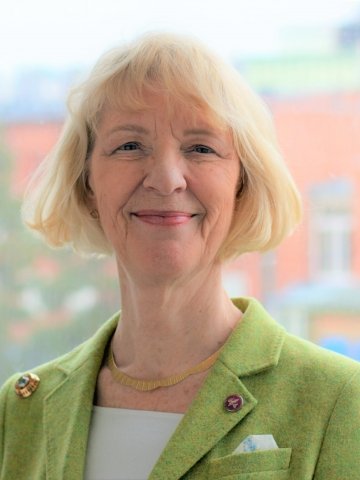 Kristina Alexanderson合作论文数Karolinska Institutet6
 Birgitta Floderus合作论文数Institute of Environmental Medicine;Karolinska Institutet;Institute of Environmental Medicine, Karolinska Institutet6Brattberg G合作论文数4Mats Thorslund合作论文数4Lena Gonas合作论文数4Maud Hagman合作论文数3
 Marjan Vaez合作论文数3
 Michael Wiberg合作论文数2roger bernow合作论文数1
 Ola Leijon合作论文数1Pernilla Videhult Pierre合作论文数1
 Anders Fridberger合作论文数1
 Ulrik Lidwall合作论文数Department of Clinical Neuroscience;Division of Insurance Medicine;Karolinska Institutet;Department of Clinical Neuroscience, Karolinska Institutet1Bo Wärneryd合作论文数1




