Summary Dendrobium chryseum is a widespread orchid from continental tropical Asia and Taiwan with a confused taxonomical history. In addition to its horticultural merits and its use in Traditional Chinese Medicine, this species has significant cultural importance among the Tsou people of Taiwan. Notes on pollination, cultivation, taxonomy, distribution, as well as a detailed description and illustrations are provided.
Two species of Stigmatodactylus have recently been observed in the Arfak Mountains of West Papua Province, Indonesian New Guinea. One of these is clearly undescribed and is here described as Stigmatodactylus antennatus Schuit., Saputra & Wanma, a species uniquely characterised by the presence of a pair of antennae on the lip. The other is believed to be S. gibbsiae (Kores) Kores. This species was only known from the type material collected in the Arfak Mountains more than a century ago, in 1913. There are, however, significant discrepancies between the protologue and the material recently found. We interpret these discrepancies as misinterpretations of the poor type material of S. gibbsiae, and provide images based on fresh material. An identification key to the four species of Stigmatodactylus in New Guinea is included.
A checklist of the 319 endemic vascular plants of the Lesser Sunda Islands is presented, derived from specimen data and expert-verified georeferences. The majority of these endemic plant species are single-island endemics (251 species). Timor is the richest in endemic plant species, with 82 single-island endemics, despite Flores (46 endemics) and Sumbawa (38 endemics) being islands of similar size. Of the 121 species that have been Red Listed, 45 are Data Deficient and 56 are in threatened categories. The persistence of many of these species is uncertain, with 51 not collected since the 19th century. We hope that this baseline data will spur targeted searches for these species, highlight taxonomic gaps, and aid conservation planning decisions.
Dendrobium Sw. is one of the largest genera in the Orchidaceae. Most species belong to one of two major clades (the Asian and the Australasian clades) based on morphology and phylogenetic analyses using DNA sequences. Several Dendrobium species in the Asian clade are used in traditional herbal medicine, and many compounds have been isolated from them (e.g., phenanthrene derivatives, bibenzyl derivatives, and polysaccharides). Conversely, there are only a few reports on the compounds contained in the Australasian clade species. Due to its size and diversity, the Australasian clade could be expected to contain compounds of potential medicinal value as well. Previously, we constructed the HPLC profile of 18 Dendrobium species and identified the phenanthrene derivative 1,5-dimethoxyphenanthrene-2,7-diol (1) as a characteristic compound in certain species of the Australasian clade. In this study, we performed metabolic analyses based on 1H-NMR to identify lineage-correlated metabolites for the Australasian clade. NMR profiling analysis also showed that 1 is a characteristic compound of the Australasian clade species. Additionally, pinoresinol (2) was predominantly detected in the Australasian clade. While syringaresinol (3) was widely detected in species from both clades, specimens from the Australasian clade tended to have higher concentrations. The simple 1H-NMR profiling method enables rapid comparison of metabolites across multiple species, providing new insights into metabolic differences associated with evolutionary lineages that were not detectable by the previous HPLC profiling.
Abstract Understanding evolutionary relationships in hyperdiverse plant groups remains a major challenge in systematics. The orchid genus Bulbophyllum , the second largest genus of flowering plants, represents an exceptional example of phylogenetic and morphological complexity. Relationships, particularly within the species-rich Asian clade, have remained poorly resolved due to extensive morphological variation and limited resolution in previous phylogenetic studies. Here, we reconstructed phylogenetic relationships using 63 plastid genes from 355 specimens representing 322 species and 65 of the 97 recognised sections of Bulbophyllum . Our analyses confirmed that the genus comprises five major evolutionary lineages comprised of species predominantly from Australasia, Madagascar, Continental Africa, Neotropics, and Asia. We provide the first robust phylogenetic evidence for a dichotomous split within the Asian clade into two well-supported lineages: the Asian-Malesian clade and the Malesian-Papuasian clade, with the latter containing a strongly supported Papuasian subclade. Additionally, this study supports the monophyly of several currently recognised sections while clarifying relationships in previously problematic groups. This study provides the most comprehensive plastid-based phylogenomic framework for Bulbophyllum to date and establishes a foundation for future taxonomic revision and integrative analyses of diversification and trait evolution within this hyperdiverse genus.
To remedy the non-monophyly of Habenaria as demonstrated in several phylogenetic analyses, we propose here to expand the limits of the genus to include the species of Cooktownia, Diplomeris, Herminium, Pecteilis and Peristylus. Previously, Androcorys, Bhutanthera, Frigidorchis and Porolabium were synonymised with Herminium, and Bonatea, Centrostigma, Platycoryne and Roeperocharis with Habenaria. The proposed 16 new names and 69 combinations make Habenaria among the largest genera of Orchidaceae with roughly 1160 species.
Orchids are one of the most diverse plant families and are renowned for their highly specialised interactions with pollinators. Despite growing evidence of orchid population decline, pollinator decline and rising concerns for orchid reproductive success, long-term changes remain poorly understood. To address this gap, we analysed changes in pollinarium removal, as a proxy for pollination success, in herbarium specimens of three species-rich orchid genera (Disa, Oncidium and Ophrys) hosted at the Royal Botanic Gardens, Kew, which has a rich and diverse orchid collection spanning the past two centuries. The selected genera occur in different major regions (subtropical and tropical Africa, predominantly temperate Europe, and tropical America, respectively). Our analysis reveals that pollinarium removal declined significantly in Disa and Oncidium, particularly among species with deceptive strategies or specialised pollination mechanisms. In contrast, Ophrys showed a significant increase, driven by Apidae-pollinated species, whereas pollinarium removal for Andrenidae-pollinated species declined over time. These contrasting findings reflect the role of orchid identity, pollinator availability and pollination strategy in shaping reproductive success under anthropogenic change. Overall, this study demonstrates the power of herbarium specimens to reveal long-term ecological changes, providing unique insights into the response of specific plant-pollinator interactions to increasing anthropogenic pressure. ### Competing Interest Statement The authors have declared no competing interest.
The subtribe Polystachyinae Schltr. (Orchidaceae, subfamily Epidendroideae) in Madagascar and adjacent archipelagos is revised. It comprises the two genera: Hederorkis Thouars, and Polystachya Hook., the latter with four sections. All of the species are described and their typification, history, identification, pollination, distribution and habitat are discussed. The circumscription and distribution of Polystachya bicolor Rolfe, P. mauritiana Spreng., P. rosellata Ridl., P. virescens Ridl. and P. waterlotii Guillaumin are re-defined. Conservation assessments and distribution maps are included for all the species. A checklist of the genera, sections and species and a key to their identification are provided. Four new species: Polystachya anjahankeliensis Hermans, Nusb. Burivalova, P. ericoides Hermans Callm., P. flammulifera Hermans and P. pertliae Hermans, Sieder Andriantiana are described for the first time.
A new species of Bulbophyllum from section Papulipetalum, B. sandfordiorum Saputra Schuit., is described based on a specimen from West Papua, Indonesia, and its sectional placement is discussed. A detailed morphological description and diagnosis, information on distribution and ecology and a preliminary conservation assessment are provided.
Dendrobium eruciforme Schuit., Saputra Wanma (Orchidaceae), the fourth known species of sect. Microphytanthe Schltr., is described and illustrated. A detailed description, morphological comparisons, habitat information, a preliminary conservation assessment and some notes are provided. A key to the four species of sect. Microphytanthe is presented. Vegetatively, D. eruciforme is one of the smallest Dendrobium species, in this respect only equalled or even surpassed by the Australian D. toressae (F.M.Bailey) Dockrill.
A new species of Bulbophyllum from section Lepidorhiza, B. abuniorum Saputra & Schuit., is described based on specimens from the Bird's Head Peninsula, New Guinea. A detailed morphological description and diagnosis, information on distribution and ecology, and a preliminary conservation assessment are provided. A key to the species of Bulbophyllum section Lepidorhiza in New Guinea is also presented.
Anoectochilus brevilabris and similar species have been much confused. Three former synonyms, A. griffithii, A. tridentatus and A. chapaensis, are here reinstated. Anoectochilus dulongensis and A. annamensis are treated as new synonyms of A. brevilabris and A. baotingensis respectively. The duplicate of the lectotypes of A. chapaensis belongs to A. longilobus. In addition, A. griffithii is recorded from China for the first time. A key to eight similar Anoectochilus species is provided.
New Guinea, the most botanically diverse island on the planet, is the location for one of the boldest conservation initiatives. The Manokwari Declaration aims to achieve 70% conservation designation for the Bird's Head Peninsula. This is 40% higher than the 2022 Global Biodiversity Framework target. However, there is a lack of species occurrence data to support evidence of where biodiversity can be best protected. To address this, we integrated plant trait data from taxonomic descriptions in species occurrence models that can inform conservation planning. Inclusion of traits improved the performance of co‐occurrence models of ∼800 plant species across the 100,000‐km 2 landscape. Traits generally improved model performance, but not all traits contributed equally (e.g., leaf size and red flower color most improved accuracy of occurrence prediction). Likewise, trait‐parameterized models tended to be most useful with rare species occurrence prediction, but this was inconsistent among traits. Under 70% protection, three‐quarters of the areas selected conserved trait diversity. Critically, trait diversity also increased the chances that areas at high risk of deforestation were selected as conservation priorities. Overall, we found that plant species’ traits, often key parameters of ecosystem function and resilience, improved spatial conservation planning.
Bulbophyllum halmaherae Mustaqim, Yudistira, Jacop Schuit. (Orchidaceae), a distinctive new species of sect. Polymeres, is described and illustrated. A detailed description, morphological comparisons, habitat information, a preliminary conservation assessment and a brief discussion are provided.
Bulbophyllum lampadion from New Guinea is herein described and illustrated based on herbarium specimens and cultivated material. This high-elevation species belongs to section Monanthes, of which sect. Oxysepala is here considered to be a synonym.
Bulbophyllum crabro (E.C.Parish & Rchb.f.) J.J.Verm., Schuit. & de Vogel is recorded from Sumatra, which is the first record of this species from Indonesia. This is also the first record of Bulbophyllum section Monomeria (Lindl.) J.J.Verm., Schuit. & de Vogel outside continental Asia. A detailed description, a map, discussion, and colour photographs are provided.
An updated and annotated checklist of the Euphorbiaceae s.l. of Timor is provided, based on the analysis of the available literature and herbarium specimens. Information about geographical distribution, ecology, conservation status (when available), and taxon richness is also presented. The list includes 79 taxa, 42 of which are new records for Timor. For each currently accepted name, synonyms relevant for Timor are also listed. The adoption of recent taxonomic changes within the Euphorbiaceae family adds to the value of this checklist, which should provide a useful resource for future biodiversity assessments, conservation efforts, and botanical research in the region.
A new species, Chiloschista breviseta (Orchidaceae: Epidendroideae: Aeridinae) from Northern Thailand is described and illustrated, and notes on ecology and conservation status are provided. Chiloschista breviseta is morphologically similar to C. usneoides but differs in having much shorter seta on each side of the anther cap. Previous records of C. usneoides from Thailand refer to C. breviseta.
SummaryAn orchid from New Guinea and the Moluccas, Bulbophyllum infundibuliforme J.J. Sm. subsp. infundibuliforme is illustrated. Its taxonomy and ecology are discussed; B. infundibuliforme subsp. hymenobracteum (Schltr.) De Witte & J.J.Verm. is included for comparison.
 Phillip Cribb合作论文数23Terry Want合作论文数14
 Xiaohua Jin (金效华)合作论文数State Key Laboratory of Systematic and Evolutionary Botany, Institute of Botany, The Chinese Academy of Sciences14
 Mark W Chase合作论文数Department of Science, Royal Botanic Gardens, Kew14Pankaj Kumar合作论文数10
 Li Jianwu合作论文数7
 Charlie D. Heatubun合作论文数Departemen Biologi Darmaga, Sekolah Pascasarjana Institut Pertanian Bogor7Pierre Bonnet合作论文数6Jin Weitao合作论文数6
 Timothy M. A. Utteridge合作论文数Herbarium, Library, Art and Archives, Royal Botanic Gardens6
 Jimmy F. Wanma合作论文数Univ Papua5Weichang Huang合作论文数5
 Maarten Christenhusz合作论文数Department of Biology;University of Turku;Department of Biology, University of Turku5
 Daniel Barthelemy合作论文数UniteMixte de Recherche ( UMR ), Cirad-Cnrs-Inra-Ird-Universite5ed de vogel合作论文数4e f de vogel合作论文数4
 Wendy A. Mustaqim合作论文数Fak Tekn, Univ Samudra4
 De-Zhu Li (李德铢)合作论文数College of Forestry, Shandong Agricultural University4
 Gale Stephan W合作论文数Kochi Prefectural Makino Botanical Garden4
 Xiaoguo Xiang (向小果)合作论文数School of Life Sciences, Nanchang University4
 Huaizhen Tian (田怀珍)合作论文数School of Life Sciences, East China Normal University4
 Leonid V. Averyanov合作论文数Russian Academy of Sciences, Russian Academy of Sciences4
 Eimear M Nic Lughadha合作论文数Royal Botanic Gardens4Santi Watthana合作论文数4
 Barbara Gravendeel合作论文数branch, Universiteit Leiden4
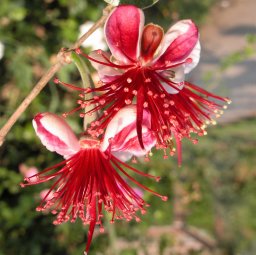 Eve J. Lucas合作论文数Herbarium, Royal Botanic Gardens4
 Niels Raes合作论文数National Herbarium of the Netherlands, Leiden University4Jaap Jan Vermeulen合作论文数4Deborah Lambkin合作论文数3Xiao-Xu Zhou合作论文数3Nopparut Toolmal合作论文数3
 Reza Saputra合作论文数Minist Environm & Forestry, West Papua Nat Resources Conservat Agcy Balai Besa3Lina Susanti Juswara合作论文数Rumahku Awan3sally e dawson合作论文数3
 Rodrigo Camara-Leret合作论文数Área de Botánica, Universidad Autónoma de Madrid3
 Gunter A. Fischer合作论文数Kadoorie Farm and Botanic Garden, Kadoorie Farm and Botanic Garden3Shihwen Chung合作论文数3Adams Peter合作论文数3Bouakhaykhone Svengsuksa合作论文数3
 Peter van Welzen合作论文数Naturalis Biodiversity Center3
 Anna Trias Blasi合作论文数Trinity College Dublin, University of Dublin3Johan Hermans合作论文数3
 Somran Suddee合作论文数3Tomohisa Yukawa合作论文数3P. Ormerod合作论文数2Renata Borosova合作论文数2
 Daniel Cahen合作论文数2
 Jaap J. Vermeulen合作论文数2
 Landy Rita Rajaovelona合作论文数2




