Presents a listing of the papers' reviewers from the 2017 IEEE Virtual Reality Conference (IEEE VR 2017).
Archaeological data are heterogeneous, making it difficult to correlate and combine different types. Datasheets and pictures, stratigraphic data and 3D models, time and space mixed together: these are only a few of the categories a researcher has to deal with. New technologies may be able to help in this process and trying to solve research related problems needs innovative solutions. In this paper, we describe the whole process for the design and development of a prototype application that uses an Immersive Virtual Reality system to acces archaeological excavation3Ddata through the Gesture Variation Follower (GVF) algorithm. This makes it possible to recognise which gesture is being performed and how it is performed. Archaeologist shave participated actively in the design of the interface and the set of gestures used for triggering the different tasks. Interactive machine learning techniques have been used for the real time detection of the gestures. As a case study the agora of Segesta (Sicily, Italy) has been selected. Indeed, due to the complex architectural features and the still ongoing fieldwork activities, Segesta represents an ideal context where to test and develop a research approach integrating both traditional and more innovative tools and methods.
Archaeological data are heterogeneous (i.e., data-sheets and pictures, stratigraphic data, 3D models), and innovative virtual reconstractuions helps to visualize and study those data. In this short paper, we describe our work in progress in the design of an innovative way to interact with the complexity of a virtual reconstruction, using natural gestures and advanced machine learning, in close collaboration with archeaeologists.
The graphical description of molecular systems has always been a fundamental topic of chemistry. The introduction of interactive computer graphics led to the development of a new research field known as computer molecular graphics. The aim of this article is to provide a survey on the vast field of molecular graphics, describing the techniques and the algorithms used to create computer-generated representations of molecular systems. The emerging role of immersive virtual reality and natural user interfaces is also examined. Finally, some applications are presented as examples about the role of graphical user interfaces in modern chemical research.
Designing a collaborative performance requires the use of paradigms and technologies which can deeply influence the whole piece experience. In this paper we define a set of six metrics, and use them to describe and evaluate a number of platforms for participatory performances. Based on this evaluation, the Augmented Stage is introduced. Such concept describes how Augmented Reality techniques can be used to superimpose a performance stage with a virtual environment, populated with interactive elements. The manipulation of these objects allows spectators to contribute to the visual and sonic outcome of the performance through their mobile devices, while keeping their freedom to focus on the stage. An interactive acoustic rock performance based on this concept was staged. Questionnaires distributed to the audience and performers’ comments have been analyzed, contributing to an evaluation of the presented concept and platform done through the defined metrics.
Several studies showed the potential of interaction technologies for assisting the performance of users during motor tasks. In particular, repetitive exercises can take advantage of novel interaction strategies in order to sustain the users efforts to maintain the target level of performance. This paper introduces a paradigm for performing a drag and drop movement of Augmented Reality 3D objects from marker to marker, using a smartphone. This interaction paradigm permits to perform repetitive exercises which can be implemented in upper limb motor training and rehabilitation tasks. After introducing the interaction paradigm, the paper describes the methodology and the results of a pilot study about the effects of AR dynamic features on the users movements and experience during repetitive motor tasks.
Clusters of PCs are widely employed in multi-screen immersive virtual reality systems. While this allows reducing the realization costs, it leds to an increase of complexity on the software side, since they require the development of distributed applications. Over the years, many frameworks supporting cluster rendering have been proposed, but none has established itself as the de-facto standard for immersive virtual reality application development. A new trend that is taking place consists in adding cluster-rendering support to one of the many freely available 3D engines. In this paper, we propose a convenient method to develop a lightweight distributed scene graph on top of a generic graphics engine. In particular, we describe the main mechanisms and design choices behind "Moka", a library for the development for cluster-based virtual reality applications. We also present "Caffeine", a virtual reality molecular visualizer based on the Moka library.
Robot-assisted surgical procedures, such as Laser Phonomicrosurgery (LP), suffer from susceptibility to variation in surgeon skill and equipment characteristics. Ergonomic and human-centered approaches acquire increased importance in the design of surgeon-machine interfaces. This paper proposes a protocol for comparative evaluation of surgeon-machine interfaces based on two criteria: (i) the subjective evaluation of their usability using questionnaires, and (ii) the objective evaluation of their performance using an imaging-based feature extraction method. Two interfaces in LP, the traditional (“AcuBlade”) interface and the novel (“Virtual Scalpel”) interface, were evaluated to demonstrate the effectiveness of the proposed scheme. A series of experimental trials were conducted using the interfaces in surgery-like tasks in a controlled environment. The subjective evaluation pointed to the superiority of the Virtual Scalpel interface (score: 83.06) in terms of confidence and ease of use, and learnability, over the AcuBlade interface (score: 65.56). The objective evaluation showed the Virtual Scalpel interface having an overall score (55.96) significantly superior to the AcuBlade (51.37). It is thus shown that the multidimensional evaluation approach allowed to clearly distinguish between levels of perceived usability and effective performance of surgeon-machine interfaces from a user-centered perspective.
Innovative design features of user interfaces could assist a patient during the accomplishment of repetitive physical exercises in training and rehabilitation. Dual task paradigms can induce a change in attentional focus allocation, moving focus away from a body part which is affected by fatigue. This study proposes an interface which integrates the motion tracking capabilities of a Kinect with the touch screen input data and vibration feedback of a smart phone. This interface is exploited to design and evaluate a dual task paradigm tested through an experimental study. Purpose of such paradigm is to support upper arm rehabilitation, by generating a distraction from the target area of the limb during repetitive tasks. The data collected during the experiments and the interface itself will be analyzed and discussed.
State-of-the-art laser phonomicrosurgery (LP) used for the treatment of laryngeal abnormalities involves complex otolaryngological surgical techniques. It relies heavily on surgeon dexterity, requiring significant psychomotor skills. Equipment scale and size, laser operative distance, and the anatomically small nature of the vocal folds all combine to compound the surgical challenges. An objective measurement is therefore necessary to understand the impact of equipment design, its usability, surgeon skill, and learning, on performing LP effectively. This paper introduces imaging based feature extraction as a method to establish metrics to assess surgical performance in LP. Experimental analysis demonstrates the utility of these metrics in measuring surgical task execution vis-à-vis the task objectives. The metrics also provide for a combined rating scale giving a robust quantitative classification of the levels of surgical performance.
Today's human-computer interaction techniques are often gesture-inspired and thus pushed towards naturalness and immediateness. Their implementation requires non-invasive tracking systems which can work with little or no body attached devices, like wireless optical motion capture. These technologies present a recurrent problem, which is to keep a coherent indexing for the different captured points during real time tracking. The inability to constantly distinguish tracked points limits interaction naturalness and design possibilities. In this paper we present a real time algorithm capable of dealing with points indexing matter. Compared to other solutions, the presented research adds a computed indexing correction to keep coherent indexing throughout the tracking session. The correction is applied automatically by the system, whenever a specific configuration is detected. Our solution works with an arbitrary number of points and it was primarily designed for fingertips tracking. A Virtual Reality application was developed in order to exploit the algorithm functionalities while testing its behavior and effectiveness. The application provides a virtual stereoscopic, user-centric environment in which the user can trigger simple interactions by reaching virtual objects with his/her fingertips.
Corpus based concatenative synthesis has been approached from different perspectives by many researchers. This generated a number of diverse solutions addressing the mat-ter of target selection, corpus visualization and navigation. With this paper we introduce the concept of extended descriptor space, which permits arbitrary redistributions of audio units in space, without affecting each unit’s sonic content. This feature can be exploited in novel instru-ments and music applications to achieve spatial dispositions which could enhance control and expression. Making use of Virtual Reality technology, we developed vrGrains , an immersive installation in which real-time corpus navigation is based on the concept of extended descriptor space and on the related audio unit rearrangement capabilities. The user is free to explore a corpus represented by 3D units which physically surrounds her/him. Through natural interaction, the interface provides different interaction modalities which allow controllable and chaotic audio unit triggering and motion.
Since technology started to be distributed on a large scale, gaming experience has radically changed. After years of graphical-detail challenges, the attention has been shifted on how users can interact with games. Our paper follows this direction, aiming to develop a unifying framework to distribute user interactions over different platforms. The main idea is to make the hardware a user is playing with transparent to other players. Different platforms could run the same game, while the inputs from one are translated to output for another according to its own hardware capabilities. In addition, we present a conceptual model where the types of interaction between users are subordinated not only to the available devices but primarily to their main purpose for the different actions during the game. The architecture was initially applied to a basic cross-platform multiplayer musical game. We then implemented the conceptual model to a more complex multiplayer application to evaluate with experimental data the interaction distribution concept. The result was a shared game experience, where players perceived the competitors' presence but not the strong differences in the hardware equipment.
The availability of haptic interfaces in music content processing offers interesting possibilities of performer-instrument interaction for musical expression. These new musical instruments can precisely modulate the haptic feedback, and map it to a sonic output, thus offering new artistic content creation possibilities. With this article, we investigate the use of a robotic arm as a bidirectional tangible interface for musical expression, actively modifying the compliant control strategy to create a bind between gestural input and music output. The user can define recursive modulations of music parameters by grasping and gradually refining periodic movements on a gravity-compensated robot manipulator. The robot learns on-line the new desired trajectory, increasing its stiffness as the modulation refinement proceeds. This article reports early results of an artistic performance that has been carried out with the collaboration of a musician, who played with the robot as part of his live stage setup.
In the last decade, the technology of multitouch displays has reached a level of maturity that has given new life to virtual reality environments and has introduced in the mass market Graphical User Interfaces previously depicted in SCIFI literature. Three dimensional and stereoscopic displays are moving into mass market and users are getting accustomed to such concepts. This has sparked a new wave of interest in the public and we are now surrounded by several devices that allow the user to experience visuals that were not even thinkable a few years ago. On the other side, devices that allow users to actively interact with the environment are still cumbersome and expensive and not on a par with the evolution of display technologies. In this paper, we introduce a virtual reality application allowing users to stream and share multimedia contents like TV channels, web radio an others. Furthermore we introduce a wireless, light and small vibrotactile haptic device that allows users to interact with the various objects in the virtual scene, increasing the interaction feeling resulting in a more involving experience.
 Mel Slater合作论文数Department of Clinical Psychology, Universitat de Barcelona;Experimental Virtual Environments for Neuroscience and Technology Lab21
 Darwin Caldwell合作论文数Department of Advanced Robotics, Italian Institute of Technology19
 Victor Zappi合作论文数Adv. Robot. Lab., Ist. Italiano di Tecnol.12
 Marco Gaudina合作论文数Advanced Robotics Department, Istituto Italiano di Tecnologia10
 Anthony Steed合作论文数Department of Computer Science, University College London9
 Vinoba Vinayagamoorthy合作论文数Department of Computer Science;University College London;Department of Computer Science, University College London8
 Angus Antley合作论文数8
 Doron Friedman合作论文数Department of Computer Science, University College London8Maia Garau合作论文数7
 Carlo Alberto Avizzano合作论文数Scuola Superiore Sant ' Anna6
 Massimo Bergamasco合作论文数Research Center G. Stefanini on Advanced Robotics;TeCIP Istitute of Communication, Information and Perception Technologies, School of Advanced Studies-Pisa, Scuola Superiore Sant’Anna6Dario Mazzanti合作论文数6
 Christoph Guger合作论文数Guger Technologies OEG4
 Robert Leeb合作论文数Center for Neuroprosthetics at Ecole Polytechnique Federale de Lausanne4G. Di Pietro合作论文数4
 Chiara Evangelista合作论文数PERCRO Viale Rinaldo Piaggio4
 Marco Gillies合作论文数Department of Computing, Goldsmiths, University of London;Teaching and Learning Innovation Centre, Goldsmiths, University of London4
 Giacinto Barresi合作论文数Dept. of Advanced Robotics
Istituto Italiano di Technologia 4A Steed合作论文数3Hila Ritter Widenfeld合作论文数3
Giacinto Barresi合作论文数Dept. of Advanced Robotics
Istituto Italiano di Technologia 4A Steed合作论文数3Hila Ritter Widenfeld合作论文数3 Alessio Margan合作论文数Humanoids & Human Ctr Mechatron, Ist Italiano Tecnol3
 Niccolo Albertini合作论文数SMART Laboratory, Scuola Normale Superiore3
 Emanuele Taccola合作论文数Univ Pisa3
 Gert Pfurtscheller合作论文数Laboratory of Brain-Computer Interfaces, Institute for Knowledge Discovery, Graz University of Technology3
 Vincenzo Barone合作论文数DREAMSLab, Scuola Normale Superiore di Pisa;DREAMS Center, Scuola Normale Superiore di Pisa;Faculty of Sciences, Scuola Normale Superiore di Pisa3Franco Tecchia合作论文数Department of Computer Science
University College London3
Vincenzo Barone合作论文数DREAMSLab, Scuola Normale Superiore di Pisa;DREAMS Center, Scuola Normale Superiore di Pisa;Faculty of Sciences, Scuola Normale Superiore di Pisa3Franco Tecchia合作论文数Department of Computer Science
University College London3 Mauro Migliardi合作论文数Dipartimento di Ingegneria Dell'Informazione, Universita' Degli Studi di Padova3
 Giordano Mancini合作论文数Dipartimento di Chimica;Inter-UniVersity;Dipartimento di Chimica, Inter-UniVersity3
 Gunter Edlinger合作论文数Guger Technologies OEG3S. Catte合作论文数2gianluca pane合作论文数2
 Daniele Licari合作论文数2Andrea Salvadori合作论文数2
 Riccardo Olivito合作论文数2
 Stefano Cordasco合作论文数2
 Sylvain Calinon合作论文数Ecole Polytechnique Fédérale de Lausanne;Idiap Research Institute2Leonardo S. Mattos合作论文数Dept. of Advanced Robotics
Istituto Italiano di Tecnologia
(Italian Institute of Technology)2
Sylvain Calinon合作论文数Ecole Polytechnique Fédérale de Lausanne;Idiap Research Institute2Leonardo S. Mattos合作论文数Dept. of Advanced Robotics
Istituto Italiano di Tecnologia
(Italian Institute of Technology)2 Nikhil Deshpande合作论文数Dept. of Advanced Robotics
Istituto Italiano di Technologia
(Italian Institute of Technology)2Vignoni M.合作论文数2
Nikhil Deshpande合作论文数Dept. of Advanced Robotics
Istituto Italiano di Technologia
(Italian Institute of Technology)2Vignoni M.合作论文数2 Giorgio Peretti合作论文数2
 Daniela M. Romano合作论文数University of Sheffield2
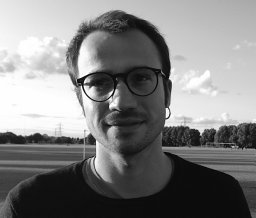 Baptiste Caramiaux合作论文数Goldsmiths University of London2
 Luca Guastini合作论文数2Martina Angela Sasse合作论文数1Penelope A. Lewis合作论文数1d ferrazzin合作论文数1l arnone合作论文数1
 Antonio Pistillo合作论文数1
 Joan Llobera合作论文数1




