Arterial blood gas (ABG) analysis is a generally reliable and frequently employed test for evaluating blood oxygen content. False readings of low oxygen content are rare but can be expected in specific clinical scenarios such as leukemia patients with marked leukocytosis who can develop "leukocyte larceny," a phenomenon of excess oxygen consumption by leukocytes. Awareness of this phenomenon may lead to early recognition and avoidance of unnecessary diagnostic and therapeutic interventions. This case report presents a patient with marked leukocytosis from chronic myelogenous leukemia whose extubation was briefly delayed due to pseudohypoxemia on ABG measurements.
Background Many institutions are training clinicians in point-of-care ultrasound (POCUS), but few POCUS skills checklists have been developed and validated. We developed a consensus-based multispecialty POCUS skills checklist with anchoring references for basic cardiac, lung, abdominal, and vascular ultrasound, and peripheral intravenous line (PIV) insertion. Methods A POCUS expert panel of 14 physicians specializing in emergency, critical care, and internal/hospital medicine participated in a modified-Delphi approach to develop a basic POCUS skills checklist by group consensus. Three rounds of voting were conducted, and consensus was defined by ≥ 80% agreement. Items achieving < 80% consensus were discussed and considered for up to two additional rounds of voting. Results Thirteen POCUS experts (93%) completed all three rounds of voting. Cardiac, lung, abdominal, and vascular ultrasound checklists included probe location and control, basic machine setup, image quality and optimization, and identification of anatomical structures. PIV insertion included additional items for needle tip tracking. During the first round of voting, 136 (82%) items achieved consensus, and after revision and revoting, an additional 21 items achieved consensus. A total of 153 (92%) items were included in the final checklist. Conclusions We have developed a consensus-based, multispecialty POCUS checklist to evaluate skills in image acquisition and anatomy identification for basic cardiac, lung, abdominal, and vascular ultrasound, and PIV insertion.
BACKGROUND:Electroencephalography (EEG) is commonly used after cardiac arrest. Burst suppression with identical bursts (BSIB) has been reported as a perfectly specific predictor of poor outcome but published case series are small. We describe two patients with BSIB who awakened from coma after cardiac arrest. METHODS:We identified two out-of-hospital cardiac arrest (OHCA) patients with coma and BSIB. We determined the etiology of arrest, presenting neurological examination, potential confounders to neurological assessment, neurodiagnostics and time to awakening. We reviewed and interpreted EEGs using 2021 American Clinical Neurophysiology Society guidelines. We quantified identicality of bursts by calculating pairwise correlation coefficients between the first 500 ms of each aligned burst. RESULTS:In case one we present a 62-year-old man with OHCA secondary to septic shock. EEG showed burst suppression pattern, with bursts consisted of high amplitude generalized spike waves in lock-step with myoclonus (inter-burst correlation = 0.86). He followed commands 3 days after arrest, when repeat EEG showed a continuous, variable and reactive background without epileptiform activity. Case two was a 49-year-old woman with OHCA secondary to polysubstance overdose. Initial EEG revealed burst suppression with high amplitude generalized polyspike-wave bursts with associated myoclonus. She followed commands on post-arrest day 4, when repeat EEG showed a continuous, variable and reactive background with frequent runs of bifrontal predominant sharply contoured rhythmic delta activity. CONCLUSION:These cases highlight the perils of prognosticating with a single modality in comatose cardiac arrest patients.
The United States Navy originally utilized the concept of damage control to describe the process of prioritizing the critical repairs needed to return a ship safely to shore during a maritime emergency. To pursue a completed repair would detract from the goal of saving the ship. This concept of damage control management in crisis is well suited to the care of the critically ill trauma patient, and has evolved into the standard of care. Damage control resuscitation is not one technique, but, rather, a group of strategies which address the lethal triad of coagulopathy, acidosis, and hypothermia. In this article, we describe this approach to trauma resuscitation and the supporting evidence base.
Andreae, Mark1; Mathews, Kusum2; Howell, Daniel2; Zhang, Qiaohua2; Richardson, Lynne2 Author Information
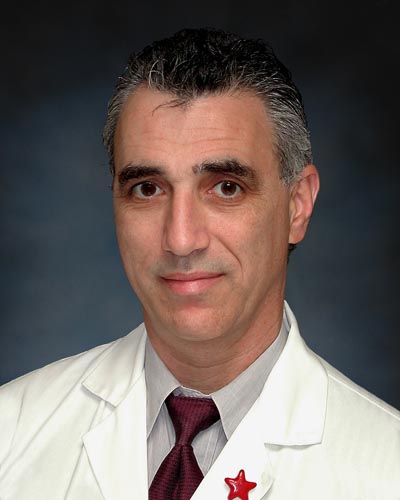 Thomas Scalea合作论文数Department of Surgery,University of Maryland School of Medicine2
 Evan Leibner合作论文数Department of Chemistry, The Pennsylvania State University2
 Brian Bales合作论文数1Daniel Howell合作论文数1Zahir Basrai合作论文数1
 Niravkumar Barot合作论文数1
 Jeremy Boyd合作论文数1Elizabeth K Haro合作论文数1Brad Butcher合作论文数1Robert Nathanson合作论文数1Qiaohua Zhang合作论文数1Joanna S Fong-Isariyawongse合作论文数1Christopher K Schott合作论文数1Michael J. Mader合作论文数1
 Karthik Vadamalai合作论文数1Jason P. Williams合作论文数1Alexandra Urban合作论文数4Neurology, and.1Alexis Steinberg合作论文数Sch Med, Univ Pittsburgh1Rahul Khosla合作论文数1Amanda E Kusztos合作论文数1
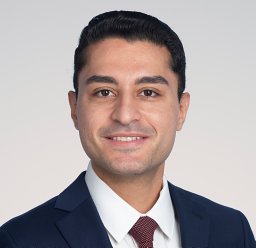 Saeid Mirzai合作论文数Department of Internal Medicine, Cleveland Clinic Foundation1
 Harald Sauthoff合作论文数Division of Pulmonary, Critical Care and Sleep Medicine, Department of Medicine, New York University1Castellano James F合作论文数1Doshi Ankur A合作论文数Department of Emergency Medicine, University of Pittsburgh1Baldwin Maria E合作论文数1
 Clifton Callaway合作论文数Department of Emergency Medicine, School of Medicine, University of Pittsburgh;UPMC Health Plan1
 Soni Nilam J合作论文数Department of Medicine, University of Texas Health Science Center1Elmer Jonathan合作论文数Department of Critical Care Medicine, University of Pittsburgh;Department of Emergency Medicine, University of Pittsburgh;Safar Center for Resuscitation Research, University of Pittsburgh;University of Pittsburgh, University of Pittsburgh1
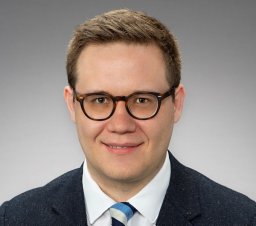 Coppler Patrick J合作论文数Safar Center for Resuscitation Research, University of Pittsburgh;Department of Critical Care Medicine, University of Pittsburgh;University of Pittsburgh, University of Pittsburgh1Kusum Mathews合作论文数1LoPresti Charles M合作论文数1
 Wetherbee Erin E合作论文数1D. Resop合作论文数1Chethan Puttarajappa合作论文数Department of Internal Medicine, Michigan State University1
 Lynne D Richardson合作论文数Institute for Health Equity Research, Icahn School of Medicine at Mount Sinai1
 Erin Finley合作论文数Veterans Evidence-based Research, Dissemination, & Implementation Center (VERDICT),, South Texas Veterans Health Care System1
 Jacqueline Pugh合作论文数Division of General Internal Medicine, South Texas Veterans Health Care System1




