INTRODUCTION:Various couplers exist for the Vibrant Soundbridge implant to connect the actuator to a middle ear structure. While the surgical indication mainly distinguishes between purely sensorineural hearing loss and mixed hearing loss, and audiological indication ranges are designed accordingly, we believe that the biomechanical distinction between forward and reverse cochlear stimulation is more meaningful. To evaluate this, we apply all common couplers in temporal bone experiments and correct the measurements for adequate comparability. MATERIAL AND METHODS:The study was conducted at two research labs, each with n = 10 cadaveric temporal bones. Laser Doppler velocity measurements on the stapes were used for direct comparison between the coupling methods. Therefore, reverse cochlear stimulation requires a correction factor due to pressure loss through a third window. This was calculated by measuring intracochlear pressure differences in the same specimens. RESULTS:Compared to the stapes LDV measurement, reverse stimulations require a correction factor that continuously decreases in the high frequency range: approximately +22.4 dB between 125-250 Hz, +7.9 dB between 300-800 Hz, and +4.8 dB above 1000 Hz. Taking this into account, there is still a considerable difference between the forward and reverse stimulation methods of 15-22 dB in the frequency range <2000 Hz and approximately 7 dB >2000 Hz to the favor of forward stimulation. CONCLUSIONS:Forward couplings, including direct stapes coupling, are mechanically superior to reverse stimulation. The stapes head coupler performs 7-25 dB better than the round window coupler and similar or even superior to incus couplers.
BACKGROUND:The Vibrant Soundbridge Implant provides multiple options for coupling the Floating Mass Transducer (FMT) to the ossicles. A parametric evaluation in clinical trials is difficult. AIMS/OBJECTIVES:We studied the vibratory output of the FMT with three couplers-short process, former long process, and current long process-in an acoustic-mechanical middle ear model (AMEM) under simulated impaired coupling conditions. MATERIALS AND METHODS:The AMEM, with life-sized ossicles, was tested via acoustic and electrical (FMT-) stimulation. Simulated impairments included accidental bone-contact, cable tension, and insufficient connection. Stapedial footplate vibrations were measured using Laser Doppler. RESULTS:Acoustic stimulation generally fulfilled the ASTM standard. With normal coupling, SP- and LP-couplers performed comparable to temporal bone data. Impaired coupling led to various effects: bone-contact reduced the transmission up to 20 dB, cable tension minimally affected SP and current LP couplers but reduced the sound transmission for the former LP coupler. Connecting the SP-coupler with only two of four titanium legs caused a single frequency dip without affecting overall magnitude, whereas off-axis LP fixation reduced the output by 15-20 dB around 1000 Hz. CONCLUSIONS AND SIGNIFICANCE:The AMEM generated reproducible, ASTM-compliant measurements. SP and current LP couplers showed resilience to potential FMT implantation impairments in most frequencies.
BACKGROUND:The "floating mass transducer" (FMT) of the Vibrant Soundbridge was initially attached to the long process of the incus (LP). In patients missing an incus, coupling to the stapes head using the Vibroplasty CliP-coupler is used. Its main limitation is the height, leading to potential contact with the tympanic membrane. The new stapes head (SH)-coupler reduces the functional height but tilts the stimulation angle by 30°. We investigated the SH-coupler's magnitude and sound transmission quality compared to the LP-coupler. METHODS:Laser Doppler vibrometry was used on 10 cadaveric human temporal bones. Measurements of the stapes and round window motion were taken for electrical (FMT-) stimulation during application of both couplers. RESULTS:At the round window, the SH-coupler showed a significantly higher gain magnitude than the LP-coupler (+ 13.4 dB over 1023-3577Hz). At low frequencies (382-500Hz), the SH-coupler gain was significantly lower (-9.9 dB). Total harmonic distortions >10% at 100 dB HLeq were recorded in 3.4% of the SH- and 7.4% of the LP-couplers above 500 Hz. CONCLUSION:The SH-coupler's performance exceeds the LP-coupler in middle and high frequencies and is comparable to and a good alternative to the CliP-coupler, dependent on the individual anatomy.
BackgroundThe "floating mass transducer" (FMT) of the Vibrant Soundbridge was initially attached to the long process of the incus (LP). In patients missing an incus, coupling to the stapes head using the Vibroplasty CliP-coupler is used. Its main limitation is the height, leading to potential contact with the tympanic membrane. The new stapes head (SH)-coupler reduces the functional height but tilts the stimulation angle by 30 degrees. We investigated the SH-coupler's magnitude and sound transmission quality compared to the LP-coupler. MethodsLaser Doppler vibrometry was used on 10 cadaveric human temporal bones. Measurements of the stapes and round window motion were taken for electrical (FMT-) stimulation during application of both couplers. ResultsAt the round window, the SH-coupler showed a significantly higher gain magnitude than the LP-coupler (+ 13.4 dB over 1023-3577Hz). At low frequencies (382-500Hz), the SH-coupler gain was significantly lower (-9.9 dB). Total harmonic distortions >10% at 100 dB HLeq were recorded in 3.4% of the SH- and 7.4% of the LP-couplers above 500 Hz. ConclusionThe SH-coupler's performance exceeds the LP-coupler in middle and high frequencies and is comparable to and a good alternative to the CliP-coupler, dependent on the individual anatomy.
Background and aims: Conserved specimens do not decay and therefore permit long-term experiments thereby overcoming limited access to fresh (frozen) temporal bones for studies on middle ear mechanics. We used a Thiel conservation method which is mainly based on a watery solution of salts. In contrast to pure Formalin, Thiel conservation aims to preserve the mechanical proprieties of human tissue. The aim of this study is to examine the effect of Thiel conservation on bone conduction in the same specimen before and after conservation. Methods: Nine ears of five defrosted whole heads were stimulated with a direct, electrically driven, bone anchored hearing system (Baha, Baha SuperPower). The motion produced by bone conduction stimulation was measured with a single point laser Doppler vibrometer (LDV) at the promontory, the ossicular chain, and the round window through a posterior tympanotomy. After the initial experiments, the entire whole heads were placed in Thiel solution. In order to enable direct comparison between fresh frozen and Thiel specimens, our Thiel conservation did not include intravascular and intrathecal perfusion. The measurements were repeated 3 and 12 months later. To determine the effect of freezing, defrosting, and embalming on the whole heads, CT scans were performed at different stages of the experimental procedure. Additionally, three extracted temporal bones were stimulated a Baha, motion of the promontory measured by LDV and embalmed in Thiel solution to investigate the direct impact of Thiel solution on the bone. Results: The averaged magnitude of motion on the promontory increased in whole head specimens by a mean of 10.3 dB after 3 months of Thiel embalming and stayed stable after 12 months. A similar effect was observed for motion at the tympanic membrane ( + 7.2 dB), the stapes ( + 9.5 dB), and the round window ( + 4.0 dB). In contrast to the whole head specimens, the motion of the extracted temporal bones did not change after 3 months of Thiel embalming (-0.04 dB in average). CT scans of the whole heads after conservation showed a notable brain volume loss mostly > 50% as well as a remarkable change in the consistency and structure of the brain. Partial changes could already be observed before the Thiel embalming but after 1-2 days of defrosting. In an additional experiment, a substitution of brain mass and weight by Thiel fluid did not lead to new deterioration in sound transmission. In contrast, a frozen (non-defrosted) whole head showed a distinctively reduced magnitude of promontory motion before defrosting. Discussion: For our setup, the vibration of the ear due to bone conduction in the same whole head specimens significantly increased after Thiel conservation. Such an increase was not observed in extracted temporal bone specimens. Due to brain changes in the CT scans, we investigated the consequences of the brain volume changes and structure loss on the frozen brain before defrosting. The loss of brain volume alone could not explain the increase of ear vibrations, as we did not observe a difference when the volume was replaced with Thiel fluid. However, freezing and defrosting of the entire brain seems to have a major influence. Be-side the destructive effect of freezing on the brain, the modified conservation method without perfusion changed the brain structure. In conclusion, bone conduction in whole heads depends on the physical condition of the brain, rather than on the conservation.(c) 2023 The Authors. Published by Elsevier B.V. This is an open access article under the CC BY license( http://creativecommons.org/licenses/by/4.0/ )
Objective The Vibrant Soundbridge (VSB) is one of the most widely used implantable hearing devices. It consists of a vibrating floating mass transducer (FMT) that is connected to a middle ear structure. The standard coupling devices for sensorineural hearing loss are short process (SP) or long process (LP) couplers. Design and study sample This study directly compared the electro-mechanical performance of the SP- and LP-coupled FMT of the VSB in the same temporal bone specimen (n = 10). We measured velocity magnitudes and total harmonic distortions (THD) of the stapes (ST) and the round window (RW) using laser Doppler Vibrometry (LDV). Results Comparison shows a maximally 10 dB higher magnitude for the LP coupler at ST and RW for frequencies below 600 Hz, whereas the SP coupler shows a maximally 20 dB higher magnitude at the ST and RW for frequencies above 600 Hz. THD show similar behaviour with less distortion at 500 Hz for the LP coupler and less distortions for the SP coupler in higher frequencies. Conclusions Our experiments showed that the SP coupling may be mechanically favourable, in terms of magnitude and distortion, for the transmission of FMT vibrations at higher frequencies.
3H-RNA was isolated from nuclei and cytoplasm of Drosophila melanogaster larval salivary glands after labeling in organ culture in the presence or absence of ecdysone. Hybridization to the sites of the ecdysone-induced puffs 74EF and 75B could be detected only if the RNA was labeled in the presence of ecdysone, while hybridization to the ecdysone-repressed puff 68C was found primarily in the cytoplasmic RNA sample labeled in the absence of ecdysone. Hybridization at the site of an ecdysone-insensitive puff, 50CD, was readily detectable in all RNA samples. RNA hybridizing to the unpuffed region 60D seemed to be restricted to the nucleus of salivary gland cells and was present at only a low level in cytoplasmic RNA samples. The data indicate that in situ hybridization can be used to detect specific hormone-induced changes in transcription.
Background Childhood maltreatment (CM) is related to poor physical and mental health outcomes in adults. Knowledge on the impact of CM on skin diseases is limited, and no study has previously addressed the association of CM with atopic dermatitis (AD) in adult age. Objectives To analyse the prevalence of CM in individuals with physician-diagnosed AD, and to examine the relationship between different types of CM with physician-diagnosed AD in a general population sample of German adults. Methods Data from 2973 participants from the cross-sectional population-based Study of Health in Pomerania (SHIP) TREND-0 were analysed (aged 20 to 83 years; 51.4% female). We administered the Childhood Trauma Questionnaire (CTQ) assessing emotional, physical and sexual abuse, and emotional and physical neglect. AD was diagnosed by dermatologists in a standardized clinical examination. We conducted logistic regression analyses adjusted for age, sex and school education to investigate the association of CM types with AD. Results Among all individuals with AD, 20.6% reported to have experienced at least one type of moderate or severe CM. Emotional and physical neglect were the most frequently reported CM types. Overall, the prevalence of CM types among individuals with AD did not differ from those among individuals without AD. We found no association of CM type with AD. Conclusions This is the first study investigating the association of CM with AD in adults. CM was common in the present general population sample, emphasizing that CM is an important public health problem. Our findings suggest that CM is not a risk factor for AD. It might be hypothesized that AD severity is a crucial outcome, and that CM history is a factor with impact on disease severity and course rather than a risk factor for the development of AD. Longitudinal studies are required to address this question.
 Lutze Stine合作论文数52M. Juenger合作论文数40
 Georg Daeschlein合作论文数27
 Christof Stieger合作论文数Department of ENT, Head, Neck and Cranio-Maxillo-Facial Surgery, University of Berne27
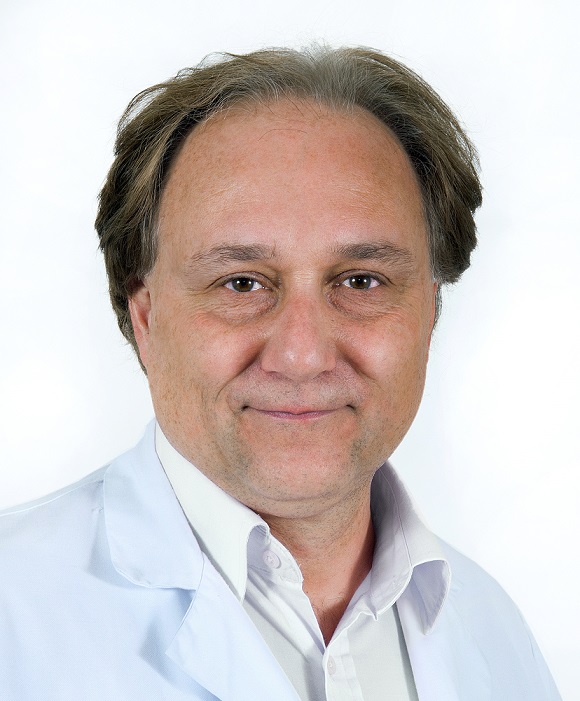 Marco Caversaccio合作论文数Department of Otolaryngology, Head and Neck Surgery, Bern University Hospital, University of Bern27
 Daniel M. Aebersold合作论文数University Cancer Center Inselspital, The Tumor Center Bern20
 Martin Kompis合作论文数14T. Westphal合作论文数10
 Pirus Ghadjar合作论文数Department of Radiation Oncology, University of Bern10
 Michael Schmuecking合作论文数10Dominik E. Uehlinger合作论文数9S. von Podewils合作论文数8
 Manfred Thumm合作论文数Institute for Microwaves and Electronics, University of Karlsruhe8Rudolf Häusler合作论文数8A. Geretschlaeger合作论文数7T. Krause合作论文数7
 Wolfgang Konschake合作论文数7Jeremie Guignard合作论文数7M Jünger合作论文数7Kaisermayer Ellen合作论文数7Riebe Helene合作论文数7
 Ferdinand Evers合作论文数Computational Condensed Matter Theory Group, Institute of Theoretical Physics, University of Regensburg7R. Vogiatzis合作论文数6Claudia Candreia合作论文数6R. Giger合作论文数6Lukas Graf合作论文数6
 Flurin Pfiffner合作论文数Department of ENT, Head and Neck Surgery, University of Bern6Wolfgang Arnold合作论文数6Roland Giger合作论文数6
 Matthias K Widmer合作论文数6J. Broemme合作论文数5H. Voelzke合作论文数5Hamidreza Mojallal合作论文数5
 Flurin Honegger合作论文数5Bachtler Matthias合作论文数5Norbert M Blumstein合作论文数5
 Andreas Geretschlager合作论文数5
 Mustafa I. Ahmed合作论文数University of Alabama at Birmingham5Bernd Klaeser合作论文数5
 Alexei Bagrets合作论文数5daniel schutz合作论文数4jeanmarc guenat合作论文数4H. Haase合作论文数4Katharina Piontek合作论文数4Nisa Lluís合作论文数4
 Matthias Dettmer合作论文数Institute of Pathology, University of Bern4Kleine-Brueggeney Maren合作论文数4Bojaxhiu Beat合作论文数4Felix J. Frey合作论文数Sitem-insel AG4




