The quality and quantity of academic work is increasingly becoming a managerial concern in universities. As a consequence, department heads are expected to engage in intensified individual performance management and conduct systematic performance appraisals. In this chapter we review research on individual performance management and its effects. We posit that traditional performance management systems make an uneasy fit with the academic context in which middle managers possess limited power and academics have multiple loyalties and high expectations of freedom and autonomy. After reviewing some current trends in performance management in academia and research evidence of intended and unintended consequences of common practices, we end the chapter with suggestions for how individual performance management could be carried out more effectively in universities.
Although previous research has mainly assumed that talent designation "buoys" individuals' identities, current research is increasingly pointing at the mixed blessing of being identified as a talent. Adopting an identity work perspective, we examine what identity threats talents perceive in the context of an early-career talent program and how they respond to these perceived threats. Our study builds on qualitative interviews conducted in a large Swedish MNC during three different phases of a talent program. Our findings advance the literature by developing a deeper understanding of the "identity struggles" early-career talents face during their talent journeys. We conceptualize these struggles as identity threats and identify and analyse specific threats as well as how talents respond to these threats. Our findings show a strong willingness to protect the talent identity, but responses vary over time and between individuals. The study sheds light on how different sources of identity threat and different critical experiences, especially regarding career progress and perceived social support, lead to different responses and outcomes of talent designation.
How will digitalization change the future of work in professional service firms (PSFs)? And how can they adapt to new technology and avoid potential disruption? Building on an interview study in the Big Four auditing firms in Sweden, we contribute to research on the future of work in PSFs by unpacking the process through which PSFs expand their domain of expertise towards technology and complement competence-destroying innovations with competence-enhancing innovations. They do so by engaging in a process of 'creative accumulation' through 'competence expansion', consisting of three overlapping sub-processes - skill acquisition, skill dissemination, and skill integration - and intertwined cycles of service, process, and organizational innovation. We also contribute to the literature on innovation in PSFs by contradicting the view of PSFs as inert and technology-avert. Instead, we show how they proactively engage in both top-down and bottom-up technology-induced innovation to reshape their work and defuse the threat of digital disruption.
Failure sharing represents potential for error management cultures and organizational learning but may be resisted by the individuals involved. Previous research suggests that one qualifying factor is the perceived benefits and costs for the individuals doing the sharing. In the current paper, based on theories of self-conscious emotions, we propose that there is also emotional impact on the failure sharing process, where the experience of shame and guilt impacts both failure-sharing tendencies and perceptions of the benefits and costs associated with failure sharing. In addition, based on mindset theory, we propose that fixed organizational and individual mindsets contribute to arousing shame and guilt in a failure situation. Two correlational online studies largely supported the hypotheses. The emotional effects on failure sharing were also found to be partly mediated by the benefit/cost perceptions. These findings contribute to the literature on error management, failure sharing, and organizational mindsets.
Providers of complex business services often focus on creating positive experiences and emotions to manage their clients’ impressions and their consultants’ self-esteem. This, however, creates chal...
Public organizations increasingly rely on management consultants to access expertise, impose reforms, and drive organizational change, and spend large sums each year on their services. Despite this, we know little about the antecedents of public organizations' use of management consulting services. Drawing on upper echelon theory, a longitudinal hypothesis-testing study of the hiring of management consultants in 72 Swedish public organizations, and interviews with Swedish chief executives (CEs), we find an inverted U-shaped relationship between CE tenure and public organizations' use of management consulting services. We also find that this relationship is moderated by CEs' previous experience and managerial discretion. These findings contribute to theorizing on the use of management consulting services and the influence of CEs in public organizations.
Contemporary organizations rarely systematically address team effectiveness. The main managerial focus is still on designing organizations through their structures and to “fill” roles with individuals having “matching” skills. Yet, almost all outputs of organizations are the results of collaborative activities between individuals. Organizational performance is to a large extent the result of the average collaborative quality at the team level, and there is a large variation in how well people collaborate. At the same time, research has consistently confirmed that teams can be worked with, and reach improvements, through different kinds of interventions, one of the most promising being team debriefs. Against this background this study develops and tests a team intervention that is generally applicable, team-led and self-guiding. The intervention is based on an application containing a training module and a self-guiding team-led debrief process. The intervention is tested in a longitudinal study of 50 experiment and 20 control teams from 22 international and Swedish private and public organizations. Results indicate a 15 to 22% increase in team performance. Seven experiment teams (“the second best”), clustered mainly in the high performing third of the sample developed negatively, while the top performing teams developed at sample average. Possible causes and how to identify these “second best” teams are discussed.
Teams, as collectives of individuals, sharing a purpose and goals, and bringing different competences and experiences to the process of working together, will play an increasingly critical role as specialization increases in organizations. In these situations, the teams’ ability of local adaptive knowledge integration can help organizations cope with increasing challenges of complexity. This report develops a definition of team-level collective intelligence and argues that it varies with the team’s ability to integrate their individual knowledge. Based on an integration of the team learning and transactive memory systems literatures, a model of knowledge integration is developed with the team processes of Reflection and Integration interacting with the team emergent states of Representation and Relation. The model is tested on a sample of 50 teams from 22 international and Swedish private and public organizations. All variables of the team capabilities Reflection, Integration, Representation and Relation were significantly related to each other. All variables were also significantly related to team performance, except Expertise location as part of Representation. The Relation variable Psychological safety, and the Representation variables Clear and Whole task were found to mediate the relation of all other variables to team performance. This indicates that integration and reflection behavior of team members relate to performance by 1) developing an advanced, shared and meaningful representation and 2) developing relations that ensure the team of its member’s deeper residing thoughts and ideas.
Adopting an identity work perspective, we focus on the employee experience of talent management. More specifically, we explore the ambiguities that talents in an early-career program encountered in connection to their talent status, and the identity work tactics they used to make sense of their talent status and construct coherent, stable and valued identities amidst ambiguity. Drawing on qualitative interview data from a large Swedish MNC, this study contributes by identifying three aspects of talent status in relation to which talents encounter ambiguity (role, responsibility and status). Furthermore, our findings suggest that ambiguity about the implications of talent status leads talents to engage in identity work that results in positive outcomes for both the organization and the individual in terms of desirable behaviours such as hard work and focusing on learning and development.
This chapter reviews research on management techniques—formal procedures for carrying out a management task. It identifies three main streams of research—a functionalist stream, viewing management techniques as best practices; an institutionalist stream, where management techniques are symbols of rationality; and an emerging practice-based stream, focusing on how management techniques come to be used in, and influence, managerial work. This line of research investigates management techniques as affordances to agents in organizations, and it is through this interaction with organizational agency that management techniques shape organizational processes (e.g. strategizing and consulting) and individual managers (e.g. uncertainty reduction). In this view, management techniques are found to play important roles in facilitating communication and knowledge creation in organizations, creating confidence and motivation for action, and reducing uncertainty for individual actors.
Studies of emerging professions are more and more at the crossroad of different fields of research, and field boundaries thus hamper the development of a full-fledged conversation. In an attempt to bridge these boundaries, this article offers a ‘generative dialogue’ about the redefinition of the professionalization project through the case of corporate social responsibility (CSR) practitioners. We bring together prominent scholars from two distinct academic communities—CSR and the professions—to shed light on some of the unsolved questions and dilemmas around contemporary professionalization through an example of an emerging profession. Key learnings from this dialogue point us toward the rethinking of processes of professionalization, in particular the role of expertise, the unifying force of common normative goals, and collaborative practises between networks of stakeholders. As such, we expand the research agenda for scholars of the professions and of CSR.
Experiences made in ongoing projects are an important source of learning and innovation in consulting firms. Experiences of failure have been pointed out to be especially valuable, at the same time as professionals are less likely to share such experiences. The current paper investigates the enablers and barriers considered by consultants when deciding whether to share or not to share experiences in two consulting organizations – a media consulting firm and a leadership consulting firm. The paper identifies factors enabling and hindering the decision to share experiences. We conclude that consultants’ decision to share experiences is made in a context of perceived image risks. We identify five dimensions that shape consultants’ assessment of these image risks in different ways: Norm conformity and potential knowledge contribution shape perceived risks; relationship quality shapes perceived probability that this risk may materialize, and status and image dependence shape the perceived consequences of risk materialization.
Vi har ställt oss frågan vad det är som får människor att dela sina framgångar och misslyckanden med sina kollegor – en viktig källa till lärande och social hållbarhet på arbetsplatser. Vi har särskilt undersökt vad som främjar respektive hindrar detta i sammanhang där mycket står på spel i termer av försörjning och karriärmöjligheter. För att få svar på frågan har vi undersökt två kunskapsintensiva konsultföretag och vilka överväganden konsulterna gör vid beslut att dela eller inte dela erfarenheter. Studien konstaterar att konsulternas huvudsakliga övervägande vid delningsbeslut är potentiell imagerisk snarare än potentiell nytta. Studien identifierar fem dimensioner som påverkar konsulternas bedömning av potentiell imagerisk: normkonformitet, möjligt kunskapsbidrag, relationskvalitet, samt status- och imageberoende.
This paper explores how professional service firms seek to take advantage of and adapt to new technology related to digitalization, robotization and AI. Building on an interview study with professi...
Each year, clients spend large sums on professional services, such as accounting services, legal services and consulting services. While research has found significant cross-country differences in organizations' spending on professional services, we do not know why they occur. Inspired by the organizational buying behavior literature, this paper investigates the influence of national culture on the use of professional services, particularly management consulting services. As the use of professional services involves considerable uncertainties particularly for the buyer it can be assumed to be influenced by cultural differences regarding the level of Uncertainty Avoidance, Individualism and Masculinity. By drawing on two independent cross-country studies, we show that organizations in high uncertainty avoidance and individualistic cultures use professional services less than organizations in low uncertainty avoidance and collectivist cultures. We found no relationship between Hofstede's dimension of Masculinity and the use of professional services. The findings contribute to the theorizing on how the cultural context influences organizational buying behavior and the purchasing of professional services.
This panel symposium focuses attention on the professionalization of emerging occupations through the case of Corporate Social Responsibility (CSR) professionals. In recent years, a growing number of scientific publications have been focusing on the emerging corporate social responsibility (CSR) profession. The purpose of this panel symposium is to enrich a broader scientific conversation inside and across the different scientific communities (e.g. CSR and professions) interested in this topic by engaging a diverse group of panelists in a moderated, highly interactive discussion of (1-2) definitional boundaries and conceptualizations; (3) the professionalization of CSR practitioners; (4) our responsibility as academics in developing these professionals; and (5) the future of the CSR profession.
In this article, we discuss how research on professions and organizations may benefit from a better understanding of the emergence and prevalence of 'new' management occupations or 'corporate professions' and their interactions with 'traditional' professions. To this end, we explore the theoretical and empirical implications of selected studies, analysing how professional and occupational jurisdictions, as well as inter-occupational relationships, are redefined. This occurs as new areas of management expertise emerge and gain influence in relation to broader organizational, technical and institutional developments.
Research on entrepreneurship in professional services is rather limited. The authors argue that one reason why the two fields of professional services and entrepreneurship have operated in isolation rather than in mutual interaction is an inherent contradiction between the very ideas of entrepreneurship and professionalism. The perspective on entrepreneurship for this chapter is rather broad, focusing on new venture management and renewal in Professional Service Firms as well as embracing aspects such as learning, innovation, and institutional change. The chapter reviews previous work on entrepreneurship in professional services from three levels of analysis—the entrepreneurial team, the entrepreneurial firm, and finally the organizational field within which the creation and exploitation of entrepreneurial opportunities take place.
 Annika Schilling合作论文数Stockholm School of Economics, Box 6502, 113 83 Stockholm, Sweden16
 Staffan Furusten合作论文数14
 Frida Pemer合作论文数Department of Management and Organization, Stockholm School of Economics;Department of Entrepreneurship, Innovation and Technology, Stockholm School of Economics14
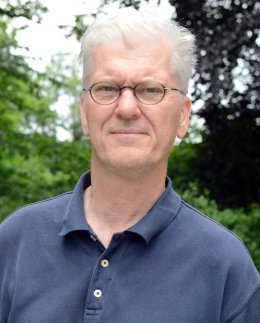 Jan Löwstedt合作论文数Stockholm Business School, Stockholm University13
 Pernilla Bolander合作论文数9
 Eero Vaara合作论文数Said Business School, University of Oxford6
 Bo Hellgren合作论文数5
 Philip Runsten合作论文数5robert sandberg合作论文数5
 Markus Reihlen合作论文数5
 Kajsa Asplund合作论文数4
 Susanna Alexius合作论文数4
 Andrew J. Sturdy合作论文数School of Management, University of Bristol/Cabot Institute for the Environment, University of Bristol4Jonas Bäcklund合作论文数4
 Jonas Dahl合作论文数3marie tomicic合作论文数3
 Love Börjeson合作论文数Stockholm Sch Econ, Stockholm, Sweden3
 Janne Tienari合作论文数School of Economics, Helsinki3
 Jesper Blomberg合作论文数School of Economics, Stockholm3
 Jost Sieweke合作论文数University of Oldenburg3
 Torbjörn Stjernberg合作论文数Sweden and Warwick Business School, University of Linköping3peter vaigur合作论文数2
 Christoph Seckler合作论文数2
 Szilvia Mosonyi合作论文数Sch Business & Management, Queen Mary Univ London2
 luc bres合作论文数FSA ULaval2
 Rahul Mitra合作论文数Wayne State Univ2
 Christopher Wickert合作论文数Department of Management and Organisation, Vrije Universiteit Amsterdam2
 Alexander Styhre合作论文数Department of Business Administration, School of Business, Economics and Law, Göteborgs Universitet2Peter Docherty合作论文数2Daniel Muzio合作论文数Business Sch, Newcastle Univ2
 Jennie Sumelius合作论文数Economics and Society;Hanken School of Economics;Economics and Society, Hanken School of Economics2Jean-Claude Sardas合作论文数2
 Juani Swart合作论文数University of Bath;School of Management;School of Management, University of Bath2
 Jean-Pascal Gond合作论文数HEC Montréal2
 Sebastien Gand合作论文数2Lovisa Naslund合作论文数2
 Anthony F. Buono合作论文数Bentley University2
 Ingalill Holmberg合作论文数Department of Management and Organization, Stockholm School of Economics2Larry E. Greiner合作论文数2
 Stefan Heusinkveld合作论文数2
 Johan Berglund合作论文数Dept Hlth, Blekinge Inst Technol2J. Tienari合作论文数1
 Stephanie Birkner合作论文数Dept Business Adm Econ & Law, Carl von Ossietzky Univ Oldenburg1Rasmussen Lars S合作论文数1
 Stephan Kaiser合作论文数Univ Bundeswehr Munchen1
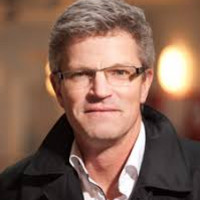 Mats Engwall合作论文数Department of Industrial Economics and Management, KTH Royal Institute of Technology;Scandinavian Academy of Industrial Engineering and Management;European Academy for Industrial Management;The Royal Swedish Academy of Engineering Sciences;Swedish Project Academy;Institute of Management of Innovation and Technology1B. Hellgren合作论文数1
 Wendy van der Valk合作论文数Faculty Technology Management, Eindhoven University of Technology1
 Arjan Kozica合作论文数Universität der Bundeswehr München1




