This paper describes our methods for repairing and restoring images of hidden paintings (paintings that have been painted over and are now covered by a new surface painting) that have been obtained via noninvasive X-ray fluorescence imaging of their canvases. This recently developed imaging technique measures the concentrations of various chemical elements at each two-dimensional spatial location across the canvas. These concentrations in turn result from pigments present both in the surface painting and in the hidden painting beneath. These X-ray fluorescence images provide the best available data from which to noninvasively study a hidden painting. However, they are typically marred by artifacts of the imaging process, features of the surface painting, and areas of information loss. Repairing and restoring these images thus consists of three stages: (1) repairing acquisition artifacts in the dataset, (2) removal of features in the images that result from the surface painting rather than the hidden painting, and (3) identification and repair of areas of information loss. We describe methods we have developed to address each of these stages: a total-variation minimization approach to artifact correction, a novel method for underdetermined blind source separation with multimodal side information to address surface feature removal, and two application-specific new methods for automatically identifying particularly thick or X-ray absorbent surface features in the painting. Finally, we demonstrate the results of our methods on a hidden painting by the artist Vincent van Gogh.
This paper describes our work on the problem of reconstructing the original visual appearance of underpaintings (paintings that have been painted over and are now covered by a new surface painting) from noninvasive X-ray fluorescence imaging data of their canvases. This recently-developed imaging technique yields data revealing the concentrations of various chemical elements at each spatial location across the canvas. These concentrations in turn result from pigments present in both the surface painting and the underpainting beneath. Reconstructing a visual image of the underpainting from this data involves repairing acquisition artifacts in the dataset, underdetermined source separation into surface and underpainting features, identification and inpainting of areas of information loss, and finally estimation of the original paint colors from the chemical element data. We will describe methods we have developed to address each of these stages of underpainting recovery and show results on lost underpaintings.
This paper examines whether machine learning and image analysis tools can be used to assist art experts in the authentication of unknown or disputed paintings. Recent work on this topic has presented some promising initial results. Our reexamination of some of these recently successful experiments shows that variations in image clarity in the experimental datasets were correlated with authenticity, and may have acted as a confounding factor, artificially improving the results. To determine the extent of this factor's influence on previous results, we provide a new "ground truth" data set in which originals and copies are known and image acquisition conditions are uniform. Multiple previously-successful methods are found ineffective on this new confounding-factor-free dataset, but we demonstrate that supervised machine learning on features derived from Hidden-Markov-Tree-modeling of the paintings' wavelet coefficients has the potential to distinguish copies from originals in the new dataset.
Wavelet transforms and machine learning tools can be used to assist art experts in the stylistic analysis of paintings. A dual-tree complex wavelet transform, Hidden Markov Tree modeling and Random Forest classifiers are used here for a stylistic analysis of Vincent van Gogh's paintings with results on two stylometry challenges that concern “dating, resp. extracting distinguishing features”.
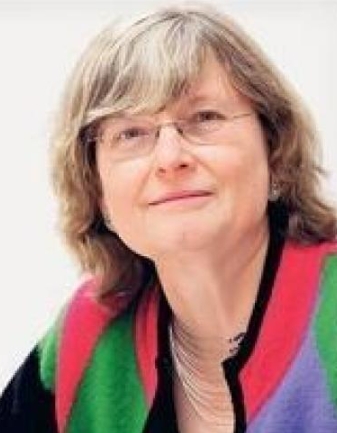 Ingrid Daubechies合作论文数Department of Mathematics, Trinity College of Arts & Sciences, Duke University;Department of Electrical and Computer Engineering, Pratt School of Engineering, Duke University4
 Shannon M. Hughes合作论文数Department of Electrical, Computer, and Energy Engineering, University of Colorado at Boulder4Anitha, A.合作论文数2
 Matthias Alfeld合作论文数Department of Materials Science and Engineering, Faculty of Mechanical, Maritime and Materials Engineering, Delft University of Technology2
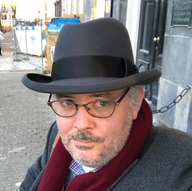 Joris Dik合作论文数Department of Materials Science and Engineering, Faculty of Mechanical, Maritime and Materials Engineering, Delft University of Technology2
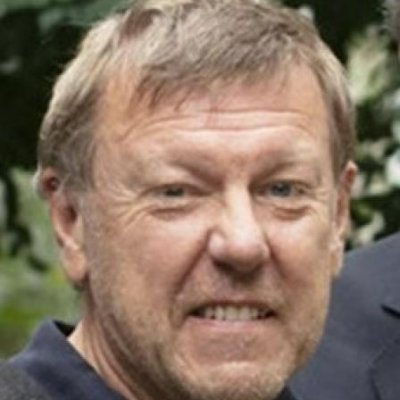 Over Koen Janssens合作论文数Department of Chemistry, Faculty of Science, University of Antwerp2
 Sina Jafarpour合作论文数Department of Computer Science, Princeton University2
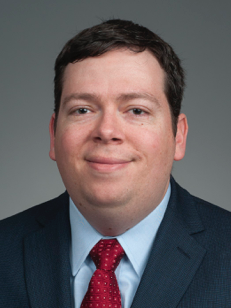 Marco F. Duarte合作论文数Department of Electrical and Computer Engineering, University of Massachusetts Amherst2
 Eugene Brevdo合作论文数Google DeepMind;Google Brain1
 Gungor Polatkan合作论文数Princeton University1




