The molecular origins of stereoselectivity in enzyme catalysed Diels–Alder reactions in abyssomicin biosynthesis are determined and spirotetronates prepared with the creation of 3 new stereocentres.
AbstractMupirocin is a clinically important antibiotic produced by a trans‐AT Type I polyketide synthase (PKS) in Pseudomonas fluorescens. The major bioactive metabolite, pseudomonic acid A (PA−A), is assembled on a tetrasubstituted tetrahydropyran (THP) core incorporating a 6‐hydroxy group proposed to be introduced by α‐hydroxylation of the thioester of the acyl carrier protein (ACP) bound polyketide chain. Herein, we describe an in vitro approach combining purified enzyme components, chemical synthesis, isotopic labelling, mass spectrometry and NMR in conjunction with in vivo studies leading to the first characterisation of the α‐hydroxylation bimodule of the mupirocin biosynthetic pathway. These studies reveal the precise timing of hydroxylation by MupA, substrate specificity and the ACP dependency of the enzyme components that comprise this α‐hydroxylation bimodule. Furthermore, using purified enzyme, it is shown that the MmpA KS0 shows relaxed substrate specificity, suggesting precise spatiotemporal control of in trans MupA recruitment in the context of the PKS. Finally, the detection of multiple intermodular MupA/ACP interactions suggests these bimodules may integrate MupA into their assembly.
Abyssomicin C and its atropisomer are potent inhibitors of bacterial folate metabolism. They possess complex polycyclic structures, and their biosynthesis has been shown to involve several unusual enzymatic transformations. Using a combination of synthesis and in vitro assays we reveal that AbyV, a cytochrome P450 enzyme from the aby gene cluster, catalyses a key late-stage epoxidation required for the installation of the characteristic ether-bridged core of abyssomicin C. The X-ray crystal structure of AbyV has been determined, which in combination with molecular dynamics simulations provides a structural framework for our functional data. This work demonstrates the power of combining selective carbon-13 labelling with NMR spectroscopy as a sensitive tool to interrogate enzyme-catalysed reactions in vitro with no need for purification.
The use of radiolabelled antibodies and antibody‐derived recombinant constructs has shown promise for both imaging and therapeutic use. In this context, the biotin–avidin/streptavidin pairing, along with the inverse‐electron‐demand Diels–Alder (iEDDA) reaction, have found application in pretargeting approaches for positron emission tomography (PET). This study reports the fluorinase‐mediated transhalogenation [5′‐chloro‐5′‐deoxyadenosine (ClDA) substrates to 5′‐fluoro‐5′‐deoxyadenosine (FDA) products] of two antibody pretargeting tools, a FDA‐PEG‐tetrazine and a [18F]FDA‐PEG‐biotin, and each is assessed either for its compatibility towards iEDDA ligation to trans‐cyclooctene or for its affinity to avidin. A protocol to avoid radiolytically promoted oxidation of biotin during the synthesis of [18F]FDA‐PEG‐biotin was developed. The study adds to the repertoire of conjugates for use in fluorinase‐catalysed radiosynthesis for PET and shows that the fluorinase will accept a wide range of ClDA substrates tethered at C‐2 of the adenine ring with a PEGylated cargo. The method is exceptional because the nucleophilic reaction with [18F]fluoride takes place in water at neutral pH and at ambient temperature.
 Race Paul R合作论文数3Christine L. Willis合作论文数3
 Katja Zorn合作论文数2Catherine R Back合作论文数2
 Martin A Hayes合作论文数2
 Marc van der Kamp合作论文数2James E. M. Stach合作论文数2Matthew P. Crump合作论文数2Jonathan A. Davies合作论文数1Abigail M C Barker-Mountford合作论文数1Ainul Zulkepli合作论文数1
 Rob Barringer合作论文数1
 Luoyi Wang (王罗医)合作论文数Institute of Microbiology, Chinese Academy of Sciences;University of Chinese Academy of Sciences1Sbusisiwe Z. Mbatha合作论文数1
 Nicholas R Lees合作论文数Department of Chemistry, King's College London1Ashley J Winter合作论文数1
 Alice Elizabeth Parnell合作论文数Univ Southampton, Dept Chem, Southampton SO17 1BJ, Hants, England1
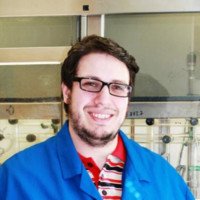 Dall'Angelo Sergio合作论文数College of Life Sciences and Medicine, University of Aberdeen1
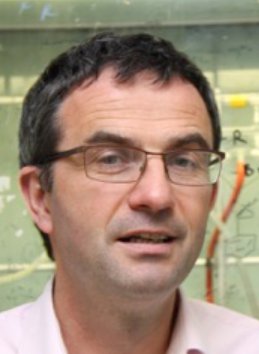 David O'Hagan合作论文数School of Chemistry, University of St Andrews1
 Phillip Lowe合作论文数1
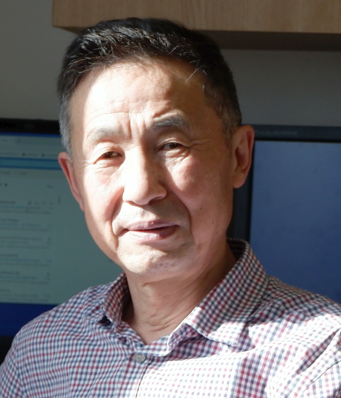 Zhongshu Song (宋中枢)合作论文数School of Chemistry, University of Bristol1
 Thomas James Simpson合作论文数School of Chemistry, University of Bristol1Christopher Williams合作论文数1Matteo Zanda合作论文数1




