In this work we focus on the generalization ability of a biological neuron model. We consider a Hodgkin-Huxley type of biological neuron model, based on Markov kinetic schemes, trained with the gradient descent algorithm. The examination of the generalization ability of the kinetic model of neuron is performed with methods derived from the regularization theory. The error function of the neuron model is supplemented with a regularizer. We examine two different forms of the regularizer: a penalty function, which is a sum of squared weights of the neuron model, and a Tikhonov functional, which is a linear differential operator related to the input-output mapping. As an example we consider a stochastic kinetic model of neuron to solve a problem of noise reduction in an image. Additionally in the paper we present different measures to show that adding a regularizer to the error function does not worsen the obtained results of noise reduction in an image. (C) 2017 Elsevier Inc. All rights reserved.
Paper presents a novel idea of failure detection mechanism for complex control environments. The mechanism is composed of several dynamic artificial neural networks that work in parallel in order to detect a failing signal from one of the on-board robot sensors. The simulation results show that the system is capable of detecting a failing control system quickly and efficiently.
The paper presents a navigation system based on Elman Artificial Neural Network (ANN). The task of data fusion from different sensors is realized by trained ANN. Determining position in space is an issue of nonlinear hence. Not every type of ANN is used for such a task. Choice of Elman ANN was dictated by its construction and successfully applications to nonlinear problems requiring prediction. Elman network is composed of three layers. Comprises a layer of hidden layer units context which is connected to the hidden layer. Context-sensitive layer allows for store the values of previous hidden units. With this layer prediction is possible in sequential order. This is the effect of contextual memory where information is stored about what it was before. This kind of functionality is not able to provide any other standard neural network unidirectional. The system consists of MEMS (Micro Electro-Mechanical Systems) sensors, which are based on IMU (Inertial Measurement Unit). IMU is composed from gyroscopes, accelerometers and magnetometers which provide three dimensional linear accelerations and angular rates. This is a classic set of sensors for determining the position in space. The study presents the results of the implementation of algorithms for determining the position in space using trained Elman ANN. The data samples to train ANN were collected during the test flight of Quadrocopter. Paper presents the performance for different configurations of Elman ANN. Presented system provides easy addition of other sensors e.g. GPS/GLONASS receiver.
In this study, we propose a model of the dendritic structure of the neuron (referred to as a neural network - NN), which can be viewed as an extension of the models that are currently used in the description of the potential on the neuron's membrane. The proposed extensions augment the generic model and offer a fuller description of the neuron's nature. The common assumption being used in most of the previous models stating a single channel (forming component of the neuron's membrane) can be positioned in only one of the two states (permissive - open and non-permissive - closed), is now relaxed by allowing the channel to be positioned in more states (five or eight states). The relationship between these states is expressed in terms of Markov kinetic schemes. In the paper, we demonstrate that the new approach is more suitable for a larger number of applications than the conventional Hodgkin-Huxley model.The study, by providing the mathematical background of the new extended model, forms a significant step towards a hardware implementation of the biologically realistic neural network (NN) of this type. To reduce the number of components required in such implementation, we propose a new optimization technique that significantly reduces the computational complexity of a single neuron. (C) 2017 Nalecz Institute of Biocybemetics and Biomedical Engineering of the Polish Academy of Sciences. Published by Elsevier B.V. All rights reserved.
The aim of this paper is to show how the Hodgkin-Huxley model of the neuron's membrane potential can be extended to a stochastic one. This extension can be done either by adding fluctuations to the equations of the model or by using Markov kinetic schemes' formalism. We are presenting a new extension of the model. This modification simplifies computational complexity of the neuron model especially when considering a hardware implementation. The hardware implementation of the extended model as a system on a chip using a field-programmable gate array (FPGA) is demonstrated in this paper. The results confirm the reliability of the extended model presented here.
Cracks are the most requiring type of pavement distresses to detect and classify automatically. Due to its nature are easily absorbed by other types of pavement surface damages. Moreover, the diversity of pavement surface makes the image detection system requiring efficient computer algorithms. The paper presents the solutions tested on surface distress data which were collected automatically using downward facing cameras placed orthogonally to road pavement axis. Presented results focus on the crack-type pavement distresses. The achieved accuracy of the transverse, longitudinal and meshing cracks recognition based on the initial dataset prepared especially for this system, show it has very good chances to work efficiently with large image datasets collected during the inspection car runs.
The paper presents a novel approach to real-time event detection in sports broadcasts. We present how the same underlying audio–visual feature extraction algorithm based on new global image descriptors is robust across a range of different sports alleviating the need to tailor it to a particular sport. In addition, we propose and evaluate three different classifiers in order to detect events using these features: a feed-forward neural network, an Elman neural network and a decision tree. Each is investigated and evaluated in terms of their usefulness for real-time event classification. We also propose a ground truth dataset together with an annotation technique for performance evaluation of each classifier useful to others interested in this problem.
Time synchronization in a distributed sensor network is a key issue. Data from the sensors are properly synchronized are very good material for further analysis. In the paper a network of medical sensors is presented. It is important to obtain a properly synchronized data from the sensors. This guarantee that the data can be processed to detect correlation between different signals. For the purpose of accurate time synchronization, the simple and efficient algorithm is presented.
The paper presents a modification of the structure of a biological neural network (BNN) based on spiking neuron models. The proposed modification allows to influence the level of the stimulus response of particular neurons in the BNN. We consider an extended, three-dimensional Hodgkin-Huxley model of the neural cell. A typical BNN composed of such neural cells have been expanded by addition of resistors in each branch point. The resistors can be treated as the weights in such BNN. We demonstrate that adding these elements to the BNN significantly affects the waveform of the potential on the membrane of the neuron, causing an uncontrolled excitation. This provides a better description of processes that take place in nervous cell. Such BNN enables an easy adaptation of the learning rules used in artificial or spiking neural networks. The modified BNN has been implemented on Graphics Processing Unit (GPU) in the CUDA C language. This platform enables a parallel data processing, which is an important feature in such applications.
The purpose of this work is to speed up simulations of neural tissues based on the stochastic version of the Hodgkin–Huxley model. Authors achieve that by introducing the system providing random values with desired distribution in simulation process. System consists of two parts. The first one is a high entropy fast parallel random number generator consisting of a hardware true random number generator and graphics processing unit implementation of pseudorandom generation algorithm. The second part of the system is Gaussian distribution approximation algorithm based on a set of generators of uniform distribution. Authors present hardware implementation details of the system, test results of the mentioned parts separately and of the whole system in neural cell simulation task.
This paper presents data processing method for Attitude Heading and Reference System (AHRS) based on Artificial Neural Networks (ANN). The system consist of MEMS (Micro Electro-Mechanical Systems) based on Inertial Measurement Unit (IMU) consisting of tri-axis gyroscopes, accelerometers and magnetometers providing three dimensional linear accelerations and angular rates. Training data was generated by simulation fusion of samples collected during the flight of Quadcopter. The presented results shows proper functioning of the neural network. Moreover, the presented system provide the possibility to easily add other sensors e.g. GPS, in order to achieve better performance.
Good diagnostic tools are the base of a proper diagnosis and as a result of good treatment. The examination of disorders of the spinal cord or peripheral nerves requires a simple tests. These tests are called Quantitative Sensory Tests. To perform these tests typically a not very accurate tools are used. This inconvenience was the basis for the development of new diagnostic tools to perform the QST. This paper presents the requirements that must be met by the utility. Is also presented a complete description of the device and a description of the control algorithms.
 Aleksandra Swietlicka合作论文数Poznan Univ Tech, Chair Comp Sci, PL-60965 Poznan, Poland15
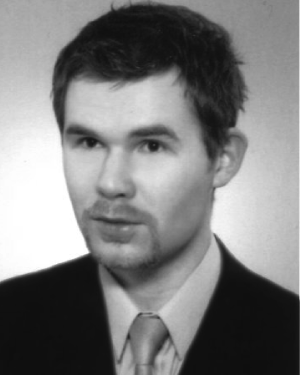 Rafal Kapela合作论文数Poznan University of Technology14
 Karol Gugala合作论文数Department of Pathology, Regional Oncology Hospital13Krzysztof Kolanowski合作论文数11Majchrzycki, M.合作论文数Dept. of Comput. Eng., Poznan Univ. of Technol.;, Poland;c;Dept. of Comput. Eng., Poznan Univ. of Technol.8Karon, I.合作论文数7
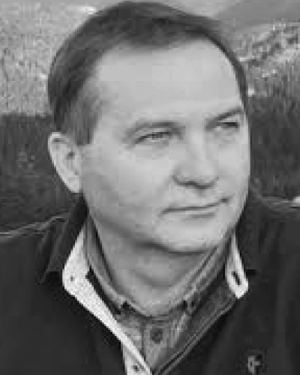 Pawel Sniatala合作论文数Poznan University of Technology7
 Michal Szulc合作论文数6Janusz Pochmara合作论文数6Karol Józefowicz合作论文数4
 Slawomir Michalak合作论文数4B. Nowakowski合作论文数3t michalak合作论文数3Bastos, I.合作论文数3Agata Jurkowlaniec合作论文数3
 Pankiewicz, P.合作论文数Pozna¿ University of Technology;c;Pozna¿ University of Technology3
 Michał Szulc合作论文数3
 João Ferreira合作论文数European Parliament3
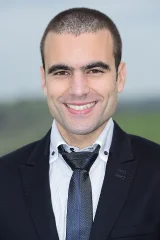 João Oliveira合作论文数Materials Science Department, Faculdade de Ciências e Tecnologia, Universidade Nova de Lisboa;Centro de Investigação de Materiais, Faculdade de Ciências e Tecnologia, Universidade Nova de Lisboa3
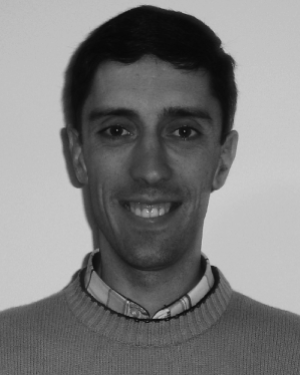 Luís Bica Oliveira合作论文数3
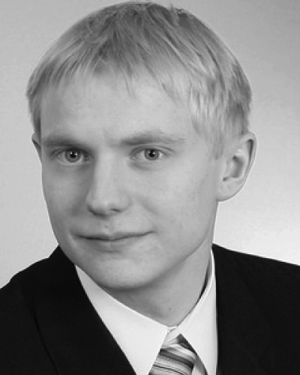 Blazej Nowacki合作论文数3
 Wojciech Kozubski合作论文数3R. Rudnicki合作论文数2
 Jacek Jerzy Losy合作论文数2Plec, K.合作论文数2Mruczkiewicz, J.合作论文数2Instytut Medycyny合作论文数2Turkot, Adam合作论文数2Jaroslaw Wencel合作论文数2M. Mossakowskiego合作论文数2Jacek Pierzchlewski合作论文数Poznan University of Technology2e garbarczyk合作论文数1Adrian Dudziak合作论文数1tomasz dybizbanski合作论文数1
 Wyczałek-Jagiełło Michał合作论文数1
 Michal Gorka合作论文数Max Planck Inst Mol Plant Physiol1
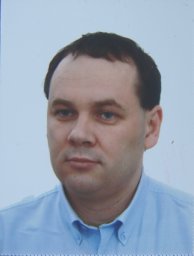 Andrzej Pozarycki合作论文数Fac Civil & Transport Engn, Poznan Univ Tech1
 Pawel Rydzewski合作论文数Inst Sociol, Maria Curie Sklodowska Univ Lublin1Klak, M.合作论文数1
 Jolanta Pauk合作论文数Białystok Technical University1
 Witold Pedrycz合作论文数School of Intelligent Systems Science and Engineering, Jinan University;Department of Electrical & Computer Engineering, Faculty of Engineering, University of Alberta1Aleksandra Figas合作论文数1
 Noel O'Connor合作论文数School of Electronic Engineering, Dublin City University;Insight SFI Research Centre for Data Analytics1
 Piotr Nowak合作论文数1Blazej Nowakowski合作论文数1
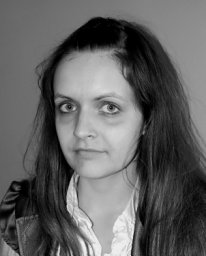 Marta Kolasa合作论文数University of Technology and Life Sciences Faculty of Telecommunication & Electrical Engineering ul. Kaliskiego 7 85-796 Bydgoszcz Poland1Wojciech Wencel合作论文数1
 Rafal Tomasz Dlugosz合作论文数1
 Mirosław Zbigniew Galicki合作论文数Katedra Informatyki i Automatyzacji Produkcji, Instytut Inzynierii Mechanicznej, Uniwersytet Zielonogorski1




