We extend the existing methodology in bound-to-bound data collaboration (B2BDC), an optimizationbased deterministic uncertainty quantification (UQ) framework, to explicitly take into account model discrepancy. The discrepancy is represented as a linear combination of finite basis functions, and the feasible set is constructed according to a collection of modified model-data constraints. Formulas for making predictions are also modified to include the model discrepancy function. Prior information about the model discrepancy can be added to the framework as additional constraints. Dataset consistency, a central feature of B2BDC, is generalized based on the extended framework.
The present study addresses the title question by taking a detailed mechanism of a concrete combustion system, syngas ignition, deriving from it three reduced models with different levels of accuracy, and comparing propagation of uncertainty by the reduced and detailed models. Two reduced models were developed by the method of Detained Reduction and the third one was adopted from recent literature. The uncertainty quantification was carried out through the deterministic framework of Bound-to-Bound Data Collaboration (B2BDC). The numerical results demonstrate that assessment of the quality of a reduced model without considering parameter uncertainty may be misleading. By including parameter uncertainty, several numerical measures can be developed to quantify the reduced model performance and those tested in the present study showed mutually consistent and qualitatively similar outcomes. One of such measures, built on the B2BDC methodology, offers a numerically-efficient approach to quantifying the propagation of uncertainty and its sensitivity measures for models having time-demanding evaluations.
A method is presented to obtain an inner-approximation of the backward reachable set (BRS) of a given target tube, along with an admissible controller that maintains trajectories inside this tube. The proposed optimization algorithms are formulated as nonlinear optimization problems, which are decoupled into tractable subproblems and solved by an iterative algorithm using the polynomial S-procedure and sum-of-squares techniques. This framework is also extended to uncertain nonlinear systems with L_2 disturbances and L_{\infty} parametric uncertainties. The effectiveness of the method is demonstrated on several nonlinear robotics and aircraft systems with control saturation.
This study presents a technique to safely control the Sit-to-Stand movement of powered lower limb orthoses in the presence of parameter uncertainty. The weight matrices used to calculate the finite time horizon linear-quadratic regulator (LQR) gain in the feedback loop are chosen from a pool of candidates as to minimize a robust performance metric involving induced gains that measure the deviation of variables of interest in a linear time-varying (LTV) system, at specific times within a finite horizon, caused by a perturbation signal modeling the variation of the parameters. Two relevant Sit-to-Stand movements are simulated for drawing comparisons with the results documented in a previous work.
This paper provides a tutorial introduction to disk margins. These are robust stability measures that account for simultaneous gain and phase perturbations in a feedback system. The paper first reviews the classical (gain-only and phase-only) margins and their limitations. This motivates the use of disk margins which are defined using a set of perturbations that have simultaneous gain and phase variations. A necessary and sufficient condition is provided to compute the disk margin for a single-input, single-output feedback system. Frequency-dependent disk margins can also be computed yielding additional insight. The paper concludes with a discussion of stability margins for multiple-input, multiple output (MIMO) feedback systems. A typical approach is to assess robust stability "loop-at-a-time" with a perturbation introduced into a single channel and all other channels held at their nominal values. MIMO disk margins provide a useful extension to consider simultaneous variations in multiple channels. This multiple-loop analysis can provide a more accurate robustness assessment as compared to the loop-at-a-time approach.
We study a multi-body asset-guarding game in missile defense where teams of interceptor missiles collaborate to defend a non-manuevering asset against a group of threat missiles. We approach the problem in two steps. We first formulate an assignment problem where we optimally assign subsets of collaborating interceptors to each threat so that all threats are intercepted as far away from the asset as possible. We assume that each interceptor is controlled by a collaborative guidance law derived from linear quadratic dynamic games. Our results include a 6-DOF simulation of a 5-interceptor versus 3-threat missile engagement where each agent is modeled as a missile airframe controlled by an autopilot. Despite the assumption of linear dynamics in our collaborative guidance law and the unmodeled dynamics in the simulation environment (e.g., varying density and gravity), we show that the simulated trajectories match well with those predicted by our approach. Furthermore, we show that a more agile threat, with greater speed and acceleration, can be intercepted by inferior interceptors when they collaborate. We believe the concepts introduced in this paper may be applied in asymmetric missile defense scenarios, including defense against advanced cruise missiles and hypersonic vehicles.
We propose a method to outer bound forward reachable sets on finite horizons for uncertain nonlinear systems with polynomial dynamics. This method makes use of time-dependent polynomial storage functions that satisfy appropriate dissipation inequalities that account for time-varying uncertain parameters, L2 disturbances, and perturbations Δ characterized by integral quadratic constraints (IQCs) with both hard and soft factorizations. The use of IQCs in forward reachability analysis allows for various types of uncertainty, including unmodeled dynamics. The generalized S-procedure and Sum-of-Squares techniques are used to derive algorithms with the goal of finding the tightest outer bound with a desired shape. Both pedagogical and practically motivated examples are presented, including a 7-state F-18 aircraft model.
We propose a data-driven supervisory method to determine actions, in real-time, for systems with a binary success/failure outcome. This approach consists of two steps. First, a high-fidelity system model is used offline to train a classifier, which acts as a quick-to-evaluate approximation of the system. Then, the classifier is used online to select an action based on the scenario encountered. The method also returns an approximate probability of success which can then be used to inform follow-on decisions. We apply this method to problems where an interceptor missile engages a threat headed towards an asset. The interceptor's supervisory actions may include selecting parameters in the guidance and control laws, setting tunable initial conditions, and determining other details about how the interceptor will engage the threat. Specifically, the proposed method is demonstrated using the case study of a planar engagement between an interceptor and a threat, with the interceptor launch angle and autopilot crossover frequency as actionable parameters. For this case study, the proposed method outperforms an alternative baseline action.
We present a safe-by-design approach to path planning and control for nonlinear systems. The planner uses a low fidelity model of the plant to compute reference trajectories by solving an MPC problem, while the plant being controlled utilizes a feedback control law that tracks those trajectories with an upper-bound on the tracking error. Our main goal is to allow for maximum permissiveness (that is, room for constraint feasibility) of the planner, while maintaining safety after accounting for the tracking error bound. We achieve this by parametrizing the state and input constraints imposed on the planner and deriving corresponding parametrized tracking control laws and tracking error bounds, which are computed offline through Sum-of-Squares programming. The parameters are then optimally chosen to maximize planner permissiveness, while guaranteeing safety.
We present a method for synthesizing controllers to steer trajectories from an initial set to a target set on a finite time horizon. The proposed control synthesis problem is decomposed into two steps. The first step under-approximates the backward reachable set (BRS) from the target set, using level sets of storage functions. The storage function is constructed with an iterative algorithm to maximize the volume of the under-approximated BRS. The second step obtains a control law by solving a pointwise min-norm optimization problem using the pre-computed storage function. A closed-form solution of this min-norm optimization can be computed through the KKT conditions. This control synthesis framework is then extended to uncertain nonlinear systems with parametric uncertainties and L2 disturbances. The computation algorithm for all cases is derived using sum-of-squares (SOS) programming and the S-procedure. The proposed method is applied to several examples, including robotic systems.
The goal of this paper is to assess the robustness of an uncertain linear time-varying (LTV) system on a finite time horizon. The uncertain system is modeled as an interconnection of a known LTV system and a perturbation. The input/output behavior of the perturbation is described by time-domain, integral quadratic constraints (IQCs). Typical notions of robustness, e.g. nominal stability and gain/phase margins, can be insufficient for finite-horizon analysis. Instead, this paper focuses on robust induced gains and bounds on the reachable set of states. Sufficient conditions to compute robust performance bounds are formulated using dissipation inequalities and IQCs. The analysis conditions are provided in two equivalent forms as Riccati differential equations and differential linear matrix inequalities, and an algorithm is developed leveraging both forms.
We report an evaluation of a semi-empirical quantum chemical method PM7 from the perspective of uncertainty quantification. Specifically, we apply Bound-to-Bound Data Collaboration, an uncertainty quantification framework, to characterize (a) variability of PM7 model parameter values consistent with the uncertainty in the training data and (b) uncertainty propagation from the training data to the model predictions. Experimental heats of formation of a homologous series of linear alkanes are used as the property of interest. The training data are chemically accurate, i.e., they have very low uncertainty by the standards of computational chemistry. The analysis does not find evidence of PM7 consistency with the entire data set considered as no single set of parameter values is found that captures the experimental uncertainties of all training data. A set of parameter values for PM7 was able to capture the training data within ±1 kcal/mol, but not to the smaller level of uncertainty in the reported data. Nevertheless, PM7 was found to be consistent for subsets of the training data. In such cases, uncertainty propagation from the chemically accurate training data to the predicted values preserves error within bounds of chemical accuracy if predictions are made for the molecules of comparable size. Otherwise, the error grows linearly with the relative size of the molecules.
The current paper presents a continuation of the development of a modern methodology for the construction of uncertainty-quantified chemical reaction models on the base of the Bound-to-Bound Data Collaboration (B2BDC) module of the automated data-centric infrastructure PrIMe. Some problems, postulated in the recent studies, are in the focus of the present investigation. The question of targets amount (experimental data, Quantities of Interest (QoI)) selected for the analysis has been studied. To investigate this, the PrIMe dataset is augmented. The influence of dataset extension on the dataset consistency, feasible parameter set, and model optimization is studied and an algorithm for the selection of QoI in each experimental set is postulated. The approach of combined methods of scalar consistency measure, SCM, and vector consistency measure, VCM, for consistency analysis are adapted and successfully implemented. Predictions of the LSF optimized mechanism are compared against a wide range of experimental data of laminar premixed flames and shock tube ignition delay times. Good agreement of model predictions with the experimental measurements is obtained.
The development of efficient industrial oxy-coal boilers can be significantly aided by Computational Fluid Dynamics (CFD) tools, as far as fidelity in modeling coal combustion is also complemented by feasible computational costs. Reduced and predictive models are the most suitable for this application scale. Reduced models feature predictivity when they are validated against a broad range of experiments and targeted by Uncertainty Quantification (UQ) procedures. This work proposes a numerical procedure that uses Bound-to-Bound Data Collaboration (B2B-DC) to derive a reduced char combustion model describing transport phenomena and reactions between char carbon and O2, CO2 and H2O, in both conventional and oxy-conditions. The approach determines the consistency between a numerical model and an experimental dataset. The latter is made up of the experiments carried out in an optically accessible laminar entrained flow reactor, operated by Sandia National Laboratories. The procedure follows five steps towards predictive modeling capability, namely: quantification of the uncertainty in the experiments, via instrument verification and modeling; development of a physics model and continuous improvement of its fidelity, via model-form uncertainty; identification of the uncertain and most sensitive parameters and of their prior bounds; sampling of the initial uncertain parameter space and training of a surrogate model; validation of the physics model via inference from the data. The last step, also known as inverse problem, is performed by applying the Bound-to-Bound Data Collaboration approach. A char combustion model is found consistent with the experimental data and its validity stands for conventional and oxy-combustion conditions. It accounts for heterogeneous reactions at the particle surface, mass transport of species in the particle boundary layer, pore diffusion and surface area changes. The consistent reduced model overcomes the differences in mass transport and kinetics observed in the experimental campaign. A reduction of the initial degree of uncertainty in both model and experiments is achieved.
Bound-to-Bound Data Collaboration (B2BDC) provides a natural framework for addressing both forward and inverse uncertainty quantification problems. In this approach, QOI (quantity of interest) models are constrained by related experimental observations with interval uncertainty. A collection of such models and observations is termed a dataset and carves out a feasible region in the parameter space. If a dataset has a nonempty feasible set, it is said to be consistent. In real-world applications, it is often the case that collections of experiments and observations are inconsistent. Revealing the source of this inconsistency, i.e., identifying which models and/or observations are problematic, is essential before a dataset can be used for prediction. To address this issue, we introduce a constraint relaxation-based approach, entitled the vector consistency measure, for investigating datasets with numerous sources of inconsistency. The benefits of this vector consistency measure over a previous method of consistency analysis are demonstrated in two realistic gas combustion examples.
We exploit symmetries in the interconnection topology of a networked system to provide a dimensionality reduction in the certification of performance. The certification method exploits the dissipativity properties of the subsystems; thus the conservatism introduced by the reduction is minimal when the subsystems possess similar dissipativity characteristics. We combine this reduction with distributed optimization techniques to be able to analyze large interconnections efficiently.
A sensitivity-based approach for computing over-approximations of reachable sets, in the presence of constant parameter uncertainty and a single initial state, is used to analyze a three-link planar robot modeling a Powered Lower Limb Orthosis and its user. Given the nature of the mappings relating the state and parameters of the system with the input, and output describing the trajectories of its Center of Mass, reachable sets for their respective spaces can be obtained relying on the sensitivities of the nonlinear closed-loop dynamics in the state space. These over-approximations are used to evaluate the worst-case performances of a finite time horizon linear-quadratic regulator for controlling the ascending phase of the Sit-To-Stand movement.
The theory of integral quadratic constraints (IQCs) allows verification of stability and gain-bound properties of systems containing nonlinear or uncertain elements. Gain bounds often imply exponential stability, but it can be challenging to compute useful numerical bounds on the exponential decay rate. This work presents a generalization of the classical IQC results of Megretski and Rantzer that leads to a tractable computational procedure for finding exponential rate certificates that are far less conservative than ones computed from $L_2$ gain bounds alone. An expanded library of IQCs for certifying exponential stability is also provided and the effectiveness of the technique is demonstrated via numerical examples.
An automated data-centric infrastructure, Process Informatics Model (PrIMe), was applied to validation and optimization of a syngas combustion model. The Bound-to-Bound Data Collaboration (B2BDC) module of PrIMe was employed to discover the limits of parameter modifications based on uncertainty quantification (UQ) and consistency analysis of the model data system and experimental data, including shock-tube ignition delay times and laminar flame speeds. Existing syngas reaction models are reviewed, and the selected kinetic data are described in detail. Empirical rules were developed and applied to evaluate the uncertainty bounds of the literature experimental data. The initial H-2/CO reaction model, assembled from 73 reactions and 17 species, was subjected to a B2BDC analysis. For this purpose, a dataset was constructed that included a total of 167 experimental targets and 55 active model parameters. Consistency analysis of the composed dataset revealed disagreement between models and data:. Further analysis suggested that removing 45 experimental targets, 8 of which were self-inconsistent, would lead to a consistent dataset. This dataset was subjected to a correlation analysis, which highlights possible directions for parameter modification and model improvement. Additionally, several methods of parameter optimization were applied, some of them unique to the B2BDC framework. The optimized models demonstrated improved agreement with experiments compared to the initially assembled model, and their predictions for experiments not included in the initial dataset (i.e., a blind prediction) were investigated. The results demonstrate benefits of applying the B2BDC methodology for developing predictive kinetic models.
This paper presents a passivity based formation control strategy for multiple unmanned aerial vehicles (UAVs) cooperatively carrying a suspended load. The control strategy we propose consists of an internal feedback control law for each UAV and a formation control law that regulates the relative position between each UAV. We show that under this control strategy the interconnected system has a continuum of equilibria and prove stability for all equilibrium points where the cables supporting the suspended load are in tension.
 Gary J. Balas合作论文数41
 Michael Frenklach合作论文数Department of Mechanical Engineering, University of California, Berkeley28
 Peter Seiler合作论文数Electrical and Computer Engineering, College of Engineering, University of Michigan-Ann Arbor24
 Murat Arcak合作论文数UC Berkeley EECS21
 John C. Doyle (道耀)合作论文数Department of Computing + Mathematical Sciences, Division of Engineering and Applied Science, California Institute of Technology21
 Ryan Feeley合作论文数12
 Ufuk Topcu合作论文数Cockrell School of Engineering, The University of Texas at Austin10
 Arun Hegde合作论文数Corresponding author.8
 Meissen, C.合作论文数Dept. of Mech. Eng., Univ. of California;c;Dept. of Mech. Eng., Univ. of California8Wenyu Li (李文宇)合作论文数School of Mathematics and Statistics, Beihua University8
 James Oreluk合作论文数Sandia Natl Labs7Wei-Min Lu合作论文数7
 Peter J. Seiler合作论文数Department of Aerospace Engineering and Mechanics, College of Science and Engineering, University of Minnesota7
 Keith Glover合作论文数Department of Engineering,University of Cambridge7Timothy Wheeler合作论文数6Trent Russi合作论文数6
 Roy S. Smith合作论文数Automatic Control Laboratory, Department of Information Technology & Electrical Engineering, Swiss Federal Institute of Technology5Weehong Tan合作论文数5
 Laurent Lessard合作论文数Goodman Cancer Centre and Department of Biochemistry, McGill University5
 Shahram M. Shahruz合作论文数Berkeley Engineering Research Institute5R Smith合作论文数4
 He Yin合作论文数4Philbrick, D.合作论文数4
 Kemin Zhou (周克敏)合作论文数Nanjing University4
 Fen Wu (吴奋)合作论文数Department of Mechanical and Aerospace Engineering, North Carolina State University;College of Intelligent Systems Science and Engineering, Harbin Engineering University4
 Kameshwar Poolla合作论文数Departments of Electrical Engineering and Computer Sciences, University of California, Berkeley4
 Erin Summers合作论文数4Benson H. Tongue合作论文数4
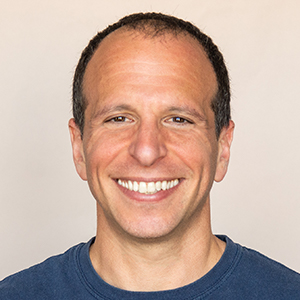 Ben Recht合作论文数Department of Electrical Engineering and Computer Sciences, University of California, Berkeley4Kunpeng Sun合作论文数4
 Rick C. Lind合作论文数Department of Mechanical and Aerospace Engineering, University of Florida4george hines合作论文数3
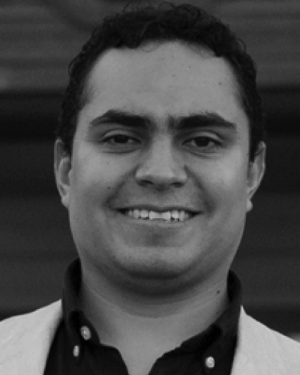 Octavio Narvaez Aroche合作论文数3Zachary Jarvis-Wloszek合作论文数3
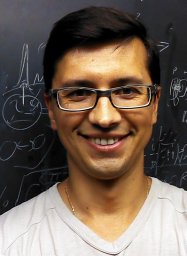 Dmitry Yu Zubarev合作论文数Kenneth S Pitzer Ctr Theoret Chem, Univ Calif Berkeley3
 Aziza Zokir qizi Mirzayeva合作论文数2Sean Smith合作论文数2Philbrick Douglas合作论文数2K Glover合作论文数2D Hernandez合作论文数2Zhenyuan Liu合作论文数2David M. Golden合作论文数SRI International2Ross Boczar合作论文数2
 Stephen Tu合作论文数Ming Hsieh Department of Electrical and Computer Engineering, Viterbi School of Engineering, University of Southern California2
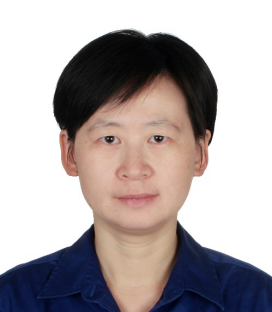 Xiaoqing You (游小清)合作论文数Department of Energy and Power Engineering, School of Mechanical Engineering, Tsinghua University2P. Pandey合作论文数2
 Allen Tannenbaum合作论文数Department of Computer Science, Stony Brook University;Department of Applied Mathematics & Statistics, Stony Brook University2
 Mike Pilling合作论文数School of Chemistry, Faculty of Engineering and Physical Sciences, University of Leeds2Philip J. Smith合作论文数Department of Integrated Systems Engineering The Ohio State University2




