Rice membrane-covered cultivation offers notable agronomic advantages, including effective weed suppression and improved moisture retention. However, current mechanized approaches remain constrained by high labor requirements, low operational efficiency, and the inherent fragility of biodegradable membranes. To address these limitations, this study integrates a high-speed synchronous membrane-covering device, governed by a PSO-Fuzzy PID control algorithm, into a conventional rice transplanter. This integration enables precise coordination between membrane-laying and transplanting operations. The mechanical properties of the membranes were analyzed, and a tension evaluation model was developed considering structural parameters and roll diameter variation. Experimental tests on three biodegradable membranes revealed an average thickness of 0.012 mm, a longitudinal tensile force of 0.57 N, and a tensile strength of 2.85 N/mm. The PSO algorithm was employed to optimize fuzzy PID parameters (K = 5.3095, Kp = 10.6981, Ki = 0.0100, Kd = 8.2892), achieving adaptive synchronization between membrane output speed and transplanter travel speed. Simulation results demonstrated that the PSO-Fuzzy PID reduced rise time by 53.13%, stabilization time by 90.58%, and overshoot by 3.3% compared with the conventional PID. In addition, a dedicated test bench for the membrane-covering device was designed and fabricated. Orthogonal experiments determined the optimal parameters for the speed-measurement system: a membrane pressure of 5.000 N, a roller width of 28.506 mm, and a placement angle of 0.690°. Under these conditions, the minimum membrane-stretching tension was 0.55 N, and the rotational speed error was 0.359%. Field tests indicated a synchronization error below 1.00%, a membrane-width variation rate below 1.50%, and strong anti-interference capability. The proposed device provides an effective solution for intelligent and fully mechanized rice transplanting.
Aiming at difficult image acquisition and low recognition accuracy of two rice canopy pests, rice stem borer and rice leaf roller, we constructed a GA-Mask R-CNN (Generative Adversarial Based Mask Region Convolutional Neural Network) intelligent recognition model for rice stem borer and rice leaf roller, and we combined it with field monitoring equipment for them. Firstly, based on the biological habits of rice canopy pests, a variety of rice pest collection methods were used to obtain the images of rice stem borer and rice leaf roller pests. Based on different segmentation algorithms, the rice pest images were segmented to extract single pest samples. Secondly, the bug generator based on a generative adversarial network strategy improves the sensitivity of the classification network to the bug information, generates the pest information images in the real environment, and obtains the sample dataset for deep learning through multi-way augmentation. Then, through adding channel attention ECA module in Mask R-CNN and improving the connection of residual blocks in the backbone network ResNet101, the recognition accuracy of the model is improved. Finally, the GA-Mask R-CNN model was tested on a multi-source dataset with an average precision (AP) of 92.71%, recall (R) of 89.28% and a balanced score F1 of 90.96%. The average precision, recall, and balanced score F1 are improved by 7.07, 7.65, and 8.83%, respectively, compared to the original Mask R-CNN. The results show that the GA-Mask R-CNN model performance indexes are all better than the Mask R-CNN, the Faster R-CNN, the SSD, the YOLOv5, and other network models, which can provide technical support for remote intelligent monitoring of rice pests.
为提高水稻种子质量,剔除杂草稻种子,提出一种基于凹点匹配的粘连分割算法,搭建一种在线形色双选水稻种子识别平台.该平台由排种系统、图像采集系统、传动系统、电机驱动系统构成.该平台算法基于ECMM凹点分割法,首先对采集的图像进行预处理、提取形态因子小于0.4的粘连轮廓,对所提取轮廓的边缘进行一维高斯卷积核平滑处理,并计算平滑后轮廓曲线的曲率及其曲率均值,寻找与曲率均值相差较大的若干个点作为角点.其次,依据矢量三角形面积的正负来判断角点是否为真正的凹点,寻找凹点与前继点、后继点所组成的法线方向的夹角范围(0°~180°),并在此夹角范围内寻找与其相匹配的凹点对,完成粘连分割.该算法平均精度为92.90%,比极限腐蚀法提高19.82个百分点,比分水岭算法提高12.85个百分点.最后,计算分割后图像上各轮廓内的种子长度与R通道像素占比来识别杂草稻种子.经识别平台测试,本文算法每识别100粒种子平均用时0.95 s,平均识别精度为97.50%.
通过研究翻转式教学方法、教学策略和教学内容,针对线上教学,开发相应学习资源,提出教学引导独立学习的有效改革措施,完善、提高创新型人才培养的质量.利用翻转课堂的教学模式,建立完善和牢固的知识体系,培养良好的创新能力和创新思维;同时提高教师的指导能力和科研能力.通过基于翻转课堂模式的创新人才培养研究,提高研究生教学水平,促进研究生培养水平的整体提高.
At present, integrated architecture is adopted by orchard fertigation management systems. The coupling of the system is too strong, which makes its operation and maintenance cost too high. To solve the problem, this article designs the architecture of the software platform under the cloud computing model. The resources related to the management of orchard fertigation are built into cloud services. These cloud services are described in categories and scheduled uniformly. These services are combined with the support of expert strategies. The corresponding business process(BP) is established to realize the intelligent operation of orchard fertigation.
根据目前建成投运的1000kV榆横—潍坊特高压交流输电线路运行情况,线路下存在大棚等钢架结构建筑物时,其内钢架结构会产生很大的感应电流.为保证农业生产人员的安全工作,以钢架大棚为例,利用Ansys仿真软件建立了结合无限元的特高压交流双回输电线路计算模型,仿真计算线路下方钢架上产生的感应电压和感应电流大小.分析表明:利用有限元一无限元相结合的方法进行建模仿真,计算机的仿真效率提升明显;线路下方钢架结构建筑上的感应电压和感应电流密度受线路运行电流等级、钢架与线路轴线距离的影响较大;线路架设高度对感应电压和感应电流的影响随着钢架距离线路轴线距离的不同呈现出不同变化;综合考虑线路架设成本和输电效率等因素,建议将线路设计在距离建筑70 m以外.
Electric vehicle is the key technology to tackle the issue of energy and emissions, a great number of EVs connected to the grid will negatively impact on the economic operation of the grid. Based on the statistics of electric vehicle travel rules, this paper used NSGA-II multi-objective optimization algorithm to establish a regional electricity price model. The goal is to reduce the peak load through electricity consumption time and ensure the interests of operators, The effectiveness of the algorithm is verified by an example of a certain area in Shandong Province. The algorithm did not change the space–time distribution of existing charging stations, and only used the regional electricity price to adjust the charging load of electric vehicles, which has high practical significance.
为精准预测苹果树果实膨大期、成熟期和采收期的叶片氮含量,提出一种基于图像处理的苹果树叶片氮含量预测模型.首先,在可见光光谱范围内使用无人机及数码相机采集不同时期苹果树树冠图像及新梢叶片图像,应用数字图像处理技术,提取苹果树冠的色彩特征和新梢叶片图像的形态特征;其次,采用凯式定氮法测定苹果树叶片的氮含量,对提取的图像特征参数和苹果树叶片的氮含量进行多项式回归模型、支持向量机(SVM)模型、人工神经网络模型的构建,并根据相关评价指标确定最优模型为人工神经网络模型;最后,对苹果树果实膨大期、成熟期、采收期3个不同时期的氮含量预测模型进行验证,确定预测模型的准确性.试验结果表明,不同时期氮含量预测模型的均方根误差(RMSE)分别为0.039、0.029、0.037,平均绝对误差(MAE)分别为0.338、0.403、0.412,平均绝对百分比误差(MAPE)分别为0.582、0.635、0.642,模型预测值与实际值拟合程度较好,该模型可以实时监控苹果树氮营养状态,为实现果园精准施肥管理提供理论依据.
Aiming at the problems of poor retrieval intelligence and low recall rate of irrigation fertilization strategy in apple orchard, an intelligent retrieval algorithm of apple orchard irrigation fertilization strategy is proposed to realize the intelligent retrieval of irrigation fertilization strategy. Firstly, the retrieval of the user's irrigation fertilization strategy is divided into title retrieval and comprehensive retrieval, and the comprehensive retrieval is a compound search with the name of the heirloom, the upload time range and the evaluation value. Secondly, the semantic similarity retrieval algorithm based on ontology is proposed for the title retrieval of apple orchard irrigation fertilization strategy, and the domain ontology of apple orchard is constructed. Lastly, the semantic similarity between the retrieval statement and the title is calculated by using the concept similarity algorithm based on ontology and the sentence similarity algorithm, and the title of irrigation fertilization strategy is sorted according to the similarity degree. This paper compares the algorithm with the traditional keyword retrieval, and the experimental results show that the retrieval algorithm proposed in this paper has higher recall rate of irrigation fertilization strategy than the traditional keyword retrieval recall rate, and can realize the intelligent retrieval of the irrigation fertilization strategy of apple orchard.
以小麦粉为原料,研究了微波功率、微波杀菌时间、物料量对其杀菌效果和感官品质的影响.结果 表明,功率越高、时间越长,小麦粉的杀菌效果越显著.经正交试验后发现,当微波功率490W,杀菌时间60 s,物料用量9 g时,小麦粉的杀菌效果和感官品质最好.与传统加热技术相比,微波杀菌处理过的小麦粉灭菌更彻底、效率更高,感官品质更好.
In recent years, the theory and application of cloud manufacturing have been greatly developed. Aiming at existing problems in agricultural production, an idea that agricultural production could be treated as agricultural manufacturing and the cloud manufacturing model could be applied to agricultural manufacturing was proposed. The difference between agricultural manufacturing and general industrial manufacturing was analyzed. Combined with cloud manufacturing theories, the agricultural cloud manufacturing platform construction model in the form of private cloud - public cloud - public cloud was designed. Its key technologies were discussed. Finally, the above theory was verified by a fertigation technology case and the foundation for subsequent researches was established.
The invention relates to a matching degree computing method of sortable precise attributes of one-chain-type services. In a traditional producing and manufacturing electric business platform, parameters of part of attributes of the services/products are precise. It is needed that the parameters of requirements and the attributes are absolutely unified or compatible. Some products or services capable of meeting user requirements are eliminated from an alternative sample set. According to the values of the parameters of the attributes, the attributes of the alternative services/products are ranked so that a one-way sequence can be formed, and a similarity calculation formula between nodes and a target node on a chain is provided. According to the similarity calculation formula, the matching degrees between the required attributes and the attributes of the services/products can be calculated, then, a weighing mode is used, and the overall matching degree between the requirements and the services/products is obtained. The method is high in flexibility degree, the intrinsic requirement of a user is met better, and the matching degree computing method is efficient, fast and close to the requirements.
Combining with the emerged technologies such as cloud computing, the Internet of things, service-oriented technologies and high performance computing, a new manufacturing paradigm – cloud manufacturing CMfg – for solving the bottlenecks in the informatisation development and manufacturing applications is introduced. The concept of CMfg, including its architecture, typical characteristics and the key technologies for implementing a CMfg service platform, is discussed. Three core components for constructing a CMfg system, i.e. CMfg resources, manufacturing cloud service and manufacturing cloud are studied, and the constructing method for manufacturing cloud is investigated. Finally, a prototype of CMfg and the existing related works conducted by the authors' group on CMfg are briefly presented.
With the rapid development of simulation science, knowledge reuse in this domain becomes a challenge. This paper concentrates on the system design of a simulation knowledge base management system. Furthermore, a semantic matching algorithm based on ontology has also been proposed for simulation knowledge retrieval.
In view of the knowledge management of organizations, this paper focuses on the text knowledge management. The characteristics and problems of knowledge management of organizations are analyzed. The thought that text knowledge can be seen as services is put forward. The key technologies for building and managing text services are analyzed. Cloud architecture for text service management is put forward. A prototype system about microorganism is built for verification.
Cloud manufacturing is a new service-oriented intelligent manufacturing paradigm. Knowledge is a core part and the foundation to realize its intelligence. In this paper, the importance and functions of knowledge to cloud manufacturing was first investigated from the lifecycle of cloud service. Then a knowledge management system was designed and the layered architecture and key technologies were analyzed. A case study was conducted to demonstrate the feasibility of the proposed knowledge management system.
In cloud manufacturing system, the distributed stored knowledge is in multiple forms and structure, and its contents are in multiple fields. In this paper, a semantic search engine method based on shared ontology is presented. The application status of ontology in semantic search is studied. In order to enhance the recall rate and precision rate, this search engine computes the semantic matching degree between user requirements and knowledge by semantic similarity computing and logical reasoning.
This paper proposes a methodology for knowledge acquisition in cloud manufacturing (CMfg) system which refers to a new knowledge based manufacturing paradigm. In view of the practical needs, the proposed methodology is designed to be cross-domain. Nonautomatic and semi-Automatic knowledge acquisition methods were used with the assistant of the automatic one. Details over knowledge acquisition for CMfg were presented, as well as the proposed methodology. System architecture for the knowledge acquisition tool was also put forwards with analysis and illustration. © 2013 DIME UNIVERSITÀ DI GENOVA.
In order to realize the unified optimal resource service management(RSM) in cloud manufacturing(CMfg),the resource services characteristics were studied as well as the role of knowledge in the whole resource services life cycle.A RSM mechanism based on knowledge was put forward.A knowledge base system construction method was designed for the RSM in CMfg.The RSM process was analyzed.Finally,a prototype system was developed to validate the proposed method.
 Fei Tao (陶飞)合作论文数International Research Institute for Multidisciplinary Science, Beihang University;Institute of Science and Technology, Beihang University;School of Automation Science and Electrical Engineering, Beihang University8
 Lin Zhang (张霖)合作论文数School of Automation Science and Electrical Engineering, Beihang University7
 Ranran WANG (王冉冉)合作论文数4
 Shuangxi Liu (刘双喜)合作论文数4Yifan Mai合作论文数3HongJian Zhang (张宏建)合作论文数3Xiaohang Hu合作论文数2Bowen Li合作论文数2Yongliang Luo (罗永亮)合作论文数2LinLong Jing (荆林龙)合作论文数2
 Lei Ren (任磊)合作论文数School of Automation Science and Electrical Engineering, Beihang University;School of Software, Beihang University2
 Bohu Li (李伯虎)合作论文数School of Automation Science and Electrical Engineering, Beihang University2Xianliang Hu合作论文数1Shenghui Fu合作论文数1Junlin Mu合作论文数1Zhai Deang合作论文数1Wen ZHANG (张稳)合作论文数1
 Zhen Wang (王振)合作论文数College of Plant Protection, China Agricultural University1Xiaolin LIU (刘晓林)合作论文数1xinpei zhao合作论文数1
 Longfei Zhou合作论文数Beihang Univ BUAA, Sch Automat Sci & Elect Engn, Beijing, Peoples R China1Zekun Quan (权泽堃)合作论文数1Shaojun Shi (石绍军)合作论文数1Ziyang LI (李子扬)合作论文数1LIU Xuemei (刘雪梅)合作论文数1YanQiang Wu (吴彦强)合作论文数1FaQi Zhao (赵法起)合作论文数1
 Tan Li (李潭)合作论文数School of Information Engineering, Nanchang University1QingQing Li (李清清)合作论文数1Fang Ma (马芳)合作论文数1
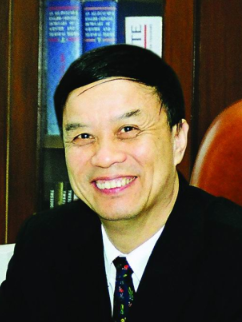 Zude Zhou (周祖德)合作论文数School of Mechanical and Electronic Engineering, Wuhan University of Technology1Yuepeng Song (宋月鹏)合作论文数山东农业大学机电学院1
 Jingeng Mai (麦金耿)合作论文数College of Engineering, Peking University1Pei Huang合作论文数1Chenfei Lv合作论文数1
 Hua Guo (郭华)合作论文数School of Cyber Science and Technology, Beihang University1Xuesong Zhang (张雪松)合作论文数College of Computer Science and Technology, Jilin University1
 Chao Yin (尹超)合作论文数College of Mechanical and Vehicle Engineering, Chongqing University1
 XuDong Chai (柴旭东)合作论文数China Aerospace Science and Industry Corporation Limited1
 Lin, Tingyu合作论文数1
 Dongming Zhao合作论文数1
 Ying Cheng (程颖)合作论文数School of Automation Science and Electrical Engineering, Beihang University1
 Yongkui Liu (刘永奎)合作论文数School of Mechano-Electronic Engineering, Xidian University1
 Baocun Hou (侯宝存)合作论文数Guangdong Midea Cloud Technology Co.,Ltd1




