Thermochemical water-splitting (TCH) based on 2-step thermal redox cycles in metal oxides is a promising approach to generating H2, but state-of-the-art (SOTA) CeO2 has several practical limitations, which has motivated continued materials discovery efforts in this field. Here, we improve upon a SOTA defect graph neural network (dGNN) surrogate model's oxygen vacancy predictions and combine them with materials project phase diagrams to down-select and discover structurally diverse, experimentally known metal oxides whose TCH performance was previously unknown. Amongst twelve candidates selected based on our high-throughput screening and down-selection criteria, we achieved ∼80% accuracy in identifying materials with stable redox cycling and hydrogen production in stagnation flow reactor water-splitting experiments. Closer to 100% accuracy can be achieved if higher-accuracy, hybrid DFT-predicted vacancy formation energies were computed and used in lieu of the most uncertain dGNN-based screening predictions, as they correct false positives to true negatives. Notably, two discovered candidates, Sr3PrMn2O8 and Ba2Fe2O5, display hydrogen yields greater than CeO2 under specific redox conditions. These results demonstrate our ability to computationally predict and experimentally validate promising candidate TCH materials that have the potential to compete with CeO2.
The current status of advanced water splitting pathways (using photoelectrochemical, biological and thermochemical platforms) toward viable technologies to produce renewable and sustainable hydrogen is assessed in a virtual international meeting.
Thermochemical hydrogen (TCH) production offers a promising method for converting thermal energy into hydrogen fuel through heat-driven redox cycles of metal oxides. In this work a defect graph neural network (dGNN) was used to predict oxygen vacancy formation energies Delta H V O combined with Materials Project predictions of oxygen chemical potential stability to screen candidate oxides via high-throughput database analysis. BaFe2O4 was identified as a promising material for experimental validation based on its predicted Delta H V O , oxygen chemical potential stability range, and potential for tunable substitutions to improve thermal properties. Experimental validation using thermogravimetric analysis (TGA), stagnation flow reactor (SFR), X-ray diffraction (XRD), and electron microscopy confirmed positive water-splitting behavior but also revealed limitations in thermal stability under aggressive reduction conditions. To address this, a human-in-the-loop modification strategy was employed introducing Al substitution in BaFe2-x Al x O4; this modification improves thermal stability, alters the crystal structure and enhances overall performance. These results demonstrate a combined computational and experimental workflow in which machine learning accelerates identification of promising candidates, while targeted experimental design enables optimization of functional performance. This approach advances the development of robust, cost-effective TCH materials and highlights the importance of integrating data-driven discovery with human-guided materials design in paving the way for scalable hydrogen production technologies.
The migration of crystallographic defects dictates material properties and performance for a plethora of technological applications. Density functional theory (DFT)-based nudged elastic band (NEB) calculations are a powerful computational technique for predicting defect migration activation energy barriers, yet they become prohibitively expensive for high-throughput screening of defect diffusivities. Without introducing hand-crafted (i.e., chemistry- or structure-specific) descriptors, we propose a generalized deep learning approach to train surrogate models for NEB energies of vacancy migration by hybridizing graph neural networks with transformer encoders and simply using pristine host structures as input. With sufficient training data, computationally efficient and simultaneous inference of vacancy defect thermodynamics and migration activation energies can be obtained to compute temperature-dependent vacancy diffusivities and to down-select candidates for more thorough DFT analysis or experiments. Thus, as we specifically demonstrate for potential water-splitting materials, candidates with desired defect thermodynamics, kinetics, and host stability properties can be more rapidly targeted from open-source databases of experimentally validated or hypothetical materials.
Solar thermochemical hydrogen (STCH) production uses concentrated sunlight to produce hydrogen using reduction/oxidation of metal oxides. Typically, the metal oxide is heated to high temperature (>1400 o C) causing it to release oxygen, then it is cooled to a lower temperature (~<1000 o C) in steam whereby it re-oxidizes, stripping oxygen from water molecules and producing hydrogen. Due to improved stability, non-stoichiometric oxides that do not change phase during the STCH process are typically used, even though the reversible oxygen content is less than phase changing materials. In this presentation, recent progress in developing and experimentally validating new water splitting materials using a defect Graph Neural Network trained on crystal structures derived from density functional theory will be discussed. An experimental screening protocol used to evaluate predicted materials will be presented. Additionally, durability challenges and pathways to testing in reactors on-sun that meet DOE hydrogen production targets will be discussed. SNL is managed and operated by NTESS under DOE NNSA contract DE-NA0003525. Part of the work was performed under the auspices of the US Department of Energy by Lawrence Livermore National Laboratory under contract no. DE-AC52-07NA27344.
Formation and migration energies of crystallographic defects dictate material properties and performance for a plethora of technological applications. Density functional theory (DFT)-based calculations are a powerful computational technique for predicting defect formation energies and migration energy barriers, yet they can become prohibitively expensive for high-throughput materials discovery exercises. Without introducing hand-crafted (i.e., chemistry- or structure-specific) descriptors and using only pristine host structures as input, we propose generalized structure-property defect models by hybridizing defect graph neural networks with transformer encoders to predict these properties. With sufficient training data, computationally efficient and simultaneous inference of vacancy defect thermodynamics and migration activation energies can be obtained to compute temperature-dependent vacancy diffusivities and to down-select candidates for more thorough DFT analysis or experiments. Thus, as we specifically demonstrate for thermochemical water-splitting materials, candidates with desired defect thermodynamics, kinetics, and host stability properties can be rapidly identified and experimentally validated. Figure 1
Phenomenological CALPHAD (CALculation of PHAse Diagrams) models, widely used for multicomponent materials, often contain a considerable number of parameters and require fitting using data from a relatively small number of experimental measurements or theoretical calculations. Sometimes these parameters are introduced for the purpose of improving model fits but without clear physical justification, which leads to over-parameterized models with poor generalization performance. Automated approaches for optimal model selection based on the available data therefore become critical. In this work, a least absolute shrinkage and selection operator (LASSO)-based approach is developed for model selection by leveraging the linearity of the CALPHAD model with respect to its parameters to convert the model selection and fitting to a LASSO minimization problem. We demonstrate its utility for thermodynamic modeling of thermochemical hydrogen (TCH) production materials, using lanthanum strontium manganite (LSM) as an example. Various TCH relevant properties, including oxygen stoichiometry as function of oxygen partial pressure, enthalpy of reduction, and entropy of reduction, are successfully predicted with reasonable accuracy using a minimal set of model parameters. Importantly, the model selection and fitting involve minimal human decision; it can therefore be applied to high-throughput DFT defect calculations and yield efficient workflows for TCH materials modeling and optimization.
Solar thermochemical hydrogen production using redox-active metal oxides is a promising pathway for the production of green hydrogen and synthetic fuel precursors. Herein, the perovskite material (La0.6Sr0.4)(0.95)Mn0.8Ga0.2O3-delta (LSMG6482) is identified as a promising metal oxide for thermochemical water splitting. LSMG6482, along with more-established water splitters ceria and (La0.6Sr0.4)(0.95)MnxAl1-x O3-delta (LSMA) perovskites, is experimentally characterized via thermogravimetric (TGA) analysis and high-temperature water splitting in a reactor simulating solar concentrating conditions. TGA analysis demonstrated that LSMG6482 has high and stable oxygen exchange capacity under controlled pO(2 )redox cycling, demonstrated by large changes in oxygen nonstoichiometry (delta) relative to ceria. Water splitting experiments using laser heating (T red = 1400 degrees C, Tox = 1200 degrees C) resulted in H-2 yields of 165.1 mu mol g(-1) for the candidate LSMG6482 composition, exceeding that of all benchmark materials tested. Under high conversion oxidation conditions, where H2 is cointroduced with H2O (150 <= nH2O/nH2 <= 500), H2 yields were greatest for LSMG6482 and LSMA6482, up to four times that of ceria at the highest nH(2)O/nH(2) conditions. Crystallographic analysis showed that over the course of experimentation, there is some secondary phase growth for all perovskite compositions, except for LSMA6482, but there was no observable degradation in H2 yields.
Solar thermochemical hydrogen (STCH) production from water splitting typically requires performing redox cycles at temperatures above 1200 °C to reduce and re-oxidize the bulk of a reversible material. Bulk processes such as oxygen vacancy formation and oxygen diffusion energies dictate the viability of a material for STCH. The surface plays an important role in the formation and destruction of vacancies and interacts with gas phase water and surface adsorbed species. These surface processes can lead to surface reconfigurations and even the formation of surface phases with stoichiometry and oxygen content very different from the bulk composition. Understanding in-situ the surface chemical state and its evolution under water splitting is important to design nonstoichiometric oxides capable of longer-lasting STCH generation at lower temperatures. In this work, we describe the water splitting active defect sites in LSM ((La0.65Sr0.35)0.95MnO3−δ) and Ga-doped LSM ((La0.6Sr0.4)0.95(Mn0.8Ga0.2)O3−δ) perovskites during Operando thermochemical water splitting conditions using ambient-pressure X-ray photoelectron spectroscopy (AP-XPS) experiments at 800 °C under steam. We show that sub-stoichiometric La+3 in the oxygen-vacancy rich surface at operating conditions can be used to correlate surface water splitting activity and the creation of surface hydroxide intermediates. The addition of Ga in LSM is shown to drastically stabilize the surface chemical composition by preventing Sr segregation and stabilizing catalytically active surface defects that promote the binding of adsorbed hydroxides. We use Operando AP-XPS quantification of metastable surface hydroxide intermediates (La(OH)3) to determine the amount of catalytically active surface sites in LSM (2.9
Synthesis of solar thermochemical hydrogen (STCH) production redox materials with engineered structures, for example, replica foams, can enable efficient heat and mass transport and are critical for scaled-up systems. Prior work has motivated the use of lanthanum strontium manganese (LSM)-type perovskites as foamed STCH materials, but the effect of their morphology on bulk and kinetic behavior has not been reported. In this work, replica and direct foamed samples of La0.65Sr0.35MnO3-delta (LSM35) were fabricated and compared to synthesized powders and dense monoliths, and similarly synthesized CeO2-delta (ceria) foams, regarding their specific reaction rates and bulk oxygen capacity/H-2 yields. Changes in oxygen capacity (Delta delta) and reaction rates were measured between 1200 degrees C and 1400 degrees C by using fixed ratios of steam and hydrogen during both reduction and oxidation steps, allowing for analysis under practical high conversion conditions. Results suggest bulk behavior and reaction rates of the foamed LSM materials are comparable to their powder analogues. Differences in reaction rates were observed only when replica foamed samples were subjected to rapid laser heating (emulating conditions expected in solar furnaces), which is expected but has not been demonstrated at such a small scale. Foamed samples were further subjected to 50 redox cycles at 1400 degrees C to evaluate their stability. Results show no statistically significant decrease in hydrogen production for any of the foamed samples, but the direct foamed samples became brittle with time. Together, these results demonstrate the viability of replica foamed LSM perovskites for integration in scaled-up STCH systems.
We identified the perovskite oxides LaMn0.5Ni0.5O3 (L2MN), Gd0.5La0.5Mn0.5Ni0.5O3 (GLMN), and GdMn0.5Ni0.5O3 (G2MN) as candidate solar thermal chemical hydrogen (STCH) redox mediators from their density functional theory (DFT)-computed electronic and oxygen vacancy properties following a high-throughput computational screening of AA ' BB ' O-6 compositions that are likely to form as perovskites and split water. At a thermal reduction temperature of 1350 degrees C and a water splitting temperature of 850 degrees C, the L2MN and GLMN perovskites produced similar to 65 mu mol g(-1) of hydrogen per cycle with no phase degradation over three redox cycles at 40 mol % steam, while the G2MN perovskite did not produce STCH under these conditions. When reoxidized by exposure to a gas flow with a H2O:H-2 molar ratio of 1333:1, which represents operating conditions where the thermodynamic driving force of water splitting is lowered by orders of magnitude relative to 40 mol % steam, the L2MN and GLMN perovskites each produced similar to 35 mu mol g(-1) of hydrogen per cycle. Guided by DFT, we propose that L2MN and GLMN's STCH activities arise from B-site cation antisite defects that facilitate oxygen vacancy formation and thus redox cycling, whereas the synthesized G2MN has few antisite defects and is therefore inactive for STCH.
The A-site high-entropy perovskite oxide (La1/6Pr1/6Nd1/6Gd1/6Sr1/6Ba1/6)MnO3 with enhanced hydrogen production, phase stability, and surface oxygen exchange kinetics, offering the potential for tailoring properties in the STCH application.
Solar thermochemical hydrogen (STCH) production uses concentrated sunlight to produce hydrogen using reduction/oxidation of metal oxides. Typically, the metal oxide is heated to high temperature (>1400 o C) causing it to release oxygen, then it is cooled to a lower temperature (<1000 o C) in steam whereby it re-oxidizes, stripping oxygen from water molecules and producing hydrogen. Due to improved stability, non-stoichiometric oxides that do not change phase during the STCH process are typically used, even though the reversible oxygen content is less than phase changing materials. HydroGEN (h2awsm.org) is an Energy Materials Network supported by the U.S. Department of Energy’s Hydrogen and Fuel Cell Technologies Office, and is focused on the development of new water splitting materials for STCH by fostering collaboration between U.S. national laboratories and external entities such as academia and industry. In this presentation, recent progress in developing new water splitting materials led by Sandia National Laboratories (SNL) will be presented. STCH performance of select materials predicted from a defect Graph Neural Network trained on crystal structures derived from density functional theory, subsequently synthesized and characterized using thermogravimetric analysis and flow reactor measurements, will be presented. Additionally, there will be discussion of benchmarking metrics and characterization of exemplar STCH materials. Lastly, trends in water splitting materials and durability considerations and challenges for commercialization will be discussed. SNL is managed and operated by NTESS under DOE NNSA contract DE-NA0003525
We present a graph neural network approach that fully automates the prediction of defect formation enthalpies for any crystallographic site from the ideal crystal structure, without the need to create defected atomic structure models as input. Here we used density functional theory reference data for vacancy defects in oxides, to train a defect graph neural network (dGNN) model that replaces the density functional theory supercell relaxations otherwise required for each symmetrically unique crystal site. Interfaced with thermodynamic calculations of reduction entropies and associated free energies, the dGNN model is applied to the screening of oxides in the Materials Project database, connecting the zero-kelvin defect enthalpies to high-temperature process conditions relevant for solar thermochemical hydrogen production and other energy applications. The dGNN approach is applicable to arbitrary structures with an accuracy limited principally by the amount and diversity of the training data, and it is generalizable to other defect types and advanced graph convolution architectures. It will help to tackle future materials discovery problems in clean energy and beyond. Automating materials' defect predictions with graph neural networks, when coupled to first principles thermodynamic calculations, accelerates materials discovery for a variety of high-temperature, clean-energy applications.
We present a graph neural network modeling approach that fully automates the prediction of the DFT-relaxed vacancy formation enthalpy of any crystallographic site from its DFT-relaxed host structure. Applicable to arbitrary structures with an accuracy limited principally by the amount/diversity of the data on which it is trained, this model accelerates the screening of vacancy defects by many orders of magnitude by replacing the DFT supercell relaxations required for each symmetrically unique crystal site. It can thus be used off-the-shelf to rapidly screen 10,000s of crystal structures (which can contain millions of unique defects) from existing databases of DFT-relaxed crystal structures. This modeling approach therefore provides a significant screening and discovery capability for a plethora of applications in which vacancy defects are the primary driver of a material's utility. For example, by high-throughput screening the Materials Project's metal oxides, we rapidly "re-discover" and identify new high potential candidate materials for hydrogen generation via solar thermochemical water splitting and energy storage, for CO2 conversion via reverse water gas shift chemical looping, and for cathodes in solid oxide fuel cells. Thermodynamic modeling on the basis of the high-throughput screening results allows us to connect the predicted defect energies to high temperature process conditions relevant to the different application areas, and we extract the reduction entropies as an additional selection criterion for high-performance materials. Further model development and accumulation of additional training data will only serve to expand the significant utility of this generalizable defect model to solving materials discovery problems in clean energy applications and beyond.
 Eric N Coker合作论文数Sandia Natl Labs32
 Mark Allendorf合作论文数Nanoelectronics and Nanophotonics Group, Sandia National Laboratories, California29
 Andrea Ambrosini合作论文数22
 Kevin F. Mccarty合作论文数Sandia National Laboratories17
 Alan W. Weimer合作论文数Department of Chemical and Biological Engineering, College of Engineering and Applied Science, University of Colorado, Boulder16Farid El Gabaly合作论文数Centro de Microanálisis de Materiales;Universidad Autónoma de Madrid;Centro de Microanálisis de Materiales, Universidad Autónoma de Madrid16
 Jonathan Scheffe合作论文数Department of Chemical and Biological Engineering, University of Colorado15
 Sean R. Bishop合作论文数Redox Power Systems14
 Josh Sugar合作论文数Sandia National Laboratories14
 Matthew Witman合作论文数Univ Calif Berkeley, Dept Chem & Biomol Engn, Berkeley, CA 94720 USA13
 Stephan Lany合作论文数National Renewable Energy Laboratory13
 James E. Miller合作论文数Sandia National Laboratories13
 Hendrik Bluhm合作论文数Department of Inorganic Chemistry, Fritz Haber Institute of the Max Planck Society12
 Tadashi Ogitsu合作论文数Lawrence Livermore National Laboratory12
 Will Chueh合作论文数Department of Materials Science & Engineering, Stanford University;Department of Photon Science, SLAC National Accelerator Laboratory;Mitra Chem12
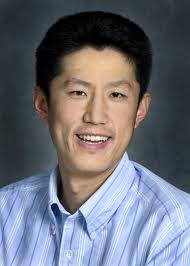 Zhi Liu (刘志)合作论文数Condensed Matter Physics and Photon Science Division, School of Physical Science and Technology, ShanghaiTech University;Shanghai Institute of Microsystem and Information Technology, Chinese Academy of Sciences10Ivan Ermanoski合作论文数10darwin arifin合作论文数Dept Chem & Biol Engn, Univ Colorado9Nicholas A. Strange合作论文数9
 Michael Grass合作论文数Lawrence Berkeley National Laboratory, Lawrence Berkeley Natl. Laboratory9Farid El Gabaly Marquez合作论文数8
 Anuj Goyal合作论文数8
 Jamie Trindell合作论文数8Keith King合作论文数7R. L. Farrow合作论文数7Sarah Shulda合作论文数Natl Renewable Energy Lab7
 Jian Luo (骆建)合作论文数Department of Chemical and Nano Engineering, Jacobs School of Engineering, University of California, San Diego7
 Mark A Rodriguez合作论文数Materials Characterization and Performance Department, Sandia National Laboratories7
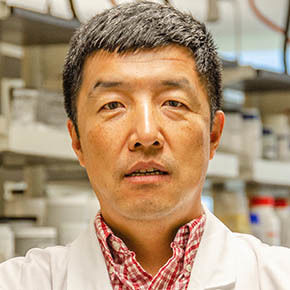 Xingbo Liu合作论文数Department of Mechanical & Aerospace Engineering, Benjamin M. Statler College of Engineering & Mineral Resources, West Virginia University7
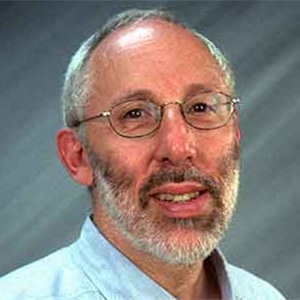 David S Ginley合作论文数National Renewable Energy Laboratory7
 Zahid Hussain合作论文数Department of Material Physics, Materials Sciences Division, Lawrence Berkeley National Laboratory7
 Nathan Phillip Siegel (Nate)合作论文数Department of Mechanical Engineering, Bucknell University7
 Cijie Liu合作论文数Hunan Engn Lab Preparat Technol Polyvinyl Alcohol, Huaihua Univ6Andrew Rowberg合作论文数Mat Dept, Univ Calif Santa Barbara6
 Rob Bell合作论文数Department of Chemistry, University College London6
 Michael Sanders合作论文数6
 Ellen Stechel合作论文数Department of Chemistry, University of California, Los Angeles6James Eujin Park合作论文数5
 Hector de Santiago合作论文数Dept Mech & Aerosp Engn, West Virginia Univ5
 Mark Linne合作论文数School of Engineering, The University of Edinburgh5Fenton Kyle R合作论文数5
 R. E. Shetter合作论文数5
 Tolek Tyliszczak合作论文数Lawrence Berkeley National Laboratory5Huyen N. Dinh合作论文数Department of Chemistry, University of Calgary5
 Gregory S. Jackson合作论文数Mechanical Engineering, University of Maryland College Park5Ja Davidson合作论文数4Wei Li合作论文数4
 Debora Barcellos合作论文数4




