The behaviour of warm water discharge at a temperature higher then Tm horizontally into a homogeneous body of cold fresh water at a temperature lower then Tm was investigated by means of a numerical model. Water density here was taken to be a quadratic function of temperature. Thus cabbeling process was inevitable as positively buoyant water form surface current while penetrating the ambient water. The current halted as mixture became dense and sink. These results are very similar to the experimental study of warm discharge into cold water by Marmoush et al. [14] and Bukreev [22]. The results showed an initially sinking water at the point where the two water bodies meets within the first few time interval. Development of Rayleigh-Taylor instabilities was observed at the lower part of the surface current as lighter fluid penetrate further. The frontal head was found to being replenished by a surface flow of warm unadulterated water, but after much entrainment of ambient fluid and cabbeling then, this head halted and sink. On the floor, denser fluid advance in the same direction as the original surface current, with some degree of Kelvin-Helmholtz instability as it penetrates further. Relations were also drawn that describes the speed, the spread length of both surface current were obtained. Relation were also drawn that describes the final spread length of the surface current Lsm and the time taken to reach that final spread length Tsm as a function ϕin. This work as presented here is practical and relevant to many fields of study and also enhances policy making towards the protection of the aquatic ecosystems.
Viscous dissipation occurs in the boundary layers on the walls of a channel in which a flow is accelerated from rest by the sudden imposition of a pressure gradient. We analyse the thermal boundary layer due to this dissipative heating, obtaining numerical solutions and also asymptotic solutions for the cases of both large and small Prandtl number, with both isothermal and adiabatic wall conditions. With large Pr the temperature rise is controlled by the viscous layer, so is independent of Pr and of the wall condition. With small Pr heat is conducted away from the viscous layer more rapidly, so the temperature rise is reduced as Pr decreases.
ABSTRACT We numerically reproduced the spring riverine thermal bar in the area of the Selenga inflow into Lake Baikal using the nonhydrostatic 2.5D mathematical model. Our model took into account the diurnal variability of the heat fluxes and wind stress on the lake surface based on the atmospheric data from the Babushkin weather station archive during 1–30 May 2015. Propagation of the thermal bar is driven principally by the mechanical and thermal energy of the river inflow together with shortwave radiation while longwave radiation and latent and sensible heat fluxes make smaller contributions. Numerical modeling of the lake hydrodynamics demonstrated that the thermal bar propagation decelerated at night and that strong reverse motion of the thermal bar (toward the shore) was possible within some specific areas due to night cooling and opposing wind. These effects appear following an initial period in which the dynamics are dominated by the river inflow. As the distance from the mouth of the Selenga to the thermal bar increased, the impact of westerly winds on the reverse movement of the thermal bar was reinforced, although the influence of wind does not extend to the full depth of the lake.
Equations for fully developed flow in a vertical channel have been solved, taking into account viscous dissipation, and using formulations with and without pressure work. Perturbation solutions are used to distinguish the effects of viscous dissipation from pressure work. Viscous dissipation has very little effect on free convection flows driven by temperature differences or heat fluxes at the channel walls, but it may play a major role in forced convection.
The behaviour of a discharge of warm water upwards into a homogeneous body of cold fresh water was investigated by means of a numerical model. The discharge has a parabolic velocity profile, with Reynolds number \(Re=50\), Prandtl number \(Pr=7\) and Froude number varied over the range \(0.2 \le {\rm Fr} \le 2.5\). Water density is taken to be a quadratic function of temperature, so that an initially positively buoyant discharge will experience buoyancy reversal as it mixes with an ambient below the temperature of maximum density. The resulting plume has some similarities to a fountain resulting from injection of negatively buoyant fluid upward into a less dense ambient. The plume is initially symmetric, but then its head detaches as it approaches its maximum height. The detached head is denser than the fluid in the plume below it, and the interaction between the sinking head and the rising plume causes a sideways deflection; as this cycle is repeated, the plume displays side-to-side flapping motion and vertical bobbing. As Froude number is increased (i.e. buoyancy reduced) the growth of the plume becomes slower, but the plume eventually reaches a greater height. We obtain empirical power-law scalings for maximum height and time taken to reach that height as functions of Froude number; these scalings are simlar to those for fountains with a linear dependence of density on temperature in the very weak regime.
Laminar plumes from a line source of warm water at the base of a shallow, homogeneous body of cold water (below the temperature of maximum density) were simulated by a computational model. The plume water undergoes buoyancy reversal as it mixes with the cold ambient. If this occurs before the plume has reached the ceiling of the domain, the plume flaps from side to side. Otherwise, it spreads along the ceiling and then sinks, with a vortex enclosed between the rising plume and the sinking flow. Some of the dense, mixed water from the sinking flow is re-entrained into the rising plume, while the rest flows outwards along the floor. However, with high source temperatures, a sufficient volume of warm water eventually builds up to also form a positively buoyant gravity current along the ceiling. (C) 2017 Elsevier Ltd. All rights reserved.
Momentum and energy equations for vertical flow with viscous dissipation are derived and shown to require that the cross‐section mean density is taken as the reference density for calculation of buoyancy forces under the Boussinesq approximation. Solutions are obtained for flow between parallel plane walls, with and without the pressure work as an explicit term in the energy equation. Both walls are at the same temperature, so there is no thermal forcing, but solutions are obtained for all admissible values of dynamic pressure gradient. The passive convection condition, whereby the flow is driven entirely by buoyancy forces resulting from heat generated by the flow's own viscous dissipation, is found on one branch of the dual solutions. However, while theoretically possible, passive convection is not physically realisable with any real fluid.
The spring riverine thermal bar phenomenon is investigated numerically on an example of Lake Baikal, and the spread of pollutants coming from the Selenga River is forecast using the 2.5 D non-hydrostatic model in the Boussinesq approximation. This hydrodynamic model takes into account the diurnal variability of the heat fluxes on the lake surface and the effects of wind and the Earth's rotation. The results of numerical modeling show that the variability of the total heat flux over 24 h plays a significant role in the variation of the thermal bar movement rate that contributes to the rapid mixing of impurities entering with river water. (C) 2016 Elsevier Ltd. All rights reserved.
A recent paper by Umavathi and Shekar addressed an important problem in thermal convection, but is unfortunately marred by several inadequacies.
In this paper, the phenomenon of the thermal bar in Lake Baikal and the propagation of pollutants from the Selenga River are studied with a nonhydrostatic mathematical model. An unsteady flow is simulated by solving numerically a system of thermal convection equations in the Boussinesq approximation using second-order implicit difference schemes in both space and time. To calculate the velocity and pressure fields in the model, an original procedure for buoyant flows, SIMPLED, which is a modification of the well-known Patankar and Spalding's SIMPLE algorithm, has been developed. The simulation results have shown that the thermal bar plays a key role in propagation of pollution in the area of Selenga River inflow into Lake Baikal.
The ratio of uphill pace to downhill pace in a foot race up and down a single mountain is used as a measure of a competitor's descending skills - those qualities which are needed for fast descent but not for ascent. For the set of competitors in each of 44 races on seven courses of differing gradients and terrain roughnesses, we calculate the variance of this pace ratio and do linear regressions of pace ratio on finish time and on competitors' age. The variances tend to be greater for races on steeper and rougher terrain, indicating a greater influence of descending skills on actual descent speeds in these races. The regression analysis shows a clear negative correlation with finish time, indicating that faster finishers tend to be those with better descending skills, but there is little evidence of correlation with age. Significant differences between the sexes are only found in races on the most difficult terrain, where men display better descending skills than women.
Route choice through mountainous terrain requires a knowledge of how pace (the reciprocal of speed) varies with gradient of ascent or descent. To model this variation for runners, we analyse record times for 91 uphill and 15 downhill races or race stages. The pace is modelled as a nonlinear function of gradient and a linear function of race duration, using ordinary least squares to obtain a best fit. For the gradient-dependence, six functional forms are compared, of which a quartic is found to fit the data best; however, at steep gradients the quartic model is unrealistic and it may be argued that a linear model is more appropriate. Critical gradients, at which a runner's vertical speed (uphill or downhill) is maximised, may be calculated from a nonlinear model, although it appears that there is no uphill critical gradient within the range of our dataset.
The orienteering route choice problem involves finding the fastest route between two given points, with running speed determined by various properties of the terrain. In this study, I consider only the effect of climbing or descending on running speed. If a runner's pace p (the reciprocal of speed) varies linearly with gradient m, the straight-line route always is fastest. However, a nonlinear formulation for p(m), with d2p/dm2?>?0, will more accurately model runners capabilities. As a result, critical gradients may exist for ascent and/or descent, such that optimal routes will never ascend or descend more steeply than the critical gradient. I review and propose several formulations for the pace function p(m) and calculate their critical gradients. In principle, the EulerLagrange equation can be used to find optimal routes between arbitrary points on any topography where the height can be expressed as a smooth function of horizontal coordinates. I obtain first integrals of this equation for idealized landforms: hillsides with straight contours and axisymmetric hills. Next, optimal routes are computed for various combinations of start- and endpoints on these landforms based on various pace functions. These routes are classified as either subcritical or maximal steepness: The former ascends or descends less steeply than the critical gradient; the latter takes the line of steepest ascent where it is not steeper than the critical gradient, but follows a curve at the critical gradient where the slope is steeper. In some cases, the optimal route zigzags up or down a hill along sections of a critical-gradient curve.
We consider two-dimensional viscous flow driven by buoyancy forces resulting from a quadratic horizontal density variation in an unbounded domain between horizontal walls. The density is a quadratic function of the concentration of a tracer, so we solve a Navier-Stokes equation under the Boussinesq approximation, together with an advection-diffusion equation for the tracer. Stagnation-point similitude eliminates dependence on the horizontal coordinate. For the case of small Grashof number (large viscosity), the flow passes through three stages. A transient adjusts from the initial condition of static fluid to a “quasi-steady” regime in which buoyancy and viscous forces are in balance. The flow and temperature gradient slowly intensify until eventually the non-linear advection terms become dominant. The flow then enters its final phase, in which a more rapid intensification leads to a singularity in finite time. Analysis is by a combination of asymptotic methods and numerical computation. While no rigorous proof has been found that blow-up occurs, the numerical results support an asymptotic calculation premised on the occurrence of blow-up. ∗Email: a.kay@lboro.ac.uk
WeatherVolume 67, Issue 3 p. 83-83 Letter Scottish weather in Mendelssohn's music Anthony Kay, Corresponding Author Anthony Kay Loughborough UniversityLoughborough UniversitySearch for more papers by this author Anthony Kay, Corresponding Author Anthony Kay Loughborough UniversityLoughborough UniversitySearch for more papers by this author First published: 27 February 2012 https://doi.org/10.1002/wea.1914Read the full textAboutPDF ToolsRequest permissionExport citationAdd to favoritesTrack citation ShareShare Give accessShare full text accessShare full-text accessPlease review our Terms and Conditions of Use and check box below to share full-text version of article.I have read and accept the Wiley Online Library Terms and Conditions of UseShareable LinkUse the link below to share a full-text version of this article with your friends and colleagues. Learn more.Copy URL Share a linkShare onFacebookTwitterLinked InRedditWechat No abstract is available for this article. Volume67, Issue3March 2012Pages 83-83 RelatedInformation
Standard concurrency control mechanisms offer a trade-off: Transactional memory approaches maximize concurrency, but suffer high overheads and cost for retrying in the case of actual contention. Locking offers lower overheads, but typically reduces concurrency due to the difficulty of associating locks with the exact data that need to be accessed. Moreover, locking allows irreversible operations, is ubiquitous in legacy software, and seems unlikely to ever be completely supplanted. We believe that the trade-off between transactions and (blocking) locks has not been sufficiently exploited to obtain a "best of both worlds" mechanism, although the main components have been identified. Mechanisms for converting locks to atomic sections (which can abort and retry) have already been proposed in the literature: Rajwar and Goodman's "lock elision" (at the hardware level) and Welc et al.'s hybrid monitors (at the software level) are the best known representatives. Nevertheless, these approaches admit improvements on both the generality and the performance front. In this position paper we present two ideas. First, we discuss an adaptive criterion for switching from a locking to a transactional implementation, and back to a locking implementation if the transactional one appears to be introducing overhead for no gain in concurrency. Second, we discuss the issues arising when locks are nested. Contrary to assertions in past work, transforming locks into transactions can be incorrect in the presence of nesting. We explain the problem and provide a precise condition for safety.
Turbulent buoyant plumes in cold fresh water are analysed, assuming a quadratic dependence of density on temperature. The model is based on the assumption that entrainment velocity is proportional to vertical velocity in the plume. Numerical and asymptotic solutions are obtained for both rising and descending plumes from virtual sources with all possible combinations of buoyancy, volume and momentum fluxes. Physical sources can be identified as points on trajectories of plumes from virtual sources. The zero-buoyancy condition, at which the plume and the ambient have equal densities but their temperatures are on opposite sides of the temperature of maximum density, is of particular importance. If an upwardly buoyant plume rising through a body of water reaches the surface before passing through its zero-buoyancy level, it will form a surface gravity current; otherwise, the plume water will return to the source as a fountain. The height at which zero buoyancy is attained generally decreases as the source momentum flux increases: greater plume velocity produces greater entrainment and hence more rapid temperature change. Descending plumes, if ejected downwards against upward buoyancy, may be classified as strongly or weakly forced according to whether they reach the zero-buoyancy condition before being brought to rest. If they do, they continue to descend with favourable buoyancy; otherwise, they may form an inverted fountain. Once a descending plume has attained downward buoyancy, it can continue to descend indefinitely, ultimately behaving like a plume in a fluid with a linear equation of state. In contrast, a rising plume will eventually come to rest, however large its initial upward buoyancy and momentum fluxes are.
We present the TIC (Transactions with Isolation and Cooperation) model for concurrent programming. TIC adds to standard transactional memory the ability for a transaction to observe the effects of other threads at selected points. This allows transactions to cooperate, as well as to invoke nonrepeatable or irreversible operations, such as I/O. Cooperating transactions run the danger of exposing intermediate state and of having other threads change the transaction's state. The TIC model protects against unanticipated interference by having the type system keep track of all operations that may (transitively) violate the atomicity of a transaction and require the programmer to establish consistency at appropriate points. The result is a programming model that is both general and simple. We have used the TIC model to re-engineer existing lock-based applications including a substantial multi-threaded web mail server and a memory allocator with coarse-grained locking. Our experience confirms the features of the TIC model: It is convenient for the programmer, while maintaining the benefits of transactional memory.
We consider surface gravity currents in fresh water where the temperatures of the current and the ambient are on opposite sides of the temperature of maximum density. Buoyancy reversal may occur in the current, due to entrainment of ambient water to produce a mixture that is denser than the ambient. Using an empirical parametrisation of entrainment in lock-release gravity currents, the distance travelled and time taken before the current is arrested due to buoyancy reversal are calculated as functions of the initial temperatures. This is done for two-dimensional and axisymmetric geometries, with a free surface and with a no-slip lid. The distance travelled and the speed of the current both increase with increasing initial buoyancy, but the distance is limited by loss of fluid from the head of the current to its tail; the time taken depends on the balance between these effects. There is greater entrainment under a no-slip lid than a free surface, so gravity currents generally travel further in the latter case.
 Alabodite M. George合作论文数3Bair O. Tsydenov合作论文数3
 A. V. Starchenko合作论文数Tomsk State University3
 Michal Young合作论文数University of Oregon, USA2
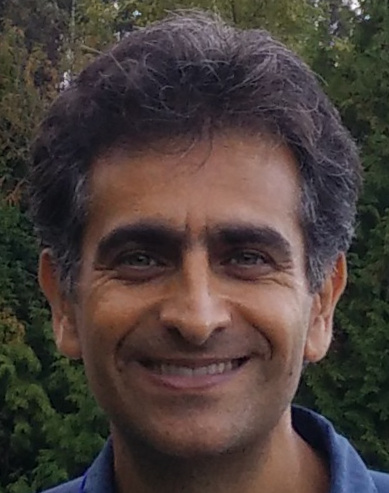 Yannis Smaragdakis合作论文数Department of Informatics and Telecommunications, University of Athens2
 Paul Holland合作论文数British Antarctic Survey;University of Bristol2Reimer Behrends合作论文数2H. K. Kuiken合作论文数1Vincenzo Botte合作论文数1




