We study example selection methods for few- 001 shot text-to-SQL tasks with unseen databases. 002 Annotating natural language questions with cor- 003 responding SQL queries is expensive, but we 004 can use abundant unlabeled questions to effi- 005 ciently select examples to annotate and then 006 use them to adapt models. Many previous 007 works only randomly sample a few instances 008 for few-shot learning, but this random selec- 009 tion is not sufficient to select representative and 010 informative examples that provide specific do- 011 main knowledge. We thus explore methods to 012 efficiently choose annotation examples. We 013 identify two important factors: the diversity of 014 selected instances and the dissimilarity to the 015 source training data if any. A diverse training 016 set contains more domain knowledge, while 017 dissimilar examples are selected to fill in the 018 domain gap between the source and target. We 019 show that our best example selection approach 020 substantially improves few-shot text-to-SQL 021 performance in both finetuning using T5 and 022 in-context learning with Codex: average execu- 023 tion accuracy gains of 8.7% and 4.3% over ran- 024 dom selection. Our extensive analysis demon- 025 strates the importance of the similarity metric 026 and the embedding method for example repre- 027 sentations. We also find that effective example 028 selection reduces syntax errors on the target 029 domains. Our results encourage future work to 030 further explore example selection for efficient 031 adaptation of text-to-SQL models. 1 032
Standard conversational semantic parsing maps a complete user utterance into an executable program, after which the program is executed to respond to the user. This could be slow when the program contains expensive function calls. We investigate the opportunity to reduce latency by predicting and executing function calls while the user is still speaking. We introduce the task of online semantic parsing for this purpose, with a formal latency reduction metric inspired by simultaneous machine translation. We propose a general framework with first a learned prefix-to-program prediction module, and then a simple yet effective thresholding heuristic for subprogram selection for early execution. Experiments on the SMCalFlow and TreeDST datasets show our approach achieves large latency reduction with good parsing quality, with a 30%–65% latency reduction depending on function execution time and allowed cost.
Text-to-SQL parsers map natural language questions to programs that are executable over tables to generate answers, and are typically evaluated on large-scale datasets like Spider (Yu et al., 2018). We argue that existing benchmarks fail to capture a certain out-of-domain generalization problem that is of significant practical importance: matching domain specific phrases to composite operation over columns. To study this problem, we first propose a synthetic dataset along with a re-purposed train/test split of the Squall dataset (Shi et al., 2020) as new benchmarks to quantify domain generalization over column operations, and find existing state-of-the-art parsers struggle in these benchmarks. We propose to address this problem by incorporating prior domain knowledge by preprocessing table schemas, and design a method that consists of two components: schema expansion and schema pruning. This method can be easily applied to multiple existing base parsers, and we show that it significantly outperforms baseline parsers on this domain generalization problem, boosting the underlying parsers' overall performance by up to 13.8% relative accuracy gain (5.1% absolute) on the new Squall data split.
In natural language understanding (NLU) production systems, users' evolving needs necessitate the addition of new features over time, indexed by new symbols added to the meaning representation space. This requires additional training data and results in ever-growing datasets. We present the first systematic investigation of this incremental symbol learning scenario. Our analysis reveals a troubling quirk in building broad-coverage NLU systems: as the training dataset grows, performance on the new symbol often decreases if we do not accordingly increase its training data. This suggests that it becomes more difficult to learn new symbols with a larger training dataset. We show that this trend holds for multiple mainstream models on two common NLU tasks: intent recognition and semantic parsing. Rejecting class imbalance as the sole culprit, we reveal that the trend is closely associated with an effect we call source signal dilution, where strong lexical cues for the new symbol become diluted as the training dataset grows. Selectively dropping training examples to prevent dilution often reverses the trend, showing the over-reliance of mainstream neural NLU models on simple lexical cues. Code, models, and data are available at https://aka.ms/nlu-incremental-symbol-learning
Collecting data for conversational semantic parsing is a time-consuming and demanding process. In this paper we consider, given an incomplete dataset with only a small amount of data, how to build an AI-powered human-in-the-loop process to enable efficient data collection. A guided K-best selection process is proposed, which (i) generates a set of possible valid candidates; (ii) allows users to quickly traverse the set and filter incorrect parses; and (iii) asks users to select the correct parse, with minimal modification when necessary. We investigate how to best support users in efficiently traversing the candidate set and locating the correct parse, in terms of speed and accuracy. In our user study, consisting of five annotators labeling 300 instances each, we find that combining keyword searching, where keywords can be used to query relevant candidates, and keyword suggestion, where representative keywords are automatically generated, enables fast and accurate annotation.
We describe a span-level supervised attention loss that improves compositional generalization in semantic parsers. Our approach builds on existing losses that encourage attention maps in neural sequence-to-sequence models to imitate the output of classical word alignment algorithms. Where past work has used word-level alignments, we focus on spans; borrowing ideas from phrase-based machine translation, we align subtrees in semantic parses to spans of input sentences, and encourage neural attention mechanisms to mimic these alignments. This method improves the performance of transformers, RNNs, and structured decoders on three benchmarks of compositional generalization.
We explore the use of large pretrained language models as few-shot semantic parsers. The goal in semantic parsing is to generate a structured meaning representation given a natural language input. However, language models are trained to generate natural language. To bridge the gap, we use language models to paraphrase inputs into a controlled sublanguage resembling English that can be automatically mapped to a target meaning representation. Our results demonstrate that with only a small amount of data and very little code to convert into English-like representations, our blueprint for rapidly bootstrapping semantic parsers leads to surprisingly effective performance on multiple community tasks, greatly exceeding baseline methods also trained on the same limited data.
Conversational semantic parsers map user utterances to executable programs given dialogue histories composed of previous utterances, programs, and system responses. Existing parsers typically condition on rich representations of history that include the complete set of values and computations previously discussed. We propose a model that abstracts over values to focus prediction on typeand function-level context. This approach provides a compact encoding of dialogue histories and predicted programs, improving generalization and computational efficiency. Our model incorporates several other components, including an atomic span copy operation and structural enforcement of well-formedness constraints on predicted programs, that are particularly advantageous in the low-data regime. Trained on the SMCALFLOW and TREEDST datasets, our model outperforms prior work by 7.3% and 10.6% respectively in terms of absolute accuracy. Trained on only a thousand examples from each dataset, it outperforms strong baselines by 12.4% and 6.4%. These results indicate that simple representations are key to effective generalization in conversational semantic parsing.
When faced with learning challenging new tasks, humans often follow sequences of steps that allow them to incrementally build up the necessary skills for performing these new tasks. However, in machine learning, models are most often trained to solve the target tasks directly.Inspired by human learning, we propose a novel curriculum learning approach which decomposes challenging tasks into sequences of easier intermediate goals that are used to pre-train a model before tackling the target task. We focus on classification tasks, and design the intermediate tasks using an automatically constructed label hierarchy. We train the model at each level of the hierarchy, from coarse labels to fine labels, transferring acquired knowledge across these levels. For instance, the model will first learn to distinguish animals from objects, and then use this acquired knowledge when learning to classify among more fine-grained classes such as cat, dog, car, and truck. Most existing curriculum learning algorithms for supervised learning consist of scheduling the order in which the training examples are presented to the model. In contrast, our approach focuses on the output space of the model. We evaluate our method on several established datasets and show significant performance gains especially on classification problems with many labels. We also evaluate on a new synthetic dataset which allows us to study multiple aspects of our method.
We propose HyperDynamics, a dynamics meta-learning framework that conditions on an agent's interactions with the environment and optionally its visual observations, and generates the parameters of neural dynamics models based on inferred properties of the dynamical system. Physical and visual properties of the environment that are not part of the low-dimensional state yet affect its temporal dynamics are inferred from the interaction history and visual observations, and are implicitly captured in the generated parameters. We test HyperDynamics on a set of object pushing and locomotion tasks. It outperforms existing dynamics models in the literature that adapt to environment variations by learning dynamics over high dimensional visual observations, capturing the interactions of the agent in recurrent state representations, or using gradient-based meta-optimization. We also show our method matches the performance of an ensemble of separately trained experts, while also being able to generalize well to unseen environment variations at test time. We attribute its good performance to the multiplicative interactions between the inferred system properties -- captured in the generated parameters -- and the low-dimensional state representation of the dynamical system.
TACRED is one of the largest and most widely used sentence-level relation extraction datasets. Proposed models that are evaluated using this dataset consistently set new state-of-the-art performance. However, they still exhibit large error rates despite leveraging external knowledge and unsupervised pretraining on large text corpora. A recent study suggested that this may be due to poor dataset quality. The study observed that over 50% of the most challenging sentences from the development and test sets are incorrectly labeled and account for an average drop of 8% f1-score in model performance. However, this study was limited to a small biased sample of 5k (out of a total of 106k) sentences, substantially restricting the generalizability and broader implications of its findings. In this paper, we address these shortcomings by: (i) performing a comprehensive study over the whole TACRED dataset, (ii) proposing an improved crowdsourcing strategy and deploying it to re-annotate the whole dataset, and (iii) performing a thorough analysis to understand how correcting the TACRED annotations affects previously published results. After verification, we observed that 23:9% of TACRED labels are incorrect. Moreover, evaluating several models on our revised dataset yields an average f1-score improvement of 14:3% and helps uncover significant relationships between the different models (rather than simply offsetting or scaling their scores by a constant factor). Finally, aside from our analysis we also release Re-TACRED, a new completely re-annotated version of the TACRED dataset that can be used to perform reliable evaluation of relation extraction models.
We propose HyperDynamics, a framework that conditions on an agent’s interactions with the environment and optionally its visual observations, and generates the parameters of neural dynamics models based on inferred properties of the dynamical system. Physical and visual properties of the environment that are not part of the low-dimensional state yet affect its temporal dynamics are inferred from the interaction history and visual observations, and are implicitly captured in the generated parameters. We test HyperDynamics on a set of object pushing and locomotion tasks. It outperforms existing dynamics models in the literature that adapt to environment variations by learning dynamics over high dimensional visual observations, capturing the interactions of the agent in recurrent state representations, or using gradient-based meta-optimization. We also show our method matches the performance of an ensemble of separately trained experts, while also being able to generalize well to unseen environment variations at test time. We attribute its good performance to the multiplicative interactions between the inferred system properties—captured in the generated parameters—and the low-dimensional state representation of the dynamical system.
Many machine learning systems today are trained on large amounts of human-annotated data. Data annotation tasks that require a high level of competency make data acquisition expensive, while the resulting labels are often subjective, inconsistent, and may contain a variety of human biases. To improve the data quality, practitioners often need to collect multiple annotations per example and aggregate them before training models. Such a multi-stage approach results in redundant annotations and may often produce imperfect "ground truth" that may limit the potential of training accurate machine learning models. We propose a new end-to-end framework that enables us to: (i) merge the aggregation step with model training, thus allowing deep learning systems to learn to predict ground truth estimates directly from the available data, and (ii) model difficulties of examples and learn representations of the annotators that allow us to estimate and take into account their competencies. Our approach is general and has many applications, including training more accurate models on crowdsourced data, ensemble learning, as well as classifier accuracy estimation from unlabeled data. We conduct an extensive experimental evaluation of our method on 5 crowdsourcing datasets of varied difficulty and show accuracy gains of up to 25% over the current state-of-the-art approaches for aggregating annotations, as well as significant reductions in the required annotation redundancy.
Many machine learning systems today are trained on large amounts of human-annotated data. Annotation tasks that require a high level of competency make data acquisition expensive, while the resulting labels are often subjective, inconsistent, and may contain a variety of human biases. To improve data quality, practitioners often need to collect multiple annotations per example and aggregate them before training models. Such a multi-stage approach results in redundant annotations and may often produce imperfect ``ground truth'' labels that limit the potential of training supervised machine learning models. We propose a new end-to-end framework that enables us to: (i) merge the aggregation step with model training, thus allowing deep learning systems to learn to predict ground truth estimates directly from the available data, and (ii) model difficulties of examples and learn representations of the annotators that allow us to estimate and take into account their competencies. Our approach is general and has many applications, including training more accurate models on crowdsourced data, ensemble learning, as well as classifier accuracy estimation from unlabeled data. We conduct an extensive experimental evaluation of our method on 5 crowdsourcing datasets of varied difficulty and show accuracy gains of up to 25% over the current state-of-the-art approaches for aggregating annotations, as well as significant reductions in the required annotation redundancy.
Relation extraction (RE) aims to predict a relation between a subject and an object in a sentence, while knowledge graph link prediction (KGLP) aims to predict a set of objects, O, given a subject and a relation from a knowledge graph. These two problems are closely related as their respective objectives are intertwined: given a sentence containing a subject and an object o, a RE model predicts a relation that can then be used by a KGLP model together with the subject, to predict a set of objects O. Thus, we expect object o to be in set O. In this paper, we leverage this insight by proposing a multi-task learning approach that improves the performance of RE models by jointly training on RE and KGLP tasks. We illustrate the generality of our approach by applying it on several existing RE models and empirically demonstrate how it helps them achieve consistent performance gains.
We consider the task of knowledge graph link prediction. Given a question consisting of a source entity and a relation (e.g., Shakespeare and BornIn), the objective is to predict the most likely answer entity (e.g., England). Recent approaches tackle this problem by learning entity and relation embeddings. However, they often constrain the relationship between these embeddings to be additive (i.e., the embeddings are concatenated and then processed by a sequence of linear functions and element-wise non-linearities). We show that this type of interaction significantly limits representational power. For example, such models cannot handle cases where a different projection of the source entity is used for each relation. We propose to use contextual parameter generation to address this limitation. More specifically, we treat relations as the context in which source entities are processed to produce predictions, by using relation embeddings to generate the parameters of a model operating over source entity embeddings. This allows models to represent more complex interactions between entities and relations. We apply our method on two existing link prediction methods, including the current state-of-the-art, resulting in significant performance gains and establishing a new state-of-the-art for this task. These gains are achieved while also reducing convergence time by up to 28 times.
Current state-of-the-art NMT systems use large neural networks that are not only slow to train, but also often require many heuristics and optimization tricks, such as specialized learning rate schedules and large batch sizes. This is undesirable as it requires extensive hyperparameter tuning. In this paper, we propose a curriculum learning framework for NMT that reduces training time, reduces the need for specialized heuristics or large batch sizes, and results in overall better performance. Our framework consists of a principled way of deciding which training samples are shown to the model at different times during training, based on the estimated difficulty of a sample and the current competence of the model. Filtering training samples in this manner prevents the model from getting stuck in bad local optima, making it converge faster and reach a better solution than the common approach of uniformly sampling training examples. Furthermore, the proposed method can be easily applied to existing NMT models by simply modifying their input data pipelines. We show that our framework can help improve the training time and the performance of both recurrent neural network models and Transformers, achieving up to a 70 decrease in training time, while at the same time obtaining accuracy improvements of up to 2.2 BLEU.
Graph-based algorithms are among the most successful paradigms for solving semi-supervised learning tasks. Recent work on graph convolutional networks and neural graph learning methods has successfully combined the expressiveness of neural networks with graph structures. We propose a technique that, when applied to these methods, achieves state-of-the-art results on semi-supervised learning datasets. Traditional graph-based algorithms, such as label propagation, were designed with the underlying assumption that the label of a node can be imputed from that of the neighboring nodes. However, real-world graphs are either noisy or have edges that do not correspond to label agreement. To address this, we propose Graph Agreement Models (GAM), which introduces an auxiliary model that predicts the probability of two nodes sharing the same label as a learned function of their features. The agreement model is used when training a node classification model by encouraging agreement only for the pairs of nodes it deems likely to have the same label, thus guiding its parameters to better local optima. The classification and agreement models are trained jointly in a co-training fashion. Moreover, GAM can also be applied to any semi-supervised classification problem, by inducing a graph whenever one is not provided. We demonstrate that our method achieves a relative improvement of up to 72% for various node classification models, and obtains state-of-the-art results on multiple established datasets.
We propose an algorithm for deep learning on networks and graphs. It relies on the notion that many graph algorithms, such as PageRank, Weisfeiler-Lehman, or Message Passing can be expressed as iterative vertex updates. Unlike previous methods which rely on the ingenuity of the designer, Deep Graphs are adaptive to the estimation problem. Training and deployment are both efficient, since the cost is $O(|E| + |V|)$, where $E$ and $V$ are the sets of edges and vertices respectively. In short, we learn the recurrent update functions rather than positing their specific functional form. This yields an algorithm that achieves excellent accuracy on both graph labeling and regression tasks.
Model selection is a problem that has occupied machine learning researchers for a long time. Recently, its importance has become evident through applications in deep learning. We propose an agreement-based learning framework that prevents many of the pitfalls associated with model selection. It relies on coupling the training of multiple models by encouraging them to agree on their predictions while training. In contrast with other model selection and combination approaches used in machine learning, the proposed framework is inspired by human learning. We also propose a learning algorithm defined within this framework which manages to significantly outperform alternatives in practice, and whose performance improves further with the availability of unlabeled data. Finally, we describe a number of potential directions for developing more flexible agreement-based learning algorithms.
 Tom Mitchell合作论文数Machine Learning Department, School of Computer Science, Carnegie Mellon University8
 Sam Thomson合作论文数Microsoft6
 Adam Pauls合作论文数Waymo5
 Barnabás Póczos合作论文数Machine Learning Department, School of Computer Science, Carnegie Mellon University5
 Otilia Stretcu合作论文数Google4
 Jason Eisner合作论文数Department of Computer Science, Whiting School of Engineering, Johns Hopkins University;Center for Language and Speech Processing, Whiting School of Engineering, Johns Hopkins University4
 Jacob Andreas合作论文数Department of Electrical Engineering and Computer Science, Massachusetts Institute of Technology3
 Subhro Roy合作论文数Massachusetts Institute of Technology3
 George Stoica合作论文数School of Interactive Computing, Georgia Institute of Technology;Reasoning, AI, and VisioN Lab, Paul G. Allen School of Computer Science & Engineering, University of Washington;Ai23
 Yu Su (苏煜)合作论文数3
 Graham Neubig合作论文数Language Technologies Institute, School of Computer Science, Carnegie Mellon University3
 Benjamin Van Durme合作论文数Department of Computer Science, Whiting School of Engineering, Johns Hopkins University;Department of Cognitive Science, Krieger School of Arts & Sciences, Johns Hopkins University3
 Sotirios Chatzis合作论文数Department of Electrical and Computer Engineering and Informatics, Cyprus University of Technology2
 Maruan Al-Shedivat合作论文数Genesis Therapeutics2
 Zhou Xian合作论文数Robotics Institute, Carnegie Mellon University2
 Shamit Lal合作论文数Amazon2
 Eric P. Xing合作论文数Computer Science Department, School of Computer Science, Carnegie Mellon University;Mohamed bin Zayed University of Artificial Intelligence;Petuum2
 Charles Chen合作论文数2
 Dan Klein合作论文数Department of Electrical Engineering & Computer Sciences, University of California, Berkeley;Scaled Cognition2
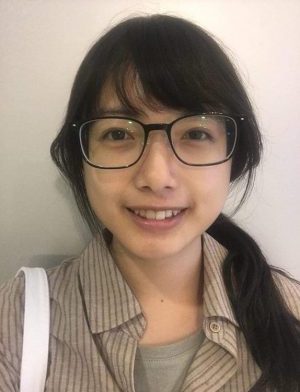 Hsiao-Yu (Fish) Tung (童筱妤)合作论文数DeepMind2
 Richard Shin合作论文数DeepMind2
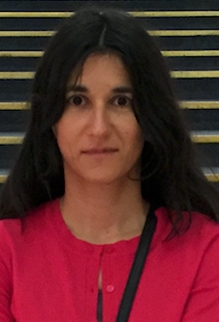 Katerina Fragkiadaki合作论文数Manufacturing Futures Institute, College of Engineering, Carnegie Mellon University;Machine Learning Department, School of Computer Science, Carnegie Mellon University2
 Hao Fang (方昊)合作论文数Microsoft Semantic Machines2
 Alex Kyte合作论文数1Aleksandr Nisnevich合作论文数Microsoft Semant Machines1Michael Newman合作论文数DRAGON SYST INC,320 NEVADA ST,NEWTON,MA 02160, USA1
 Mrinmaya Sachan合作论文数Department of Computer Science, ETH Zürich1
 Alan J.X. Guo (郭嘉祥)合作论文数Center for Applied Mathematics, Tianjin University1
 Anton Belyy合作论文数Center of Language and Speech Processing, Johns Hopkins University;Apple1
 Ashish Kapoor合作论文数Scaled Foundations1
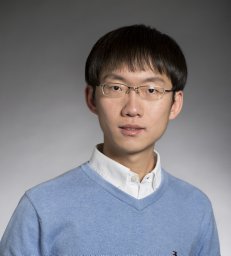 Pengcheng Yin (殷鵬程)合作论文数Google DeepMind1
 Elias Stengel-Eskin合作论文数Multimodal Understanding, Reasoning, and Generation for Language Lab, University of North Carolina, Chapel Hill1
 Jiawei (Joe) Zhou合作论文数Department of Applied Mathematics & Statistics, College of Engineering and Applied Sciences, Stony Brook University;Department of Computer Science, Stony Brook University1
 Chen Zhao合作论文数Department of Computer Science, NYU Shanghai1Krishnamurthy Viswanathan合作论文数Google1
 Eric Horvitz合作论文数Microsoft1
 Avrim Blum合作论文数Toyota Technological Institute at Chicago1
 Alex Smola合作论文数Boson AI1
 Jason Wolfe合作论文数Room #: Hall-Atwater Labs 1541
 Sujith Ravi合作论文数SliceX AI1
 Abulhair Saparov合作论文数Purdue University1
 Andrew Tomkins合作论文数Google1
 Dana Movshovitz-Attias合作论文数Google Research1
 Chieh-Yang Huang (黃介揚)合作论文数College of Information Sciences and Technology, Penn State University1
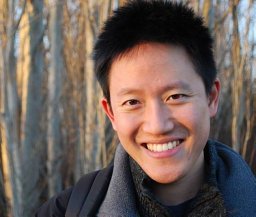 Christopher H. Lin合作论文数1
 Yuchen Zhang (张雨辰)合作论文数Microsoft1
 Jayant Krishnamurthy合作论文数Douro Labs;Jump Trading Group1




