Climate change and policy are unevenly experienced across nations, social groups, households, sectors, and generations. Understanding how benefits and burdens of climate action can be equitably shared is therefore critical. While the cornerstone concept of 'common but differentiated responsibilities and respective capabilities' is broadly accepted, the absence of consensus on equitable effort-sharing principles presents a challenge that permeates science underpinning climate policy. Climate-energy-economy models exhibit considerable conceptual, structural, and technical limitations in constructing equitable climate futures: they aggregate diverse Global South countries into homogeneous regions, fail to capture critical elements of international climate finance, and tend to produce one-size-fits-all strategies with limited consideration of local contexts. Model-based studies, additionally, have been argued to reflect Global North narratives in international scenario ensembles, assume persisting inequalities between the Global North and the Global South in the future, obscure ethical or normative choices behind operationalised principles of justice, and fail to systematically include stakeholders and scientists from the Global South. Here, we explore how modelling science can be more inclusive and effective in recognising these issues and co-constructing just climate futures. While acknowledging the inherent limitations of any modelling exercise, we argue that progress depends on several key actions, including meaningfully collaborating with stakeholders and scientists from other disciplines and critically from hitherto underrepresented and underfunded regions, incorporating wider policy priorities beyond mitigation, improving data and modelling capabilities to better represent the varied conditions of different communities, and integrating elements, policies, and governance structures that are indispensable to representing climate finance considerations.
South Africa’s internationally celebrated water legislation placed the responsibility for investing in water services at the door of the government. In recent years South Africa has struggled to invest adequately to keep up with growing demand for these services. The result is a suite of social, economic and environmental risks that are destabilising to the fiscus and the financial sector. This paper explored both operating and capital costs, and applied the ‘Beyond the Gap’ analysis to show that an additional 55% investment (R91 billion annually) is necessary to ensure South Africa meets its water policy goals. The analysis explores the factors that influence the investment amount and shows that a combination of policy choices and exogenous factors such as climate change could render the investment gap anywhere between 30% and 90% of the estimated current allocation to the water sector. The most significant savings are attributed to reducing the extent of “non-revenue water”, an energy transition away from coal, sharing of some water taps between (up to) five houses, reduced water allocations to agriculture, investments in invasive alien plant (IAP) clearing in water catchments above dams, and water demand management, capacity building and more efficient integration of different bulk water schemes. The study revealed important dependencies between capital and operating costs; where operating costs are ignored, the decay of water infrastructure is accelerated. Showing the contingency of investment needs on policy choices, places responsibility for attaining water policy goals and SDG 6 in the hands of a diverse set of actors. Quantifying the investment need also raises the critical question of how to raise the required investment. Recognising the need to balance risks to financiers with the widespread risks to households, companies and government when investment in water services is inadequate, South Africa is exploring a Monetary Architecture approach of inter-balance sheet relationships in an attempt to mobilise investment from new sources.
The Summary for Urban Policymakers (SUP) initiative provides a distillation of the IPCC reports into accessible and targeted summaries that can help inform action at city and regional scales. This is a collection of the three volumes of the SUP series combined together.
The second volume in the Summary for Urban Policymakers (SUP) series, Climate Change in Cities and Urban Areas: Impacts, Adaptation and Vulnerability, offers a concise and accessible distillation of the IPCC Working Group II Report. Cities are places of high risks from climate change, resulting from the interaction of climate change hazards, the exposure of infrastructure, people and ecosystems, the vulnerability of exposed elements and communities, and the negative or unintended effects of responses to climate change to people and ecosystems. This report assesses the feasibility and effectiveness of different adaptation options but highlights that adaptation has limits and can even lead to maladaptation, triggering unintended effects which increase risk, emissions and lock-ins. It synthesises the latest evidence on the necessary urban-led transformation, as well as evidence on operationalizing the five simultaneous system transitions across land, coastal, ocean and freshwater ecosystems; cities, regions, and infrastructure; energy and industrial systems, accelerated by societal choices. Cities and urban areas have a critical role to play in the climate resilient development needed to meet goals of climate change, human wellbeing, and ecosystem health challenges.
Applied research has evolved to play an important role in understanding and reorienting relationships between different knowledge partnerships in urban sustainability. This paper reflects on experiences from the global South on knowledge co-production experiments through 'CityLabs', which are forums for bringing together different knowledge brokers (particularly government and academia) to co-produce policy-relevant urban knowledge. Each CityLab experimented with different configurations to generate knowledge relevant for addressing urban sustainability challenges. This paper reflects on these experiences and identifies emerging common principles. These include: deliberate formulation of safe spaces, in which to engage, willingness for flexibility around the direction, focus and outputs, and carefully fostering trust and mutual understanding among participants. Urban experimentation, and CityLabs in particular, provide real opportunities for facilitating learning, reframing issues and shifting practices around urban sustainability between government and the academy.
The Special Report on 1.5°C assesses three main themes: • What would be required to limit warming to 1.5°C (mitigation pathways) • The impacts of 1.5°C of warming, compared to 2ºC and higher • Strengthening the global response to climate change; mitigation and adaptation options The connections between climate change and sustainable development and efforts to eradicate poverty are discussed throughout the report. This chapter takes sustainable development as the starting point and focus for analysis. It considers the broad and multifaceted bi-directional interplay between sustainable development, including its focus on eradicating poverty and reducing inequality in their multidimensional aspects, and climate actions in a 1.5°C warmer world. These fundamental connections are embedded in the Sustainable Development Goals (SDGs). The chapter also examines synergies and trade-offs of adaptation and mitigation options with sustainable development and the SDGs and offers insights into possible pathways, especially climate-resilient development pathways towards a 1.5°C warmer world.
Linda Steg (Netherlands/EU) SR1.5 Lead Author – Chapter 4 The Summary for Urban Policymakers synthesises the key scientific findings and policy observations from the Special Report on Global Warming of 1.5°C (SR1.5) for officials and policymakers of the world’s cities and urban areas. It details the significance of exceeding a 1.5°C global warming limit, including in urban settings, whilst outlining the four systems transitions – energy, land use and ecosystems, urban and infrastructure, and industry – needed to develop 1.5°C-consistent pathways. It focuses in particular on the urban systems transition, including the necessary enabling conditions, as well as the political, economic and social feasibility of the necessary adaptation and mitigation actions. The document clarifies knowledge gaps and research priorities for urban climate change mitigation and adaptation. Cities and urban areas need to be at the forefront of developing 1.5°C-consistent pathways as shown in this report.
Climate science must be accessible to urban policymakers, because without them, there will be no limiting global warming to 1.5°C.As eighteen of the authors representing all 5 chapters of the Special Report on Global Warming of 1.5°C (SR1.5),we have produced the following Summary for Urban Policymakers to translate the report's key scientific findings and policy observations for officials and policymakers of the world's cities and urban areas.Though the SR1.5 primarily speaks to national and international decision-makers, we have produced this synthesis for a simple reason: climate science must be accessible to urban policymakers, because without them, there will be no limiting global warming to 1.5°C.In cities and urban areas, there are actions that policymakers-along with residents and stakeholders, such as civil society, the academic community, and those in business and finance-can take to help limit warming and adapt to the impacts of climate change.The effects of a city's actions are not limited to its own borders or region, and, likewise, lessons learned in some cities and urban areas can serve as inspiration and resources for solutions in other urban areas.This Summary for Urban Policymakers is synthesised from SR1.5, the Fifth Assessment Report of the Intergovernmental Panel on Climate Change (IPCC), and relevant supporting research.It builds on thirty years of science from the IPCC and climate diplomacy.The Paris Agreement, signed in 2015 within the United Nations Framework Convention on Climate Change (UNFCCC), committed signatories to maintaining global warming to well below 2.0°C above pre-industrial levels and pursuing efforts to limit this increase to 1.5°C.In 2016, the IPCC accepted an invitation from the UNFCCC to prepare a scientific report on the impacts of global warming of 1.5°C and related pathways to reduce global greenhouse gas emissions.Published in 2018, the resulting report is shifting the global conversation on climate change.The SR1.5 identifies cities and urban areas as one of four critical global systems that can accelerate and upscale climate action, but recognizes this will require major transitions in how both mitigation and adaptation are undertaken.This Summary for Urban Policymakers has been produced in discussion with city practitioners and policymakers, as well as leading city networks and non-governmental organizations.It seeks to provide urban stakeholders access to the most advanced science on why the transition to a 1.5°C world is necessary and how it can be achieved.
Resilience building has become a growing policy agenda, particularly for urban risk management. While much of the resilience agenda has been shaped by policies and discourses from the global North, its applicability for cities of the global South, particularly African cities, has not been sufficiently assessed. Focusing on rights of urban citizens as the object to be made resilient, rather than physical and ecological infrastructures, may help to address many of the root causes that characterize the unacceptable risks that urban residents face on a daily basis. Linked to this idea, we discuss four entry points for grounding a rights and justice orientation for urban resilience. First, notions of resilience must move away from narrow, financially oriented risk analyses. Second, opportunities must be created for “negotiated resilience”, to allow for attention to processes that support these goals, as well as for the integration of diverse interests. Third, achieving resilience in ways that do justice to the local realities of diverse urban contexts necessitates taking into account endogenous, locally situated processes, knowledges and norms. And finally, urban resilience needs to be placed within the context of global systems, providing an opportunity for African contributions to help reimagine the role that cities might play in these global financial, political and science processes.
The economic and environmental effects of a carbon tax in South Africa: A dynamic cge modelling approachSouth Africa’s National Treasury released its Carbon Tax Policy Paper in May 2013. The paper proposed a R120/tCO2-equiv. levy on coal, gas and petroleum fuels. Here, we model the possible impacts of such a tax on the South African economy using the computable general equilibrium (CGE) 53-sector model of the University of Pretoria’s Department of Economics. The model shows that the carbon tax has the capacity to decrease South Africa’s greenhouse gas (GHG) emissions by between 1 900MtCO2-equiv. and 2 300MtCO2-equiv. between 2016 and 2035. The extent of emissions reductions is most sensitive to the rate at which tax exemptions are removed. Recycling of carbon tax revenue reduces the extent of emissions reductions due to the fact that economic growth is supported. The manner in which carbon tax revenue is recycled back into the economy is therefore important in terms of the extent of emissions reductions achieved, but not as significant as the influence of different exemption schedules. The model shows the carbon tax to have a net negative impact on South Africa’s gross domestic product (GDP) relative to the baseline under all exemption regimes and all revenue recycling options assessed. The negative impact of the carbon tax on GDP is, however, greatly reduced by the manner in which the tax revenue is recycled. Recycling in the form of a production subsidy for all industries results in the lowest negative impact on GDP.
INTRODUCTION How do cities take effective decisions in the management of climate change impacts and in organising their functions, communities and economies so as to reduce emissions? This is not a trivial question. City of Cape Town officials, like their counterparts around the world, are being urged from all quarters to demonstrate pro-activity and leadership in the face of climate change (McKinsey 2009; Stern et al. 2006; UNEP 2010; WWF 2011). However, the process of taking the types of decisions that are effective in reducing climate change risk is poorly defined, prone to lobbying influence and unnerving for officials.
This study represents the first attempt at an integrated approach to assessing the potential impacts of climate change on the national economy of South Africa via a number of (but not necessarily all) impact channels. The study focuses on outcomes by about 2050. The results show the multiple impacts of climate change and the importance of spatial and temporal variation in these impacts. The study focused in particular on the potential impacts of climate change on the water supply sector, dry-land agriculture, hydropower, roads infrastructure costs and sea level rise. These factors have not been previously considered in a fully integrated way for South Africa. The study considers two future global emissions scenarios-- an Unconstrained Emission Scenario (UCE) where global policies to reduce emissions fail to materialize and a Level 1 Stabilization Scenario (L1S) where aggressive emissions policies are pursued. Based on the full range of impact channels considered, economic impacts are showed to be potentially significant particularly resulting from additional roads infrastructure costs and variability in dryland agricultural yields, with only limited impacts due to variability in the ability to supply future water demands. The total impact of climate change on the level of real GDP by about 2050 is found to range between -3.8% and 0.3% compared with a fictional 'no climate change' baseline. While positive outcomes are possible, results indicate that, for the very large majority of climate futures, the impact on total GDP will be negative. The median result shows that by 2050, South Africa.s real GDP level will be about 1.5% lower than in the baseline scenario. This translates into a 0.03 percentage point decline in average annual real GDP growth rate. The net present value of the potential impact on GDP out to 2050 is highly variable, ranging from losses of R 930 billion to gains of R 310 billion (real 2007 Rand). About 96% of the climates scenarios show overall losses. The median loss in NPV is approximately Rand 259 billion which, at more than 10% of 2007 GDP, is sizeable and should motivate for action in terms of both mitigation and consideration and funding of potential adaptation scenarios.
Cities are increasingly recognised as places in which climate change risks coalesce and from which climate change adaptation efforts are most likely to be mobilised. In an effort to reduce damages from storm surges and sea-level rise, the City of Cape Town municipal government set out to establish a coastal set-back line. This paper describes the process and highlights the potential for unanticipated conflict and resistance when notions of ‘best practice’ fail to consider local institutional interests and pre-existing legislation. This insight is important as coastal municipalities in South Africa look to implement set-back lines in compliance with the Integrated Coastal Management Act (Act 24 of 2008). McKenna et al. [McKenna, J., Cooper, A., & O'Hagan, A.M., Managing by principle: A critical analysis of the european principles of integrated coastal zone management (ICZM). Marine Policy, 32, 941–955. doi:10.1016/j.marpol.2008.02.005] elucidate the potential for conflicts and contradictions when applying the principles of Integrated Coastal Zone Management in Europe. Developing and a applying a set-back line for Cape Town's coastline was anticipated to be difficult given that the city remains socio-economically unequal and spatially segregated and that the coastline provides multiple different communities with amenities, resources and opportunities at the same time. What was not anticipated was the encountered resistance from within public sector directorates operating under the same policies. The paper suggests that differences in mentalities, technologies and resources (following Wood, J., and Shearing, C., (2007) Imagining security. Devon: Willan Publishing) make for subjective policy interpretations and applications by local officials. Recognising and managing these differences is critical if notions of ‘best practice’ prescribed at higher governance levels are to prove useful to climate change adaptation measures at the local scale.
Calls for greater engagement between academia and society to address mounting societal problems persist. The African Centre for Cities, a University of Cape Town research entity, set up the CityLab programme to broker interdisciplinary engagement, both across academic disciplines and between academia and broader society, to engage with the issues pertinent to sustainable urban development in Cape Town. CityLabs were formed around specific themes and sought to share and co-produce knowledge. Reflections on the running of six distinct CityLabs within this innovative programme over the first 2years corroborate views emerging in the literature around the outcomes of, and challenges to, interdisciplinary work. The creation of productive and engaged communities, emerging publications and the professional growth and development of researchers heading up the CityLabs stand testimony to the success of the programme. Challenges include issues around micro-politics, getting people to move out of their disciplinary and practice biases, the difficulties of writing and producing knowledge in interdisciplinary groups, and the fact that this type of work takes longer than standard research work. Reflections suggest that the personal biography of the research leader of each CityLab, the role of funders, the history of the discipline in question, and the actual space in which meetings are held are significant influencing factors in determining how interdisciplinary work plays out.
This paper describes the design and application of a benefit-cost model to the city of Durban’s (South Africa) climate change adaptation options. The approach addresses the inability to compile an accurate damage-cost function for economic prioritizations at the local level. It proposes that uncertainty over climate impacts and the efficacy of adaptation responses, in conjunction with the lack of economic data, high levels of economic informality and inequality make it difficult to link adaptation efforts to positive GDP impact in Durban. Instead, the research based its calculations of “benefits” on the number of people impacted and the extent of the welfare benefits imparted by the respective adaptation efforts. It also took into account the uncertainty over future events, capacity constraints, priorities of decision makers and the risk of maladaptation. The results were reported as benefit-cost ratios for 16 clusters of interventions (many of which were primarily the responsibility of one municipal department or agency) in each of four future scenarios (defined by minor or major climate change and weak or strong socio-institutional capacity). The paper presents and discusses the benefit-cost ratios and total benefits for each of the intervention clusters in each of the future scenarios. It emphasizes how these are influenced by choices of time frames. It also highlights how the most efficient interventions across all futures and time frames tend to be socio-institutional – for instance the creation of a cross-sectoral disaster management forum, sea level rise preparedness and early warning system, and creating climate change adaptation capacity within the water services unit. Ecosystem-based adaptation measures had moderate benefit-cost ratios, probably because in Durban the land that needs to be purchased for this is relatively expensive. Infrastructure-based clusters generally had the lowest benefit-cost ratios.
From the Olympics to the World Cup, mega sporting events are a source of enjoyment for tens of thousands of people, but can also be a source of intense debate and controversy. This insightful Handbook addresses a number of central questions, including: How are host cities selected and under what economic conditions? How are these events organized, and how is local resistance overcome? Based on historical and empirical experience, what are the pitfalls for the organizers of these events? What are the potential economic benefits, including any international image effects? How can the costs be minimized and the benefits maximized for host cities and countries? How do these mega events impact the challenges of globalization and what is their environmental legacy?
 Seth Schultz合作论文数C40 Cities Climate Leadership Group, New York, USA6
 Aromar Revi合作论文数6
 William D. Solecki合作论文数Florida State University5Ian Klaus合作论文数4
 Chandni Singh合作论文数School of Environment and Sustainability, Indian Institute for Human Settlements4
 Francois Engelbrecht合作论文数Global Change Institute, University of the Witwatersrand4
 E.M. (Linda) Steg合作论文数Department Environmental Psychology, Faculty of Behavioural and Social Sciences, University of Groningen4
 Darryl Colenbrander合作论文数Environmental Resource Management, City of Cape Town4
 Paolo Bertoldi合作论文数Joint Research Centre;Institute for Environment and Sustainability;Joint Research Centre, Institute for Environment and Sustainability4
 Debora Ley合作论文数3
 Kiane de Kleijne合作论文数Corresponding author3
 Amir Bazaz合作论文数Indian Inst Human Settlements3
 Adelle Thomas合作论文数Univ Bahamas, Climate Change Adaptat & Resilience Res Ctr, Nassau, Bahamas3
 Gina Ziervogel合作论文数Department of Environmental & Geographical Science, Faculty of Science, University of Cape Town3
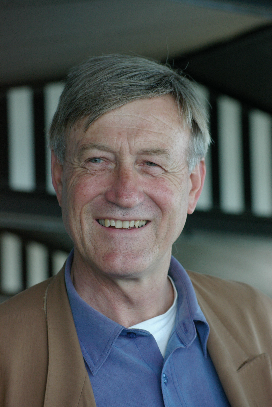 Peter William Geoffrey Newman合作论文数Department of Sustainability, Curtin University3
 Jean-Charles Hourcade合作论文数centre national de la recherche scientifique3
 Anna Taylor合作论文数3
 M. S. Buckeridge合作论文数Department of Botany, Institute of Biosciences, University of Sao Paulo3Heleen De Coninck合作论文数Energy Research Centre of the Netherlands3Henri Waisman合作论文数3
 Mark Pelling合作论文数Department of Risk and Disaster Reduction, University College London;Institute for Risk and Disaster Reduction, University College London;King's College London3Mustafa H. Babiker合作论文数3
 Myles Mander合作论文数2Gregg Oelofse合作论文数2
 James Cullis合作论文数2
 Fernando Aragon-Durand合作论文数yahoo2Shagun Mehrotra合作论文数2
 Liliana Miranda Sara合作论文数Foro Ciudades Vida2
 Shreya Some合作论文数Ahmedabad University2
 Christopher H Trisos合作论文数Univ Maryland, Natl Socioenvironm Synth Ctr, Annapolis, MD 21401 USA2
 Riyanti Djalante合作论文数Institute for the Advanced Study of Sustainability (UNU-IAS),, United Nations University2
 Drew Shindell合作论文数Earth & Climate Sciences Division, Nicholas School of the Environment, Duke University;School of the Environment and Earth Sciences, Tel Aviv University;UN Environment2
 Minal Pathak合作论文数2
 Diana Liverman合作论文数School of Geography Development and Environment, College of Social & Behavioral Sciences, The University of Arizona2
 Colenbrander Sarah合作论文数Department of Geography, Trinity College;University of KwaZulu-Natal, Makerere University;Commissioner Health Services, Ministry of Health;University of KwaZulu-Natal, University of Leeds2
 Daniela Jacob合作论文数Climate Service Center Germany, Helmholtz-Zentrum Hereon GmbH;Centre for Materials and Coastal Research, Helmholtz-Centre Geesthacht2
 Kristie Ebi合作论文数Department of Global Health, School of Public Health, University of Washington2
 Debra Roberts合作论文数Environm Planning & Climate Protect Dept, Ethekwini Municipal2
 Bronwyn Hayward合作论文数2
 Pippin Ml Anderson合作论文数African Centre for Cities, University of Cape Town2
 Keywan Riahi合作论文数International Institute for Applied Systems Analysis2
 Matthias Garschagen合作论文数School of Global, Urban and Social Studies, Royal Melbourne Institute of Technology;Department of Geography, Ludwig-Maximilians-Universität München;Faculty of Geosciences, Ludwig-Maximilians-Universität München2
 Ibidun O. Adelekan合作论文数Department of Geography, University of Ibadan2
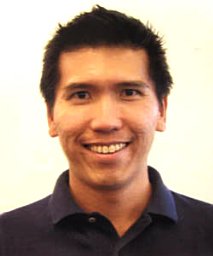 Winston T. L. Chow合作论文数School of Geographical Sciences, Arizona State University2
 Joyashree Roy合作论文数Environmental Energy;Technologies Division;Environmental Energy|Technologies Division2
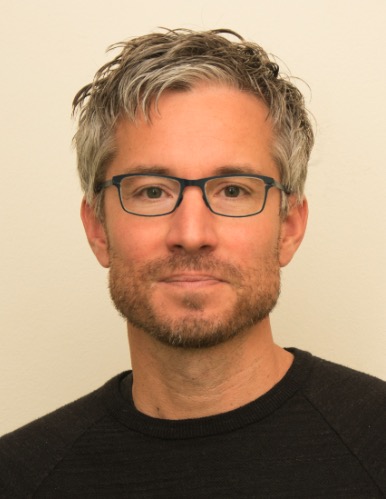 Timon Mcphearson合作论文数Environmental Studies Department, College of Arts & Science, New York University;Climasens;Stockholm Resilience Centre2
 Taishi Sugiyama合作论文数2
 Reinhard Mechler合作论文数International Institute for Applied Systems Analysis (IIASA), Laxenburg, Austria2
 James Nelson Blignaut合作论文数Department of Economics, University of Pretoria2




