The Summary for Urban Policymakers (SUP) initiative provides a distillation of the IPCC reports into accessible and targeted summaries that can help inform action at city and regional scales. This is a collection of the three volumes of the SUP series combined together.
The SUP Action Agenda provides the perspective of city and business leaders in response to the three volumes of the Summary for Urban Policymakers (SUP) of the Intergovernmental Panel on Climate Change’s Sixth Assessment Report (IPCC AR6). The Action Agenda explicitly focuses on the policy and solution space, outlining both the opportunities for, and business investments required, to incentivize engagement from all relevant stakeholder communities for co-created solutions to the climate change crisis. While grounded in the scientific understanding of the climate crisis, the Action Agenda goes beyond the SUP Series and the foundational IPCC reports to include inputs from city and business leaders. Distinct from the official SUP Series, which is authored by the scientific community with input from practitioners, the Action Agenda is written from the perspective of city and business leaders and organizations that represent them.
Xuemei Bai and colleagues call for long-term, cross-disciplinary studies to reduce carbon emissions and urban risks from global warming. Xuemei Bai and colleagues call for long-term, cross-disciplinary studies to reduce carbon emissions and urban risks from global warming.
Meeting the ambitions of the Paris Agreement will require rapid and massive decarbonization of cities, as well as adaptation. Capacity and requirement differs across cities, with challenges and opportunities for transformational action in both the Global North and South.
The Special Report on 1.5°C assesses three main themes: • What would be required to limit warming to 1.5°C (mitigation pathways) • The impacts of 1.5°C of warming, compared to 2ºC and higher • Strengthening the global response to climate change; mitigation and adaptation options The connections between climate change and sustainable development and efforts to eradicate poverty are discussed throughout the report. This chapter takes sustainable development as the starting point and focus for analysis. It considers the broad and multifaceted bi-directional interplay between sustainable development, including its focus on eradicating poverty and reducing inequality in their multidimensional aspects, and climate actions in a 1.5°C warmer world. These fundamental connections are embedded in the Sustainable Development Goals (SDGs). The chapter also examines synergies and trade-offs of adaptation and mitigation options with sustainable development and the SDGs and offers insights into possible pathways, especially climate-resilient development pathways towards a 1.5°C warmer world.
Linda Steg (Netherlands/EU) SR1.5 Lead Author – Chapter 4 The Summary for Urban Policymakers synthesises the key scientific findings and policy observations from the Special Report on Global Warming of 1.5°C (SR1.5) for officials and policymakers of the world’s cities and urban areas. It details the significance of exceeding a 1.5°C global warming limit, including in urban settings, whilst outlining the four systems transitions – energy, land use and ecosystems, urban and infrastructure, and industry – needed to develop 1.5°C-consistent pathways. It focuses in particular on the urban systems transition, including the necessary enabling conditions, as well as the political, economic and social feasibility of the necessary adaptation and mitigation actions. The document clarifies knowledge gaps and research priorities for urban climate change mitigation and adaptation. Cities and urban areas need to be at the forefront of developing 1.5°C-consistent pathways as shown in this report.
Climate science must be accessible to urban policymakers, because without them, there will be no limiting global warming to 1.5°C.As eighteen of the authors representing all 5 chapters of the Special Report on Global Warming of 1.5°C (SR1.5),we have produced the following Summary for Urban Policymakers to translate the report's key scientific findings and policy observations for officials and policymakers of the world's cities and urban areas.Though the SR1.5 primarily speaks to national and international decision-makers, we have produced this synthesis for a simple reason: climate science must be accessible to urban policymakers, because without them, there will be no limiting global warming to 1.5°C.In cities and urban areas, there are actions that policymakers-along with residents and stakeholders, such as civil society, the academic community, and those in business and finance-can take to help limit warming and adapt to the impacts of climate change.The effects of a city's actions are not limited to its own borders or region, and, likewise, lessons learned in some cities and urban areas can serve as inspiration and resources for solutions in other urban areas.This Summary for Urban Policymakers is synthesised from SR1.5, the Fifth Assessment Report of the Intergovernmental Panel on Climate Change (IPCC), and relevant supporting research.It builds on thirty years of science from the IPCC and climate diplomacy.The Paris Agreement, signed in 2015 within the United Nations Framework Convention on Climate Change (UNFCCC), committed signatories to maintaining global warming to well below 2.0°C above pre-industrial levels and pursuing efforts to limit this increase to 1.5°C.In 2016, the IPCC accepted an invitation from the UNFCCC to prepare a scientific report on the impacts of global warming of 1.5°C and related pathways to reduce global greenhouse gas emissions.Published in 2018, the resulting report is shifting the global conversation on climate change.The SR1.5 identifies cities and urban areas as one of four critical global systems that can accelerate and upscale climate action, but recognizes this will require major transitions in how both mitigation and adaptation are undertaken.This Summary for Urban Policymakers has been produced in discussion with city practitioners and policymakers, as well as leading city networks and non-governmental organizations.It seeks to provide urban stakeholders access to the most advanced science on why the transition to a 1.5°C world is necessary and how it can be achieved.
As a greater fraction of the world's residents moves to cities, urban-scale policies will play a critical role in mitigating global climate change. Recognizing this role, many city governments around the world are developing greenhouse gas (GHG) reduction targets and action plans. Despite their ambition, however, these jurisdictions often lack the capability to prioritize actions based on the scale of GHG abatement potential and to use mitigation assessment to set and a plan on how to meet (often ambitious) emissions targets. This paper helps to address these gaps by (a) developing a general typology of urban-scale emission-reduction technologies and practices, (b) identifying policies and measures that can support their adoption, (c) assessing their relative abatement potential in the nearer (2020) and longer (2050) term and (d) examining the relative degree of influence that urban jurisdictions can wield with respect to realizing these potentials. Local jurisdictions can use this typology as an initial screening tool to identify technologies and practices with higher GHG abatement potential, especially those in the transport and buildings sectors, as well as policies and measures that may support them. Researchers can use the results to inform priorities for further development of standardized analytical methods, toolkits and indicators.
Lead Authors: Mustafa Babiker (Sudan), Paolo Bertoldi (Italy), Marcos Buckeridge (Brazil), Anton Cartwright (South Africa), Wenjie Dong (China), James Ford (Canada/UK), Sabine Fuss (Germany), JeanCharles Hourcade (France), Debora Ley (Guatemala/Mexico), Reinhard Mechler (Germany), Peter Newman (Australia), Anastasia Revokatova (Russian Federation), Seth Schultz (USA), Linda Steg (Netherlands), Taishi Sugiyama (Japan)
This report, a collaborative effort of more than 50 organisations brought together by the Coalition for Urban Transitions, outlines the immense social and economic benefits of creating compact, connected and clean cities with net-zero emissions, and presents a clear six-part action plan for national governments around the world. Zero-carbon cities offer a powerful lever to secure economic prosperity and boost living standards across a country – all while tackling the climate crisis. City governments cannot realise this opportunity alone. National governments have unique and crucial roles to play.
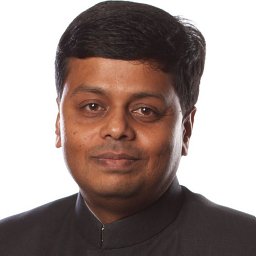 Aromar Revi合作论文数6
 Anton Cartwright合作论文数6William D. Solecki合作论文数Florida State University5Ian Klaus合作论文数4
 Francois Engelbrecht合作论文数Global Change Institute, University of the Witwatersrand4
 E.M. (Linda) Steg合作论文数Department Environmental Psychology, Faculty of Behavioural and Social Sciences, University of Groningen4
 Debra Roberts合作论文数Environm Planning & Climate Protect Dept, Ethekwini Municipal4
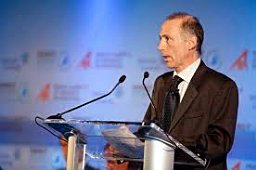 Paolo Bertoldi合作论文数Joint Research Centre;Institute for Environment and Sustainability;Joint Research Centre, Institute for Environment and Sustainability4
 Debora Ley合作论文数3
 Kiane de Kleijne合作论文数Corresponding author3
 Amir Bazaz合作论文数Indian Inst Human Settlements3
 Chandni Singh合作论文数School of Environment and Sustainability, Indian Institute for Human Settlements3
 Colenbrander Sarah合作论文数Department of Geography, Trinity College;University of KwaZulu-Natal, Makerere University;Commissioner Health Services, Ministry of Health;University of KwaZulu-Natal, University of Leeds3
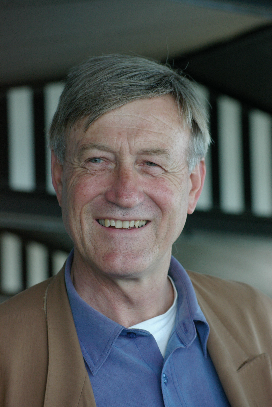 Peter William Geoffrey Newman合作论文数Department of Sustainability, Curtin University3
 Jean-Charles Hourcade合作论文数centre national de la recherche scientifique3
 M. S. Buckeridge合作论文数Department of Botany, Institute of Biosciences, University of Sao Paulo3Heleen De Coninck合作论文数Energy Research Centre of the Netherlands3Henri Waisman合作论文数3
 Shobhakar Dhakal合作论文数School of Environment, Resources and
Development, Asian Institute of Technology;Department of
Energy, Environment and Climate Change, Asian Institute of Technology3
Shobhakar Dhakal合作论文数School of Environment, Resources and
Development, Asian Institute of Technology;Department of
Energy, Environment and Climate Change, Asian Institute of Technology3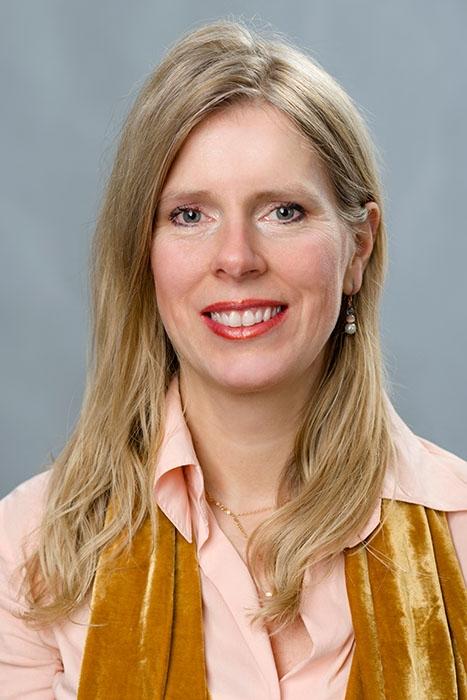 Diana Urge-Vorsatz合作论文数Department of Environmental Sciences and Policy, Central European University3Mustafa H. Babiker合作论文数3
 Fernando Aragon-Durand合作论文数yahoo2Shagun Mehrotra合作论文数2
 Adelle Thomas合作论文数Univ Bahamas, Climate Change Adaptat & Resilience Res Ctr, Nassau, Bahamas2
 Shreya Some合作论文数Ahmedabad University2
 Riyanti Djalante合作论文数Institute for the Advanced Study of Sustainability (UNU-IAS),, United Nations University2
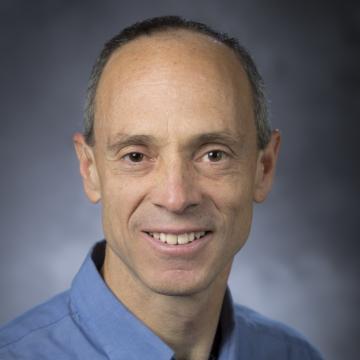 Drew Shindell合作论文数Earth & Climate Sciences Division, Nicholas School of the Environment, Duke University;School of the Environment and Earth Sciences, Tel Aviv University;UN Environment2
 Diana Liverman合作论文数School of Geography Development and Environment, College of Social & Behavioral Sciences, The University of Arizona2
 Daniela Jacob合作论文数Climate Service Center Germany, Helmholtz-Zentrum Hereon GmbH;Centre for Materials and Coastal Research, Helmholtz-Centre Geesthacht2
 Kristie Ebi合作论文数Department of Global Health, School of Public Health, University of Washington2
 Bronwyn Hayward合作论文数2
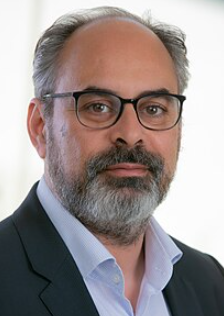 Keywan Riahi合作论文数International Institute for Applied Systems Analysis2
 Joyashree Roy合作论文数Environmental Energy;Technologies Division;Environmental Energy|Technologies Division2
 Taishi Sugiyama合作论文数2
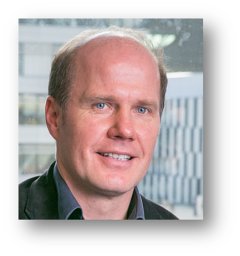 Reinhard Mechler合作论文数International Institute for Applied Systems Analysis (IIASA), Laxenburg, Austria2
 Aliyu Salisu Barau合作论文数Department of Geography;College of Education, Federal;Department of Geography, Federal College of Education2
 Chukwumerije Okereke合作论文数Center for Climate and Development, Alex Ekwueme Federal University Ndufu-Alike Nigeria2
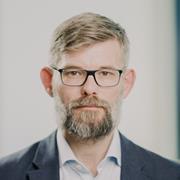 Joeri Rogelj合作论文数Centre for Environmental Policy, Faculty of Natural Sciences, Imperial College London;Grantham Institute, Imperial College London;International Institute for Applied Systems Analysis2
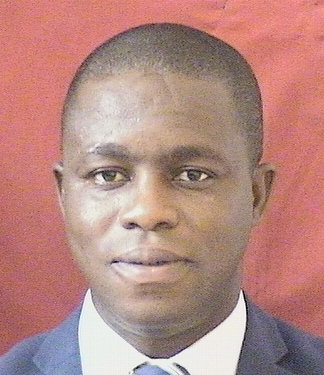 Philip Antwi-Agyei合作论文数Department of Environmental Sciences, Kwame Nkrumah University of Science and Technology2
 Richard Dawson合作论文数School of Engineering, Newcastle University2j kala合作论文数1Maria Virginia Vilariño合作论文数1S. Fuss合作论文数1
 A.K.M Saiful Islam合作论文数1Solomone Fifita合作论文数1Joana Portugal Pereira合作论文数1nenenteiti tearikiruatu合作论文数1Diana Hinge Salili合作论文数1Simon Parkinson合作论文数1




