Automatic speech recognition (ASR) models are normally trained to operate over single utterances, with a short duration of less than 30 seconds. This choice has been made in part due to computational constraints, but also reflects a common, but often inaccurate, modeling assumption that treats utterances as independent and identically distributed samples. When long-format audio recordings are available, to work with such systems, these recordings must first be segmented into short utterances and processed independently. In this work, we show that due to recent algorithmic and hardware advances, this is no longer necessary, and current attention-based approaches can be used to train ASR systems that operate on sequences of over an hour in length. Therefore, to gain a better understanding of the relationship between the training/evaluation sequence length and performance, we train ASR models on large-scale data using 10 different sequence lengths from 10 seconds up to 1 h. The results show a benefit from using up to 21.8 minutes of context, with up to a 14.2% relative improvement from a short context baseline in our primary experiments. Through modifying various architectural components, we find that the method of encoding positional information and the model's width/depth are important factors when working with long sequences. Finally, a series of evaluations using synthetic data are constructed to help analyse the model's use of context. From these results, it is clear that both linguistic and acoustic aspects of the distant context are being used by the model.
Diffusion and flow matching TTS faces a tension between discrete temporal structure and continuous spectral modeling. Two-stage models diffuse on fixed alignments, often collapsing to mean prosody; single-stage models avoid explicit durations but suffer alignment instability. We propose a jump-diffusion framework where discrete jumps model temporal structure and continuous diffusion refines spectral content within one process. Even in its one-shot degenerate form, our framework achieves 3.37
Autoregressive speech synthesis often adopts a left-to-right order, yet generation order is a modelling choice. We investigate decoding order through masked diffusion framework, which progressively unmasks positions and allows arbitrary decoding orders during training and inference. By interpolating between identity and random permutations, we show that randomness in decoding order affects speech quality. We further compare fixed strategies, such as and with adaptive ones, such as Top-K, finding that fixed-order decoding, including the dominating left-to-right approach, is suboptimal, while adaptive decoding yields better performance. Finally, since masked diffusion requires discrete inputs, we quantise acoustic representations and find that even 1-bit quantisation can support reasonably high-quality speech.
Most artificial neural networks do not directly incorporate a memory of previous experiences, instead using training data to parameterise a model, and then discarding the training data prior to inference. While some recent models have included a memory, this has typically been added to an already highly parameterised model. An alternative option is to use a purely memory-based model, and then add parameters. This has been shown to work for Minerva 2, a simple, non-parametric, memory-based model which has been widely used in the field of human psychology. We revisit the use of Minerva 2 for speech and language tasks, drawing comparisons between Minerva 2 and other architectures, and showing that an iterative process that Minerva 2 uses for inference is a close relative of deep equilibrium models. We assess parameterised models based on Minerva 2, including a sequence model inspired by Minerva 2’s similarity to the transformer architecture, which shows promising results.
This work investigates whether modern speech models are sensitive to prosodic emphasis - whether they encode emphasized and neutral words in systematically different ways. Prior work typically relies on isolated acoustic correlates (e.g., pitch, duration) or label prediction, both of which miss the relational structure of emphasis. This paper proposes a residual-based framework, defining emphasis as the difference between paired neutral and emphasized word representations. Analysis on self-supervised speech models shows that these residuals correlate strongly with duration changes and perform poorly at word identity prediction, indicating a structured, relational encoding of prosodic emphasis. In ASR fine-tuned models, residuals occupy a subspace up to 50
Noise contrastive estimation (NCE) is a popular method for training energy-based models (EBM) with intractable normalisation terms. The key idea of NCE is to learn by comparing unnormalised log-likelihoods of the reference and noisy samples, thus avoiding explicitly computing normalisation terms. However, NCE critically relies on the quality of noisy samples. Recently, sliced score matching (SSM) has been popularised by closely related diffusion models (DM). Unlike NCE, SSM learns a gradient of log-likelihood, or score, by learning distribution of its projections on randomly chosen directions. However, both NCE and SSM disregard the form of log-likelihood function, which is problematic given that EBMs and DMs make use of first-order optimisation during inference. This paper proposes a new criterion that learns scores more suitable for first-order schemes. Experiments contrasts these approaches for training EBMs.
Text-to-Speech (TTS) synthesis faces the inherent challenge of producing multiple speech outputs with varying prosody given a single text input. While previous research has addressed this by predicting prosodic information from both text and speech, additional contextual information, such as video, remains under-utilized despite being available in many applications. This paper investigates the potential of integrating visual context to enhance prosody prediction. We propose a novel model, VisualSpeech, which incorporates visual and textual information for improving prosody generation in TTS. Empirical results indicate that incorporating visual features improves prosodic modeling, enhancing the expressiveness of the synthesized speech. Audio samples are available at https://ariameetgit.github.io/VISUALSPEECH-SAMPLES/.
Diffusion models have attracted a lot of attention in recent years. These models view speech generation as a continuous-time process. For efficient training, this process is typically restricted to additive Gaussian noising, which is limiting. For inference, the time is typically discretized, leading to the mismatch between continuous training and discrete sampling conditions. Recently proposed discrete-time processes, on the other hand, usually do not have these limitations, may require substantially fewer inference steps, and are fully consistent between training/inference conditions. This paper explores some diffusion-like discrete-time processes and proposes some new variants. These include processes applying additive Gaussian noise, multiplicative Gaussian noise, blurring noise and a mixture of blurring and Gaussian noises. The experimental results suggest that discrete-time processes offer comparable subjective and objective speech quality to their widely popular continuous counterpart, with more efficient and consistent training and inference schemas.
Nearly half of the world's languages are endangered. Speech technologies such as Automatic Speech Recognition (ASR) are central to revival efforts, yet most languages remain unsupported because standard pipelines expect utterance-level supervised data. Speech data often exist for endangered languages but rarely match these formats. Manx Gaelic ($\sim$2,200 speakers), for example, has had transcribed speech since 1948, yet remains unsupported by modern systems. In this paper, we explore how little data, and in what form, is needed to build ASR for critically endangered languages. We show that a short-form pronunciation resource is a viable alternative, and that 40 minutes of such data produces usable ASR for Manx ($<$50\% WER). We replicate our approach, applying it to Cornish ($\sim$600 speakers), another critically endangered language. Results show that the barrier to entry, in quantity and form, is far lower than previously thought, giving hope to endangered language communities that cannot afford to meet the requirements arbitrarily imposed upon them.
Current flow-based generative speech enhancement methods learn curved probability paths which model a mapping between clean and noisy speech. Despite impressive performance, the implications of curved probability paths are unknown. Methods such as Schrodinger bridges focus on curved paths, where time-dependent gradients and variance do not promote straight paths. Findings in machine learning research suggest that straight paths, such as conditional flow matching, are easier to train and offer better generalisation. In this paper we quantify the effect of path straightness on speech enhancement quality. We report experiments with the Schrodinger bridge, where we show that certain configurations lead to straighter paths. Conversely, we propose independent conditional flow-matching for speech enhancement, which models straight paths between noisy and clean speech. We demonstrate empirically that a time-independent variance has a greater effect on sample quality than the gradient. Although conditional flow matching improves several speech quality metrics, it requires multiple inference steps. We rectify this with a one-step solution by inferring the trained flow-based model as if it was directly predictive. Our work suggests that straighter time-independent probability paths improve generative speech enhancement over curved time-dependent paths.
Generative models are a popular choice for adult-to-adult voice conversion (VC) because of their efficient way of modelling unlabelled data. To this point their usefulness in producing children speech and in particular adult to child VC has not been investigated. For adult to child VC, four generative models are compared: diffusion model, flow based model, variational autoencoders, and generative adversarial network. Results show that although converted speech outputs produce by those models appear plausible, they exhibit insufficient similarity with the target speaker characteristics. We introduce an efficient frequency warping technique that can be applied to the output of models, and which shows significant reduction of the mismatch between adult and child. The output of all the models are evaluated using both objective and subjective measures. In particular we compare specific speaker pairing using a unique corpus collected for dubbing of children speech.
Recent work on the CPC2 speech intelligibility task shows promising results using an architecture inspired by memory models from the field of human psychology. This is surprising, given that previous work has shown memory models of this type to be inferior to parametric models, such as transformers, in most modern applications. This paper shows that the difference in performance is reduced or eliminated by using high quality features. Furthermore, we show for the first time that, despite being widely used in the field of human psychology and also for speech and language tasks, this model is a special case of a neural network. Experimental results from different tasks and datasets (CPC2/TIMIT/GoEmotions) confirm that this type of memory model is competitive with equivalently complex parametric models given sufficiently good feature representation, suggesting that high quality features may allow the use of simple, interpretable models without sacrificing performance.
Diffusion Models (DMs) iteratively denoise random samples to produce high-quality data. The iterative sampling process is derived from Stochastic Differential Equations (SDEs), allowing a speed-quality trade-off chosen at inference. Another advantage of sampling with differential equations is exact likelihood computation. These likelihoods have been used to rank unconditional DMs and for out-of-domain classification. Despite the many existing and possible uses of DM likelihoods, the distinct properties captured are unknown, especially in conditional contexts such as Text-To-Image (TTI) or Text-To-Speech synthesis (TTS). Surprisingly, we find that TTS DM likelihoods are agnostic to the text input. TTI likelihood is more expressive but cannot discern confounding prompts. Our results show that applying DMs to conditional tasks reveals inconsistencies and strengthens claims that the properties of DM likelihood are unknown. This impact sheds light on the previously unknown nature of DM likelihoods. Although conditional DMs maximise likelihood, the likelihood in question is not as sensitive to the conditioning input as one expects. This investigation provides a new point-of-view on diffusion likelihoods.
Neural networks have been successfully used for non-intrusive speech intelligibility prediction. Recently, the use of feature representations sourced from intermediate layers of pre-trained self-supervised and weakly-supervised models has been found to be particularly useful for this task. This work combines the use of Whisper ASR decoder layer representations as neural network input features with an exemplar-based, psychologically motivated model of human memory to predict human intelligibility ratings for hearing-aid users. Substantial performance improvement over an established intrusive HASPI baseline system is found, including on enhancement systems and listeners unseen in the training data, with a root mean squared error of 25.3 compared with the baseline of 28.7.
Self-supervised learning (SSL) has recently emerged as a promising paradigm for training generalisable models on large-scale data in the fields of vision, text, and speech. Although SSL has been proven effective in speech and audio, its application to music audio has yet to be thoroughly explored. This is partially due to the distinctive challenges associated with modelling musical knowledge, particularly tonal and pitched characteristics of music. To address this research gap, we propose an acoustic Music undERstanding model with large-scale self-supervised Training (MERT), which incorporates teacher models to provide pseudo labels in the masked language modelling (MLM) style acoustic pre-training. In our exploration, we identified an effective combination of teacher models, which outperforms conventional speech and audio approaches in terms of performance. This combination includes an acoustic teacher based on Residual Vector Quantisation - Variational AutoEncoder (RVQ-VAE) and a musical teacher based on the Constant-Q Transform (CQT). Furthermore, we explore a wide range of settings to overcome the instability in acoustic language model pre-training, which allows our designed paradigm to scale from 95M to 330M parameters. Experimental results indicate that our model can generalise and perform well on 14 music understanding tasks and attain state-of-the-art (SOTA) overall scores.
When there is a mismatch between the training and test domains, current speech recognition systems show significant performance degradation. Self-training methods, such as noisy student teacher training, can help address this and enable the adaptation of models under such domain shifts. However, self-training typically requires a collection of unlabelled target domain data. For settings where this is not practical, we investigate the benefit of performing noisy student teacher training on recordings in the test set as a test-time adaptation approach. Similarly to the dynamic evaluation approach in language modelling, this enables the transfer of information across utterance boundaries and functions as a method of domain adaptation. A range of in-domain and out-of-domain datasets are used for experiments demonstrating large relative gains of up to 32.2%. Interestingly, our method showed larger gains than the typical self-training setup that utilises separate adaptation data.
Recently there has been a lot of interest in non-autoregressive (non-AR) models for speech synthesis, such as FastSpeech 2 and diffusion models. Unlike AR models, these models do not have autoregressive dependencies among outputs which makes inference efficient. This paper expands the range of available non-AR models with another member called energy-based models (EBMs). The paper describes how noise contrastive estimation, which relies on the comparison between positive and negative samples, can be used to train EBMs. It proposes a number of strategies for generating effective negative samples, including using high-performing AR models. It also describes how sampling from EBMs can be performed using Langevin Markov Chain Monte-Carlo (MCMC). The use of Langevin MCMC enables to draw connections between EBMs and currently popular diffusion models. Experiments on LJSpeech dataset show that the proposed approach offers improvements over Tacotron 2.
For the task of speech recognition, the use of more than 30 seconds of acoustic context during training is uncommon and under-investigated in literature. In this work, we conduct an empirical study on the effect of scaling the sequence length used to train/evaluate (dense-attention-based) acoustic models on speech recognition performance. For these experiments, a dataset of roughly 100,000 pseudo-labelled Spotify podcasts is used, with context lengths of 5 seconds to 1 hour being explored. Zero-shot evaluations are presented on the long-format datasets: Earnings-22, Tedlium and Rev16. Results demonstrate a benefit from training with up to 21.8 minutes of acoustic context, showing up to a 14.5% relative improvement from a baseline trained with 10 seconds of context. We find that the model's width/depth, positional encoding scheme and number of attention heads impact its ability to use longer contexts.
In recent years, foundation models (FMs) such as large language models (LLMs) and latent diffusion models (LDMs) have profoundly impacted diverse sectors, including music. This comprehensive review examines state-of-the-art (SOTA) pre-trained models and foundation models in music, spanning from representation learning, generative learning and multimodal learning. We first contextualise the significance of music in various industries and trace the evolution of AI in music. By delineating the modalities targeted by foundation models, we discover many of the music representations are underexplored in FM development. Then, emphasis is placed on the lack of versatility of previous methods on diverse music applications, along with the potential of FMs in music understanding, generation and medical application. By comprehensively exploring the details of the model pre-training paradigm, architectural choices, tokenisation, finetuning methodologies and controllability, we emphasise the important topics that should have been well explored, like instruction tuning and in-context learning, scaling law and emergent ability, as well as long-sequence modelling etc. A dedicated section presents insights into music agents, accompanied by a thorough analysis of datasets and evaluations essential for pre-training and downstream tasks. Finally, by underscoring the vital importance of ethical considerations, we advocate that following research on FM for music should focus more on such issues as interpretability, transparency, human responsibility, and copyright issues. The paper offers insights into future challenges and trends on FMs for music, aiming to shape the trajectory of human-AI collaboration in the music realm.
Automatic speech recognition (ASR) research has achieved impressive performance in recent years and has significant potential for enabling access for people with dysarthria (PwD) in augmentative and alternative communication (AAC) and home environment systems. However, progress in dysarthric ASR (DASR) has been limited by high variability in dysarthric speech and limited public availability of dysarthric training data. This paper demonstrates that data augmentation using text-to-dysarthic-speech (TTDS) synthesis for finetuning large ASR models is effective for DASR. Specifically, diffusion-based text-to-speech (TTS) models can produce speech samples similar to dysarthric speech that can be used as additional training data for fine-tuning ASR foundation models, in this case Whisper. Results show improved synthesis metrics and ASR performance for the proposed multi-speaker diffusion-based TTDS data augmentation for ASR fine-tuning compared to current DASR baselines.
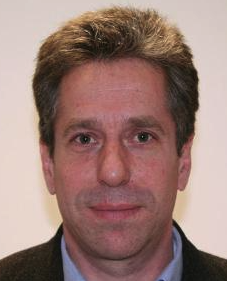 Mark Gales合作论文数Information Engineering Division, Department of Engineering, University of Cambridge46
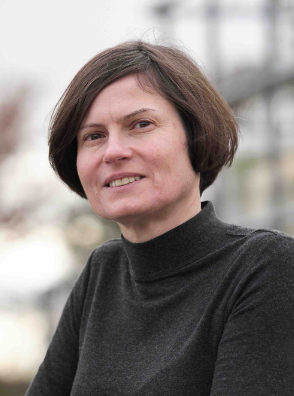 Kate Knill合作论文数Speech Research Group, Machine Intelligence Laboratory, Department of Engineering, University of Cambridge22
 Yu Wang (王钰)合作论文数School of Artificial Intelligence, Shanghai Jiao Tong University;Shanghai AI Laboratory, Shanghai Jiao Tong University8
 Yizhi Li合作论文数IQuest Research6
 Chenghua Lin合作论文数Department of Computer Science, University of Manchester6
 (Nicolaus) Yinghao Ma (马英浩)合作论文数Centre for Digital Music, School of Electronic Engineering and Computer Science, Queen Mary University of London5
 Ruibin Yuan合作论文数5
 Ge Zhang合作论文数ByteDance Inc.5
 Emmanouil Benetos合作论文数Centre for Digital Music, Queen Mary Univ of London5
 Jie Fu (付杰)合作论文数Shanghai AI Laboratory5
 Hanzhi Yin合作论文数4Xingran Chen合作论文数4
 Norbert Gyula Gyenge合作论文数Information Technology Services, University of Sheffield4
 Gus Xia合作论文数New York University4
 Roger B. Dannenberg合作论文数School of Music, Carnegie Mellon University4Haipeng Wang合作论文数4
 Thomas Hain合作论文数School of Computer Science, The University of Sheffield4Shakti P. Rath合作论文数4
 Ruibo Liu合作论文数Google DeepMind4
 Rogier C. Van Dalen合作论文数Cambridge University;Engineering Department;Engineering Department, Cambridge University4Robert Flynn合作论文数3
 Andrey Malinin合作论文数Isomorphic Labs;Shifts Project3
 Jeremy Heng Meng Wong合作论文数Institute for Infocomm Research, A*STAR3Qiujia Li合作论文数3
 Jake Vasilakes合作论文数National Centre for Text Mining, Department of Computer Science, School of Engineering, University of Manchester3
 Wenhu Chen (陈文虎)合作论文数Computer Science Department, University of Waterloo;Vector Institute3
 Philip Woodland合作论文数Machine Intelligence Laboratory, Division of Information Engineering, Department of Engineering, University of Cambridge3
 Stefan Goetze合作论文数Department of Computer Science, Faculty of Engineering, The University of Sheffield3Yike Guo (郭毅可)合作论文数3
 Konstantinos Kyriakopoulos合作论文数High Speed Networks, Loughborough University3
 Xie Chen合作论文数Department of Physics, California Institute of Technology;Walter Burke Institute for Theoretical Physics, California Institute of Technology3
 Xunying Liu (刘循英)合作论文数Department of Systems Engineering and Engineering Management, The Faculty of Engineering, The Chinese University of Hong Kong3Rhiannon Mogridge合作论文数2
 Zeyue Tian合作论文数2J. Yang合作论文数2
 Suraj Nair合作论文数Amazon2
 Kastanos Alexandros合作论文数University of Cambridge2Preben Ness合作论文数Univ Cambridge, Dept Engn, Trumpington St, Cambridge CB2 1PZ, England2
 Protima Nomo Sudro合作论文数Indian Inst Technol Guwahati, Dept Elect & Elect Engn, Gauhati 781039, India2
 Chunyang Wu合作论文数Facebook AI2
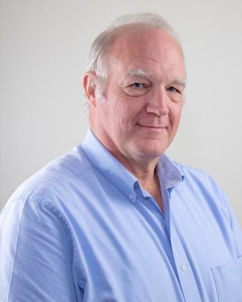 Douglas W. Oard合作论文数College of Information Studies, University of Maryland2
 Jiawen Huang合作论文数School of Electronic Engineering and Computer Science, Queen Mary University of London2
 Shi Wang (王石)合作论文数Institute of Computing Technology, Chinese Academy of Sciences2Petra Galuscáková合作论文数Inst Formal & Appl Linguist, Charles Univ Prague2Wanli Sun合作论文数1X. Liu合作论文数1Binyue Deng合作论文数1Wenhao Huang合作论文数1




