This paper introduces singing to speech conversion (S2S), a cross-domain voice conversion task, and presents the first deep learning-based S2S system. S2S aims to transform singing into speech while retaining the phonetic information, reducing variations in pitch, rhythm, and timbre. Inspired by the Glow-TTS architecture, the proposed model is built using generative flow, with an adjusted alignment module between the latent features. We adapt the original monotonic alignment search (MAS) to the S2S scenario and utilize a duration predictor to deal with the duration differences between the two modalities. Subjective evaluations show that the proposed model outperforms signal processing baselines in naturalness and outperforms a transcribe-and-synthesize baseline in phonetic similarity to the original singing. We further demonstrate that singing-to-speech could be an effective augmentation method for low-resource lyrics transcription.
Automatic Lyrics Transcription (ALT) aims to recognize lyrics from singing voices, similar to Automatic Speech Recognition (ASR) for spoken language, but faces added complexity due to domain-specific properties of the singing voice. While foundation ASR models show robustness in various speech tasks, their performance degrades on singing voice, especially in the presence of musical accompaniment. This work focuses on this performance gap and explores Low-Rank Adaptation (LoRA) for ALT, investigating both single-domain and dual-domain fine-tuning strategies. We propose using a consistency loss to better align vocal and mixture encoder representations, improving transcription on mixture without relying on singing voice separation. Our results show that while naive dual-domain fine-tuning underperforms, structured training with consistency loss yields modest but consistent gains, demonstrating the potential of adapting ASR foundation models for music.
Multilingual automatic lyrics transcription (ALT) is a challenging task due to the limited availability of labelled data and the challenges introduced by singing, compared to multilingual automatic speech recognition. Although some multilingual singing datasets have been released recently, English continues to dominate these collections. Multilingual ALT remains under-explored due to the scale of data and annotation quality. In this paper, we aim to create a multilingual ALT system with available datasets. Inspired by architectures that have been proven effective for English ALT, we adapt these techniques to the multilingual scenario by expanding the target vocabulary set. We then evaluate the performance of the multilingual model in comparison to its monolingual counterparts. Additionally, we explore various conditioning methods to incorporate language information into the model. We apply analysis by language and combine it with the language classification performance. Our findings reveal that the multilingual model performs consistently better than the monolingual models trained on the language subsets. Furthermore, we demonstrate that incorporating language information significantly enhances performance.
In recent years, foundation models (FMs) such as large language models (LLMs) and latent diffusion models (LDMs) have profoundly impacted diverse sectors, including music. This comprehensive review examines state-of-the-art (SOTA) pre-trained models and foundation models in music, spanning from representation learning, generative learning and multimodal learning. We first contextualise the significance of music in various industries and trace the evolution of AI in music. By delineating the modalities targeted by foundation models, we discover many of the music representations are underexplored in FM development. Then, emphasis is placed on the lack of versatility of previous methods on diverse music applications, along with the potential of FMs in music understanding, generation and medical application. By comprehensively exploring the details of the model pre-training paradigm, architectural choices, tokenisation, finetuning methodologies and controllability, we emphasise the important topics that should have been well explored, like instruction tuning and in-context learning, scaling law and emergent ability, as well as long-sequence modelling etc. A dedicated section presents insights into music agents, accompanied by a thorough analysis of datasets and evaluations essential for pre-training and downstream tasks. Finally, by underscoring the vital importance of ethical considerations, we advocate that following research on FM for music should focus more on such issues as interpretability, transparency, human responsibility, and copyright issues. The paper offers insights into future challenges and trends on FMs for music, aiming to shape the trajectory of human-AI collaboration in the music realm.
Artificial Intelligence (AI) technologies such as deep learning are evolving very quickly bringing many changes to our everyday lives. To explore the future impact and potential of AI in the field of music and sound technologies a doctoral day was held between Queen Mary University of London (QMUL, UK) and Sciences et Technologies de la Musique et du Son (STMS, France). Prompt questions about current trends in AI and music were generated by academics from QMUL and STMS. Students from the two institutions then debated these questions. This report presents a summary of the student debates on the topics of: Data, Impact, and the Environment; Responsible Innovation and Creative Practice; Creativity and Bias; and From Tools to the Singularity. The students represent the future generation of AI and music researchers. The academics represent the incumbent establishment. The student debates reported here capture visions, dreams, concerns, uncertainties, and contentious issues for the future of AI and music as the establishment is rightfully challenged by the next generation.
In the era of extensive intersection between art and Artificial Intelligence (AI), such as image generation and fiction co-creation, AI for music remains relatively nascent, particularly in music understanding. This is evident in the limited work on deep music representations, the scarcity of large-scale datasets, and the absence of a universal and community-driven benchmark. To address this issue, we introduce the Music Audio Representation Benchmark for universaL Evaluation, termed MARBLE. It aims to provide a benchmark for various Music Information Retrieval (MIR) tasks by defining a comprehensive taxonomy with four hierarchy levels, including acoustic, performance, score, and high-level description. We then establish a unified protocol based on 14 tasks on 8 public-available datasets, providing a fair and standard assessment of representations of all open-sourced pre-trained models developed on music recordings as baselines. Besides, MARBLE offers an easy-to-use, extendable, and reproducible suite for the community, with a clear statement on copyright issues on datasets. Results suggest recently proposed large-scale pre-trained musical language models perform the best in most tasks, with room for further improvement. The leaderboard and toolkit repository are published at https://marble-bm.shef.ac.uk to promote future music AI research.
Drug-target binding affinity prediction is a fundamental task for drug discovery and has been studied for decades. Most methods follow the canonical paradigm that processes the inputs of the protein (target) and the ligand (drug) separately and then combines them together. In this study we demonstrate, surprisingly, that a model is able to achieve even superior performance without access to any protein-sequence-related information. Instead, a protein is characterized completely by the ligands that it interacts. Specifically, we treat different proteins separately, which are jointly trained in a multi-head manner, so as to learn a robust and universal representation of ligands that is generalizable across proteins. Empirical evidences show that the novel paradigm outperforms its competitive sequence-based counterpart, with the Mean Squared Error (MSE) of 0.4261 versus 0.7612 and the R-Square of 0.7984 versus 0.6570 compared with DeepAffinity. We also investigate the transfer learning scenario where unseen proteins are encountered after the initial training, and the cross-dataset evaluation for prospective studies. The results reveals the robustness of the proposed model in generalizing to unseen proteins as well as in predicting future data. Source codes and data are available at https://github.com/huzqatpku/SAM-DTA.
In recent years, the accuracy of automatic lyrics alignment methods has increased considerably. Yet, many current approaches employ frameworks designed for automatic speech recognition (ASR) and do not exploit properties specific to music. Pitch is one important musical attribute of singing voice but it is often ignored by current systems as the lyrics content is considered independent of the pitch. In practice, however, there is a temporal correlation between the two as note starts often correlate with phoneme starts. At the same time the pitch is usually annotated with high temporal accuracy in ground truth data while the timing of lyrics is often only available at the line (or word) level. In this paper, we propose a multi-task learning approach for lyrics alignment that incorporates pitch and thus can make use of a new source of highly accurate temporal information. Our results show that the accuracy of the alignment result is indeed improved by our approach. As an additional contribution, we show that integrating boundary detection in the forced-alignment algorithm reduces cross-line errors, which improves the accuracy even further.
Code summaries are clear and concise natural language descriptions of program entities. Meaningful code summaries assist developers in better understanding. Code summarization refers to the task of generating a natural language summary from a code snippet. Most researches on code summarization focus on automatically generating summaries for methods or functions. However, in an object-oriented language such as Java, class is the basic programming unit rather than method. To fill this gap, in this paper, we investigate how to generate summaries for Java classes utilizing deep learning-based approaches. We propose a novel encoder–decoder model called ClassSum to generate functionality descriptions for Java classes and build a dataset containing 172,639 pairs from 3185 repositories hosted on Github. Since the code of class is much longer and more complicated, encoding a whole class via neural network is more challenging than encoding a method. On the other hand, the content within a class may be incomplete. To overcome this difficulty, we reduce the code of a class by only keeping its key elements, namely class signatures, method signatures and attribute names. To utilize both lexical and structural information of code, our model takes token sequence and abstract syntax tree of the reduced class content as inputs. ClassSum and five baselines (designed for method-level code summarization) are evaluated on our dataset. Experiment results show that summaries generated by ClassSum are more accurate and readable than those generated by baselines. Our dataset is available at https://github.com/classsum/ClassSum .
Code comments are valuable for program comprehension and software maintenance. However, comments can be inconsistent or out-of-date after code changes. To tackle this problem, Just-In-Time (JIT) comment updating aims to automatically update comments with code changes. Existing approaches for this task use edit sequences of source code to model code changes. Meanwhile, recent researches indicate that neural models based on abstract syntax trees (AST) can help represent source code. In this paper, we propose a new method to learn code changes by combining code edit sequences with AST edit sequences, so that the generated new comment can be more accurate. Our approach utilizes three encoders to encode code edit sequences, AST edit sequences and old comment token sequences, respectively. The outputs of the encoders are then decoded into a sequence of edit actions, which is parsed to generate a new comment. The proposed method is evaluated on a public dataset using seven metrics, and the experimental results show that our approach outperforms the baselines. Furthermore, when the new comment has a larger edit distance than the old one, our model shows better performance.
A music mashup combines audio elements from two or more songs to create a new work. To reduce the time and effort required to make them, researchers have developed algorithms that predict the compatibility of audio elements. Prior work has focused on mixing unaltered excerpts, but advances in source separation enable the creation of mashups from isolated stems (e.g., vocals, drums, bass, etc.). In this work, we take advantage of separated stems not just for creating mashups, but for training a model that predicts the mutual compatibility of groups of excerpts, using self-supervised and semi-supervised methods. Specifically, we first produce a random mashup creation pipeline that combines stem tracks obtained via source separation, with key and tempo automatically adjusted to match, since these are prerequisites for high-quality mashups. To train a model to predict compatibility, we use stem tracks obtained from the same song as positive examples, and random combinations of stems with key and/or tempo unadjusted as negative examples. To improve the model and use more data, we also train on "average" examples: random combinations with matching key and tempo, where we treat them as unlabeled data as their true compatibility is unknown. To determine whether the combined signal or the set of stem signals is more indicative of the quality of the result, we experiment on two model architectures and train them using semi-supervised learning technique. Finally, we conduct objective and subjective evaluations of the system, comparing them to a standard rule-based system.
The assessment of music performances in most cases takes into account the underlying musical score being performed. While there have been several automatic approaches for objective music performance assessment (MPA) based on extracted features from both the performance audio and the score, deep neural network-based methods incorporating score information into MPA models have not yet been investigated. In this paper, we introduce three different models capable of score-informed performance assessment. These are (i) a convolutional neural network that utilizes a simple time-series input comprising of aligned pitch contours and score, (ii) a joint embedding model which learns a joint latent space for pitch contours and scores, and (iii) a distance matrix-based convolutional neural network which utilizes patterns in the distance matrix between pitch contours and musical score to predict assessment ratings. Our results provide insights into the suitability of different architectures and input representations and demonstrate the benefits of score-informed models as compared to score-independent models.
 Emmanouil Benetos合作论文数Centre for Digital Music, Queen Mary Univ of London6
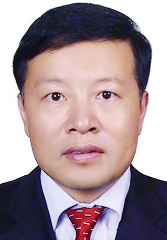 Huiqun Yu (虞慧群)合作论文数School of Information Science and Engineering, East China University of Science and Technology3
 Zeyue Tian合作论文数2
 Ziyi Zhou (周子宜)合作论文数Institute of Natural Sciences, Shanghai Jiao Tong University2
 (Nicolaus) Yinghao Ma (马英浩)合作论文数Centre for Digital Music, School of Electronic Engineering and Computer Science, Queen Mary University of London2
 Mingchen Li合作论文数2
 Ruibin Yuan合作论文数2
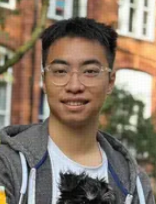 Yizhi Li合作论文数IQuest Research2
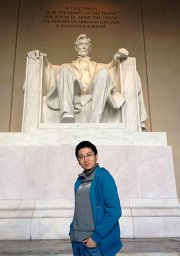 Gus Xia合作论文数New York University2
 Roger B. Dannenberg合作论文数School of Music, Carnegie Mellon University2
 Anton Ragni合作论文数Department of Computer Science, Faculty of Engineering, The University of Sheffield2
 Wenhu Chen (陈文虎)合作论文数Computer Science Department, University of Waterloo;Vector Institute2
 Guisheng Fan (范贵生)合作论文数School of Information Science and Engineering, East China University of Science and Technology2
 Chenghua Lin合作论文数Department of Computer Science, University of Manchester2
 Alexander Lerch合作论文数School of Music, College of Design, Georgia Institute of Technology2
 Binyue Deng合作论文数1Wenhao Huang合作论文数1
 Shun Lei合作论文数Shenzhen International Graduate School, Tsinghua University;Tencent AI Lab1Yun-Ning Hung合作论文数1Julien Guinot合作论文数1Bleiz Macsen Del Sette合作论文数1Aliénor Golvet合作论文数1Lewis Wolstanholme合作论文数1Lenny Renault合作论文数1Xingjian Du (杜行健)合作论文数Bytedance AI Lab1
 Xingwei Qu合作论文数1Hanzhi Yin合作论文数1
 Le Zhuo合作论文数Krea AI1
 Siddharth Gururani合作论文数NVIDIA Research1
 Hao Liu合作论文数1Ningzhi Wang合作论文数1Yiqi Liu合作论文数1David Genova合作论文数1Nils Demerlé合作论文数1Sarah Nabi合作论文数1Song Ke合作论文数1Shangda Wu合作论文数1
 Yuxuan Wang合作论文数ByteDance1Saurjya Sarkar合作论文数1
 Pedro Sarmento合作论文数Queen Mary University of London1
 Ziyang Ma合作论文数1Teresa Pelinski合作论文数1
 Shuqi Dai合作论文数1
 Elona Shatri合作论文数1Cyrus Vahidi合作论文数Ctr Digital Mus, Queen Mary Univ London1
 Ge Zhang合作论文数ByteDance Inc.1Xingran Chen合作论文数1
 Ilaria Manco合作论文数1
 Lele Liu合作论文数Centre for Digital Music, Queen Mary University of London, UK1




