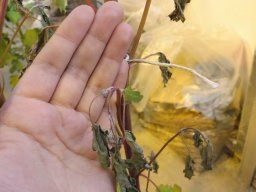
In 2021, grapevines (Vitis vinifera L.) cv. Callet growing in a commercial vineyard located at Pollença (northeast of the island of Majorca, Spain) showed severe symptoms of shoot blight during spring and early summer, with an incidence of 70%. Symptoms consisted of elongated cankered-like lesions, surrounded by water-soaked darker tissues, that developed at the base or around the middle nodes of the shoot. For fungal isolation, shoot samples with lesions were collected, surface disinfected with 2% NaCl for 90s, rinsed twice with deionized water and placed in Petri plates containing potato dextrose agar (PDA). The plates were incubated at 25°C under 12 h light-darkness for 6 days. Isolations consistently yielded on kind of fungal colonies that produced white mycelium and black spherical to elongated sclerotia (2 to 10 mm in diameter). Morphological characterization was consistent with the description of Sclerotinia sclerotiorum (Lib.) de Bary (Bolton et al. 2006). Three isolates (UIB 118-1, UIB 118-26, and UIB 129-41) were preserved and deposited in the Culture Collection of Microbiology-Faculty of Sciences, University of Balearic Islands, Spain. Genomic DNA was extracted from isolates UIB 118-26 and UIB 129-41 using the EZNA Miniprep Kit (Omega Bio-Tek, Norcross, GA). The internal transcribed spacer (ITS) region of ribosomal DNA, β-tubulin (BTUB) and calmodulin (CAL) gene regions were amplified using ITS1F-ITS4 (Gardes and Bruns, 1996; White et al. 1990), Bt-2a/Bt-2b (Glass and Donaldson 1995) and CAL228F/CAL737R (Carbone and Kohn 1999) primer sets, respectively. Amplicons were sequenced and deposited in GenBank with accession numbers MZ604647 and MZ604648 for ITS, OK634402 and OK634403 for BTUB and OK634404 and OK634405 for CAL. BLASTn search showed that isolates were >99 % (ITS, BTUB and CAL) identical to S. sclerotiorum GenBank accession no. KF859933, CP017815 and KF871381, respectively. Pathogenicity tests were conducted using eight one-year old grapevines cv. Cabernet Sauvignon. Old and new green shoots were inoculated by inserting a 6-mm plug of mycelium taken from actively growing cultures on PDA into cuts made at the base and at the distal part of each shoot with a sterile scalpel with a total of eight inoculation points per plant. Inoculated wounds were sealed with Parafilm tape to avoid rapid dehydration. Inoculated plants and an equal number of wounded but non-inoculated plants (negative controls) were maintained at 25 ± 1°C for 48 h in plastic containers to ensure a high relative humidity (>90%). After 5 days, the infection girdled and rotted the green new shoots, whereas the older partially lignified shoots developed a localized long brown lesion that reached 16 cm in length. Due to the rotting of the basal part of the petiole, leaves turned gray, wilted, and died, easily detaching from the stem. In advanced stages of the disease, 7 days after infection, branches died and fell with the leaves remained attached (Fig 1 A, B). Reisolations from diseased shoots were successfully performed on PDA to fulfill Koch's postulates. S. slerotiorum was previously reported on grapevine causing shoot blight in Chile (Latorre and Guerrero, 2001), Korea (Jong-Han et al. 2009), California-USA (Boland and Hall, 1994) and Australia (Hall et al. 2002). AlsoS. sclerotiorum was reported among the endophytic mycobiota associated with Vitis vinifera in the Iberian Peninsula (Gonzalez and Tello, 2011) but not as a pathogen causing visible symptoms on that crop. So, this is the first report of the occurrence of S. slerotiorum as a pathogen of grapevines in Spain causing symptoms of canker and shoot blight. This finding highlights a potential risk of this fungal disease for the wine industry in the Mediterranean region and specially for Spain, the country with the largest acreage devoted to grapevines. Although chemical and biological are suitable control strategies, disease management is difficult as sclerotia of Sclerotinia can remain in the soil for up to eight years (Adams and Ayears, 1979), and preventive surveys are greatly recommended as an important epidemiological tool to monitor the epidemiology of disease and identify potential outbreaks of this new pathogen on grapevine in Spain.
This study aims to elucidate if the regulation of plant aquaporins by the arbuscular mycorrhizal (AM) symbiosis occurs only in roots or cells colonized by the fungus or at whole root system. Maize plants were cultivated in a split-root system, with half of the root system inoculated with the AM fungus and the other half uninoculated. Plant growth and hydraulic parameters were measured and aquaporin gene expression was determined in each root fraction and in microdissected cells. Under well-watered conditions, the non-colonized root fractions of AM plants grew more than the colonized root fraction. Total osmotic and hydrostatic root hydraulic conductivities (Lo and Lpr) were higher in AM plants than in non-mycorrhizal plants. The expression of most maize aquaporin genes analysed was different in the mycorrhizal root fraction than in the non-mycorrhizal root fraction of AM plants. At the cellular level, differential aquaporin expression in AM-colonized cells and in uncolonized cells was also observed. Results indicate the existence of both, local and systemic regulation of plant aquaporins by the AM symbiosis and suggest that such regulation is related to the availability of water taken up by fungal hyphae in each root fraction and to the plant need of water mobilization.
Potassium is one of the principal macronutrients required by all plants, but its mobility is restricted between soil compartments. Numerous studies have shown that Plant Growth Promoting Bacteria (PGPB) can facilitate nutrient uptake. The present work examined the effects of the PGPB (Bacillus megaterium) on rice plants subjected to potassium deprivation. To study only direct effects of B. megaterium, we first checked its lack of capacity to solubilize soil K. Rice plants were provided with 1.5 mM K (100%) or 0.015 mM K (1%) and growth related parameters, nutrient concentrations and gene expression of K+ transporters were determined. After two weeks, the 1% K treatment reduced growth of non-inoculated plants by about 50% compared with the 100% K treatment. However, there was no effect of reduced K nutrition on growth of inoculated plants. The reduction in growth in non-inoculated plants was accompanied by a similar reduction in K+ concentration in both roots and leaves and an overall 80% reduction of the plant potassium concentrations. In inoculated plants a 50% reduction occurred only in leaves. The expression of the K+ transporters HKT1;1, 1;2, 1;5, 2;2, 2;3 and 2;4 was up-regulated by the inoculation of B. megaterium under K deprivation conditions, explaining their higher K tissue concentrations and growth. Thus, the bacterial strain improved plant potassium nutrition without affecting K+ availability in the soil. The results demonstrate the potential of this bacteria for using as a biofertilizer to reduce the amount of potassium fertilizers to be applied in the field.
Climate change is leading to combined drought and high temperature stress in many areas, drastically reducing crop production, especially for high-water-consuming crops such as maize. This study aimed to determine how the co-inoculation of an arbuscular mycorrhizal (AM) fungus (Rhizophagus irregularis) and the PGPR Bacillus megaterium (Bm) alters the radial water movement and physiology in maize plants in order to cope with combined drought and high temperature stress. Thus, maize plants were kept uninoculated or inoculated with R. irregularis (AM), with B. megaterium (Bm) or with both microorganisms (AM + Bm) and subjected or not to combined drought and high temperature stress (D + T). We measured plant physiological responses, root hydraulic parameters, aquaporin gene expression and protein abundances and sap hormonal content. The results showed that dual AM + Bm inoculation was more effective against combined D + T stress than single inoculation. This was related to a synergistic enhancement of efficiency of the phytosystem II, stomatal conductance and photosynthetic activity. Moreover, dually inoculated plants maintained higher root hydraulic conductivity, which was related to regulation of the aquaporins ZmPIP1;3, ZmTIP1.1, ZmPIP2;2 and GintAQPF1 and levels of plant sap hormones. This study demonstrates the usefulness of combining beneficial soil microorganisms to improve crop productivity under the current climate-change scenario.
Shifts in animal husbandry and landscape use have significantly changed ungulate grazing effects on ecosystem functioning. These changes are now the subject of extensive research with respect to plant and soil communities, but the results of these studies are highly varied and context dependent. The objective of this study is to address contextual variation by holding all sampling methods and analytical approaches constant and analyse the effect of the feral goat (Capra hircus) population of Mallorca Island, Spain, on soil physical, chemical and biological characteristics across five controlled sites. Specifically, vegetation cover and soil properties in fenced plots excluded from ungulates were compared with adjacent grazed plots in five independent mountain areas of Mallorca. Soil microbial activity measured as Community-Level Physiological Profiles (CLPP) using EcoPlate™ increased when ungulates were excluded. However, all other physical and chemical measures of the soils did not vary significantly when we considered ungulate exclusion across all plots, and this may be caused by a soil community that is simply robust to the effects of the herbivores. Or, it may be due to the high heterogeneity that was detected among pair plots comparisons within each of the five sites. Indeed, we find more variability within a site than among our independent sites leading us to hypothesize that grazing does influence biogeochemical cycles, but it does it by increasing variability of the system in general. Our well-controlled multilevel meta-analysis confirms the notion that ungulate effects are highly context dependent, and soil heterogeneity makes resolving clear patterns very challenging. Apparently, context persistently drives the soil response more than the grazing itself, and this is seen even at very small scales.
The interaction of the alternative oxidase (AOX) pathway with nutrient metabolism is important for understanding how respiration modulates ATP synthesis and carbon economy in plants under nutrient deficiency. Although AOX activity reduces the energy yield of respiration, this enzymatic activity is upregulated under stress conditions to maintain the functioning of primary metabolism. The in vivo metabolic regulation of AOX activity by phosphorus (P) and nitrogen (N) and during plant symbioses with Arbuscular mycorrhizal fungi (AMF) and Rhizobium bacteria is still not fully understood. We highlight several findings and open questions concerning the in vivo regulation of AOX activity and its impact on plant metabolism during P deficiency and symbiosis with AMF. We also highlight the need for the identification of which metabolic regulatory factors of AOX activity are related to N availability and nitrogen-fixing legume-rhizobia symbiosis in order to improve our understanding of N assimilation and biological nitrogen fixation.
Today, there are easy and inexpensive techniques for the study of microbial communities from soils. The present review, on the one hand, shows the historical development of some of the techniques used to analyze the physiological profile of microbial communities and, on the other hand, analyzes the use of Biolog (TM) ECO-plate microplates specifically. The key points of the application of this methodology to soil analysis in agroecosystems are examined. The review of multiple articles focused on the implementation of this methodology shows how the protocol used, both for obtaining data and for its analysis, determines the conclusions that can be derived from the results. It is necessary a good knowledge of the technique for its correct interpretation. Therefore, we consider it necessary to take into account the recommendations made and maintain an optimal and common protocol that facilitates the comparison between studies.
Salinization is one of the major causes of agricultural soil degradation worldwide. In arid and semi-arid regions with calcareous soils, phosphorus (P) deficiency further worsens the quality of salinized soils. Nonetheless, nutrient poor soils could be suitable of producing second-generation energy crops. Due to its high biomass production, Arundo donax L. (giant reed) is one of the most promising species for energy and second-generation biofuel production. A. donax can be propagated by micropropagation, an in vitro technique that produces high number of homogeneous plantlets. However, crop establishment is often compromised due to poor plantlet acclimatization to the soil environment. Arbuscular mycorrhizal fungi (AM) are components of soil-plant systems able to increase root phosphorus uptake and to confer the plant an increase tolerance to salinity with a consequent enhancement effect of plant growth and yield. In the present study, the relative importance of the early symbiosis establishment between AM fungi and A. donax micropropagated plantlets in the response to salt stress under low phosphorus availability was determined. A commercial inoculum which contained two different AM fungi species: Rhizophagus intraradices and Funneliformis mosseae was used. AM-symbionts (AM) and non-symbionts plants were grown at two phosphorus [2.5 μM (C) and 0.5 mM (P)] and three NaCl (1, 75 and 150 mM) concentrations in a room chamber under controlled conditions. After 5 weeks, AM root colonization was 60, 26 and 15% in 1, 75 and 150 mM NaCl-treated plants, respectively. At 1 and 75 mM NaCl, AM plants showed increased growth. In all saline treatments, AM plants had decreased Na+ uptake, Na+ root-to-shoot translocation, Na+/K+ ratio and increased P and K use efficiencies with respect to C and P plants. AM improved the nutritional status of A. donax plants by enhancing nutrient use efficiency rather than nutrient uptake. Increased phosphorus use efficiency in AM plants could have benefited ion (Na+ and K+) uptake and/or allocation and ultimately ameliorate the plant's response to saline conditions.
Plants exhibit respiratory bypasses (e.g., the alternative oxidase [AOX]) and increase the synthesis of carboxylates in their organs (leaves and roots) in response to phosphorus (P) deficiency, which increases P uptake capacity. They also show differential expression of high-affinity inorganic phosphorus (Pi) transporters, thus avoiding P toxicity at a high P availability. The association between AOX and carboxylate synthesis was tested in Solanum lycopersicum plants grown at different soil P availability, by using plants grown under P-sufficient and P-limiting conditions and by applying a short-term (24 hr) P-sufficient pulse to plants grown under P limitation. Tests were also performed with plants colonized with arbuscular mycorrhizal fungi, which increased plant P concentration under reduced P availability. The in vivo activities of AOX and cytochrome oxidase were measured together with the concentration of carboxylates and the P concentration in plant organs. Gene transcription of Pi transporters (LePT1 and LePT2) was also studied. A coordinated response between plant P concentration with these traits was observed, indicating that a sufficient P availability in soil led to a suppression of both AOX activity and synthesis of citrate and a downregulation of the transcription of genes encoding high-affinity Pi transporters, presumably to avoid P toxicity.
Arundo donax L. has become one of the most promising species for energy production in several subtropical and Mediterranean areas. This species can thrive across a wide range of soil types and is tolerant of many stressful conditions. However, establishment of the crop is critical for the cultivation of A. donax. In this study, we evaluated the effect of nursery preconditioning on survival during transfer to the field and harvests in the first and second year for A. donax. We used early arbuscular mycorrhizae (AM) inoculation, two different substrates, and two pot sizes to generate different nursery conditions that resulted in A. donax plantlets of different sizes and quality. In total, we had 3 treatments. Treatment inoculation: mycorrhizal (AM) plantlets were inoculated with commercial inoculum (AEGIS SYM), which contained Rhizophagus intraradices and Funneliformis mosseae, at the time of transplantation, whereas control plantlets were not inoculated. Substrate treatment: half of the plantlets were acclimatized with commercial nutrient-rich agricultural substrate (AS) and half with a mix of agricultural substrate:sand (1:1, v/v) (MIX). Cell size treatment: after 100 days of hardening, 20 plants per treatment were grown in 50 cm(3) cells (SC), whereas 20 plants per treatment were transplanted into trays with 300 cm(3) cells (BC) in order to generate bigger plants. The results showed a positive effect of the use of AS versus MIX. However, after hardening, AM plantlets grew in MIX substrate presented a greater height, number of leaves, biomass and chlorophyll content than non-mycorrhized (control) plantlets. At the time of transplanting into the field, the plants that remained in small cells were significantly smaller than those that were transplanted into large cells. Additionally, mycorrhizal plants that had been grown in AS had a taller initial height. Plant height at the time of transplantation significantly affected the first- and second-year harvests. Inoculated plants showed higher biomass accumulation than non-inoculated plants after 11 months of growth in an open field. In the second year, only the tray cell size had significant effects on dry biomass harvest. These results demonstrate the potential of the nursery conditions to improve the hardening process of micropopagated plantlets. This could increase the advantages of this propagation method, compared to other methods, and compensate part of its high economic cost.
The objective of this study was to evaluate the response of the giant reed (Arundo donax L.) to drought stress at early stages, as well as to determine the effects of limited soil water availability on plant growth, gas exchange, and water-use efficiency. Plantlets of a commercial clone were grown in a greenhouse under two water treatments: at 100% of field capacity and progressive drought for 66 days (until 20% of field capacity). Soil water content, leaf elongation rate, plant water consumption, and gas-exchange parameters were measured throughout the experiment. Total plant biomass, leaf water, and osmotic potential were determined at the end of the experiment. Plant growth and leaf gas-exchange parameters were significantly affected by soil water availability, but only when it was below 40% of field capacity. At early stages, Arundo donax showed drought stress acclimation due to leaf plasticity, stomatal regulation, and osmotic adjustment.
Under phosphorus (P) limitation, plants tend to maximize their efficiency of P acquisition by increasing the exudation of root carboxylates, such as citrate, whose synthesis is mediated by respiration via the alternative oxidase (AOX) in cluster roots. However, high respiratory costs related to nutrient uptake are associated with slower plant growth, whereas arbuscular mycorrhizal (AM) fungus colonization increases plant growth and decreases the exudation of citrate and malate. Thus, the present research is based on the hypothesis that AM fungus colonization will decrease root respiration via the alternative pathway and the amount of carboxylates in the rhizosphere, and increase plant growth.
The effect of arbuscular mycorrhiza (AM) symbiosis on plant growth is associated with the balance between costs and benefits. A feedback regulation loop has been described in which the higher carbohydrate cost to plants for AM symbiosis is compensated by increases in their photosynthetic rates. Nevertheless, plant carbon balance depends both on photosynthetic carbon uptake and respiratory carbon consumption. The hypothesis behind this research was that the role of respiration in plant growth under AM symbiosis may be as important as that of photosynthesis. This hypothesis was tested in Arundo donax L. plantlets inoculated with Rhizophagus irregularis and Funneliformis mosseae. We tested the effects of AM inoculation on both photosynthetic capacity and in vivo leaf and root respiration. Additionally, analyses of the primary metabolism and ion content were performed in both leaves and roots. AM inoculation increased photosynthesis through increased CO2 diffusion and electron transport in the chloroplast. Moreover, respiration decreased only in AM roots via the cytochrome oxidase pathway (COP) as measured by the oxygen isotope technique. This decline in the COP can be related to the reduced respiratory metabolism and substrates (sugars and tricarboxylic acid cycle intermediates) observed in roots.
Growth and maintenance partly depend on both respiration and ATP production during oxidative phosphorylation in leaves. Under stress, ATP is needed to maintain the accumulated biomass. ATP production mostly proceeds from the cytochrome oxidase pathway (COP), while respiration via the alternative oxidase pathway (AOP) may decrease the production of ATP per oxygen consumed, especially under phosphorus (P) limitation and salinity conditions. Symbiosis with arbuscular mycorrhizal (AM) fungi is reputed by their positive effect on plant growth under stress at mature stages of colonization; however, fungal colonization may decrease plant growth at early stages. Thus, the present research is based on the hypothesis that AM fungus colonization will increase both foliar respiration and ATP production at mature stages of plant growth while decreasing them both at early stages. We used the oxygen-isotope-fractionation technique to study the in vivo respiratory activities and ATP production of the COP and AOP in AM and non-AM (NM) tobacco plants grown under P-limiting and saline conditions in sand at different growth stages (14, 28 and 49 days). Our results suggest that AM symbiosis represents an ATP cost detrimental for shoot growth at early stages, whilst it represents a benefit on ATP allowing for faster rates of growth at mature stages, even under salinity conditions.
Arundo donax L. (giant reed) has become one of the most promising species for energy production in several Subtropical and Mediterranean areas. This species is able to thrive across a wide range of soil types and is tolerant to many stressful conditions, enabling its cultivation on marginal lands. Since this species is not able to produce viable seeds, micropropagation has been suggested as an efficient method for large-scale plant production. Several studies have demonstrated that arbuscular mycorrhizal fungi (AMF) can improve the acclimatization of micropropagated plantlets, enhancing their growth and survival. Two experiments were conducted to evaluate the effect of AMF during the acclimatization period of A. donax plantlets and its posterior establishment to the field and first year harvest. Plantlets were inoculated with commercial inoculum (AEGIS SYM®) that contained Rhizophagus intraradices and Funneliformis mosseae. Inoculated plants showed higher biomass accumulation than non-inoculated plants not only after acclimatization process but also after 11 months of growth in open field. These differences were higher when plants were grown on a less nutritive substrate. The results showed the potential benefits of applying AMF inoculum to giant reed in early stages of growth, especially under stress conditions, and the importance of the quality of the plantlet for crop production. The standardized use of AMF inoculum can be very useful for the large-scale production of this energy crop not only to improve field establishment but also to improve first year harvest.
 Elena Baraza合作论文数Facultad de Ciencias, Universidad de Granada11
 Néstor Fernández Del-Saz合作论文数Lab Fisiol Vegetal, Univ Concepcion6
 Javier Gulias合作论文数6
 Miquel Ribas Carbó合作论文数Universitat de les Illes Balears;GARET 62 LLORET SL;BioExpert Network5
 Igor Florez-Sarasa合作论文数Grup de Recerca en Biologia;Departament de Biologia, UIB-IMEDEA;Universitat de les Illes Balears;Departament de Biologia ( UIB-IMEDEA ), Universitat de les Illes Balears4
 Jaume Flexas Sans (Jaume Flexas)合作论文数Department of Biology, University of the Balearic Islands4
 Joan Cifre合作论文数3
 Ricardo Aroca Alvarez合作论文数Consejo Superior de Investigaciones Cientificas3
 Ricardo F. Aroca合作论文数Department of Chemistry & Biochemistry, University of Windsor/Department of Physics, University of Windsor3
 José Ortiz合作论文数2Coba de la Peña Teodoro合作论文数2
 Hans Lambers合作论文数School of Biological Sciences, University of Western Australia;Institute of Agriculture, University of Western Australia;National Academy of Agriculture Green Development, China Agricultural University2Miguel Lopez合作论文数2Palma Francisco合作论文数2
 Sanhueza Carolina合作论文数2
 Bascuñán-Godoy Luisa合作论文数Laboratorio de Fisiología Vegetal, Centro de Estudios Avanzado Zonas Áridas, La Serena, Chile.2
 Greg Cawthray合作论文数School of Plant Biology, University of Western Australia2Catalina Cabot合作论文数2
 Juan Manuel Ruiz-Lozano合作论文数2
 Alisdair Fernie合作论文数Max Planck Institute of Molecular Plant Physiology2Bàrbara Quetglas合作论文数1J. Bota合作论文数1Catalina Castro合作论文数1Miguel Ibañez-Álvarez合作论文数1Pere A. Gost合作论文数1Silvia De Rose合作论文数1
 Emmanuel Serrano合作论文数1Maria Tauler合作论文数1C. Achir合作论文数1
 David Alonso-Forn合作论文数Agrifood Research and Technology Centre of Aragon1
 Carles Cardona合作论文数University of the Balearic Islands1Rafael Bosch合作论文数Univ Illes Balears, Dept Biol, Palma De Mallorca, Spain1
 Busquets Antonio合作论文数1
 Javier Hidalgo Castellanos合作论文数1Diego Olmo合作论文数1
 Monica Berbegal合作论文数1
 Jennifer Adams Krumins合作论文数Department of Ecology, Evolution and Natural Resources, Rutgers University1
 Josep Armengol合作论文数Universidad Politécnica de Valencia Instituto Agroforestal Mediterráneo1Luca Giovannini合作论文数1
 Raffaella Maria Balestrini合作论文数^ Dipartimento di Biologia Vegetale, Universita di Torino;Centro di Studio sulla Micologia del Terreno del CNR;fiir Biologie, Fakultai;Centro di Studio sulla Micologia del Terreno del CNR, Universita di Torino1
 Analía Perelló合作论文数Centro de Investigaciones de Fitopatología (CIDEFI),, Universidad Nacional de La Plata1
 Jordi Bartolome合作论文数Departament de Ciencia Animal i dels Aliments, Universitat Autònoma de Barcelona1Jaume Vadell Adrover合作论文数1
 Charlotte Poschenrieder合作论文数Department of Animal Biology, Plant Biology and Ecology, Universitat Autònoma de Barcelona1
 Angel M Zamarreno合作论文数1
 José María García-Mina合作论文数School of Sciences, University of Navarra1
 Margarita Gomila合作论文数1




