Histamine is a significant food quality, safety, and trade issue in the fisheries sector. In the absence of adequate proficiency testing for histamine in India, it was important to organize a proficiency testing (PT) program among 22 food analytical laboratories for the external assessment of proficiency of the laboratories following ISO 17043:2010 and ISO 13528:2015. The test item (fish) prepared was sufficiently homogenous and stable for the entire duration of the PT program. The Grubbs test employed on the data showed the absence of any outlier result in the present testing scheme. The assigned value of 45.31 mg kg-1 was determined using the ‘consensus approach’ with a standard uncertainty of 1.33 mg kg-1. The robust standard deviation value was 5.02 mg kg-1. The z score for the participant results varied from -1.96 to +1.47, implying that the analytical performance of the participant laboratories was in agreement with the criteria mentioned in ISO 17043:2010. The HorRat value of 1.13, lay between the acceptable range of 0.5-2.0. The distribution of the results as depicted by the kernel density plot revealed a fairly normal distribution of the participants. All the participant laboratories were able to satisfy the proficiency testing requirements, as implied by the z score- -1.96 to +1.47. Further, proficiency testing can be carried out at various analyte levels and other matrices of commercial importance to allow for effective quality assurance.
Background Emergence and dissemination of antibiotic resistance is one of the major risks associated with the rampant usage of antibiotics in food-producing animals including aquaculture. Objective To determine Epidemiological Cut-OFF (ECOFF) values of heterotrophic bacterial populations from shrimp culture environments against five different antibiotics Methods In this present study, bacterial samples were isolated from Penaeus vannamei culture environment in different locations of Andhra Pradesh, which is the aquaculture hub of India. The bacterial isolates were assessed for antibiotic resistance towards five antibiotics belonging to different classes (oxytetracycline, chloramphenicol, erythromycin, ciprofloxacin, and co-trimoxazole) by the disc diffusion method. Determination of Epidemiological Cut-OFF (ECOFF) values and analysis by employing normalized resistance interpretation (NRI) was carried out. Results The most dominant bacterial populations from shrimp culture were Vibrio spp. (pathogenic bacteria) followed by Bacillus spp. (probiotic bacteria). The bacterial isolates showed highest resistance towards oxytetracycline (overall 23.38%) and in location L6 (59.4%) followed by co-trimoxazole (31.1%). ECOFF values calculated by employing NRI showed that the disc diffusion data were distributed in a normalized manner. The maximum ECOFF value was obtained for ciprofloxacin (23.32 mm), while the minimum value was observed for oxytetracycline (9.05 mm). The antibiotic resistant phenotypes showed that the majority of the heterotrophic bacterial isolates (>60%) belonged to the non-wild type phenotype and primarily towards oxytetracycline (90%). Conclusion The presence of non-wild antibiotic-resistant phenotypes of heterotrophic bacterial populations (which include not only pathogenic bacteria but also probiotic bacteria) indicates that shrimp culture ponds may be a reservoir for drug-resistant bacteria and there is a greater risk associated with transmission of resistant genes across bacterial flora. Highlights NRI analysis of antibiotic disc diffusion data of heterotrophic bacterial populations in shrimp aquaculture environments revealed that majority of them belonged to non-wild type (90%) paticularly to oxytetracycline in comparison to other studied antibiotics (chloramphenicol, erythromycin, ciprofloxacin and co-trimoxazole).
Seventh pandemic Vibrio choleare O1 El Tor strain is responsible for the on-going pandemic outbreak of cholera globally. This strain evolved from non-pathogenic V. cholerae by acquiring seventh pandemic gene (VC 2346), pandemic Islands (VSP1 and VSP2), pathogenicity islands (VP1 and VP2) and CTX prophage region. The cholera toxin production is mainly attributed to the presence of ctx gene in these strains. However, several variants of this strain emerged as hybrid strains or atypical strains. The present study aimed to assess the aquatic environment of Cochin, India, over a period of 5 years for the emergence of multidrug resistant V. cholerae and its similarity with seventh pandemic strain. The continuous surveillance and monitoring resulted in the isolation of ctx negative, O1 positive V. cholerae isolate (VC6) from coastal water, Cochin, Kerala. The isolate possessed the biotype specific O1 El Tor tcpA gene and lacked other biotype specific ctx, zot, ace and rst genes. Whole genome analysis revealed the isolate belongs to pandemic sequence type (ST) 69 with the possession of pandemic VC2346 gene, pathogenic island VPI1, VPI2, and pandemic island VSP1 and VSP2. The isolate possessed several insertion sequences and the SXT/R391 family related Integrative Conjugative Elements (ICEs). In addition to this, the isolate genome carried virulence genes such as VgrG, mshA, ompT, toxR, ompU, rtxA, als, VasX, makA, and hlyA and antimicrobial resistance genes such as gyrA, dfrA1, strB, parE, sul2, parC, strA, VC1786ICE9-floR, and catB9. Moreover, the phylogenetic analysis suggests that the isolate genome is more closely related to seventh pandemic V. cholerae O1 N16961 strain. This study reports the first incidence of environmental ctx negative seventh pandemic V. choleare O1 El Tor isolate, globally and its presence in the aquatic system likely to induce toxicity in terms of public health point of view. The presence of this isolate in the aquatic environment warns the strict implementation of the epidemiological surveillance on the occurrence of emerging strains and the execution of flagship program for the judicious use of antibiotics in the aquatic ecosystem.
Biofortification is a promising strategy to reduce the persisting micronutrient deficiency. Biofortifying wheat grains has the potential to alleviate malnutrition as it is one of the major staple crops. In this study, we examine the research progress and impact of agronomic and genetic efforts on wheat biofortification. Developing countries like India, Pakistan, and China lead the research in wheat biofortification, followed by Turkey, Australia, the United Kingdom, and the United States of America. Using meta-analysis we find that agronomic biofortification leads to a 1.6 standard deviation (SD) and 1.7 SD increase in zinc (Zn) and iron (Fe) concentration, respectively. Genetic biofortification efforts lead to a 74% and 79% increase in Zn and Fe contents, respectively. The effects of biofortification were larger in Asia and Africa, where micronutrient deficiency and hidden hunger are widespread. In India, genetic biofortification has more potential than agronomic biofortification as the impact of the former on wheat micronutrient concentration was around three times higher than the latter. Further, genetic biofortification has been recognized as an economical and sustainable strategy. India’s first biofortified wheat variety (WB 02), since its release, is cultivated in around 144,256 hectares generating an estimated economic surplus of ₹ 50.54 million at the constant price (base year as 2011-12). We propose policy inputs to strengthen the value chain on biofortification, followed by a framework to upscale the adoption of biofortified wheat varieties to combat hunger and improve its effect on nutritional outcomes.
Seaweeds are an excellent source of unique antioxidant phytochemicals, dietary fibres, essential amino acids, vitamins, polyunsaturated fatty acids and minerals. The presence of such structurally diverse and high value bioactive compounds has led to popularization of seaweed as functional food ingredient in global health supplement market. India, with a long coastline of 8100 km and exclusive economic zone of 2.17 million km2, is rich in diverse seaweed resources belonging to almost 700 species. However, food and nutraceutical application of Indian seaweed is highly constrained. Apart from Kappaphycus alvarezii, there is no systematic commercial cultivation of seaweed in India. The regulatory framework for use of seaweed as food is still developing and consumer acceptance is still low. However, there is a timely and renewed interest from different government agencies and research organisations to develop a thriving food and nutraceutical industry using India’s vast seaweed resources. The review briefly describes the nutritional and functional food potential of the seaweed and goes on to discuss the scope of seaweed utilization in food and nutraceutical industry in India. Further, the review has identified the regulatory challenges and quality control requirements for use of seaweeds in food and nutraceuticals.
Biscuits are a popular snack option consumed and appreciated across the globe due to their sensory attributes, long shelf life, and convenience. These products have their niche and are available in an array of tastes and flavours. An attempt was made to develop nutrient-rich spiced-shrimp fortified biscuits and assess the effect of the spiced-shrimp mix (SSM) (15-20 %) on the nutritional, physical, and sensorial attributes. Incorporation of the SSM into biscuits enhanced the nutritional profile of the biscuits. Inclusion caused a significant increase in the protein and mineral content of the biscuits. The water activity values of SSM biscuits ranged from 0.37-0.40. The SSM biscuits were thinner and lighter in comparison to the control ones. Further, a decrease in lightness (L*) value and an increase in redness value (a*) were observed upon supplementation with SSM. SSM-supplemented biscuits were preferred by sensory panellists, in comparison to control ones. The overall likeability of the supplemented biscuits lay in the `like moderately to like very much' range of the 9-point Hedonic rating scale. The inclusion aided in the development of biscuits that could bestow consumers with good nutrition along with a spicy-delectable flavour.
Wheat, a major Indian staple food crop is largely prone to rusts infection. Inter alia, wheat producers have been advocated to adopt the recently released innovative technologies (rust resistant high yielding wheat varieties) developed under the All India Coordinated Research Project to counter the significant yield losses. In the milieu, we investigated the technological trend in terms of seed indent followed by policy options for transfer of technology at farmers’ field. Research findings indicated that the wheat producers adopted old technologies (varieties in our case). In the recent past five years, the trend hasn’t witnessed any drastic change despite several rust resistant varieties have been tested and released for various agro-climatic conditions. Recent varieties take about 5 years to reach their peak adoption since release and is attributed to the innovative transfer of technologies. At the producers’ level, technologies have been upscaled though frontline demonstrations, especially on cluster mode. Demonstrations resulted in an average yield gain of 699 kg/ha for an innovative rust resistant technology (HD 2967) in comparison to its check. Despite the increasing demand and promotion of latest technologies, the need and availability of ‘producer choice variety’ is still persisting which has to be addressed. Innovations like ‘community seed banks’, enabling public-private partnership, contract farming (quadpartite model), participatory demonstrations and blockchain enabled ‘seed tracker’ will strengthen the transfer of technology system in Indian wheat production.
In the middle of the twentieth century, there was an unprecedented growth in the agricultural sector around the world. Green Revolution technology-driven development has achieved the important goal of total supply of agricultural food grains. This has ensured food security for the growing population. However, the next stage of agricultural development is facing a serious challenge in terms of sustainability. While the main problem faced by the developing countries in the south is related to the sustainability of resource use, the main challenge facing the developed economies in the north is the overuse of chemical inputs. These problems have led to growing awareness and a need to move from input intensive agriculture used during the Green Revolution phase to sustainable farming in different parts of the world. The new agenda in Indian agriculture should set a goal that broadly and clearly focuses on improving agricultural systems and organizing rural development in an integrated manner. Although Indian agriculture has shifted from traditional farming to modern agribusiness, yet to meet the increasing demand, contribute more effectively to reduce poverty and malnutrition and to make it more ecologically sustainable, agriculture must change. This paper analyses and explores measures to tackle various issues related to sustainable agricultural development in India.
Wheat production has undergone rapid strides in India, mainly attributed to the widely cultivated high-yielding varieties (HYVs) and other technological interventions and innovations. Adopting such HYVs increased public welfare, especially in fulfilling food and nutritional security. Globally, biofortification is considered a promising technology to tackle micronutrient deficiency, and it has gained utmost importance in alleviating hunger and poverty, particularly after the sustainable development goals. Prediction of such technology adoption is much more pertinent for researchers, extension personnel, and policymakers for planning and development to ensure food and nutrition security. In the present study, we used ADOPT model (developed by CSIRO) to analyze and predict how a biofortified wheat variety will be adopted for seed production by the farmers in the Haryana and Punjab states of India. Primary data were collected, during 2021-22, on 22 variables (to incorporate in ADOPT) from 100 farmers in Haryana and Punjab states of India to predict the adoption level of ‘Biofortified Wheat Variety’ for seed production. States were selected purposively wherein farmers exhibited a high inclination to seed production. Subsequently, farmers were randomly sampled in the selected districts of the two states, as mentioned earlier. The four components that were considered for technology adoption ( i.e., biofortified wheat variety for seed production) uptake are (1) Relative advantage for the population, (2) Learnability characteristics of the practice, (3) Population-specific influences on the ability to learn about the practice, and (4) Relative advantage of the practice. The prediction results indicated that the extent of adoption and diffusion differed between Haryana and Punjab. In the case of Haryana, the time to near-peak adoption level has been estimated as seven years, with the peak adoption reaching a maximum of 98%. On the contrary, in Punjab, a state well-known for being a pioneer in adopting agricultural technology, the time to near-peak adoption level was estimated to be 18 years, with peak adoption reaching only 2%. The possible reason for higher uptake in Haryana could be the higher level of awareness among the respondents while executing the ‘seed village’ project. In Punjab, despite the respondents inclined to seed production, a low level of uptake of a biofortified variety might be due to the lack of interest/awareness of biofortified wheat, and it doesn’t fetch any premium price in the market. The time to 50% of the peak adoption is attained at three years in Haryana, but for Punjab, it is 7.8 years. Similarly, the adoption at five (and ten) years from the start has been predicted at 87% (and 98%) for Haryana and 0% (and 1%) for Punjab, respectively. The possible reasons for spatial differences are linked to several variables about the understanding of the biofortified wheat, which is indirectly attributed to the farmers’ socio-economic condition, psychology, etc., apart from other internal and external factors.
Rajasthan is the largest state of India in terms of area, it accounts for 5.67% of the total population of India, whereas this state has only 10.4% of the total geographical area. There are 7 divisions and 33 districts in the state of Rajasthan. Agriculture and allied activities play an important role in the economy of the state, although its contribution to NSDP is continuously declining, yet agriculture and allied sectors form the backbone of the state's economy. Change in cropping pattern is an important and robust tool in agriculture for minimizing risk and maximizing farmers' profits. Change in cropping pattern means to change the ratio of area of different crops so that desired and beneficial objectives can be fulfilled. In the present study a systematic attempt has been made to analyze the cropping pattern through cross section data of production of major crops in Rajasthan. The above analysis is based on the analysis of data collected primarily for the year 2019-20 of Bharatpur division. Out of 4 districts of Bharatpur division, 120 prescribed farms have been studied, which have been divided into highly irrigated, medium irrigated and low irrigated farms and data has been obtained on random basis. The results of the above study related to cropping pattern clearly indicate that along with increasing the certainty of irrigation, the area under cash crop and Rabi season crop was increasing. The results of the study show that with the increase in the assuredness and certainty of irrigation, the percentage of cropped area under food grains has been increasing gradually and at the same time an increase in the area of oilseed crops has been achieved. It is also clear from the present study that on Low irrigated, medium irrigated and high irrigated farms, the crop intensity was getting increasing by work which was 158.51%, 168.69% and 175.09%.
Agriculture is the soul of the Indian economy and a source of livelihood for around 48% of the population. Worldwide, the occurrence of the COVID-19 pandemic, a viral outbreak, disrupted the economies, especially the performance of the agricultural systems. In India, the lockdown imposed coincided with the Rabi (Winter)season which affected the regular functioning of the essential food commodities value chain, such as wheat, maize and barley. To mitigate the unforeseen risk and cope with the disruption for revival and prosper in the new normal agriculture, setting strategies and policy advisories are the need of the hour. The major shift in the predominant supply chain for demand due to the pandemic has disrupted the domestic and foreign trade. The prevalence of hunger, unemployment and malnutrition have further exacerbated the economic and social instability caused by the pandemic. Export sanctions with market restrictions and containment mechanisms affects the agricultural product supply chains. In order to improve the efficiency and performance of the supply chain, the role of stakeholders in adding value and strength to the trade in various forms and facets is very significant. In the aftermath of the pandemic, the government intervened with a slew of policy initiatives like ‘Atmanirbhar Bharat Abhiyan (Self-reliant India Movement)’, PM Kisan Samman Nidhi (Prime Minister’s Farmer’s Tribute Fund) and Pradhan Mantri Garib Kalyan Anna Yojana (Prime Minister’s Food Security Scheme for the Poor) to protect and revive the agricultural sector. Disruptions along the supply chain may lead to food shortages affecting food and nutritional security, and hence we need policy advisories for each stakeholder involved in the value chain to continue the uninterrupted supply of food. Investment in rural development programmes to minimize the urban migration crisis, and the government’s position in securing food and social security are very vital. The key goal for revival and prosperity of the sector post-pandemic is to promote the multi-stakeholder partnerships. Several policy advisories viz., enabling contract farming, futures trading, mechanization, direct income support, implementing staggered support price and procurement, and resetting the research priorities have been suggested for the new normal agriculture. The suggested policy advisories targets to improve the multi-stakeholder partnerships in wheat, maize and barley in response to the rapidly evolving food value chains, as these crops play a major role in ensuring food and nutrition security.
India’s share in world production of groundnut is around 19 percent while in area under this crop India accounts for about 27 percent. In terms of area under this crop India ranks first in the world but output is quite low and is nearly a third of those in USA and China and even less than the world average Productivity. Five major states contribute nearly 90 percent production of total groundnut in India. These states are - Gujarat (37%), Andhra Pradesh (20%), Tamil Nadu (13%), Karnataka (8%), Rajasthan (7.7%), and Maharashtra (5.4%). Gujarat and Andhra Pradesh together contribute nearly 58 percent of total production and area under the crop. These study based on secondary data during the period from 1980-81 to 2014-15
Barley, a nutri-rich cereal is gaining momentum among stakeholders owing to multiple health benefits but the concern is its declining area, possibly attributed to lack of market and competitive pricing strategy. Amongst alternatives, contract farming is widely suggested for better price realisation and assured market. In the context, the present study was carried out during 2013-15 in four major barley growing states in India, viz. Haryana, Madhya Pradesh, Rajasthan and Uttar Pradesh for identifying the determinants of contract farming from a sample of 400 randomly selected farmers using regression tree approach. Findings indicated that the average yield of farmers enrolled in contract farming was 4791 kg/ha (n=90) against non-contractors with an estimated yield of 3549 kg/ha (n=310), implying a yield advantage of 35%. The practice of enrollment into contracts was popular in Rajasthan as corroborated by regression tree. The analysis also indicated that farm size, seed replacement behaviour, source of seed and area under barley were turned as deciding factors in contract enrollment. Overall, the study indicated that region plays a prominent role in enrollment into contracts despite multiple benefits availed. The study advocates barley growers to take advantage of contract farming, especially small-holders to enroll into contracts for mitigating price risk apart from self-empowerment in barley production.
Biofortification is considered to be a potential strategy for tackling malnutrition. Biofortification is an act of enhancing nutrition level in grains by diverse practices like intervening crop agronomy, conventional plant-breeding, and cutting-edge biotechnological options. It has gained utmost importance post targets set under the Sustainable development goals. Malnutrition takes different forms like undernourishment, overweighing and obese, and, dietary related diseases that are not contagious. Micronutrient deficiencies-shortfall from the norm for essential nutrients, such as zinc, iron, vitamin-A, vitamin-B12, and iodine-affects substantial population and biofortification is a probable answer to end malnutrition for being natural, economical, and profitable. It is a food-based approach and improves the nutrition levels significantly as evident from the past research. However, biofortification to be successful, it has to be adopted, upscaled, and utilized by the stakeholders concerned for achieving the set target by 2030. Intensive efforts by all partners facilitated by policies like mainstreaming biofortification in the national breeding programs followed by organized campaign through cluster demonstrations and price premium to biofortified grains will strengthen the complete biofortification value chain.
COVID-19 incidence in India, impacted the food market, wheat in particular, as the crop harvest coincided with the lockdown disrupting the supply chain and prices posing a few researchable issues - the lockdown effect on wheat supply chain; how the state intervention bolstered the sector to restore; the insights the government interventions offer, etc. The study, using the interrupted time series analysis, investigated the disruption in wheat supply chain, and captured the impact of lockdown on wheat prices. Despite relaxation allowed to agricultural-related activities, lack of transport and labour shortage were reported. Nevertheless, the country registered a record wheat procurement of 38.99 million tonnes. Though the prices spiked post-lockdown, there was no evidence of structural-break and persisting volatility. The findings affirm that supply chain disruption is the main driver for the observed price changes and government interventions like staggered procurement and logistics support resulted in restoration of the wheat economy. The relief measures, infrastructure and its efficient usage, and easing restrictions rendered resilience to wheat supply chain against the COVID-19 shocks. The experience of coordinated efforts of the state machinery and the cooperative farm communities offers confidence about the national capacities to manage disasters of even greater scale in agriculture.
 Sendhil Ramadas合作论文数ICAR Indian Inst Wheat & Barley Res15
 Satyavir Singh合作论文数10
 Devananda Uchoi合作论文数ICAR Cent Inst Fisheries Technol6
 Pankaj Kishore合作论文数ICAR Cent Inst Fisheries Technol6
 G. P. Singh合作论文数Division of Genetics, Indian Agricultural Research Institute6
 Ramesh Chand合作论文数5
 P. Ramasundaram合作论文数5
 Satyen Kumar Panda合作论文数4
 Sunil Kumar合作论文数CSIR-National Environmental Engineering Research Institute (CSIR-NEERI),4
 Randhir Singh合作论文数Department of Chemistry and Biochemistry, Haryana Agricultural University4Sonal Meena合作论文数3Gyanendra Singh合作论文数3
 Ranjit Kumar Nadella合作论文数ICAR Cent Inst Fisheries Technol3
 Jitendra K. Pandey合作论文数Division of Polymer Science and Engineering, National Chemical Laboratory3R. P. S. Verma合作论文数2Ajit Singh Kharub合作论文数ICAR- Indian Institute of Wheat and Barley Research2
 Ankita Jha合作论文数ICAR-Indian Institute of Wheat and Barley Research2
 Vanita Pandey合作论文数Division of Quality and Basic Sciences, ICAR-Indian Institute of Wheat and Barley Research (IIWBR), Karnal, 132001, Haryana, India2
 Gopalareddy Krishnappa合作论文数Res IIWBR, ICAR Indian Inst Wheat & Barley2
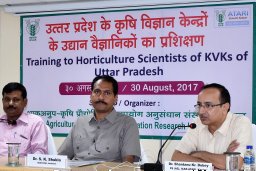 Shantanu Kumar Dubey合作论文数ICAR-Agricultural Technology Application Research Institute2
 A G Adeeth Cariappa合作论文数ICAR–National Dairy Research Institute2
 C. O. Mohan合作论文数2
 Sewa Ram合作论文数2
 C. N. Ravishankar合作论文数2
 Niladri Sekhar Chatterjee合作论文数Division of Agricultural Chemicals, Indian Agricultural Research Institute2J. Bindu合作论文数1Minimol V. Ayyappan合作论文数1
 Kamlesh Kumar Acharya合作论文数1Ajeet Singh合作论文数1Truptimayee Suna合作论文数1
 Amit Kumar Sharma合作论文数1Kashish Arora合作论文数1
 Raj Kumar合作论文数1S. K. Panda合作论文数1S. Balasundari合作论文数1
 Chaitanya Ashok Adhav合作论文数1Neha Patwa合作论文数1
 Muneeb Hamza合作论文数1
 Sunny Kumar合作论文数Punjab Agr Univ1
 Romen Sharma Phurailatpam合作论文数Nagaland Ctr, ICAR Res Complex NEH Reg1
 Priyajoy Kar合作论文数ICAR Indian Inst Maize Res1
 m m prasad合作论文数ICAR Cent Inst Fisheries Technol1
 S.J. Balaji合作论文数1
 Sangeetha V合作论文数Dr.T.Thimmaiah Institute of Technology, Visvesvaraya Technological University1
 S. K. GOYAL合作论文数Rajasthan Agr Res Inst, SKN Agr Univ1
 Chandra Nath Mishra合作论文数ICAR Indian Inst Wheat & Barley Res1
 M.K. Singh合作论文数1
 Om Parkash Gupta合作论文数1




