The development of a highly efficacious and durable vaccine for malaria remains a top priority for global health researchers. Despite the huge rise in recognition of malaria as a global health problem and the concurrent rise in funding over the past 10-15 years, malaria continues to remain a widespread burden. The evidence of increasing resistance to anti-malarial drugs and insecticides is a growing concern. Hence, an efficacious and durable preventative vaccine for malaria is urgently needed. Vaccines are one of the most cost-effective tools and have successfully been used in the prevention and control of many diseases, however, the development of a vaccine for the Plasmodium parasite has proved difficult. Given the early success of whole sporozoite mosquito-bite delivered vaccination strategies, we know that a vaccine for malaria is an achievable goal, with sub-unit vaccines holding great promise as they are simple and cheap to both manufacture and deploy. However a major difficulty in development of sub-unit vaccines lies within choosing the appropriate antigenic target from the 5000 or so genes expressed by the parasite. Given the liver-stage of malaria represents a bottle-neck in the parasite's life cycle, there is widespread agreement that a multi-component sub-unit malaria vaccine should preferably contain a liver-stage target. In this article we review progress in identifying and screening Plasmodium falciparum liver-stage targets for use in a malaria vaccine.
AUTOBIOGRAPHICAL SKETCH A. V. HILL* I. Forbears I was born in Bristol, England, on 26th September 1886, the son of Jonathan Hill and Ada Priscilla (Rumney). My known ancestors were all from the south-west ofEngland and South Wales; apart from the first of them, James Hill, who came from Northern Ireland in the middle ofthe eighteenth century and founded a timber and mahogany business in Bristol. His sonJames (born 1771) carried it on, and it remained with the Hill family till 1924. Other families thatjoined the Hills by marriage were Hawker, Bayley, Griffiths andRumney. The secondJames married in 1795 a daughter ofThomas Hawker; he was a son ofJohn Hawker ofWoodehester (Glos.) described as a 'house carpenter'. Thomas was apprenticed in Bristol in 1747 to a butcher, and by title ofhis apprenticeship became a burgess, or freeman, ofthe City of Bristol in 1756 [1]. Starting with him, five ofmy ancestors, ending with my father in 1880, became burgesses. The freedom ofBristol never had any snob value, though before 1835 it had various practical advantages. Burgesses are still appointed; but its valuenowis sentimental andhistorical, in the connexion it implies with a city which has been famous in history for eight hundred years [2]. There are many Bristols in the United States, and Americans interested in seafaring and discovery will rememberJohn Cabot andhis son Sebastian who sailed from Bristol, England; in 1497John Cabot exploring for King Henry VII discovered Newfoundland. The life of Bristol has always depended on its mariners and their trade. Ships from Bristol joined at Plymouth against the Spanish Armada, the first steamship1 to cross the * Present address: nA Chaucer Road, Cambridge, CB2 2EB, England. 1 This, the Great Western, was designed and built at Bristol by I. K. Brunei. The second ship, the Great Britain, crossed the Atlantic in 1845 and later ran aground on the Falkland Islands, where she remained for many years. In 1970, however, she was put on a raft and brought across the Atlantic Ocean. She is today in the dry dock at Bristol where she was built, and can now be seen. 27 Atlantic was launched at Bristol in 1837, and the phrase 'ship-shape and Bristol-fashion' is traditional [3]. Americans also may recall that Edmund Burke, one of our greatest political thinkers, in the 1770's when he was Member of Parliament for Bristol, pleaded for conciliation with the American colonies. My mother's Rumney descent, also connected with Bristol, goes back to John Rumney in the eighteenth century; he lived in the parish of St. George at Easton-in-Gordano just west of the Avon estuary. Earlier records ofhis family were destroyed in riots in 183 1. The name is uncommon and almost certainly derived from the little town of Rumney on the River Rhymney, fifty miles across the Bristol Channel in South Wales. The 'prepositor' [4] ofBristol in 1221 wasJohn de Rumney and the Mayor in 1276 was Peter de Rumney, and there were others in later times. John Rumney's son Charles (b. 1792) was apprenticed in 1807 to a Lawrence Houghton, boatbuilder and shipwright, 'to learn the art and mystery of boatbuilding'. William Rumney, another member of the family, a pilot in the Bristol Channel, was drowned off Clovelly in N. Devon in 1830 aged 33. Later, Charles built ships near Bristol and possibly at Bideford. My mother's father, Alfred Jones Rumney, son of Charles, was apprenticed (1846) as awoollendraper inBristolandlaterfollowedthe trade ofwoollen merchant there—with singular lack ofsuccess. He might well have made good as a scholar, writer or teacher and he had a lively sense ofthe ridiculous; this fortunately passed on to my mother who often needed it. His family was miserably poor, but his four daughters were people ofcharacter, originality and resource. The other side of my mother's descent (Huggins) came from midDevon . There were many Hugginses there ofwhom the first in our record wasJohn Huggins who married Elizabeth Pope ofBow, or Colebrook. Their son William (b. 1761), described as a yeoman, married Grace Townsend ofWhitstone four miles west of Exeter, who lived to 90 and died, according to legend, from breaking her leg climbing over a hurdle while chasing geese out...
This case report describes the clinical findings and successful treatment of an oesophageal obstruction (‘choke’) by endoscopic removal of a foreign body in a two-year-old Dartmoor pony referred to the Langford Equine Hospital (University of Bristol). The majority of simple oesophageal obstructions are managed without needing surgical intervention and the prognosis is highly dependent on the duration of the clinical signs, tracheal contamination and oesophageal damage. Medical and surgical treatments for this condition as well as possible complications are discussed in this report.
Liposomes are small, spherical, self-closed vesicles. Thi s study evaluates the chaenhancement prepared by lipid film hydration method c mprised of varying molar concentrations of phosphatidylcholine and cholestero l and dropwise addition of a defined concentration of DOTAP. A solution of Newca stle disease virus vaccine was added and sonicated to form multilamellar vesicles. The optimum condition was 12.5:12.5:1(w/w) of phosphatidylcholine:cholesterol:DOTAP ratio with a maximum percent encapsulation efficiency of 63.3 %. Liposomes w as characterized for morphology, particle size and zetapotential. Antibody titre, l ymphocytes and globulin was assessed. The stability of the liposome was assesse d by toring for four weeks at 4C, 28 C and at freeze-thaw temperatures. The mean size was 100 nm as confirmed by PCS and TEM images. The zeta potential of optimiz ed liposomes prepared by this method was +24 mV. Haemagglutination inhibition, haemat ology and biochemical tests showed that the cationic liposomes induced higher immunity than La Sota® commercial vaccine. Stability studies of the TEM and PCS s howed slight alteration in the shape and size of the liposomes after one month of storage at 4 C and 25 C. Results suggest that DOTAP-based liposome might be for b oosting immunity against ND virus in chickens whereas storage of the liposomes a t room temperature may not be favourable. Introduction Liposomes are small, spherical, self-closed vesicles o f colloidal dimension which consist of amphiphilic lipids, enclosing an aqueous core. The lipids are predominantly phospholipids which form bilayers similar to those found in biomembra nes. In most cases the major component is phosphatidylcholine. The processing condit i s and the chemical composition determine whether liposomes are formed with one or severa l concentric bilayers . Liposomes have been employed in various applications of life scie nces . Twenty-five years after the discovery of their immunological properties, liposomes now appear a major candidate adjuvant with a liposome-based vaccine (against hepatiti s A) being licensed for use in humans . Vaccines based on novasomes (R) (non-phospholipid lip osomes formed from single-chain amphiphiles, with or without other lipids) have been lice nsed for the immunization of fowl
Send the bibliographic details of this record to your email address … Please enter the email address that the record information will be sent to … Please add any additional information to be included within the email … Dunachie, S., Berthoud, T., Keating, S., Todryk, S., Thompson, F., Gilbert, S., … Hill, A. (2005). Regulatory T cells limit the cellular response to CS and TRAP encoding candidate malaria vaccines in humans [MIM-SD-8756]. ACTA TROPICA, 95, S200–S200 … Dunachie, S., et al. “Regulatory T Cells Limit the Cellular Response to CS and TRAP Encoding Candidate Malaria Vaccines in Humans [MIM-SD-8756].” ACTA TROPICA, vol. 95, ACTA TROPICA, 2005, pp. S200–S200 … Dunachie, S, T Berthoud, S Keating, S Todryk, F Thompson, S Gilbert, H Fletcher, and A Hill. 2005. “Regulatory T Cells Limit the Cellular Response to CS and TRAP Encoding Candidate Malaria Vaccines in …
 W. Hartree合作论文数13
 Sarah Gilbert合作论文数Nuffield Department of Medicine, Medical Sciences Division, University of Oxford12J. L. Parkinson合作论文数9
 Mark Thursz合作论文数Department of Metabolism, Digestion and Reproduction, Faculty of Medicine, Imperial College London;St Mary's Hospital7Tamara Berthoud合作论文数6Jv Howarth合作论文数5
 Maimuna Mendy合作论文数5
 Stephen Todryk合作论文数Immune Regulation Research Group, Trinity College Dublin5
 Sheila Keating合作论文数GigaGen Inc;Blood Systems Research Institute5BC ABBOTT合作论文数5L Bugnard合作论文数4F. Thompson合作论文数4
 Howard Thomas合作论文数Department of Metabolism, Digestion and Reproduction, Faculty of Medicine, Imperial College London;Section of Hepatology and Gastroenterology, School of Medicine, Imperial College London4K. Furusawa合作论文数4
 Helen McShane合作论文数Nuffield Department of Medicine, University of Oxford;Harris Manchester College, University of Oxford;Oxford NIHR Biomedical Research Centre;Medical Sciences Division, University of Oxford4
 Arturo Reyes-Sandoval合作论文数4TP Feng合作论文数4Uga Dumpis合作论文数Wellcome Trust Centre for Human Genetics, Oxford University4Hilton Whittle合作论文数4P Bejon合作论文数3Jc Bramwell合作论文数3M Walther合作论文数3R Sinden合作论文数3Solandt D Y合作论文数3
 Peter Karayiannis合作论文数Department of Medicine;Imperial College;School of Medicine;School of Medicine, Imperial College3Joerg Schneider合作论文数Oxxon Therapeutics3Angela J. Frodsham合作论文数Wellcome Trust Centre for Human Genetics;University of Oxford;Churchill Hospital;School of Biochemistry and Immunology;Trinity College3Alison Downing合作论文数3Hamilton Hartridge合作论文数3
 Susanna Dunachie合作论文数Churchill Hospital, Oxford University3Mckeen Cattell合作论文数3Andrew M. Hall合作论文数Department of Medicine and Therapeutics, Institute of Medical Sciences3Anita Milicic合作论文数T Cell Modulation Group, University of Oxford3
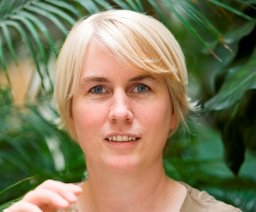 Anne C Moore合作论文数Church Laboratory of Chemical Biology Division of Chemistry and Chemical Engineering, California Institute of Technology Pasadena3
 Thomas Bardin合作论文数2N Peshu合作论文数2Simon J Draper合作论文数2B. Lowe合作论文数2L Andrews合作论文数2M Graves合作论文数2R Kaur合作论文数2
 Robert P Anderson合作论文数Wesley Med Res2
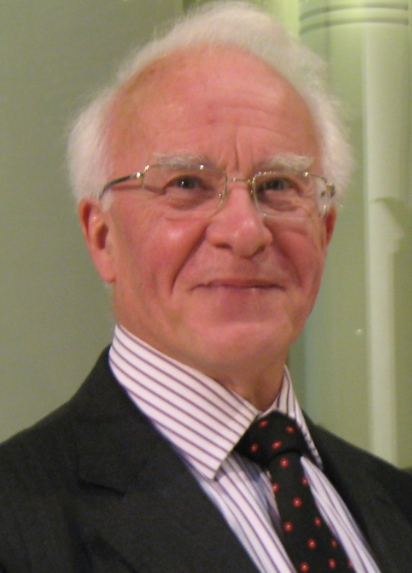 Derek Jewell合作论文数Green Templeton College, University of Oxford;Nuffield Department of Medicine, University of Oxford2Barcroft J合作论文数2
 Jordana Bell合作论文数Department of Twin Research and Genetic Epidemiology, School of Life Course & Population Sciences, Faculty of Life Sciences & Medicine, King's College London2Lang Trudie合作论文数2AUBERT X M合作论文数2MACPHERSON L合作论文数2
 Magdalena Plebanski合作论文数Department of Immunology, Monash University2




