A number of physics experiments call for the use of iron-dominated, normal-conducting electromagnets to produce moderate fields (2 T range) in a large gap or over a large volume. Although robust and reliable, these magnets require significant electrical power, in the MW range, and can thus be costly to operate, especially in DC mode. We report on the design and test of a superconducting, proof-of-principle demonstrator that makes use of technological developments carried out for the High Luminosity upgrade of the Large Hadron Collider at CERN (HL-LHC). The demonstrator includes a superconducting coil, wound from a MgB 2 cable, and mounted inside an iron yoke with a 62 mm gap. As a first phase, the demonstrator was successfully tested in liquid helium at 4.5 K, generating a magnetic flux density of 1.95 T at a current of 5 kA. In a second phase, currently under preparation, the demonstrator will be tested in gaseous helium at 20 K. The design concepts of the demonstrator can be scaled up to large, iron-dominated electromagnets.
This document specifies the functional requirements for the MQXFA magnet readapted for the American contribution. If all the requirements specified in this document are met, then the U.S. HL-LHC AUP MQXFA deliverables will be accepted by CERN for the HL-LHC project. Another separate document will be issued by the American contribution for the MQXFA cold mass functional requirements. Please note that the definition of threshold as it is being used by the American contribution is not the same as objective, according to the HL-LHC quality policy.
The Japan Atomic Energy Agency (JAEA) has the responsibility to procure 25% of the ITER Toroidal Field Coil conductors as the Japanese Domestic Agency (JADA) in the ITER project. The TF conductor is a circular shaped, cable-in-conduit conductor, composed of a cable and a stainless steel conduit (jacket). The outer diameter and maximum length of the TF conductor are 43.7 mm and 760 m, respectively. JAEA started to produce strand, cables and jacket sections and to construct a conductor manufacturing (jacketing) facility in 2008. Following preparation in December 2009 of the jacketing facility, the dummy cable, the jacket sections and fabrication procedures, such as welding, cable insertion, compaction and spooling, JAEA manufactured a 760 m long Cu dummy conductor for process qualification. Into the 760 m long Cu dummy conductor jacketing, JAEA successfully inserted the cable with a maximum force of 32 kN. The outer diameter of the cross section of the spooled conductor was 43.7 ± 0.15 mm, which complies with the ITER target requirement of 43.7 ± 0.3 mm. Following qualification of all manufacturing processes, JAEA has started to fabricate superconducting conductors for the TF coils.
The main purpose of Next European Dipole (NED) project is to design and to build an Nb3Sn ~ 15 T dipole magnet. Due to budget constraints, NED is mainly focused on superconducting cable development and production. In this work, an update is given on the NED conductor development by Alstom-MSA and SMI, which uses, respectively, Internal-Tin-Diffusion and Powder-In-Tube methods, with the aim of reaching a non-copper critical current density of ~ 3000 A/mm2 at 12 T and 4.2 K. Characterization results, including critical current and magnetization data, are presented and discussed, as well, for conductors already developed by both companies for this project. SMI succeeded to produce a strand with 50 μm diameter filaments and with a critical current of ~ 1400 A at 4.2 K and 12 T, corresponding to a non-copper critical current density of ~ 2500 A/mm2. Cabling trials with this strand were successfully carried out at LBNL.
This paper presents a new Finite Element numerical method to analyse the coupling between twisted filaments in a superconducting multifilament composite wire. To avoid the large number of elements required by a 3D code, the proposed method makes use of the energy balance principle in a 2D code. The relationship between superconductor critical current density and local magnetic flux density is implemented in the program for the Bean and modified Kim models. The modeled wire is made up of six filaments twisted together and embedded in a low-resistivity matrix. Computations of magnetization cycle and of the electric field pattern have been performed for various twist pitch values in the case of a pure copper matrix. The results confirm that the maximum magnetization depends on the matrix conductivity, the superconductor critical current density, the applied field frequency, and the filament twist pitch. The simulations also lead to a practical criterion for wire design that can be used to assess whether or not the filaments are coupled.
The Next European Dipole (NED) activity supported by the European Union aims at the development of a high-performance Nb3Sn conductor (Jc = 1500 A/mm2 @ 15 T, 4.2 K) in collaboration with European industry and at the design of a high- field dipole magnet making use of this conductor. In the framework of the NED collaboration which coordinates the activity of several institutes, CERN has contributed to the electromagnetic design study of a cos - thetas, layer-type superconducting dipole with an 88 mm aperture that is able to reach 15 T at 4.2 K. Part of the optimization process was dedicated to the reduction of the multipole coefficients so as to improve field quality while keeping an efficient peak-field to main-field ratio. In this paper, we present the optimization of the coil cross-section and of the shape of the iron yoke to reduce saturation-induced field errors during ramp. The effects of persistent magnetization currents are also estimated and different methods to compensate persistent-current-induced field distortions are presented.
We report an experimental study aiming to demonstrate the not negligible role of unreacted Nb on the magnetic instabilities in superconducting Nb3Sn multifilamentary wires, observable through partial flux jumps at magnetic field values below 0.5 T. The analysed wires were recently developed for use as dipoles required in future high- energy proton accelerators and are based on powder- in-tube technology. We studied both unreacted (only involving Nb filaments) and reacted wires, finding flux jump instabilities in both cases when performing magnetic measurements. The results can be interpreted on the basis of the critical state model and are coherent with the intrinsic stability criterion.
This paper presents a new Finite Element numerical method to analyze the coupling between twisted filaments in a superconducting multifilament composite wire. To avoid the large number of elements required by a 3D code, the proposed method makes use of the energy balance principle in a 2D code. The relationship between superconductor critical current density and local magnetic flux density is implemented in the program for the Bean and modified Kim models. The modeled wire is made up of six filaments twisted together and embedded in a lowresistivity matrix. Computations of magnetization cycle and of the electric field pattern have been performed for various twist pitch values in the case of a pure copper matrix. The results confirm that the maximum magnetization depends on the matrix conductivity, the superconductor critical current density, the applied field frequency, and the filament twist pitch. The simulations also lead to a practical criterion for wire design that can be used to assess whether or not the filaments are coupled.
We present a preliminary design of the superconducting final focusing quadrupole magnets for TESLA and all their associated cryogenics.
One of the major achievements of the magnet R & D program for the Superconducting Super Collider (SSC) is the fabrication and test of a series of twenty 5-cm-aperture, 15-m-long dipole magnet prototypes. The ramp-rate sensitivity of these magnets appear to fall in at least two categories, which can be correlated to the manufacturer and production batch of the strands used for the inner-coil cables. The first category, refered to as type-A, is characterized by a strong quench current degradation at high ramp rates, usually accompanied by large distortions of the multipole fields and large energy losses. The second category, refered to as type-B, is characterized by a sudden drop of quench current at low ramp rates, followed by a much milder degradation at larger rates. The multipole fields of the type-B magnets show little ramp-rate sensitivity, and the energy losses are smaller than for the type-A magnets. The behavior of the type-A magnets can be explained in terms of inter-strand eddy currents arising from low and non-uniform resistances at the crossovers between the strands of the two-layer, Rutherford-type cable. Anomalies in the transport-current repartition among the cable strands are suggested as a possible cause for the type-B behavior. The origins of these anomalies have not yet been clealy identified. The SSC project was canceled by decision of the United States Congress on October 21, 1994.
Over a period of ten months, a 15 m-long, 50 mm-aperture superconducting SSC Collider dipole was taken through a series of thermal and power cycles to check for changes in performance. One quench below operating current was experienced during this period. Small changes in the coil preload and certain harmonics were observed.<>
Polyimide with epoxy impregnated glass tape was used in Fermilab baseline design of several SSC Collider dipole magnets which were used in the SSC Accelerator Systems String Test (ASST). Later in the magnet R&D program several magnets were built using conductor insulation in which adhesive that cures at 140/spl deg/C was coated directly on the polyimide film. Some alternate materials for coil end parts and coil winding were also tested. The data taken during the tests of these magnets are compared with results from 10-stack studies of the two insulation systems and design expectations and correlated with changes in assembly methods.< >
Views Icon Views Article contents Figures & tables Video Audio Supplementary Data Peer Review Share Icon Share Twitter Facebook Reddit LinkedIn Tools Icon Tools Reprints and Permissions Cite Icon Cite Search Site Citation A. Devred, T. Bush, R. Coombes, J. DiMarco, C. Goodzeit, J. Kuzminski, M. Puglisi, P. Radusewicz, P. Sanger, R. Schermer, G. Spigo, J. Thompkins, J. Turner, Z. Wolf, Y. Yu, H. Zheng, T. Ogitsu, M. Anerella, J. Cottingham, G. Ganetis, M. Garber, A. Ghosh, A. Greene, R. Gupta, J. Herrera, S. Kahn, E. Kelly, A. Meade, G. Morgan, J. Muratore, A. Prodell, M. Rehak, E. P. Rohrer, W. Sampson, R. Shutt, P. Thompson, P. Wanderer, E. Willen, M. Bleadon, R. Hanft, M. Kuchnir, P. Mantsch, P. O. Mazur, D. Orris, T. Peterson, J. Strait, J. Royet, R. Scanlan, C. Taylor; About the mechanics of SSC dipole magnet prototypes. AIP Conf. Proc. 11 March 1992; 249 (2): 1309–1374. https://doi.org/10.1063/1.41955 Download citation file: Ris (Zotero) Reference Manager EasyBib Bookends Mendeley Papers EndNote RefWorks BibTex toolbar search Search Dropdown Menu toolbar search search input Search input auto suggest filter your search All ContentAIP Publishing PortfolioAIP Conference Proceedings Search Advanced Search |Citation Search
A 1-m long superconducting dipole prototype with an aperture of 5 cm and a rated field of 6.6 T was built and tested. This model was based on a two-layer cosine-theta coil clamped by stainless steel collars inside a laminated iron yoke, with a large keystone-angle cable and no wedge. The cold mass was encased in an outer stainless steel skin. The magnet was instrumented with voltage taps, which allow the location of the quench start, and with strain gauges, which allow the measurement of the coil stress variations during assembly, cool-down, and energization. Prior to the assembly, several tests were carried out in order to understand the mechanical properties of the coil and to determine a proper calibration for the strain gauges. This paper reports these design studies, with emphasis on the calibration problem, followed by a discussion of the magnet assembly and quench performance in light of the mechanical measurements.
Author(s): Devred, A.; Bush, T.; Coombes, R.; DiMarco, J.; Goodzeit, D.; Kuzminski, J.; Puglisi, M.; Radusewicz, P.; Sanger, P.; Schermer, R.; Spigo, G.; Tompkins, J.; Turner, J.; Wolf, Z.; Yu, Y.; Zheng, H.; Ogitsu, T.; Anerella, M.; Cottingham, J.; Ganetis, G.; Garber, M.; Ghosh, A.; Greene, A.; Gupta, R.; Herrera, J.; Kahn, S.; Kelly, E.; Meade, A.; Morgan, G.; Muratore, J.; Prodell, A.; Rehak, M.; Rohrer, E.P.; Sampson, W.; Shutt, R.; Thompson, P.; Wanderer, P.; Willen, E.; Bleadon, M.; Hanft, R.; Kuchnir, M.; Mantsch, P.; Mazur, P.O.; Orris, D.; Peterson, T.; Strait, J.; Royet, J.M.; Scanlan, R.M.; Taylor, C.
 R. Schermer合作论文数12m garber合作论文数12e willen合作论文数12a prodell合作论文数12r shutt合作论文数12peter thompson合作论文数12
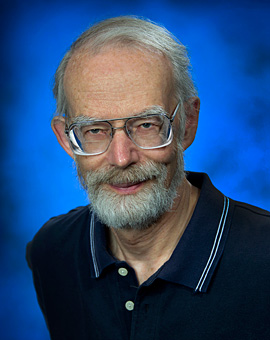 Peter Wanderer合作论文数Superconducting Magnet Division, Brookhaven National Laboratory12G. Ganetis合作论文数12Alan H Greene合作论文数12W. Sampson合作论文数12E. Kelly合作论文数12
 Amit Ghosh合作论文数12m bleadon合作论文数11c goodzeit合作论文数11S. Kahn合作论文数11m kuchnir合作论文数11j strait合作论文数11R. Hanft合作论文数11
 R. M. Scanlan合作论文数11G. Morgan合作论文数11Darryl F Orris合作论文数11e p rohrer合作论文数10
 Paul Mantsch合作论文数Fermi National Accelerator Laboratory10
 Javier Herrera合作论文数10C. Taylor合作论文数9j zbasnik合作论文数9J Cortella合作论文数8G. Tool合作论文数8A Desportes合作论文数8jessica a turner合作论文数8w s gilbert合作论文数8c w peters合作论文数8Michael Lamm合作论文数8S. Caspi合作论文数8J. Kaugerts合作论文数8John C. Tompkins合作论文数8J. Rechen合作论文数8
 Bruce C. Brown合作论文数8
 Michael Chapman合作论文数School of Physics, College of Sciences, Georgia Institute of Technology8j royet合作论文数7Joseph Dimarco合作论文数7K Mirk合作论文数6j g cottingham合作论文数6J Peoples合作论文数6T. Kirk合作论文数6
 Michelle Rehak合作论文数6Peter Mazur合作论文数6P. Dahl合作论文数6T. Ogitsu合作论文数6




