The US High-Luminosity LHC Accelerator Upgrade Project (AUP) is responsible for delivering cryo-assemblies for the Q1/Q3 quadrupole optical components of the High Luminosity LHC upgrade at CERN. Total of 10 cryo-assemblies containing two Nb3Sn quadrupole magnets per cold mass will be delivered within this program. After the successful test of the first pre-series cryo-assembly in 2023, two more cryo-assemblies were tested at Fermilab's horizontal test facility. Production overview and the test results of the LQXFA/B02 and LQXFA/B03 cryo-assemblies are summarized in this paper. After the first test, to increase the capability of the horizontal test facility, various improvements have been made. These improvements are also described in this paper.
New high field and large-aperture quadrupole magnets for the low-beta inner triplets (Q1, Q2, Q3) have been built and tested as part of the high-luminosity upgrade of the Large Hadron Collider (HL-LHC). These new quadrupole magnets are based on Nb3Sn superconducting technology. The US Accelerator Upgrade Project (US-AUP) is producing the Q1 and Q3 Cryo-Assemblies: a pair of ∼ 5 m long magnet structures installed in a stainless-steel helium vessel (Cold Mass) and surrounded by cryostat shields, piping, and a vacuum vessel. This paper gives an overview of the design, production, and the results of the horizontal test of the first pre-series Q1/Q3 Cryo-Assembly.
The High Luminosity upgrade of the Large Hadron Collider (HL-LHC) at CERN will include eight cryo-assemblies that are expected to be fabricated and delivered to CERN by the US HL-LHC Accelerator Upgrade Project (AUP) as part of the U.S. contributions to the HL-LHC. These cryostat assemblies are the quadrupole magnetic components of the HL-LHC Q1 and Q3 inner triplet optical elements in front of the two interaction points. Each cryo-assembly consists of two 4.2 m long Nb 3 Sn quadrupole magnets with aperture 150 mm and operating gradient 132.6 T/m. The first pre-series cryo-assembly has been fabricated and successfully tested at the horizontal test facility at Fermi National Accelerator Laboratory. In this manuscript we report the quench test results of the LQXFA/B-01 cryo-assembly. The primary objective of the horizontal test is full cryo-assembly qualification and validation of the performance requirements.
The Large Hadron Collider will soon undergo an upgrade to increase its luminosity by a factor of 10 [1]. A crucial part of this upgrade will be replacement of the NbTi focusing magnets with Nb3Sn magnets that achieve a 50 increase in the field strength. This will be the first ever large-scale implementation of Nb3Sn magnets in a particle accelerator. The High-Luminosity LHC Upgrade, HL-LHC is a CERN project with a world-wide collaboration. It is under construction and utilizes Nb3Sn Magnets (named MQXF) as key ingredients to increase tenfold the integrated luminosity delivered to the CMS and ATLAS experiments in the next decade. The HL-LHC AUP is the US effort to contribute approximately 50 low-beta focusing magnets and crab cavities for the HL-LHC. This paper will present the program to fabricate the Nb3Sn superconducting magnets. We are reporting the status of the HL-LHC AUP project present the results from horizontal tests of the first fully assembled cryo-assembly.
The cold powering test of the first two prototypes of the MQXFB quadrupoles (MQXFBP1, now disassembled, and MQXFBP2), the Nb 3 Sn inner triplet magnets to be installed in the HL-LHC, has validated many features of the design, such as field quality and quench protection, but has found performance limitations. In fact, both magnets showed a similar phenomenology, characterized by reproducible quenches in the straight part inner layer pole turn, with absence of training and limiting the performance at 93% (MQXFBP1) and 98% (MQXFBP2) of the nominal current at 1.9 K, required for HL-LHC operation at 7 TeV. Microstructural inspections of the quenching section of the limiting coil in MQXFBP1 have identified fractured Nb 3 Sn sub-elements in strands located at one specific position of the inner layer pole turn, allowing to determine the precise origin of the performance limitation. In this paper we outline the strategy that has been defined to address the possible sources of performance limitation, namely coil manufacturing, magnet assembly and integration in the cold mass.
The United States has a rich history in high energy particle accelerators and colliders — both lepton and hadron machines, which have enabled several major discoveries in elementary particle physics. To ensure continued progress in the field, U.S. leadership as a key partner in building next generation collider facilities abroad is essential; also critically important is to prepare to host an energy frontier collider in the U.S. once the construction of the LBNF/DUNE project is completed. In this paper, we briefly discuss the ongoing and potential U.S. engagement in proposed collider projects abroad and present a number of future collider options we have studied for hosting an energy frontier collider in the U.S. We also call for initiating an integrated national R&D program in the U.S. now, focused on future colliders.
The US HL-LHC Accelerator Upgrade Project (AUP) is fabricating the MQXFA magnets to be used in the Q1 and Q3 Inner Triplet elements of the High Luminosity LHC (HL-LHC). This is the first production of Nb3Sn magnets for a particle accelerator, together with the MQXFB magnets for Q2a and Q2b. Here we show status and some results of MQXFA magnets fabrication and vertical test.
the large-aperture low-β focusing Nb3Sn quadrupoles and the Radio Frequency Dipole (RFD) Crab Cavities, located in close proximity to the ATLAS and CMS experiments. This contribution, called the HL-LHC Accelerator Upgrade Project (HL-LHC AUP), focuses on production of these quadrupoles and cavities by sharing the work among a consortium of US Laboratories (FNAL, LBNL, BNL and SLAC) and Universities and in close connection with the CERN-led HL-LHC Collaboration. The collaboration achieved commonality of specifications and uniformity of performance. Final development of design, construction and first results from the prototypes are described to indicate the status of these critical components for HL-LHC.
About one hundred magnets of six different types shall be installed in the High Luminosity LHC (HL-LHC) in the years 2026--2028 at CERN. The magnets design, construction and test are based on CERN collaborations with institutes and industrial partners in USA, Spain, Italy, Japan and China. Three types of correctors are based on Nb–Ti technology and feature conductor peak fields in the 2 to 4 T range: for all of them the protoype phase has been successfully completed. The production is well advanced for the superferric correctors, and is starting for the canted cos theta correctors and for the nested correctors. The separation and recombination Nb–Ti dipoles D1 and D2, with a 4.5-6 T bore field range, are both in the prototype phase after the completion of the short model program. The most challenging magnet, the Nb3Sn quadrupole with conductor peak field above 11 T, is in the prototype phase at CERN and halfway through the production phase in the USA. In this paper we will give, for each type of magnet, an overview of the main achievements obtained so far and we will outline the technical points still needing validation from the prototype program.
The purpose of this document is to define the specifications for the structure fabrication and assembly of MQXFA series magnets to be used by the US High-Luminosity LHC Accelerator Upgrade Project (AUP). Magnets fabricated according to these specifications are expected to allow MQXFA magnets to meet the MQXFA Functional Requirements Specification. These specifications for the fabrication of MQXFA series magnets are based on the R&D performed by the US LHC Accelerator Research Program (LARP) and the development performed by AUP, in collaboration with CERN, through fabrication and test of pre-series coils and magnets.
By the end of October 2022, the US HL-LHC Accelerator Upgrade Project (AUP) had completed fabrication of ten MQXFA magnets and tested eight of them. The MQXFA magnets are the low-beta quadrupole magnets to be used in the Q1 and Q3 Inner Triplet elements of the High Luminosity LHC. This AUP effort is shared by BNL, Fermilab, and LBNL, with strand verification tests at NHMFL. An important step of the AUP QA plan is the testing of MQXFA magnets in a vertical cryostat at BNL. The acceptance criteria that could be tested at BNL were all met by the first four production magnets (MQXFA03-MQXFA06). Subsequently, two magnets (MQXFA07 and MQXFA08) did not meet some of the criteria and were disassembled. Lessons learned during the disassembly of MQXFA07 caused a revision to the assembly specifications that were used for MQXFA10 and subsequent magnets. In this article, we present a summary of: 1) the fabrication and test data for all the MQXFA magnets; 2) the analysis of MQXFA07/A08 test results with characterization of the limiting mechanism; 3) the outcome of the investigation, including the lessons learned during MQXFA07 disassembly; and 4) the finite element analysis correlating observations with test performance.
In this White Paper for the Snowmass 2021 Process, we propose the establishment of a magnet Leading-Edge technology And Feasibility-directed Program (LEAF Program) to achieve readiness for a future collider decision on the timescale of the next decade. The LEAF Program would rely on, and be synergetic with, generic R&D efforts presently covered - in the US - by the Magnet Development Program (MDP), the Conductor Procurement and R&D (CPRD) Program and other activities in the Office of HEP supported by Early Career Awards (ECA) or Lab Directed R&D (LDRD) funds. Where possible, ties to synergetic efforts in other Offices of DOE or NSF are highlighted and suggested as wider Collaborative efforts on the National scale. International efforts are also mentioned as potential partners in the LEAF Program. We envision the LEAF Program to concentrate on demonstrating the feasibility of magnets for muon colliders as well as next generation high energy hadron colliders, pursuing, where necessary and warranted by the nature of the application, the transition from R&D models to long models/prototypes. The LEAF Program will naturally drive accelerator-quality and experiment-interface design considerations. LEAF will also concentrate, where necessary, on cost reduction and/or industrialization steps.
The MQXFA Quadrupole magnets will be installed in High Luminosity LHC to form the Q1 and Q3 inner triplet optical elements in front of the interaction points 1 (ATLAS) and 5 (CMS). A pair of MQXFA units is assembled in a stainless steel helium vessel, including the end domes, to make the Q1 Cold Mass or the Q3 Cold Mass. The US HL LHC Accelerator Upgrade Project* is responsible for the design, manufacturing and test of the Q1/Q3 Cold Masses and the complete MQXFA magnets. CERN provides the cryostat components and is responsible for integration and installation in HL LHC. The MQXFA quadrupoles have 150 mm aperture, 4.2 m magnetic length, nominal gradient of 132.2 T/m, and coil peak field of 11.3 T. They use Nb_3Sn conductor and a support structure made of segmented aluminum shells pre-loaded by using bladders and keys. This report presents the final design of the MQXFA quadrupole magnets. *Supported by the U.S. Department of Energy, Office of Science, Office of High Energy Physics
were stopped. Analytical and Finite Element analysis were performed in light of the graded procedure defined in the Structure Design Criteria to investigate the fracture failure for MQXFAP2. In this paper, we report the fracture analysis of the current shell design, including the elasto-plastic simulations with submodel technique, and calculations with Linear Elastic Fracture Mechanics (LEFM). Test material properties are also presented. The results of this analysis explain why the end shell of MQXFAP2 failed, and suggest fillets on the end shell notches to meet the margin specified in the Structural Design Criteria.
We present a measurement of the W boson mass in W-->e(nu) decays using 1 fb-1 of data collected with the D0 detector during Run II of the Fermilab Tevatron collider. With a sample of 499830 W-->e(nu) candidate events, we measure M(W)=80.401+/-0.043 GeV. This is the most precise measurement from a single experiment.
The scope of the proposal outlined in this white paper is the development and demonstration of the technology needed for next generation of Nb_3Sn accelerator magnets in the 12-14 T range. The main goal is to cut magnet cold-mass cost by a factor 2 or higher with respect to the Nb_3Sn magnets produced by the US Accelerator Upgrade Project (AUP) for the High-Luminosity Large Hadron Collider (HL-LHC). This goal will be achieved by significant reduction of labor hours, higher operating point, and improved performance uniformity. A key factor will be automation that will be achieved through industry involvement and benefitting from the experience gained in US national laboratories through the production of the AUP magnets. This partnership will enable the development of a technology that will be easily transferable to industry for mid- and large-scale production of Nb_3Sn accelerator magnets in the 12-14 T range. This step is essential to enable next generation of colliders such as the FNAL-proposed Muon Collider, FCC and other HEP hadron colliders. This is a Directed R&D where direction is given by the field range and industry involvement for high-automation and industry-ready technology. The plan includes ten milestones, to be achieved in 6-8 years at the cost of 5-7 $M/year.
 Arie Bodek合作论文数Department of Physics and Astronomy, School of Arts & Sciences, University of Rochester1222
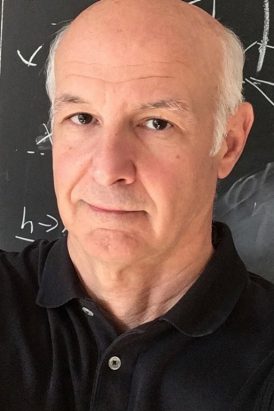 Dante Amidei合作论文数Department of Physics, College of Literature, Science, and the Arts, University of Michigan1204
 Pawel De Barbaro合作论文数Department of Physics and Astronomy, School of Arts and Sciences, University of Rochester;CERN1172
 Andrew Beretvas合作论文数1152
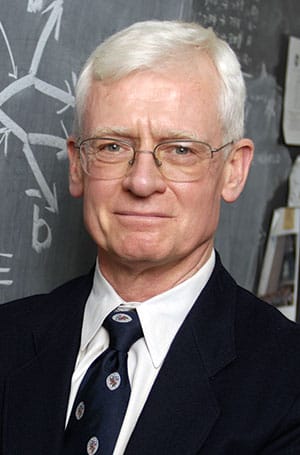 Bruce Barnett合作论文数William H. Miller III Department of Physics and Astronomy, Krieger School of Arts and Sciences, Johns Hopkins University1144V. E. Barnes合作论文数1129
 Giorgio Chiarelli合作论文数Istituto Nazionale di Fisica Nucleare1120Franco Bedeschi合作论文数Istituto Nazionale di Fisica Nucleare Sezione di Pisa1118
 Daniela Bortoletto合作论文数Department of Physics, University of Oxford1097K. Goulianos合作论文数1092
 Duncan Carlsmith合作论文数Department of Physics, College of Letters & Science, University of Wisconsin-Madison1085
 Luc Demortier合作论文数Laboratory of Experimental High Energy Physics, The Rockefeller University1083
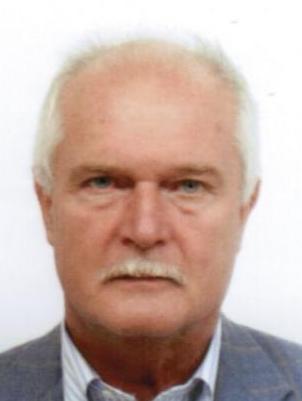 Dario Bisello合作论文数Department of Physics and Astronomy "Galileo Galilei", University of Padova1076
 John S. Conway合作论文数Department of Physics and Astronomy, University of California, Davis1073
 Jacobo Konigsberg合作论文数Institute for High Energy Physics and Astrophysics, University of Florida;Department of Physics, College of Liberal Arts and Sciences, University of Florida1066
 Steven Errede合作论文数Department of Physics, The Grainger College of Engineering, University of Illinois Urbana-Champaign1058
 Melissa Franklin合作论文数Department of Physics, Harvard University1046K. Burkett合作论文数1045Alvin Laasanen合作论文数Purdue University1043James Bellinger合作论文数Department of Physics, University of Wisconsin–Madison1040
 C. Bromberg合作论文数Michigan State University, USA1038C. Grosso-Pilcher合作论文数1037M. A. Ciocci合作论文数1035
 Anwar Bhatti合作论文数Department of Physics, College of Computer, Mathematical, & Natural Sciences, University of Maryland1034
 Jay R. Dittmann合作论文数Department of Physics, College of Arts and Sciences, Baylor University1033
 Bill Ashmanskas合作论文数Department of Physics & Astronomy, College of Arts & Sciences, University of Pennsylvania1026G. Bellettini合作论文数1019
 Michael S. Gold合作论文数Department of Physics and Astronomy, The University of New Mexico1003G. Busetto合作论文数Universita degli Studi980T. Kamon合作论文数977
 Patrick Lukens合作论文数Particle Physics Division, Fermi National Accelerator Laboratory977
 Joseph Boudreau合作论文数Department of Physics and Astronomy, University of Pittsburgh975
 Manfred Paulini合作论文数Department of Physics, Mellon College of Science, Carnegie Mellon University966
 Joey W Huston合作论文数Department of Physics & Astronomy, College of Natural Science, Michigan State University964S. Leone合作论文数962
 Morris Binkley合作论文数Collider Detector Facility Department, Fermi National Accelerator Laboratory962J. Antos合作论文数961
 Angela Barbaro-Galtieri合作论文数Physics Division, Lawrence Berkeley National Laboratory958D. Benjamin合作论文数957
 Ray Culbertson合作论文数Fermi National Accelerator Laboratory955Af Garfinkel合作论文数937G. Latino合作论文数INFN Sezione di Firenze, Università di Firenze936Marco Cordelli合作论文数Laboratori Nazionali di Frascati, Istituto Nazionale di Fisica Nucleare933
 Fabio Happacher合作论文数Istituto Nazionale di Fisica Nucleare932
 Kaori Maeshima合作论文数Fermi National Accelerator Laboratory928
 Andrea Castro合作论文数INFN Sezione di Bologna;Dipartimento di Fisica, Universita' di Bologna924
 William F. Badgett Jr.合作论文数Fermi National Accelerator Laboratory923D. Lucchesi合作论文数920
 Tommaso Dorigo合作论文数Italian Institute for Nuclear Physics;University of Padova920




