In the U.S., Black communities are disproportionately impacted by HIV due to economic instability, racism, and structural inequities. Among Black residents who participated in a bundled implementation study from November 2019 through March 2020 in HIV high impact communities in Miami, FL this study examines (a) which latent classes are most prevalent based on indicators of economic stability (ES; income, work, housing, zip-code poverty thresholds), medical mistrust (MM), and barriers to care (BAC) and (b) the latent classes in relation to PrEP awareness and speaking with a doctor regarding HIV (e.g., testing, protection, treatment). Among 569 Black residents (mean = 42.4 years) 67% had never heard of PrEP, but 64% had spoken with a doctor about HIV. Four salient classes emerged: Class 1(34.8%) reported the second highest ES, lowest MM and least BAC. Class 2(18.7%) had the lowest ES, low MM and moderate BAC. Class 3(33.0%) exhibited the highest ES, high MM, and no BAC. Class 4(13.5%) had the third highest ES, highest MM, and highest probability for BAC. No significant differences between classes were found for PrEP awareness, but Class 1 had a higher likelihood of a provider conversation about HIV. Despite varying ES, MM levels and BAC, Black residents of HIV high impact communities are not being informed about PrEP. Interestingly, a significant percentage had provider conversations regarding HIV, especially Black residents with the highest ES, least BAC, and lowest MM. These findings also highlight the need for provider conversations with clients that discuss biomedical prevention tools such as PrEP.
Black women living with HIV (BWLWH) face adversities associated with lower HIV medication adherence, viral non-suppression, and mental health symptoms (e.g., post-traumatic stress disorder) such as trauma/violence, racism, HIV-related discrimination/stigma, and gender-related stressors. We developed the first intervention based in cognitive behavioral therapy and culturally congruent coping for BWLWH to increase medication adherence and decrease PTSD symptoms by enhancing resilience, self-care, engagement in care, and coping for trauma, racism, HIV-related discrimination/stigma, and gender-related stressors. A pilot randomized control trial was conducted with BWLWH and histories of trauma who were at risk for their HIV viral load remaining or becoming detectable (i.e., below 80
BACKGROUND:Black individuals in the U.S. remain the most disproportionately impacted by new HIV diagnoses, represent the highest portion of individuals living with HIV, and have the highest morbidity rates. Structural inequities and historical oppression are the primary drivers. Such drivers limit access to HIV prevention tools that need to be delivered with culturally congruent and community-informed approaches. METHODS:The Five Point Initiative (FPI) is a community-informed bundled implementation strategy developed and piloted between September 2019 and March 2020 in Miami, Florida in communities heavily impacted by HIV. Key components of the strategy included community consultants/experts, five categories (hence the "Five Point") of community businesses (e.g., corner stores, beauty supply stores, laundromats, mechanics, barbershops), local health organizations, an academic research program engrossed in community engaged research, and community residents who provided ongoing feedback throughout. Outcomes of FPI included (a) survey information (e.g., knowledge of and access to PrEP, barriers to care) and pilot data (acceptability and feasibility), (b) expansion of reach to Black individuals in HIV high impact zip codes in Miami, (c) insights on our bundled implementation strategy, (d) condom distribution, and (e) HIV testing. RESULTS:Over the course of six months FPI carried out 10 outreach events, partnered with 13 community businesses and 5 health organizations, engaged 677 community residents, collected health information via a survey, distributed 12,434 condoms, provided information on PrEP, and offered voluntary HIV testing (131 completed). FPI's ability to reach residents who are not being reached (e.g., 68.8% never heard of PrEP, 8% no HIV testing ever, 65.9% no primary care provider), positive feedback from residents (e.g., 70% very satisfied, 21% satisfied; 62% strongly agree and 25% agree they would participate again) and qualitative interviews with businesses provide evidence of acceptability and feasibility. Further, survey data provided insights on factors such as socio-demographics, discrimination experiences, barriers to care, social-structural factors, physical and sexual health, and mental health and substance use. CONCLUSIONS:The FPI bundled implementation strategy shows promise to deliver health prevention/intervention for HIV and other health conditions to communities facing health inequities and for whom the current system for delivering care is insufficient.
Background: To achieve Ending the HIV Epidemic goals, key populations, including sexual minority men, need to adhere to evidence-based biomedical interventions including antiretroviral therapy as treatment (ART) or preexposure prophylaxis (PrEP). The present study integrates traditional and machine learning methods to evaluate whether a common set of factors can predict adherence to ART for both treatment and prevention. Method: Participants included 365 sexual minority men taking antiretroviral therapy as treatment or PrEP in South Florida. Survey respondents provided information on adherence to treatment or PrEP and demographic, psychosocial, and behavioral factors potentially associated with adherence. Data were analyzed using machine learning algorithms that are simple to interpret such as Classification and Regression Tree and LASSO regression variable selection, techniques that require specialized extra steps to look inside “black box models” like Multivariate Adaptive Regression Spline (MARS) and Random Forest models, and traditional stepwise logistic regression to identify factors associated with adherence. Results: Taking ART for HIV treatment or PrEP was not an important predictor for adherence in any of the models. Rather, the models suggested that a common set of predictors can be used to predict adherence to ART for both treatment and PrEP. Race/ethnicity was identified by all models as an important predictor of adherence. Additionally, depressive symptoms, anxiety symptoms
Objectives. To examine the effects of within-neighborhood and neighboring characteristics on discrimination, stigma, mental health, and HIV outcomes among Black women living with HIV (BWLWH). Methods. A total of 151 BWLWH in a southeastern US city provided baseline data (October 2019‒January 2020) on experienced microaggressions and discrimination (race-, gender-, sexual orientation-, or HIV-related), mental health (e.g., depression, posttraumatic stress disorder), and HIV outcomes (e.g., viral load, antiretroviral therapy adherence). Neighborhood characteristics by census tract were gathered from the American Community Survey and the National Center for Charitable Statistics. Spatial econometrics guided the identification strategy, and we used the maximum likelihood technique to estimate relationships between a number of predictors and outcomes. Results. Within-neighborhood and neighboring characteristics (employment, education, crime, income, number of religious organizations, and low-income housing) were significantly related to intersectional stigma, discrimination, mental health, HIV viral load, and medication adherence. Conclusions. Policy, research, and interventions for BWLWH need to address the role of neighborhood characteristics to improve quality of life and HIV outcomes. (Am J Public Health. 2022;112(S4):S433-S443. https://doi.org/10.2105/AJPH.2021.306675).
Black women living with HIV (BWLWH) in the U.S. face microaggressions based on race, gender, HIV-status, and sexual orientation. We examined changes in daily microaggressions and related distress among 143 BWLWH in Miami, FL. Microaggression-related distress increased from 52% at baseline/October, peaked at 70% during the holidays (November/December), declined to 55% in March when COVID-19 social distancing began, and peaked to 83% in June/July 2020 during widespread Black Lives Matters protests. Baseline viral suppression was associated with lower microaggressions across the 9-months. Microaggression-related distress may change due to social context and research is needed on microaggressions and viral load overtime.
 Dale Sannisha K合作论文数The Fenway Institute;Massachusetts General Hospital;Harvard Medical School, Boston, MA, USA.;Harvard Medical School, The Fenway Institute6
 Rachelle Reid合作论文数5Nadine Gardner合作论文数3Jasmyn Sanders合作论文数3
 Steven A. Safren合作论文数College of Arts and Sciences, University of Miami;Sylvester Comprehensive Cancer Center, University of Miami3Ian Wright合作论文数University of Western Sydney3
 Allan Rodriguez合作论文数3Aarti Madhu合作论文数2
 Yue Pan合作论文数2Naysha N Shahid合作论文数2
 Jingxin Liu合作论文数Soffer Clinical Research Ctr2
 Daniel J Feaster合作论文数Department of Economics, University of Miami2
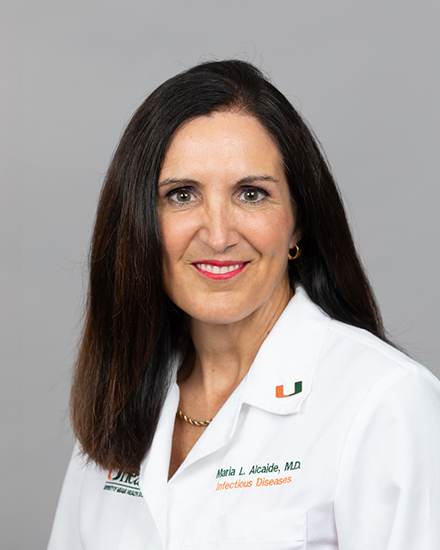 Maria L Alcaide合作论文数Division of Infectious Diseases, Department of Medicine, Miller School of Medicine, University of Miami;Miami Clinical Translational Science Institute, Miller School of Medicine, University of Miami2
 Gail H. Ironson合作论文数Department of Psychology, University of Miami2Kimberly Lazarus合作论文数1Nancy Ngumbau合作论文数1C. Mindy Nelson合作论文数1
 Devon Kimball合作论文数1Carolyn Wright合作论文数1Jie Shen合作论文数1Linyu Zhou合作论文数1Amanda Ponce合作论文数1Kayla Etienne合作论文数1Sherene Saunders合作论文数1Yilan Huang合作论文数1
 Si Pan (潘思)合作论文数1
 Ervin M Simmons合作论文数Dept Psychol, Univ Miami1Heather Henderson合作论文数1
 Alithia Zamantakis合作论文数Department of Medical Social Sciences, Northwestern University1
 Matthew T Rosso合作论文数Sch Nursing, Univ Michigan1Deepalika Chakravarty合作论文数1
 Qidi Zhou合作论文数1
 Felix Abuna Otieno合作论文数1Caroline Carnevale合作论文数1
 Audrey Harkness合作论文数School of Nursing and Health Studies, University of Miami1
 Honghu Liu合作论文数Department of Biostatistics, Fielding School of Public Health, University of California, Los Angeles1
 Dennis H Li合作论文数Department of Psychiatry & Behavioral Sciences, Feinberg School of Medicine, Northwestern University1Naar Sylvie合作论文数1
 Laura M. Bogart合作论文数RAND Corporation1Haaland Richard E合作论文数1
 Bryan Kutner合作论文数Division of Substance Abuse, New York State Psychiatric Institute1Malika Nipher M合作论文数1
 Nguyen Nadia合作论文数1
 Vincent C. Marconi合作论文数Division of Infectious Diseases, Department of Medicine, Emory University School of Medicine;The Rollins School of Public Health, Emory University1
 Mallory Johnson合作论文数School of Medicine, University of California, San Francisco1Kathrine Meyers合作论文数1Kartika Palar合作论文数1
 Xianhong Li (李现红)合作论文数Xiangya School of Nursing, Central South University1
 Demetria Cain合作论文数University of Connecticut Department of Psychology1




