In real-world reinforcement learning (RL), the choice of action space can play a key role in shaping motion smoothness, safety, and overall task performance. In this study, we evaluate pose increment, pose velocity, joint position increment, and joint velocity across two vision-based manipulation tasks: object picking and pushing. We train policies in simulation and deploy them to the real world using sim-to-real transfer. We find that action-space representation indeed significantly affects sim-to-real performance. In particular, we find that the joint velocity action space is best for the vision-based picking and pushing tasks in terms of smoothness and final task performance. We also provide practical guidance for RL practitioners in choosing action spaces for both simulation and real-world experiments.
Deep reinforcement learning (RL) algorithms often suffer from low run-to-run robustness, manifesting as significant performance variation across independent runs of identically configured agents. Although this issue poses a spectrum of challenges across research and practice, relatively few studies develop methods to evaluate it; RL research instead often reports uncertainty in the estimated mean performance. In this paper, we outline the limitations of conventional uncertainty and variation estimates, particularly their misalignment with purpose and the risk of underreporting. We then propose an alternative percentile-based statistic and visualization method, min-max IPR and run-wise percentile highlighting, respectively. These percentile-based tools are easy to interpret and rely on standard properties of sample percentiles, providing rich information about run-to-run performance variation. We demonstrate this through three case studies. First, we show that LayerNorm and penultimate-layer normalizations narrow performance variation in PPO, whereas the variation is mostly unchanged in SAC. Second, we compare PPO, SAC, TD-MPC, and TD-MPC2, and show TD-MPC exhibits the least variation while being the most data efficient among the four. Finally, in a comparison of DQN and Rainbow on five Atari environments, we show that both algorithms exhibit similar levels of performance variation.
We introduce a novel reinforcement learning (RL) framework that treats parameterized action distributions as actions, redefining the boundary between agent and environment. This reparameterization makes the new action space continuous, regardless of the original action type (discrete, continuous, hybrid, etc.). Under this new parameterization, we develop a generalized deterministic policy gradient estimator, \emph{Distributions-as-Actions Policy Gradient} (DA-PG), which has lower variance than the gradient in the original action space. Although learning the critic over distribution parameters poses new challenges, we introduce \emph{interpolated critic learning} (ICL), a simple yet effective strategy to enhance learning, supported by insights from bandit settings. Building on TD3, a strong baseline for continuous control, we propose a practical actor-critic algorithm, \emph{Distributions-as-Actions Actor-Critic} (DA-AC). Empirically, DA-AC achieves competitive performance in various settings across discrete, continuous, and hybrid control.
Goal-conditioned reinforcement learning (GCRL) offers a unified way to pursue diverse tasks, yet most existing methods rely on state- or position-based goal representations that are unavailable in real-world robotics. Robots operating in warehouses, agriculture, or laboratory environments rarely have access to privileged goal states, object positions, or future observations, limiting the practicality of current GCRL approaches. We propose a dynamic mask-based goal representation that provides simple, object-agnostic visual cues for vision-based navigation and manipulation. At each timestep, an image-based goal detector produces a goal mask using standard image processing, task-specific object recognizers, or pretrained detectors such as Detic or Grounding DINO. These masks specify the spatial target without requiring privileged goal states, enabling broad applicability and strong generalization to unseen objects. Our method improves stability and sample efficiency in GCRL, achieving a 99
Catastrophic forgetting has remained a significant challenge for efficient reinforcement learning for decades (Ring 1994, Rivest and Precup 2003). While recent works have proposed effective methods to mitigate this issue, they mainly focus on the algorithmic side. Meanwhile, we do not fully understand what architectural properties of neural networks lead to catastrophic forgetting. This study aims to fill this gap by studying the role of activation functions in the training dynamics of neural networks and their impact on catastrophic forgetting in reinforcement learning setup. Our study reveals that, besides sparse representations, the gradient sparsity of activation functions also plays an important role in reducing forgetting. Based on this insight, we propose a new class of activation functions, elephant activation functions, that can generate both sparse outputs and sparse gradients. We show that by simply replacing classical activation functions with elephant activation functions in the neural networks of value-based algorithms, we can significantly improve the resilience of neural networks to catastrophic forgetting, thus making reinforcement learning more sample-efficient and memory-efficient.
Off-policy policy evaluation (OPE), an essential component of reinforcement learning, has long suffered from stationary state distribution mismatch, undermining both stability and accuracy of OPE estimates. While existing methods correct distribution shifts by estimating density ratios, they often rely on expensive optimization or backward Bellman-based updates and struggle to outperform simpler baselines. We introduce AVG-DICE, a computationally simple Monte Carlo estimator for the density ratio that averages discounted importance sampling ratios, providing an unbiased and consistent correction. AVG-DICE extends naturally to nonlinear function approximation using regression, which we roughly tune and test on OPE tasks based on Mujoco Gym environments and compare with state-of-the-art density-ratio estimators using their reported hyperparameters. In our experiments, AVG-DICE is at least as accurate as state-of-the-art estimators and sometimes offers orders-of-magnitude improvements. However, a sensitivity analysis shows that best-performing hyperparameters may vary substantially across different discount factors, so a re-tuning is suggested.
When creating new reinforcement learning tasks, practitioners often accelerate the learning process by incorporating into the task several accessory components, such as breaking the environment interaction into independent episodes and frequently resetting the environment. Although they can enable the learning of complex intelligent behaviors, such task accessories can result in unnatural task setups and hinder long-term performance in the real world. In this work, we explore the challenges of learning without episode terminations and robot embodiment resets using the Soft Actor-Critic (SAC) algorithm. To learn without terminations, we present a continuing version of the SAC algorithm and show that, with simple modifications to the reward functions of existing tasks, continuing SAC can perform as well as or better than episodic SAC while reducing the sensitivity of performance to the value of the discount rate γ. On a modified Gym Reacher task, we investigate possible explanations for the failure of continuing SAC when learning without embodiment resets. Our results suggest that embodiment resets help with exploration of the state space in the SAC algorithm, and removing embodiment resets can lead to poor exploration of the state space and failure of or significantly slower learning. Finally, on additional simulated tasks and a real-robot vision task, we show that increasing the entropy of the policy when performance trends worse or remains static is an effective intervention for recovering the performance lost due to not using embodiment resets.
Thompson sampling (TS) is one of the most popular exploration techniques in reinforcement learning (RL). However, most TS algorithms with theoretical guarantees are difficult to implement and not generalizable to Deep RL. While the emerging approximate sampling-based exploration schemes are promising, most existing algorithms are specific to linear Markov Decision Processes (MDP) with suboptimal regret bounds, or only use the most basic samplers such as Langevin Monte Carlo. In this work, we propose an algorithmic framework that incorporates different approximate sampling methods with the recently proposed Feel-Good Thompson Sampling (FGTS) approach (Zhang, 2022; Dann et al., 2021), which was previously known to be computationally intractable in general. When applied to linear MDPs, our regret analysis yields the best known dependency of regret on dimensionality, surpassing existing randomized algorithms. Additionally, we provide explicit sampling complexity for each employed sampler. Empirically, we show that in tasks where deep exploration is necessary, our proposed algorithms that combine FGTS and approximate sampling perform significantly better compared to other strong baselines. On several challenging games from the Atari 57 suite, our algorithms achieve performance that is either better than or on par with other strong baselines from the deep RL literature.
Second-order information is valuable for many applications but challenging to compute. Several works focus on computing or approximating Hessian diagonals, but even this simplification introduces significant additional costs compared to computing a gradient. In the absence of efficient exact computation schemes for Hessian diagonals, we revisit an early approximation scheme proposed by Becker and LeCun (1989, BL89), which has a cost similar to gradients and appears to have been overlooked by the community. We introduce HesScale, an improvement over BL89, which adds negligible extra computation. On small networks, we find that this improvement is of higher quality than all alternatives, even those with theoretical guarantees, such as unbiasedness, while being much cheaper to compute. We use this insight in reinforcement learning problems where small networks are used and demonstrate HesScale in second-order optimization and scaling the step-size parameter. In our experiments, HesScale optimizes faster than existing methods and improves stability through step-size scaling. These findings are promising for scaling second-order methods in larger models in the future.
Deep representation learning methods struggle with continual learning, suffering from both catastrophic forgetting of useful units and loss of plasticity, often due to rigid and unuseful units. While many methods address these two issues separately, only a few currently deal with both simultaneously. In this paper, we introduce Utility-based Perturbed Gradient Descent (UPGD) as a novel approach for the continual learning of representations. UPGD combines gradient updates with perturbations, where it applies smaller modifications to more useful units, protecting them from forgetting, and larger modifications to less useful units, rejuvenating their plasticity. We adopt the challenging setup of streaming learning as the testing ground and design continual learning problems with hundreds of non-stationarities and unknown task boundaries. We show that many existing methods suffer from at least one of the issues, predominantly manifested by their decreasing accuracy over tasks. On the other hand, UPGD continues to improve performance and surpasses or is competitive with all methods in all problems, being among the few methods demonstrably capable of addressing both issues.
Many failures in deep continual and reinforcement learning are associated with increasing magnitudes of the weights, making them hard to change and potentially causing overfitting. While many methods address these learning failures, they often change the optimizer or the architecture, a complexity that hinders widespread adoption in various systems. In this paper, we focus on learning failures that are associated with increasing weight norm and we propose a simple technique that can be easily added on top of existing learning systems: clipping neural network weights to limit them to a specific range. We study the effectiveness of weight clipping in a series of supervised and reinforcement learning experiments. Our empirical results highlight the benefits of weight clipping for generalization, addressing loss of plasticity and policy collapse, and facilitating learning with a large replay ratio.
In recent years, by leveraging more data, computation, and diverse tasks, learned optimizers have achieved remarkable success in supervised learning, outperforming classical hand-designed optimizers. Reinforcement learning (RL) is essentially different from supervised learning and in practice these learned optimizers do not work well even in simple RL tasks. We investigate this phenomenon and identity three issues. First, the gradients of an RL agent vary across a wide range in logarithms while their absolute values are in a small range, making neural networks hard to obtain accurate parameter updates. Second, the agent-gradient distribution is non-independent and identically distributed, leading to inefficient meta-training. Finally, due to highly stochastic agent-environment interactions, the agent-gradients have high bias and variance, which increase the difficulty of learning an optimizer for RL. We propose gradient processing, pipeline training, and a novel optimizer structure with good inductive bias to address these issues. By applying these techniques, for the first time, we show that learning an optimizer for RL from scratch is possible. Although only trained in toy tasks, our learned optimizer can generalize to unseen complex tasks in Brax.
Many real-world robot learning problems, such as pick-and-place or arriving at a destination, can be seen as a problem of reaching a goal state as soon as possible. These problems, when formulated as episodic reinforcement learning tasks, can easily be specified to align well with our intended goal: -1 reward every time step with termination upon reaching the goal state, called minimum-time tasks. Despite this simplicity, such formulations are often overlooked in favor of dense rewards due to their perceived difficulty and lack of informativeness. Our studies contrast the two reward paradigms, revealing that the minimum-time task specification not only facilitates learning higher-quality policies but can also surpass dense-reward-based policies on their own performance metrics. Crucially, we also identify the goal-hit rate of the initial policy as a robust early indicator for learning success in such sparse feedback settings. Finally, using four distinct real-robotic platforms, we show that it is possible to learn pixel-based policies from scratch within two to three hours using constant negative rewards.
We present a scalable and effective exploration strategy based on Thompson sampling for reinforcement learning (RL). One of the key shortcomings of existing Thompson sampling algorithms is the need to perform a Gaussian approximation of the posterior distribution, which is not a good surrogate in most practical settings. We instead directly sample the Q function from its posterior distribution, by using Langevin Monte Carlo, an efficient type of Markov Chain Monte Carlo (MCMC) method. Our method only needs to perform noisy gradient descent updates to learn the exact posterior distribution of the Q function, which makes our approach easy to deploy in deep RL. We provide a rigorous theoretical analysis for the proposed method and demonstrate that, in the linear Markov decision process (linear MDP) setting, it has a regret bound of $\tilde{O}(d^{3/2}H^{3/2}\sqrt{T})$, where $d$ is the dimension of the feature mapping, $H$ is the planning horizon, and $T$ is the total number of steps. We apply this approach to deep RL, by using Adam optimizer to perform gradient updates. Our approach achieves better or similar results compared with state-of-the-art deep RL algorithms on several challenging exploration tasks from the Atari57 suite.
We prove that the combination of a target network and over-parameterized linear function approximation establishes a weaker convergence condition for bootstrapped value estimation in certain cases, even with off-policy data. Our condition is naturally satisfied for expected updates over the entire state-action space or learning with a batch of complete trajectories from episodic Markov decision processes. Notably, using only a target network or an over-parameterized model does not provide such a convergence guarantee. Additionally, we extend our results to learning with truncated trajectories, showing that convergence is achievable for all tasks with minor modifications, akin to value truncation for the final states in trajectories. Our primary result focuses on temporal difference estimation for prediction, providing high-probability value estimation error bounds and empirical analysis on Baird's counterexample and a Four-room task. Furthermore, we explore the control setting, demonstrating that similar convergence conditions apply to Q-learning.
Artificial neural networks are promising for general function approximation but challenging to train on non-independent or non-identically distributed data due to catastrophic forgetting. The experience replay buffer, a standard component in deep reinforcement learning, is often used to reduce forgetting and improve sample efficiency by storing experiences in a large buffer and using them for training later. However, a large replay buffer results in a heavy memory burden, especially for onboard and edge devices with limited memory capacities. We propose memory-efficient reinforcement learning algorithms based on the deep Q-network algorithm to alleviate this problem. Our algorithms reduce forgetting and maintain high sample efficiency by consolidating knowledge from the target Q-network to the current Q-network. Compared to baseline methods, our algorithms achieve comparable or better performance in both feature-based and image-based tasks while easing the burden of large experience replay buffers.
Modern deep-learning systems are specialized to problem settings in which training occurs once and then never again, as opposed to continual-learning settings in which training occurs continually. If deep-learning systems are applied in a continual learning setting, then it is well known that they may fail to remember earlier examples. More fundamental, but less well known, is that they may also lose their ability to learn on new examples, a phenomenon called loss of plasticity. We provide direct demonstrations of loss of plasticity using the MNIST and ImageNet datasets repurposed for continual learning as sequences of tasks. In ImageNet, binary classification performance dropped from 89% accuracy on an early task down to 77%, about the level of a linear network, on the 2000th task. Loss of plasticity occurred with a wide range of deep network architectures, optimizers, activation functions, batch normalization, dropout, but was substantially eased by L2-regularization, particularly when combined with weight perturbation. Further, we introduce a new algorithm -- continual backpropagation -- which slightly modifies conventional backpropagation to reinitialize a small fraction of less-used units after each example and appears to maintain plasticity indefinitely.
The visual world provides an abundance of information, but many input pixels received by agents often contain distracting stimuli. Autonomous agents need the ability to distinguish useful information from task-irrelevant perceptions, enabling them to generalize to unseen environments with new distractions. Existing works approach this problem using data augmentation or large auxiliary networks with additional loss functions. We introduce MaDi, a novel algorithm that learns to mask distractions by the reward signal only. In MaDi, the conventional actor-critic structure of deep reinforcement learning agents is complemented by a small third sibling, the Masker. This lightweight neural network generates a mask to determine what the actor and critic will receive, such that they can focus on learning the task. The masks are created dynamically, depending on the current input. We run experiments on the DeepMind Control Generalization Benchmark, the Distracting Control Suite, and a real UR5 Robotic Arm. Our algorithm improves the agent's focus with useful masks, while its efficient Masker network only adds 0.2% more parameters to the original structure, in contrast to previous work. MaDi consistently achieves generalization results better than or competitive to state-of-the-art methods.
Deep representation learning methods struggle with continual learning, suffering from both catastrophic forgetting of useful units and loss of plasticity, often due to rigid and unuseful units. While many methods address these two issues separately, only a few currently deal with both simultaneously. In this paper, we introduce Utility-based Perturbed Gradient Descent (UPGD) as a novel approach for the continual learning of representations. UPGD combines gradient updates with perturbations, where it applies smaller modifications to more useful units, protecting them from forgetting, and larger modifications to less useful units, rejuvenating their plasticity. We use a challenging streaming learning setup where continual learning problems have hundreds of non-stationarities and unknown task boundaries. We show that many existing methods suffer from at least one of the issues, predominantly manifested by their decreasing accuracy over tasks. On the other hand, UPGD continues to improve performance and surpasses or is competitive with all methods in all problems. Finally, in extended reinforcement learning experiments with PPO, we show that while Adam exhibits a performance drop after initial learning, UPGD avoids it by addressing both continual learning issues.
Natural intelligence processes experience as a continuous stream, sensing, acting, and learning moment-by-moment in real time. Streaming learning, the modus operandi of classic reinforcement learning (RL) algorithms like Q-learning and TD, mimics natural learning by using the most recent sample without storing it. This approach is also ideal for resource-constrained, communication-limited, and privacy-sensitive applications. However, in deep RL, learners almost always use batch updates and replay buffers, making them computationally expensive and incompatible with streaming learning. Although the prevalence of batch deep RL is often attributed to its sample efficiency, a more critical reason for the absence of streaming deep RL is its frequent instability and failure to learn, which we refer to as stream barrier. This paper introduces the stream-x algorithms, the first class of deep RL algorithms to overcome stream barrier for both prediction and control and match sample efficiency of batch RL. Through experiments in Mujoco Gym, DM Control Suite, and Atari Games, we demonstrate stream barrier in existing algorithms and successful stable learning with our stream-x algorithms: stream Q, stream AC, and stream TD, achieving the best model-free performance in DM Control Dog environments. A set of common techniques underlies the stream-x algorithms, enabling their success with a single set of hyperparameters and allowing for easy extension to other algorithms, thereby reviving streaming RL.
 Richard S. Sutton合作论文数Department of Computing Science, Faculty of Science, University of Alberta;Alberta Machine Intelligence Institute, Faculty of Science, University of Alberta;Keen Technologies;Openmind Research Institute16
 Gautham Vasan合作论文数Department of Computing Science, Faculty of Science, University of Alberta10
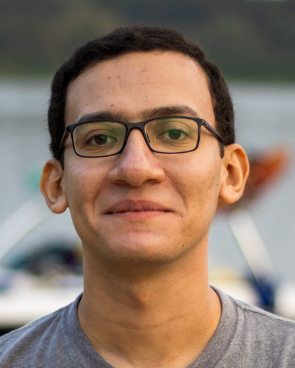 Mohamed Elsayed合作论文数Reinforcement Learning and Artificial Intelligence Lab, Department of Computing Science, University of Alberta8
 Qingfeng Lan合作论文数Qwen Team, Alibaba Group8
 Martha White合作论文数Department of Computing Science, Faculty of Science, University of Alberta7
 Fengdi Che合作论文数Department of Computing Science, Faculty of Science, University of Alberta4
 Doina Precup合作论文数DeepMind;School of Computer Science, McGill University;Mila;Centre for Intelligent Machines, McGill University4
 Hado van Hasselt合作论文数Department of Computer Science, University College London;Google DeepMind4
 Samuele Tosatto合作论文数RLAI Lab, University of Alberta4
 James Bergstra合作论文数Ocado Technology;Kindred.ai4
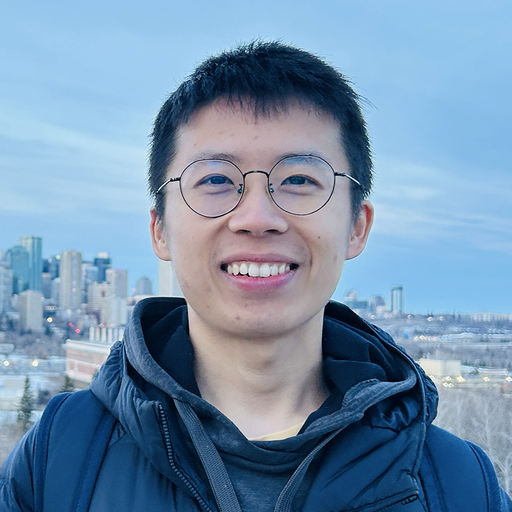 Jiamin He合作论文数University of Alberta3
 Shibhansh Dohare合作论文数3
 Homayoon Farrahi合作论文数3
 Patrick M. Pilarski合作论文数Division of Physical Medicine and Rehabilitation, Department of Medicine, University of Alberta;Alberta Machine Intelligence Institute3Dmytro Korenkevych合作论文数Department of Industrial and Systems Engineering, University of Florida3
 Huizhen Yu合作论文数Department of Computing Science, Faculty of Science, University of Alberta3
 Martin Jagersand合作论文数Department of Computing Science, Faculty of Science, University of Alberta3Fahim Shahriar合作论文数2Yan Wang合作论文数2Parash Rahman合作论文数2
 Bryan Chan合作论文数2J. Fernando Hernandez-Garcia合作论文数2
 Yangchen Pan合作论文数Department of Engineering Science, University of Oxford2
 Luo Jun合作论文数Institute of Strategic Research, Huawei Technologies Canada2
 Haque Ishfaq合作论文数Mila - Quebec Artificial Intelligence Institute2
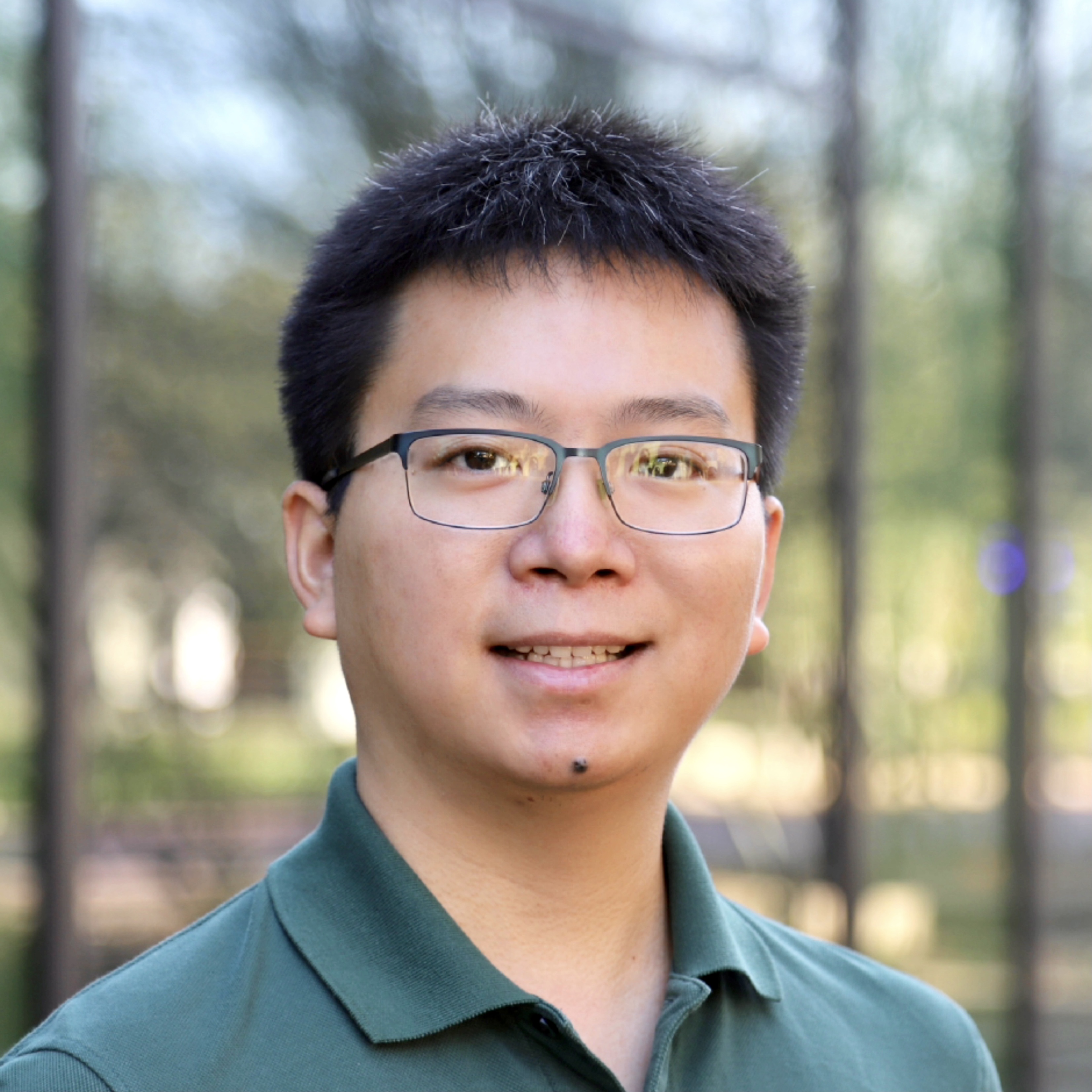 Pan Xu (徐攀)合作论文数Department of Biostatistics & Bioinformatics, Duke University;Department of Computer Science, Duke University;Department of Electrical & Computer Engineering, Duke University2
 Harm Van Seijen合作论文数SonyAI2Seyed Alireza Azimi合作论文数1Oscar Ramirez合作论文数1
 Andrew N Patterson合作论文数1Rich Sutton合作论文数1Hugo Silva合作论文数1Tristan Tomilin合作论文数1
 Bram Grooten合作论文数1Amirmohammad Karimi合作论文数1Michael Przystupa合作论文数University of Alberta, Edmonton, AB, Canada1Brent J. Komer合作论文数Kindred Inc.1
 Oliver Limoyo合作论文数UTIAS, Space & Terr Autonomous Robot Syst STARS Lab, Toronto, ON, Canada1Yixin TAN (谭怡忻)合作论文数1
 Yufeng Yuan合作论文数1
 Felix Dangel合作论文数Max Planck Society1
 Brandon Wagstaff合作论文数Space and Terrestrial Autonomous Robotic Systems (STARS) Laboratory, University of Toronto Institute for Aerospace Studies (UTIAS),1
 Yi Wan合作论文数Reinforcement Learning and Artificial Intelligence Laboratory, University of Alberta1
 Chenjun Xiao合作论文数Department of Computing Science, University of Alberta;Google1
 Jincheng Mei合作论文数Google DeepMind1
 William Ma合作论文数Pennsylvania College of Technology1
 Sungsu Lim (林成洙)合作论文数Department of Computer Science and Engineering, Chungnam National University1
 Kamyar Azizzadenesheli合作论文数Nvidia Corporation1
 Shivam Garg合作论文数Stanford University1




