Recently, many reinforcement learning (RL) algorithms have been applied to improve the post-training of large language models (LLMs). In this article, we aim to provide a unified perspective on the objectives of these RL algorithms, exploring how they relate to each other through the Policy Gradient Theorem — the fundamental theorem of policy gradient methods.
Despite their remarkable success in complex tasks propelling widespread adoption, large language model based agents still face critical deployment challenges due to prohibitive latency and inference costs. While recent work has explored various methods to accelerate inference, existing approaches suffer from significant limitations: they either fail to preserve performance fidelity, require extensive offline training of router modules, or incur excessive operational costs. Moreover, they provide minimal user control over the tradeoff between acceleration and other performance metrics. To address these gaps, we introduce **Dynamic Speculative Planning** (DSP), an asynchronous online reinforcement learning framework that provides lossless acceleration with substantially reduced costs without requiring additional pre-deployment preparation. DSP explicitly optimizes a joint objective balancing end-to-end latency against dollar cost, allowing practitioners to adjust a single parameter that steers the system toward faster responses, cheaper operation, or any point along this continuum. Experiments on two standard agent benchmarks demonstrate that DSP achieves comparable efficiency to the fastest lossless acceleration method while reducing total cost by 30\% and unnecessary cost up to 60\%. Our code and data are available through \url{https://anonymous.4open.science/r/Dynamic-Speculative-Planning-F574}
Catastrophic forgetting has remained a significant challenge for efficient reinforcement learning for decades (Ring 1994, Rivest and Precup 2003). While recent works have proposed effective methods to mitigate this issue, they mainly focus on the algorithmic side. Meanwhile, we do not fully understand what architectural properties of neural networks lead to catastrophic forgetting. This study aims to fill this gap by studying the role of activation functions in the training dynamics of neural networks and their impact on catastrophic forgetting in reinforcement learning setup. Our study reveals that, besides sparse representations, the gradient sparsity of activation functions also plays an important role in reducing forgetting. Based on this insight, we propose a new class of activation functions, elephant activation functions, that can generate both sparse outputs and sparse gradients. We show that by simply replacing classical activation functions with elephant activation functions in the neural networks of value-based algorithms, we can significantly improve the resilience of neural networks to catastrophic forgetting, thus making reinforcement learning more sample-efficient and memory-efficient.
Thompson sampling (TS) is one of the most popular exploration techniques in reinforcement learning (RL). However, most TS algorithms with theoretical guarantees are difficult to implement and not generalizable to Deep RL. While the emerging approximate sampling-based exploration schemes are promising, most existing algorithms are specific to linear Markov Decision Processes (MDP) with suboptimal regret bounds, or only use the most basic samplers such as Langevin Monte Carlo. In this work, we propose an algorithmic framework that incorporates different approximate sampling methods with the recently proposed Feel-Good Thompson Sampling (FGTS) approach (Zhang, 2022; Dann et al., 2021), which was previously known to be computationally intractable in general. When applied to linear MDPs, our regret analysis yields the best known dependency of regret on dimensionality, surpassing existing randomized algorithms. Additionally, we provide explicit sampling complexity for each employed sampler. Empirically, we show that in tasks where deep exploration is necessary, our proposed algorithms that combine FGTS and approximate sampling perform significantly better compared to other strong baselines. On several challenging games from the Atari 57 suite, our algorithms achieve performance that is either better than or on par with other strong baselines from the deep RL literature.
Many failures in deep continual and reinforcement learning are associated with increasing magnitudes of the weights, making them hard to change and potentially causing overfitting. While many methods address these learning failures, they often change the optimizer or the architecture, a complexity that hinders widespread adoption in various systems. In this paper, we focus on learning failures that are associated with increasing weight norm and we propose a simple technique that can be easily added on top of existing learning systems: clipping neural network weights to limit them to a specific range. We study the effectiveness of weight clipping in a series of supervised and reinforcement learning experiments. Our empirical results highlight the benefits of weight clipping for generalization, addressing loss of plasticity and policy collapse, and facilitating learning with a large replay ratio.
In recent years, by leveraging more data, computation, and diverse tasks, learned optimizers have achieved remarkable success in supervised learning, outperforming classical hand-designed optimizers. Reinforcement learning (RL) is essentially different from supervised learning and in practice these learned optimizers do not work well even in simple RL tasks. We investigate this phenomenon and identity three issues. First, the gradients of an RL agent vary across a wide range in logarithms while their absolute values are in a small range, making neural networks hard to obtain accurate parameter updates. Second, the agent-gradient distribution is non-independent and identically distributed, leading to inefficient meta-training. Finally, due to highly stochastic agent-environment interactions, the agent-gradients have high bias and variance, which increase the difficulty of learning an optimizer for RL. We propose gradient processing, pipeline training, and a novel optimizer structure with good inductive bias to address these issues. By applying these techniques, for the first time, we show that learning an optimizer for RL from scratch is possible. Although only trained in toy tasks, our learned optimizer can generalize to unseen complex tasks in Brax.
We present a scalable and effective exploration strategy based on Thompson sampling for reinforcement learning (RL). One of the key shortcomings of existing Thompson sampling algorithms is the need to perform a Gaussian approximation of the posterior distribution, which is not a good surrogate in most practical settings. We instead directly sample the Q function from its posterior distribution, by using Langevin Monte Carlo, an efficient type of Markov Chain Monte Carlo (MCMC) method. Our method only needs to perform noisy gradient descent updates to learn the exact posterior distribution of the Q function, which makes our approach easy to deploy in deep RL. We provide a rigorous theoretical analysis for the proposed method and demonstrate that, in the linear Markov decision process (linear MDP) setting, it has a regret bound of $\tilde{O}(d^{3/2}H^{3/2}\sqrt{T})$, where $d$ is the dimension of the feature mapping, $H$ is the planning horizon, and $T$ is the total number of steps. We apply this approach to deep RL, by using Adam optimizer to perform gradient updates. Our approach achieves better or similar results compared with state-of-the-art deep RL algorithms on several challenging exploration tasks from the Atari57 suite.
Artificial neural networks are promising for general function approximation but challenging to train on non-independent or non-identically distributed data due to catastrophic forgetting. The experience replay buffer, a standard component in deep reinforcement learning, is often used to reduce forgetting and improve sample efficiency by storing experiences in a large buffer and using them for training later. However, a large replay buffer results in a heavy memory burden, especially for onboard and edge devices with limited memory capacities. We propose memory-efficient reinforcement learning algorithms based on the deep Q-network algorithm to alleviate this problem. Our algorithms reduce forgetting and maintain high sample efficiency by consolidating knowledge from the target Q-network to the current Q-network. Compared to baseline methods, our algorithms achieve comparable or better performance in both feature-based and image-based tasks while easing the burden of large experience replay buffers.
Modern deep-learning systems are specialized to problem settings in which training occurs once and then never again, as opposed to continual-learning settings in which training occurs continually. If deep-learning systems are applied in a continual learning setting, then it is well known that they may fail to remember earlier examples. More fundamental, but less well known, is that they may also lose their ability to learn on new examples, a phenomenon called loss of plasticity. We provide direct demonstrations of loss of plasticity using the MNIST and ImageNet datasets repurposed for continual learning as sequences of tasks. In ImageNet, binary classification performance dropped from 89% accuracy on an early task down to 77%, about the level of a linear network, on the 2000th task. Loss of plasticity occurred with a wide range of deep network architectures, optimizers, activation functions, batch normalization, dropout, but was substantially eased by L2-regularization, particularly when combined with weight perturbation. Further, we introduce a new algorithm -- continual backpropagation -- which slightly modifies conventional backpropagation to reinitialize a small fraction of less-used units after each example and appears to maintain plasticity indefinitely.
Catastrophic forgetting remains a significant challenge to continual learning for decades. While recent works have proposed effective methods to mitigate this problem, they mainly focus on the algorithmic side. Meanwhile, we do not fully understand what architectural properties of neural networks lead to catastrophic forgetting. This study aims to fill this gap by studying the role of activation functions in the training dynamics of neural networks and their impact on catastrophic forgetting. Our study reveals that, besides sparse representations, the gradient sparsity of activation functions also plays an important role in reducing forgetting. Based on this insight, we propose a new class of activation functions, elephant activation functions, that can generate both sparse representations and sparse gradients. We show that by simply replacing classical activation functions with elephant activation functions, we can significantly improve the resilience of neural networks to catastrophic forgetting. Our method has broad applicability and benefits for continual learning in regression, class incremental learning, and reinforcement learning tasks. Specifically, we achieves excellent performance on Split MNIST dataset in just one single pass, without using replay buffer, task boundary information, or pre-training.
To effectively perform the task of next-word prediction, long short-term memory networks (LSTMs) must keep track of many types of information. Some information is directly related to the next word's identity, but some is more secondary (e.g. discourse-level features or features of downstream words). Correlates of secondary information appear in LSTM representations even though they are not part of an \emph{explicitly} supervised prediction task. In contrast, in reinforcement learning (RL), techniques that explicitly supervise representations to predict secondary information have been shown to be beneficial. Inspired by that success, we propose Predictive Representation Learning (PRL), which explicitly constrains LSTMs to encode specific predictions, like those that might need to be learned implicitly. We show that PRL 1) significantly improves two strong language modeling methods, 2) converges more quickly, and 3) performs better when data is limited. Our work shows that explicitly encoding a simple predictive task facilitates the search for a more effective language model.
Quantum computing has a superior advantage in tackling specific problems, such as integer factorization and Simon's problem. For more general tasks in machine learning, by applying variational quantum circuits, more and more quantum algorithms have been proposed recently, especially in supervised learning and unsupervised learning. However, little work has been done in reinforcement learning, arguably more important and challenging. Previous work in quantum reinforcement learning mainly focuses on discrete control tasks where the action space is discrete. In this work, we develop a quantum reinforcement learning algorithm based on soft actor-critic -- one of the state-of-the-art methods for continuous control. Specifically, we use a hybrid quantum-classical policy network consisting of a variational quantum circuit and a classical artificial neural network. Tested in a standard reinforcement learning benchmark, we show that this quantum version of soft actor-critic is comparable with the original soft actor-critic, using much less adjustable parameters. Furthermore, we analyze the effect of different hyper-parameters and policy network architectures, pointing out the importance of architecture design for quantum reinforcement learning.
Q-learning suffers from overestimation bias, because it approximates the maximum action value using the maximum estimated action value. Algorithms have been proposed to reduce overestimation bias, but we lack an understanding of how bias interacts with performance, and the extent to which existing algorithms mitigate bias. In this paper, we 1) highlight that the effect of overestimation bias on learning efficiency is environment-dependent; 2) propose a generalization of Q-learning, called \emph{Maxmin Q-learning}, which provides a parameter to flexibly control bias; 3) show theoretically that there exists a parameter choice for Maxmin Q-learning that leads to unbiased estimation with a lower approximation variance than Q-learning; and 4) prove the convergence of our algorithm in the tabular case, as well as convergence of several previous Q-learning variants, using a novel Generalized Q-learning framework. We empirically verify that our algorithm better controls estimation bias in toy environments, and that it achieves superior performance on several benchmark problems.
Counterfactual reasoning is an important paradigm applicable in many fields, such as healthcare, economics, and education. In this work, we propose a novel method to address the issue of \textit{selection bias}. We learn two groups of latent random variables, where one group corresponds to variables that only cause selection bias, and the other group is relevant for outcome prediction. They are learned by an auto-encoder where an additional regularized loss based on Pearson Correlation Coefficient (PCC) encourages the de-correlation between the two groups of random variables. This allows for explicitly alleviating selection bias by only keeping the latent variables that are relevant for estimating individual treatment effects. Experimental results on a synthetic toy dataset and a benchmark dataset show that our algorithm is able to achieve state-of-the-art performance and improve the result of its counterpart that does not explicitly model the selection bias.
In this paper, we propose a novel model named DTMM, which is specifically designed for ad-hoc retrieval. Given a query and a document, DTMM firstly builds an word-level interaction matrix based on word embeddings from query and document. At the same time, we also compress the embeddings of both document word and query word into a small dimension, to learn the importance of each word. Specifically, the compressed query word embedding is projected into the term gating network, and the compressed document word embedding is concatenated into the interaction matrix. Then, we apply the top-k pooling layer (i.e., ordered k-max pooling) on the interaction matrix, and get the essential top relevance signals. The top relevance signals is associated with each query term, and projected into a multi-layer perceptron neural network to obtain the query term level matching score. Finally, the query term level matching scores are aggregated with the term gating network to produce the final relevance score. We have tested our model on two representative benchmark datasets. Experimental results show that our model can significantly outperform existing baseline models.
 Ashique Rupam Mahmood合作论文数University of Alberta Edmonton, Alberta, Canada8
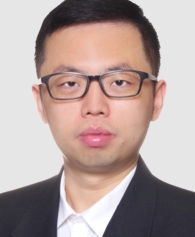 Yangchen Pan合作论文数Department of Engineering Science, University of Oxford2
 Haque Ishfaq合作论文数Mila - Quebec Artificial Intelligence Institute2
 Doina Precup合作论文数DeepMind;School of Computer Science, McGill University;Mila;Centre for Intelligent Machines, McGill University2
 Alona Fyshe合作论文数Department of Computing Science, Faculty of Science, University of Alberta;Representations Laboratory, Department of Psychology, Faculty of Science, University of Alberta2
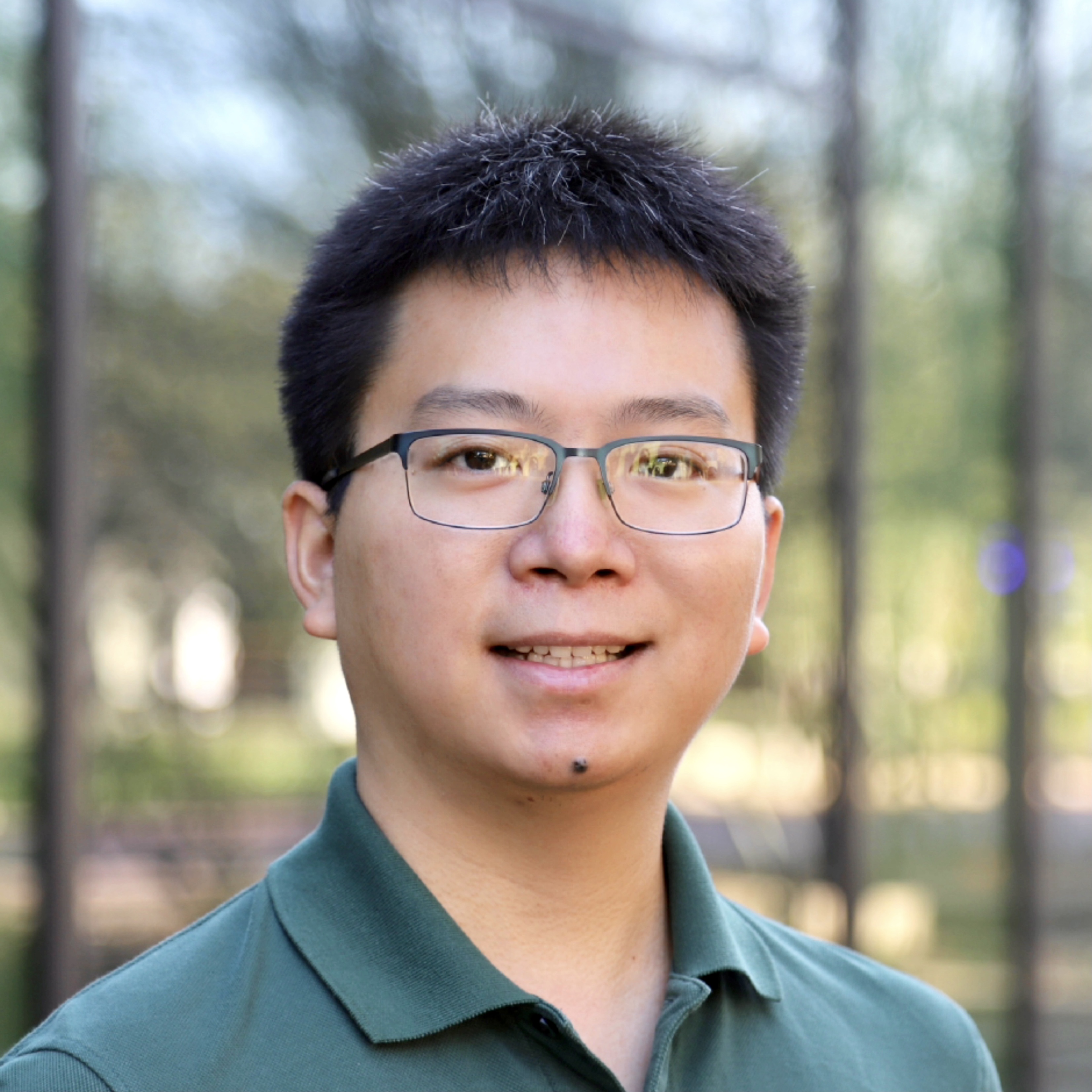 Pan Xu (徐攀)合作论文数Department of Biostatistics & Bioinformatics, Duke University;Department of Computer Science, Duke University;Department of Electrical & Computer Engineering, Duke University2
 Martha White合作论文数Department of Computing Science, Faculty of Science, University of Alberta2
 Yilin Guan合作论文数Johns Hopkins University1
 Wenyue Hua合作论文数Computer Science Department, College of Engineering, University of California, Santa Barbara1
 Dujian Ding合作论文数Microsoft1
 Parash Rahman合作论文数1
 Luke N. Kumar合作论文数Alberta Machine Intelligence Inst1
 Shibhansh Dohare合作论文数1J. Fernando Hernandez-Garcia合作论文数1Yixin TAN (谭怡忻)合作论文数1Yue Wang (王越)合作论文数1
 Gautham Vasan合作论文数Department of Computing Science, Faculty of Science, University of Alberta1
 Negar Hassanpour合作论文数Control & Intell. Process. Center of Excellence (CIPCE),, Univ. of Tehran;c;Control & Intell. Process. Center of Excellence (CIPCE),, Univ. of Tehran1
 Kamyar Azizzadenesheli合作论文数Nvidia Corporation1Zhou Yang合作论文数1
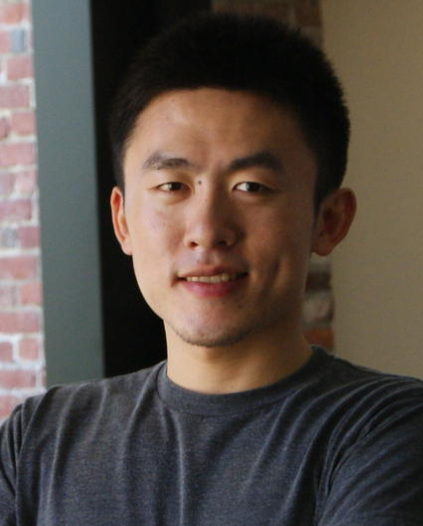 Zichen Zhang (张紫晨)合作论文数University of Alberta1
 Mohamed Elsayed合作论文数Reinforcement Learning and Artificial Intelligence Lab, Department of Computing Science, University of Alberta1
 Luo Jun合作论文数Institute of Strategic Research, Huawei Technologies Canada1
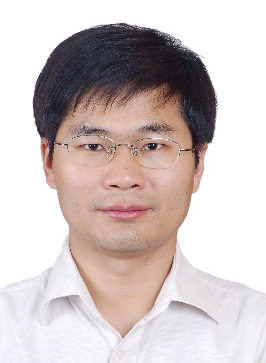 Xueqi Cheng (程学旗)合作论文数Key Laboratory of Network Data Science and Technology, Institute of Computing Technology, Chinese Academy of Sciences;University of Chinese Academy of Sciences1
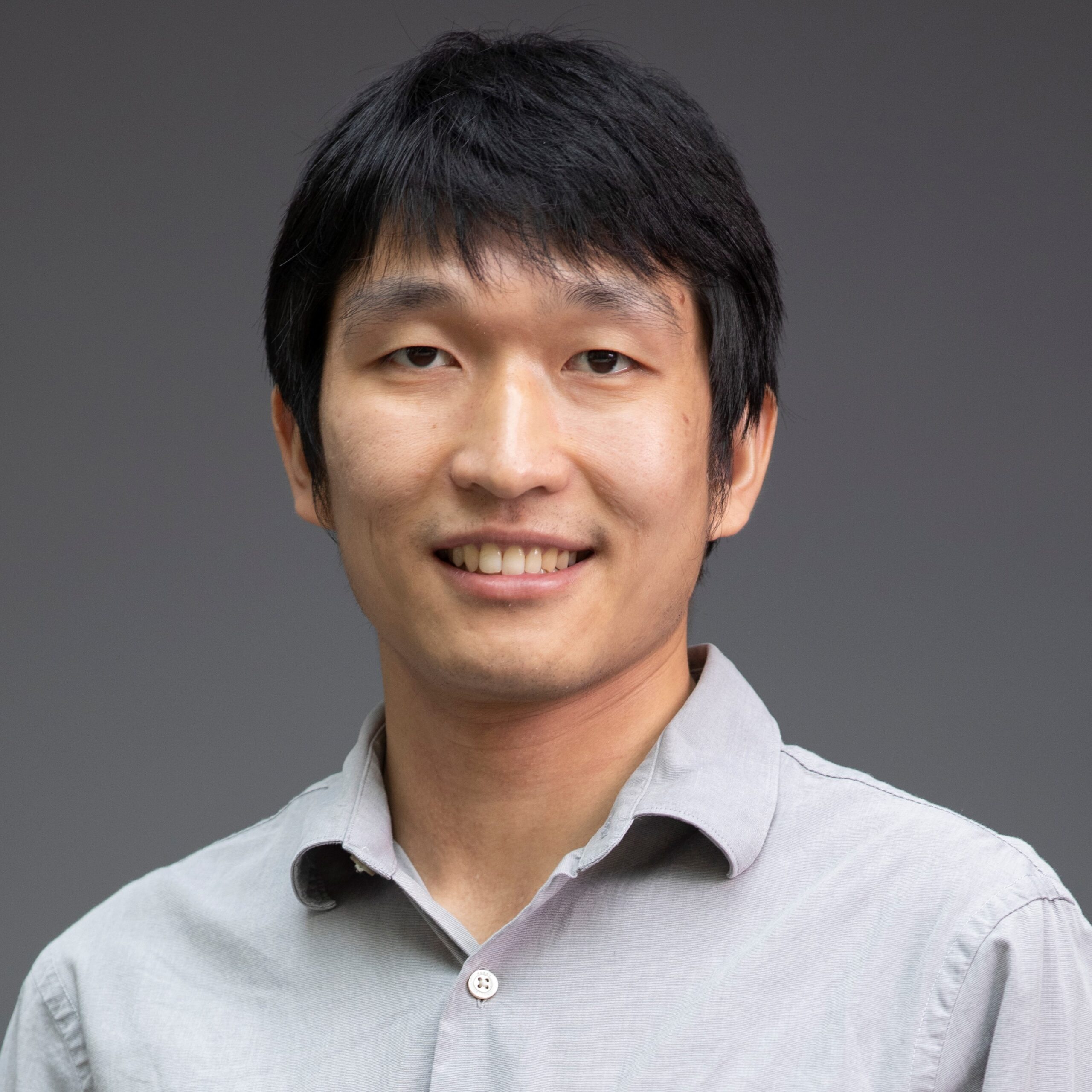 Chi Wang合作论文数AG21
 Anima Anandkumar合作论文数Anima AI + Science Lab, California Institute of Technology;Division of Engineering and Applied Science, California Institute of Technology;Department of Computing and Mathematical Sciences, California Institute of Technology1
 Yang Yu (俞扬)合作论文数National Key Laboratory for Novel Software Technology, School of Artificial Intelligence, Nanjing University1
 Jianfeng Lu (鲁剑锋)合作论文数Department of Mathematics, Duke University;Department of Chemistry, Duke University;Department of Physics, Duke University1
 Lei Ding (丁雷)合作论文数Department of Mathematical and Statistical Sciences, University of Alberta1
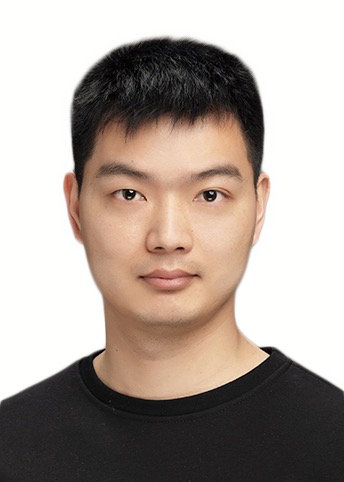 Yixing Fan (范意兴)合作论文数Key Laboratory of Network Data Science and Technology, Institute of Computing Technology, Chinese Academy of Sciences;School of Computer Science and Technology, University of Chinese Academy of Sciences1
 Richard S. Sutton合作论文数Department of Computing Science, Faculty of Science, University of Alberta;Alberta Machine Intelligence Institute, Faculty of Science, University of Alberta;Keen Technologies;Openmind Research Institute1
 Russell Greiner合作论文数Department of Computing Science, Faculty of Science, University of Alberta;Alberta Machine Intelligence Institute1
 Yanyan Lan (兰艳艳)合作论文数Institute for AI Industry Research, Tsinghua University1
 Shuicheng Yan (颜水成)合作论文数Department of Computer Science, School of Computing, National University of Singapore1
 William Wang (王威廉)合作论文数Department of Computer Science, University of California, Santa Barbara;ChipAgents1
 Xiaofei Zhu (朱小飞)合作论文数Department of Computer Science and Technology, College of Computer Science and Engineering, Chongqing University of Technology;Chongqing Engineering Research Center for Computer Vision Intelligent Technology, Chongqing University of Technology1
 Zhongwen Xu合作论文数Tencent1
 Jiafeng Guo (郭嘉丰)合作论文数Key Lab of Web Data Science and Technology, Institute of Computing Technology, Chinese Academy of Sciences;Key Laboratory of AI Safety, Institute of Computing Technology, Chinese Academy of Sciences;University of Chinese Academy of Sciences1
 Clare Lyle合作论文数DeepMind1




