The Applied Data Science (ADS) Invited Talks Track at KDD-2017 is a continuation of what has now become a "7-year tradition" at KDD conferences. This is the second year the track operates under the ADS name, an evolution from its origins at KDD-2011 as the "Industry Practice Expo". The KDD Conference on Knowledge Discovery and Data Mining (KDD) is the world's first, largest and best conference on Data Science, Data Mining, and Knowledge Discovery. It brings together a healthy mix of academic researchers, industry and government researchers, and practitioners from a wide range of institutions and fields. The primary focus on KDD is on peer-reviewed research contributions and the academic advancement of the field. This is an important goal and in fact the KDD conference is now recognized as the most competitive and prestigious forum for presenting high quality research results. KDD, being fundamentally an applied field, needs the strong representation of applied work of big impact. Over the years of running the conference we observed that our initial speaker-selection approach needed to be re-thought because of the important contributions made to the field outside traditional academic, industrial and government research laboratories. The result of this re-thinking was to create a forum that exposes important contributions to Data Science through Big Data Applications that address strategic problems. We wanted to effectively capture the rising importance of Data Science and Machine Learning especially in the Big Data environment where structured and unstructured data create special challenges, and of course present new opportunities. The goal of the Invited Talks Track is to curate contributions from leaders in our field who have made important contributions through the development of a system, the creation of a new and important business, or the development and market introduction of a product,. Some of these important contributions may never see an academic paper or detailed peer-reviewed paper written about them, yet they are of critical importance to our very applied field. To give you an idea of how rapidly growing this area is, and how this sector of our industry and promises to be highly disruptive across many industries, we cite a couple of articles out of a plethora of such coverage: According to IDC, the global revenues from Big Data and business will grow from $130.1 billion in 2016 to more than $203 billion in 2020, at a compound annual growth rate (CAGR) of 11.7% [1]. Furthermore, to quote from a Forbes article: "Data monetization" will become a major source of revenues, as the world will create 180 zettabytes of data (or 180 trillion gigabytes) in 2025, up from less than 10 zettabytes in 2015.? [2]
Advances in Machine Learning and Data Mining for Astronomy documents numerous successful collaborations among computer scientists, statisticians, and astronomers who illustrate the application of state-of-the-art machine learning and data mining techniques in astronomy. Due to the massive amount and complexity of data in most scientific disciplines, the material discussed in this text transcends traditional boundaries between various areas in the sciences and computer science. The books introductory part provides context to issues in the astronomical sciences that are also important to health, social, and physical sciences, particularly probabilistic and statistical aspects of classification and cluster analysis. The next part describes a number of astrophysics case studies that leverage a range of machine learning and data mining technologies. In the last part, developers of algorithms and practitioners of machine learning and data mining show how these tools and techniques are used in astronomical applications. With contributions from leading astronomers and computer scientists, this book is a practical guide to many of the most important developments in machine learning, data mining, and statistics. It explores how these advances can solve current and future problems in astronomy and looks at how they could lead to the creation of entirely new algorithms within the data mining community.
This talk will cover recent innovations in large-scale machine learning and their applications on massive, real-world data sets at Verizon. These applications power new revenue generating products and services for the company and are hosted on a massive computing and storage platform known as Orion. We will discuss the architecture of Orion and the underlying algorithmic framework. We will also cover some of the real world aspects of building a new organization dedicated to creating new product lines based on data science.
The airline industry is moving toward proactive risk management, which aims to identify and mitigate risks before accidents occur. However, existing methods for such efforts are limited. They rely on predefined criteria to identify risks, leaving emergent issues undetected. This paper presents a new method, cluster-based anomaly detection to detect abnormal flights, which can support domain experts in detecting anomalies and associated risks from routine airline operations. The new method, enabled by data from the flight data recorder, applies clustering techniques to detect abnormal flights of unique data patterns. Compared with existing methods, the new method no longer requires predefined criteria or domain knowledge. Tests were conducted using two sets of operational data consisting of 365 B777 flights and 25,519 A320 flights. The performance of cluster-based anomaly detection to detect abnormal flights was compared with those of multiple kernel anomaly detection, which is another data-driven anomaly detection algorithm in recent years, as well as with exceedance detection, which is the current method employed by the airline industry. Results showed that both cluster-based anomaly detection to detect abnormal flights and multiple kernel anomaly detection were able to identify operationally significant anomalies, surpassing the capability of exceedance detection. Cluster-based anomaly detection to detect abnormal flights performed better with continuous parameters, whereas multiple kernel anomaly detection was more sensitive toward discrete parameters.
Performance of multiwall carbon nanotube (MWCNT)-based VLSI interconnect has been studied under the strong influence of scattering induced by self-heating. Using modified Landauer Buttiker formalism along with Fourier heat transfer equation we have estimated interconnect parameters at different diameters. Anisotropic thermal conductivity has been considered for temperature distribution calculation using FDTD method for primitive defect-less MWCNT. Using the relaxation time approximation, we have studied scattering dynamics in calculating resistance. Electronic and thermal transport equations have been coupled and solved iteratively to get accurate estimation of temperatures and resistances. Total intrinsic resistance has been estimated as low as 16 Ω for a MWCNT of 100 nm outer diameter. Even though temperature gradient has been calculated as high as 6000K/m the most hot spot has been estimated only 0.0035K higher than the surroundings, which is not enough temperature to reach melting point. Study of scattering parameters confirmed the higher bandwidth with low transmission loss (10 THz within -20dB limit) is achievable for MWCNTs with more shells (D>50 nm).
Sparse machine learning has recently emerged as powerful tool to obtain models of high‐dimensional data with high degree of interpretability, at low computational cost. The approach has been successfully used in many areas, such as signal and image processing. This article posits that these methods can be extremely useful in the analysis of large collections of text documents, without requiring user expertise in machine learning. Our approach relies on three main ingredients: (i) multidocument text summarization; (ii) comparative summarization of two corpora, both using sparse regression or classification; (iii) sparse principal components and sparse graphical models for unsupervised analysis and visualization of large text corpora. We validate our methods using a corpus of Aviation Safety Reporting System (ASRS) reports and demonstrate that the methods can reveal causal and contributing factors in runway incursions. Furthermore, we show that the methods automatically discover four main tasks that pilots perform during flight, which can aid in further understanding the causal and contributing factors to runway incursions and other drivers for aviation safety incidents. We also provide a comparative study involving other commonly used datasets, and report on the competitiveness of sparse machine learning compared to state‐of‐the‐art methods such as latent Dirichlet allocation (LDA). © 2013 Wiley Periodicals, Inc. Statistical Analysis and Data Mining 6: 221–242, 2013
Software health management (SWHM) is an emerging field which addresses the critical need to detect, diagnose, predict, and mitigate adverse events due to software faults and failures. These faults could arise for numerous reasons including coding errors, unanticipated faults or failures in hardware, or problematic interactions with the external environment. This paper demonstrates a novel approach to software health management based on a rigorous Bayesian formulation that monitors the behavior of software and operating system, performs probabilistic diagnosis, and provides information about the most likely root causes of a failure or software problem. Translation of the Bayesian network model into an efficient data structure, an arithmetic circuit, makes it possible to perform SWHM on resource-restricted embedded computing platforms as found in aircraft, unmanned aircraft, or satellites. SWHM is especially important for safety critical systems such as aircraft control systems. In this paper, we demonstrate our Bayesian SWHM system on three realistic scenarios from an aircraft control system: (1) aircraft file-system based faults, (2) signal handling faults, and (3) navigation faults due to inertial measurement unit (IMU) failure or compromised Global Positioning System (GPS) integrity. We show that the method successfully detects and diagnoses faults in these scenarios. We also discuss the importance of verification and validation of SWHM systems.
This paper presents a method of feature extraction in the context of aviation data analysis. The underlying algorithm utilizes a feature extraction algorithm called symbolic dynamic filtering (SDF) that was recently published. In SDF, time-series data are partitioned for generating symbol sequences that, in turn, construct probabilistic finite state automata (PFSA) to serve as features for pattern classification. The SDF-based algorithm of feature extraction, which enjoys both flexibility of implementation and computational efficiency, is directly applicable to detection, classification, and prediction of anomalies and faults. The results of analysis with real-world flight recorder data show that the SDF-based features can be derived at a desired level of abstraction from the information embedded in the time-series data. The performance of the proposed SDF-based feature extraction is compared with that of standard temporal feature extraction for anomaly detection. Our study on flight recorder data shows that SDF-based features can enable discovering unique anomalous flights and improve the performance of the detection algorithm. We also theoretically show that under certain conditions it may be possible to achive a better or comparable time complexity with SDF based features.
The NASA Technical Reports Servcr (NTRS) houses half a million publications that are a valuable means of information to researchers, teachers, students, and the general public. These documents are all aerospace related with much scientific and technical information created or funded by NASA. Some types of documents include conference papers, research reports, meeting papers, journal articles and more. This is one of those documents.
As software and software intensive systems are becoming increasingly ubiquitous, the impact of failures can be tremendous. In some industries such as aerospace, medical devices, or automotive, such failures can cost lives or endanger mission success. Software faults can arise due to the interaction between the software, the hardware, and the operating environment. Unanticipated environmental changes lead to software anomalies that may have significant impact on the overall success of the mission. Latent coding errors can at any time during system operation trigger faults despite the fact that usually a significant effort has been expended in verification and validation (V&V) of the software system. Nevertheless, it is becoming increasingly more apparent that pre-deployment V&V is not enough to guarantee that a complex software system meets all safety, security, and reliability requirements. Software Health Management (SWHM) is a new field that is concerned with the development of tools and technologies to enable automated detection, diagnosis, prediction, and mitigation of adverse events due to software anomalies, while the system is in operation. The prognostic capability of the SWHM to detect and diagnose failures before they happen will yield safer and more dependable systems for the future. This paper addresses the motivation, needs, and requirements of software health management as a new discipline and motivates the need for SWHM in safety critical applications.
A large portion of real world data is either text or structured (e.g., relational) data. Moreover, such data objects are often linked together (e.g., structured specification of products linking with the corresponding product descriptions and customer comments). Even for text data such as news data, typed entities can be extracted with entity extraction tools. The EventCube project constructs TextCube and TopicCube from interconnected structured and text data (or from text data via entity extraction and dimension building), and performs multidimensional search and analysis on such datasets, in an informative, powerful, and user-friendly manner. This proposed EventCube demo will show the power of the system not only on the originally designed ASRS (Aviation Safety Report System) data sets, but also on news datasets collected from multiple news agencies, and academic datasets constructed from the DBLP and web data. The system has high potential to be extended in many powerful ways and serve as a general platform for search, OLAP (online analytical processing) and data mining on integrated text and structured data. After the system demo in the conference, the system will be put on the web for public access and evaluation.
At the end ofMay 2012, I joined the Journal of Aerospace Computing, Information, and Communication (JACIC) as Editor-in-Chief with the intent of creating a premier journal focusing on the theoretical developments, novel applications, and case studies regarding the information systems that have become the foundation of modern aerospace systems. The extensive use of computing and information systems has extended the capabilities, performance, autonomy, and resilience of aerospace systems to unprecedented levels. As was noted by Lyle Long, the founding Editor of JACIC, the fields represented by the JACIC would form a fifth pillar in aerospace engineering along with aerodynamics, propulsion, structures, and dynamics and control [[1]]. Indeed, some studies indicate that the software for a modern commercial aircraft accounts for about 50% of the entire cost of the aircraft, thus lending significant support for his visionary assertion. To focus the JACIC on the research regarding the information systems on aerospace applications, the AIAA Publications Committee has approved the following change to the scope of the journal:
Statistical Analysis and Data Mining: The ASA Data Science JournalVolume 6, Issue 3 p. 157-157 Guest Editorial Special Issue on CIDU '11 Ashok N. Srivastava, Ashok N. Srivastava General Chair, formerly with NASA Ames Research CenterSearch for more papers by this authorNitesh V. Chawla, Nitesh V. Chawla Co-General Chair, University of Notre DameSearch for more papers by this author Ashok N. Srivastava, Ashok N. Srivastava General Chair, formerly with NASA Ames Research CenterSearch for more papers by this authorNitesh V. Chawla, Nitesh V. Chawla Co-General Chair, University of Notre DameSearch for more papers by this author First published: 15 May 2013 https://doi.org/10.1002/sam.11194Read the full textAboutPDF ToolsRequest permissionExport citationAdd to favoritesTrack citation ShareShare Give accessShare full text accessShare full-text accessPlease review our Terms and Conditions of Use and check box below to share full-text version of article.I have read and accept the Wiley Online Library Terms and Conditions of UseShareable LinkUse the link below to share a full-text version of this article with your friends and colleagues. Learn more.Copy URL Share a linkShare onFacebookTwitterLinked InRedditWechat No abstract is available for this article. Volume6, Issue3Special Issue: Best of CIDU 2011June 2013Pages 157-157 RelatedInformation
 Santanu Das合作论文数11
 Nikunj C. Oza合作论文数Intelligent Systems Division, NASA Ames Research Center7
 Kanishka Bhaduri合作论文数Apple Inc.7
 Johann Schumann合作论文数KBR/Wyle, NASA Ames Research Center7
 Andreas Weigend (韦思岸)合作论文数Alibaba Group;Stanford University;University of California, Berkeley;Cheung Kong Graduate School of Business;Social Data Lab6
 Jiawei Han (韩家炜)合作论文数Siebel School of Computing and Data Science, The Grainger College of Engineering, University of Illinois Urbana-Champaign6chuang zhang合作论文数5
 Nikunj Oza合作论文数Intelligent Systems Division
NASA Ames Research Center5
Nikunj Oza合作论文数Intelligent Systems Division
NASA Ames Research Center5 Ram Akella合作论文数University of California Santa Cruz5Dawn M. Mcintosh合作论文数5
 Pratul K. Ajmera合作论文数5Bryan L. Matthews合作论文数Systems Engineer at Stinger Ghaffarian Technologies (SGT)5Yang Liu合作论文数4
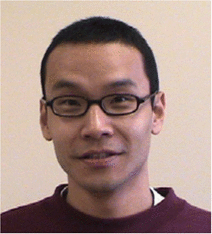 Chi Zhang合作论文数4
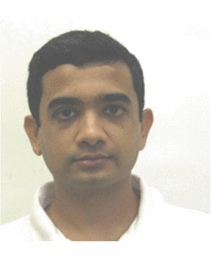 S. R. Herlekar合作论文数4
 Julienne Stroeve合作论文数Centre for Polar Observation and Modelling, University College London4Yao Xu合作论文数3
 Bernd Fischer合作论文数Electronics and Computer Science, University of Southampton, UK and Division of Computer Science, Stellenbosch University, South Africa3
 Bo Zhao合作论文数Pinterest3
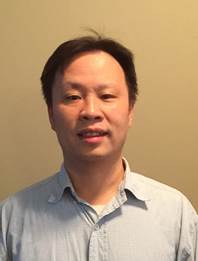 Hsiao-Chun Wu (吳孝純)合作论文数Division of Electrical and Computer Engineering, School of Electrical Engineering and Computer Science, Louisiana State University3
 ChengXiang (Cheng) Zhai (翟成祥)合作论文数Department of Computer Science, Siebel School of Computing and Data Science, The Grainger College of Engineering, University of Illinois at Urbana-Champaign;Carl R. Woese Institute for Genomic Biology, Department of Statistics, School of Information Sciences, University of Illinois at Urbana-Champaign3
 Kamalika Das合作论文数Intuit3
 Cindy Xide Lin合作论文数3Zuobing Xu合作论文数3P. R. Gazis合作论文数3
 Rajiv Soundararajan合作论文数University of Texas at Austin3
 Suratna Budalakoti合作论文数University of Texas at Austin3Vesselin Diev合作论文数3Eugene Turkov合作论文数3Tinghui Xin合作论文数3
 Ashwani Sharma合作论文数Space Vehicles Directorate, Kirtland AFB Air Force Research Laboratory3
 Michael J. Way合作论文数Seed Conservation Department;Royal Botanic Gardens;Royal Botanic Gardens, Seed Conservation Department3
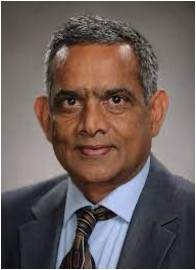 Ramakrishna Nemani合作论文数NASA Ames Research Center2
 Vu Pham合作论文数Ho Chi Minh City University of Science2
 Lishuai Li (李立帅)合作论文数School of Data Science, City University of Hong Kong;Department of Mechanical Engineering, College of Engineering, City University of Hong Kong2
 Ole Mengshoel合作论文数Department of Electrical and Computer Engineering, Carnegie Mellon University;Wilton E. Scott Institute for Energy Innovation, Carnegie Mellon University2Duo Zhang合作论文数2
 Qiang Zhu (诸强)合作论文数Atlassian2
 Bolin Ding合作论文数Data Analytics and Intelligence Lab, Alibaba Group2Brett Zane-Ulman合作论文数2
 Nitesh Chawla合作论文数Department of Computer Science and Engineering, College of Engineering, University of Notre Dame2
 Laurent El Ghaoui合作论文数College of Engineering and Computer Science, VinUniversity;Kayrros2
 Aditi Chattopadhyay合作论文数School for Engineering of Matter, Transport and Energy, Arizona State University2
 R. John Hansman合作论文数International Center for Air Transportation, Department of Aeronautics and Astronautics, MIT;Laboratory for Aviation and the Environment, MIT2Manos Pontikakis合作论文数2Viet-An Duong合作论文数2Siva Yellampalli合作论文数Bachelor of Engineering;Jawaharlal Nehru Technological University;Louisiana State University;Jawaharlal Nehru Technological University, Louisiana State University2Clay Mayberry合作论文数2Jialiu Liu合作论文数1




