Günümüzde, örgüt yapısının tasarlanması büyük önem taşımaktadır. Bu durum, örgütteki bütün bölümlerin ve birimlerin işleyişine etki etmektedir. Örgüt tasarımından sorumlu olan yöneticilerin, değişime cevap verebilecek yapılar oluşturmaları beklenmektedir. Ayrıca, yeni unsurları örgütle bütünleştirmeleri ve esnekliği sağlamaları gerekmektedir. Yöneticilerin şirketlerinin yaşlarını, büyüklüklerini, stratejilerini, çevre ve teknoloji koşulları gibi durumsallık faktörlerini göz önüne alarak örgütlerinin tasarımlarını yapmaları gerekir. Tek tip bir örgüt yapısının bütün durumlara uyması beklenemez. Türkiye’deki büyük inşaat şirketlerinde matris yapıyı, takım yapısını ve şebeke türü örgüt yapısını görmekteyiz. Son zamanlarda artan uluslararası rekabetin etkisiyle, birçok inşaat şirketi dünyanın her tarafında yapılabilecek karlı işleri alabilmek için stratejilerini yeniden belirlemektedirler. Bir şirket eğer sadece yurt içinde faaliyet göstermenin ötesinde, değişik ülkelerde ve küresel ölçeklere uygun olarak çalışmak istiyorsa, yapısal uyum için çaba göstermelidir. Örgütün değişik faaliyetlerde bulunması var olan yapılara farklı bir baskı uygulayacaktır. Yeni atılımlarda başarılı olabilmek için örgüt yapılarında düzenlemeler gerekmektedir. Türk inşaat şirketleri de yurt içinde ve dışında faaliyetlerini başarıyla sürdürmektedirler.
Since people well know the threats of inorganic agriculture to their health, they are more interested in organic agriculture than ever. Organic agriculture is expected to play a major role for a healthy world in the future whereas inorganic agriculture nowadays increases the volume of agricultural production and presents lower priced foods but causes health problems. The agricultural investments are generally evaluated by using linguistic terms since most of the evaluation criteria are intangible and inherently require imprecise data to be used. In this paper, we analyze six types of agricultural investment alternatives using eight different criteria based on linguistic data. One of the most-used multi-criteria decision-making methods, TOPSIS is used under fuzziness for the solution of this problem. A sensitivity analysis is also given to examine the robustness of the decision.
Innovation is the way of transforming the resources of a company through the creativity of people into new resources and wealth. Innovation investments are essential instruments in a company's competitive productivity and profitability strategy. Evaluation of innovation investments is a multicriteria decision making problem with many conflicting tangible and intangible criteria. Vague nature of this evaluation requires a fuzzy multicriteria methodology. In this paper we propose a fuzzy multicriteria method to evaluate technological innovation investments using eight different criteria. Fuzzy TOPSIS method is used in this evaluation and a sensitivity analysis is given.
People buy insurance to protect themselves against possible financial loss in the future. Health insurance provides protection against the possibility of financial loss due to health care use. A selection among health insurance options is a multiattribute decision making problem including many conflicting criteria. This problem can be better solved using the fuzzy set theory since human decision making is generally based on vague and linguistic data. We propose an integrated methodology composed of fuzzy AHP and fuzzy TOPSIS to select the best health insurance option. The considered option types, Health Savings Account (HSA), Flexible Spending Accounts (FSA), and Health Reimbursement Arrangement (HRA) are evaluated using eight different criteria under fuzziness. A sensitivity analysis is also realized.
Environmental risk is a measure of potential threats to the environment and combines the probability that events will cause or lead to degradation of the environment and the severity of that degradation. Evaluation of environmental risk factors requires linguistic terms to be used rather than exact numerical assignments. The fuzzy set theory provides a useful tool for converting linguistic terms into numerical evaluations. In this article, we will try to select the best location for the Faculty of Management of the Istanbul Technical University taking care of the predetermined environmental criteria by using fuzzy TOPSIS. The decision matrix is composed of linguistic evaluations for the alternatives with respect to the environmental risk criteria. The Macka Campus area has been selected after the multicriteria evaluation. A sensitivity analysis is also realized to see if the minor changes in criteria weights cause any change in the ranking of alternatives. Unless the importance of the criteria rock or soil structure, remoteness to health facilities, transportation availability, and transportation costs is changed to be from low to extremely low importance, the Macka Campus is still the selected alternative.
Information and communication technologies are radically changing the way that healthcare is delivered with the development of e-Health among the most remarkable changes. It plays an increasingly important role in delivering healthcare. Information and communication technology has the potential to effectively support the complexities involved in the communication that takes place both amongst healthcare professionals and their patients in the developed and developing countries. The aim of the chapter is to analyze the recent situation in healthcare management and information communication technology applications in the health industry. This chapter examines the challenges involved in human interaction and a clinical information system and allows for richer communication between the patient and those involved in their health.
Health research and investments are expensive, and its explicit social, health and economic impacts are hard to define. There are many challenges and assumptions in defining specific returns on investment in health research. In the literature, there is no common approach to evaluate health research impacts. Single criterion methods are generally used with validated indicators to track overall outcomes or outcomes in a specific health research area. These methods have the ability of considering only one criterion at a time, which is usually the cost of the investment. A multicriteria method is proposed for taking care of many conflicting criteria of health research investments. The difficulty of measuring intangible criteria is captured by the fuzzy set theory. Fuzzy analytic hierarchy process (AHP) is used for the selection among four possible health research investment alternatives. A sensitivity analysis is made for the changes in the values of various parameters.
Higher education refers to a level of education that is provided at academies, universities, colleges, seminaries, institutes of technology, and certain other collegiate-level institutions. Government investment policy should be concerned with the marginal rate of return when deciding on whether to increase their expenditure on higher education. Government investment in higher education is a decision making problem, which includes multiple and conflicting criteria. We use fuzzy analytic hierarchy process (AHP) to take these criteria into account and to handle vague and incomplete data. We also use fuzzy TOPSIS to compare the results of AHP. A case study for Turkey is realized. In this case study, our multi-criteria decision model evaluates three possible higher education investment alternatives. A sensitivity analysis based on different scenarios of experts' preferences is also given.
Careers today are not what they were several years ago. Companies give a greater emphasis on the integration of the human resource function into HR activities such as developing strategic HR policies, human resource development, communications and workplace learning and career management. Nowadays, most of the employees exchange performance for the sort of training and learning and development that will allow them to remain marketable. This study tries to examine changing role of HRM in the international and national small house appliances companies in Turkish Industry.
Information and communication technology (ICT) plays an increasingly important role in delivering healthcare today. Healthcare professionals, including consultants, doctors and nurses, are engaged in what is seen as a radical action plan for improving the National Health Service in the developed countries. A major focus of this plan is the greater empowerment of the patient, and providing them with more information about their health needs and care. Information and communication technology has the potential to effectively support the complexities involved in the communication that takes place both amongst healthcare workers themselves and between workers and their patients in both primary and secondary care both in the developed countries and elsewhere. This paper explores the challenges involved in human interaction and a clinical information system, allows for richer communication between the patient and those involved in their health.
Today, business has to consider customers, suppliers, and competitors in global terms in order to succeed. Most products are global composites of materials and services from manufacturers throughout the world. The business environment has a substantial impact on the choice of manufacturing capability focus. Additionally, it is found that high performance manufacturers adopt different competitive priorities in response to environmental stimuli than do low performance manufacturers. Productivity is concerned with the effective and efficient transformation of resources into desired outputs. Manufacturing, traditionally, has paid great attention to this conversion in terms of its effect on organizational profit but not on its harmful environmental effects. As pressures rise to establish green manufacturing processes, the issue becomes one of both being seen as socially responsible, and as conforming to increasing legislative and regulatory frameworks. Green manufacturing implies the minimization of waste. A particular approach is introduced to addressing the concept of wastivity.
In a world increasingly shaped by technology, engineers have a moral obligation to consider the consequences of their choices. Ethical behavior means accepting responsibility for your actions. Nearly everyone intends to do his or her job ethically. But today's complex engineering world, good intentions may not be enough. Engineering ethics may have been a luxury in the past for some engineers, but let us hope that in the future it becomes a necessity for all. Today, chambers of engineers are dedicated to transforming engineers into ethical practitioners who will reflect on the consequences of their designs and discoveries, especially for those traditionally under-served by technology. Companies as agents and drivers of global change must be engaged in efforts to develop solutions to critical social and environmental issues. In the long term, socially beneficial and environmentally sustainable designs will be essent ial components in a company's global competitiveness. Many environmentalists argue that these developing economies represent one of the best opportunities for introducing environmentally sustainable technologies before they replicate the pollution that was a side effect of industrial revolution. One of the core values of engineering is to make the world a better place. Engineers should spend a larger part of their time focusing on how to translate this core value into appropriate action. The general public relies on engineers to protect their health, safety and well-being as they practice their profession.
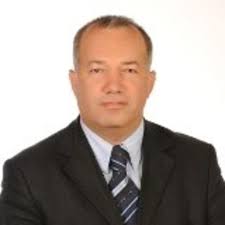 Cengiz Kahraman合作论文数Department of Industrial Engineering, Faculty of Management, Istanbul Technical University6
 Murat Durucu合作论文数Ind Engn Dept, Istanbul Tech Univ2
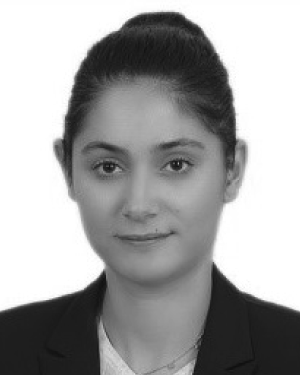 Ebru Turanoglu Bekar合作论文数1
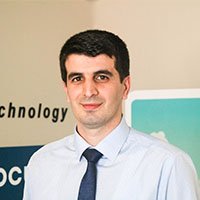 Ihsan Kaya合作论文数Department of Industrial Engineering, Istanbul Technical University1
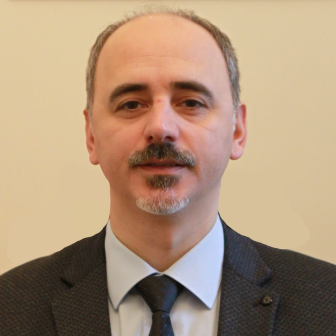 Selcuk Cebi合作论文数Department of Industrial Engineering, Faculty of Mechanical Engineering, Yildiz Technical University1




