Data taken by the DELPHI experiment at centre-of-mass energies of 183 GeV and 189 GeV with a total integrated luminosity of 212 pb^{-1} have been used to search for the supersymmetric partners of the electrons, muons, and taus in the context of the Minimal Supersymmetric Standard Model (MSSM). The decay topologies searched for were the direct decay ({\tilde \ell} -> \ell {\tilde \chi_1^0}), producing acoplanar lepton pairs plus missing energy, and the cascade decay ({\tilde \ell} -> \ell {\tilde \chi_2^0} > \ell \gamma {\tilde \chi_1^0}), producing acoplanar lepton and photon pairs plus missing energy. The observed number of events is in agreement with Standard Model predictions. The 95% CL excluded mass limits for selectrons, smuons and staus are m_{\tilde {e}} \leq 87 GeV/c^2, m_{\tilde {\mu}} \leq 80 GeV/c^2 and m_{\tilde {\tau}} \leq 75 GeV/c^2, respectively, for values of \mu=-200 GeV/c^2 and tan(beta)=1.5.
The field-line description of the electric field, proposed by Faraday, accepted by Maxwell and used by Dirac, is utilized here in order to try to understand the origin of the electric charge quantization. This origin could be the result of the discrete nature of the field lines in conjunction with the requirement for spherical symmetry of the field. Under the hypothesis that for elementary particles, the electric field is consisting of only a few field lines, the d-quark could be composed of four field lines, the u-quark of eight, and the electron of 12. The proton would also exhibit a 12 field line structure. For electrons and protons, such a structure could eventually be observed with the here proposed experimental techniques. New particles with charges 1/2e, 5/3e, and 2.5e would be allowed in this context.
DELPHI results are presented on the inclusive production of the neutral mesons , f0(980), f2(1270), K 0 2 (1430) and f 0 2(1525) in hadronic Z 0 decays. They are based on about 2 million multihadronic events collected in 1994 and 1995, using the particle identi cation capabilities of the DELPHI Ring Imaging Cherenkov detectors and measured ionization losses in the Time Projection Chamber. The total production rates per hadronic Z decay have been determined to be: 1:19 0:10 for ; 0:164 0:021 for f0(980); 0:214 0:038 for f2(1270); 0:073 0:023 for K 0 2 (1430); and 0:012 0:006 for f 0 2(1525). The total production rates for all mesons and di erential cross-sections for the , f0(980) and f2(1270) are compared with the results of other LEP experiments and with models. (Accepted by Physics Letters B)
F rom the analysis of a data sample corresponding to an integrated luminosity of 4.63 pb -1 taken during the 1990 run of LEP at centre of mass energies between 88.2GeV an 94.2GeV, the tau decays r ~ e g e v T , r -* ,u-~ .v~ , r ~ z c ( K ) v T , r r p v ~ and their charge conjugates have been studied. The following branching ratios have been measured; B R ( r ~ e aTeVT) = 18.6 + 0.8 (stat.) _ 0.6 (sys.)%, BR (z---+ /~17u vT) = 17.4 • 0.7 + 0.6%, B R ( r ~ z c ( K ) v T ) = 11.9_+0.7_ 0.7%, BR ( r > p vT) = 22.4 + 0.8 + 1.3%, in good agreement with world averages. The measured electronic and muonic branching ratios lead to a measurement of the strong coupling constant, es (mT) = 0.26 + 0.09 Extrapolating the c L value from -0 .12" m T to m z yields cL(mz)=0 .109 +0.012 0.028" The average polarization P~ of taus produced in Z---, r + r decays has also been measured using the above decay modes. The weighted mean of the polarizations obtained from the four decay modes is PT = 0.24 _+ 0.07. This value of PT gives, in the improved Born approximation, a ratio between the axial and vector coupling constants of the tau of vT/aT=0.12+__O.04, and hence a value of the effective electroweak mixing parameter sin 2 0 w(m~) = 0.220 _ 0.009.
A search for a massive resonance decaying into a standard-model-like Higgs boson (H) and a W or Z boson is reported. The analysis is performed on a data sample corresponding to an integrated luminosity of 19.7 fb^(−1), collected in proton-proton collisions at a centre-of-mass energy of 8 TeV with the CMS detector at the LHC. Signal events, in which the decay products of Higgs, W, or Z bosons at high Lorentz boost are contained within single reconstructed jets, are identified using jet substructure techniques, including the tagging of b hadrons. This is the first search for heavy resonances decaying into HW or HZ resulting in an all-jet final state, as well as the first application of jet substructure techniques to identify H → WW* → 4q decays at high Lorentz boost. No significant signal is observed and limits are set at 95% confidence level on the production cross sections of W′ and Z′ in a model with mass-degenerate charged and neutral spin-1 resonances. Resonance masses are excluded for W′ in the interval [1.0, 1.6] TeV, for Z′ in the intervals [1.0, 1.1] and [1.3, 1.5] TeV, and for mass-degenerate W′ and Z′ in the interval [1.0, 1.7] TeV.
Measurements of the ZZ production cross sections in proton-proton collisions at center-of-mass energies of 7 and 8 TeV are presented. Candidate events for the leptonic decay mode ZZ to 2 l 2 nu, where l denotes an electron or a muon, are reconstructed and selected from data corresponding to an integrated luminosity of 5.1 (19.6) inverse femtobarns at 7 (8) TeV collected with the CMS experiment. The measured cross sections, sigma(pp to ZZ) = 5.1 -1.4 +1.5 (stat) -1.1 +1.4 (syst) +/- 0.1 (lumi) pb at 7 TeV, and 7.2 -0.8 +0.8 (stat.) -1.5 +1.9 (syst) +/- 0.2 (lumi) pb at 8 TeV, are in good agreement with the standard model predictions with next-to-leading-order accuracy. The selected data are analyzed to search for anomalous triple gauge couplings involving the ZZ final state. In the absence of any deviation from the standard model predictions, limits are set on the relevant parameters. These limits are then combined with the previously published CMS results for ZZ in 4 l final states, yielding the most stringent constraints on the anomalous couplings.
Article history: Received 30 January 2015 Received in revised form 1 July 2015 Accepted 16 July 2015 Available online 22 July 2015 Editor: M. Doser
The hadronic part of the electron structure function F2e has been measured for the first time, using e+e− data collected by the DELPHI experiment at LEP, at centre-of-mass energies of s=91.2–209.5 GeV. The data analysis is simpler than that of the measurement of the photon structure function. The electron structure function F2e data are compared to predictions of phenomenological models based on the photon structure function. It is shown that the contribution of large target photon virtualities is significant. The data presented can serve as a cross-check of the photon structure function F2γ analyses and help in refining existing parameterisations.
A search for $WV\ensuremath{\gamma}$ triple vector boson production is presented based on events containing a $W$ boson decaying to a muon or an electron and a neutrino, a second $V$ ($W$ or $Z$) boson, and a photon. The data correspond to an integrated luminosity of $19.3\text{ }\text{ }{\mathrm{fb}}^{\ensuremath{-}1}$ collected in 2012 with the CMS detector at the LHC in $pp$ collisions at $\sqrt{s}=8\text{ }\text{ }\mathrm{TeV}$. An upper limit of 311 fb on the cross section for the $WV\ensuremath{\gamma}$ production process is obtained at 95% confidence level for photons with a transverse energy above 30 GeV and with an absolute value of pseudorapidity of less than 1.44. This limit is approximately a factor of 3.4 larger than the standard model predictions that are based on next-to-leading order QCD calculations. Since no evidence of anomalous $WW\ensuremath{\gamma}\ensuremath{\gamma}$ or $WWZ\ensuremath{\gamma}$ quartic gauge boson couplings is found, this paper presents the first experimental limits on the dimension-eight parameter ${f}_{T,0}$ and the $CP$-conserving $WWZ\ensuremath{\gamma}$ parameters ${\ensuremath{\kappa}}_{0}^{W}$ and ${\ensuremath{\kappa}}_{C}^{W}$. Limits are also obtained for the $WW\ensuremath{\gamma}\ensuremath{\gamma}$ parameters ${a}_{0}^{W}$ and ${a}_{C}^{W}$.
A measurement of total and fiducial inclusive W and Z boson production cross sections in pp collisions at sqrt(s) = 8 TeV is presented. Electron and muon final states are analyzed in a data sample collected with the CMS detector corresponding to an integrated luminosity of 18.2 +/- 0.5 inverse picobarns. The measured total inclusive cross sections times branching fractions are sigma(pp to W X) B(W to l nu) = 12.21 +/- 0.03 (stat.) +/- 0.24 (syst.) +/- 0.32 (lum.) nb and sigma(pp to Z X) B(Z to l+ l-) = 1.15 +/- 0.01 (stat.) +/- 0.02 (syst.) +/- 0.03 (lum.) nb for the dilepton mass in the range of 60 to 120 GeV. The measured values agree with next-to-next-to-leading-order QCD cross section calculations. Ratios of cross sections are reported with a precision of 2%. This is the first measurement of inclusive W and Z boson production in proton-proton collisions at sqrt(s) = 8 TeV.
 Tiziano Camporesi合作论文数CERN350
 Francesco-Luigi Navarria合作论文数INFN Sezione di Bologna347
 K. Doroba合作论文数341
 Göran Jarlskog合作论文数Department of Physics, Faculty of Science, Lund University338
 Luc Pape合作论文数CERN337
 Tiziano Rovelli合作论文数Department of Physics and Astronomy, University of Bologna;INFN337
 Francisco Matorras Weinig合作论文数Instituto de Fisica de Cantabria, Universidad de Cantabria337P Baillon合作论文数335
 Stavros Katsanevas合作论文数Physics Laboratory, University of Athens335M. Feindt合作论文数333D Liko合作论文数332R. Gokieli合作论文数Inst. Nuclear Studies and University of Warsaw Ul. Hoza 69 PL-00681 Warsaw Poland329P. Jarry合作论文数328
 Paolo Ronchese合作论文数Dipartimento di Fisica e Astronomia "Galileo Galilei", Università degli Studi di Padova327
 Dimitris Loukas合作论文数Institute of Nuclear and Particle Physics, National Center for Scientific Research Demokritos327
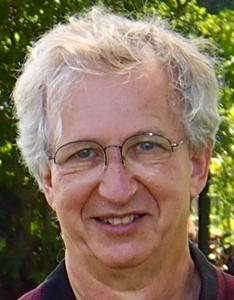 Daniel Bloch合作论文数Institut Pluridisciplinaire Hubert Curien, Université de Strasbourg;Centre National de la Recherche Scientifique327A Perrotta合作论文数326Martino Margoni合作论文数Department of Physics and Astronomy, Università degli Studi di Padova326
 Olga Botner合作论文数Department of Physics and Astronomy, Uppsala University318Hallgren A.合作论文数315Piotr Zalewski合作论文数High Energy Physics Division, National Centre for Nuclear Research313
 Marco Paganoni合作论文数Dipartimento di Fisica "Giuseppe Occhialini", Università degli Studi di Milano-Bicocca311
 Emmanuel Fokitis合作论文数310D. Treille合作论文数307P. Kokkinias合作论文数307
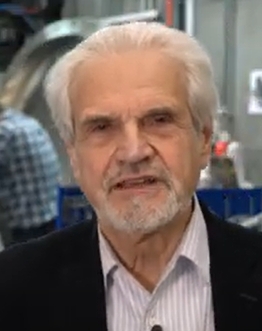 Tord Ekelof合作论文数Department of Physics and Astronomy, Uppsala University307p juillot合作论文数305
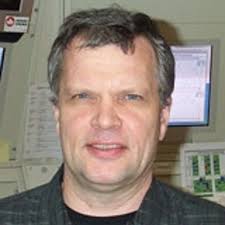 Risto Orava合作论文数University of Helsinki;Helsinki Institute of Physics305
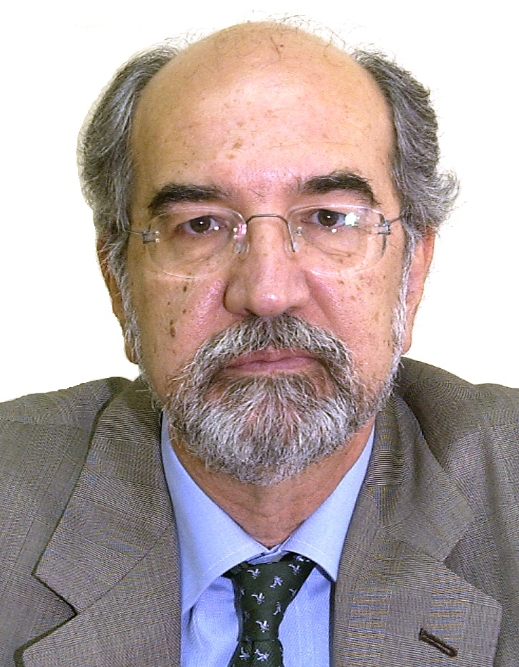 Evangelos N. Gazis合作论文数Department of Physics, School of Applied Mathematical & Physical Sciences, National Technical University of Athens304
 Juan Fuster合作论文数Institute of Corpuscular Physics304
 Enrico Graziani合作论文数Dipartimento di Fisica, Università Roma Tre and INFN Sezione di Roma III302S Ragazzi合作论文数301Paolo Checchia合作论文数INFN Sezione di Padova300J. M. Brunet合作论文数300G. Polok合作论文数300
 Clara Matteuzzi合作论文数Istituto Nazionale di Fisica Nucleare;University of Milan300
 Klaus Hamacher合作论文数Fachbereich Mathematik und Naturwissenschaften, Bergische Universität Wuppertal299W. Adam合作论文数299P. Kluit合作论文数298M Baubillier合作论文数298
 Marta Calvi合作论文数Department of Physics "Giuseppe Occhialini", University of Milano-Bicocca;Istituto Nazionale di Fisica Nucleare298
 Ugo Amaldi合作论文数TUM, Munich298A. Ouraou合作论文数297mariana mazzucato合作论文数297
 Celso Martínez Rivero合作论文数Instituto de Física de Cantabria, CSIC297F. Ledroit合作论文数296B. Bouquet合作论文数296Vladimir Obraztsov合作论文数Department of Experimental Physics, Institute for High Energy Physics296F. Kapusta合作论文数296




