With the increasing prevalence of AI, significant advancements have been made across various domains, such as healthcare, learning, industry, etc. However, challenges persist in terms of trusting and comprehending the outcomes generated by these technologies. Specifically in the language learning domain, teachers face challenges regarding the classification of the students’ learning capabilities and build the appropriate learning path for them. To address these challenges, the concept of Explainable Artificial Intelligence (XAI) was adopted, which is a set of processes and methods that allows human users to interpret, understand and trust the results derived from machine learning models. In this study, we adopt two well-known XAI algorithms, PFI and SHAP in a proposed Knowledge Generation Model equipped with ML models to derive hidden knowledge. The whole framework has been applied and evaluated on the Language Learning Classification of Spanish Tertiary Education Students acquired from the CEDEL2 database. The analysis concludes that in terms of explaining the black-box models, the SHAP model-agnostic method is the most comprehensive and dominant for visualizing feature interactions and feature importance and be applicable to any type of data.
Apart from being an economic struggle, migration is first of all a societal challenge; most migrants come from different cultural and social contexts, do not speak the language of the host country, and are not familiar with its societal, administrative, and labour market infrastructure. This leaves them in need of dedicated personal assistance during their reception and integration. However, due to the continuously high number of people in need of attendance, public administrations and non-governmental organizations are often overstrained by this task. The objective of the Welcome Platform is to address the most pressing needs of migrants. The Platform incorporates advanced Embodied Conversational Agent and Virtual Reality technologies to support migrants in the context of reception, integration, and social inclusion in the host country. It has been successfully evaluated in trials with migrants in three European countries in view of potentially deviating needs at the municipal, regional, and national levels, respectively: the City of Hamm in Germany, Catalonia in Spain, and Greece. The results show that intelligent technologies can be a valuable supplementary tool for reducing the workload of personnel involved in migrant reception, integration, and inclusion.
In this paper we address the problem of automating the process of handling the numerous inquiries received by the medical information teams from the users in the pharmaceutical industry. Our approach foresees the development of a holistic system which includes an intelligent conversational agent that is informed by a set of questions and answers (Q&A), extracted from a large corpus of medical scientific documents in a semi-automatic manner. We investigate two different methods (i.e., template-based and neural-based) for extracting Q&A pairs that are subsequently used to train the Natural Language Understanding model of the conversational agent. Both methods are qualitatively evaluated by experts of a medical information team. The performance of our system shows that our approach is robust with promising results which can reach an average performance of 64%.
We present a knowledge-driven multilingual conversational agent (referred to as "MyWelcome Agent") that acts as personal assistant for migrants in the contexts of their reception and integration. In order to also account for tasks that go beyond communication and require advanced service coordination skills, the architecture of the proposed platform separates the dialogue management service from the agent behavior including the service selection and planning. The involvement of genuine agent planning strategies in the design of personal assistants, which tend to be limited to dialogue management tasks, makes the proposed agent significantly more versatile and intelligent. To ensure high quality verbal interaction, we draw upon state-of-the-art multilingual spoken language understanding and generation technologies.
In this chapter, we provide an overview of the current trends in using semantic technologies in the IoT domain, presenting practical applications and use cases in different domains, such as in the healthcare domain (home care and occupational health), disaster management, public events, precision agriculture, intelligent transportation, building and infrastructure management. More specifically, we elaborate on semantic web-enabled middleware, frameworks and architectures (e.g. semantic descriptors for M2M) proposed to overcome the limitations of device and data heterogeneity. We present recent advances in structuring, modelling (e.g. RDFa, JSON-LD) and semantically enriching data and information derived from sensor environments, focusing on the advanced conceptual modelling capabilities offered by semantic web ontology languages (e.g. RDF/OWL2). Querying and validation solutions on top of RDF graphs and Linked Data (e.g. SPARQL, SPIN and SHACL) are also presented. Furthermore, insights are provided on reasoning, aggregation, fusion and interpretation solutions that aim to intelligently process and ingest sensor information, infusing also human awareness for advanced situational awareness.
This paper presents the algorithms that CERTH-ITI team deployed so as to deal with flood detection and road passability from social media and satellite data. Computer vision and deep learning techniques are combined so as to analyze social media and satellite images, while word2vec is used to analyze textual data. Multimodal fusion is also deployed in CERTH-ITI framework, both in early and late stage, by combining deep representation features in the former and semantic logic in the latter so as to provide a deeper and more meaningful understanding of the flood events.
 Stefanos Vrochidis合作论文数Centre for Research and Technology Hellas, Information Technologies Institute5
 Dimos Ntioudis合作论文数Ctr Res & Technol Hellas, Informat Technol Inst, Thermi 57001, Greece3
 Ioannis Kompatsiaris合作论文数Multimedia Knowledge and Social Media Analytics Laboratory, Information Technologies Institute, Centre for Research and Technology– Hellas;Infalia3Steffi Davey合作论文数CENTRIC Sheffield Hallam Univ, Sheffield, S Yorkshire, England2
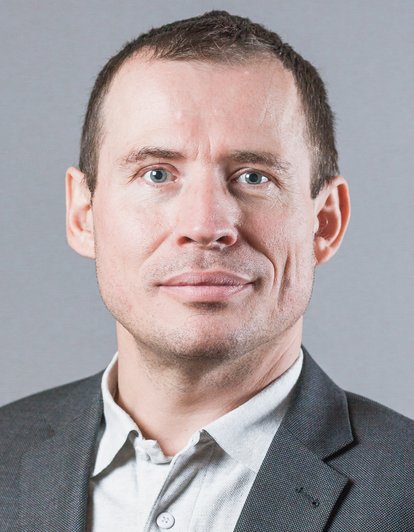 Jan Černocký合作论文数Department of Computer Graphics and Multimedia, Faculty of Information Technology, Brno University of Technology2
 Ilias Gialampoukidis合作论文数2
 Stelios Andreadis合作论文数2
 Leo Wanner合作论文数Life Sciences - Language Technologies Laboratory, Barcelona Supercomputing Center;Department of Information and Communication Technologies, Pompeu Fabra University2
 Jens Grivolla合作论文数Barcelona Media Innovation Centre2
 Ekaterina Egorova合作论文数2
 Matthias Klusch合作论文数German Research Center for Artificial Intelligence2Gerasimos Antzoulatos合作论文数1George Meditskos合作论文数1Emmanuel Jamin合作论文数1Gloria Elena Jaramillo合作论文数Deutsch Forschungszentrum Kunstl Intelligenz DFKI1
 Maria Tsourma合作论文数Ctr Res & Technol Hellas, Informat Technol Inst1Athina Tsanousa合作论文数Centre for Research and Technology Hellas1
 Monica Dominguez合作论文数Pompeu Fabra University1
 Alexandros Zamichos合作论文数1
 Evangelos A. Stathopoulos合作论文数CERTH, Information Technologies Institute1Yash Shekhawat合作论文数Nurogames GmbH, Cologne, Germany1
 Maria Rousi合作论文数1Angelos Chatzimichail合作论文数Informat Technol Inst, Ctr Res & Technol, Thessaloniki, Greece1
 Panagiotis Giannakeris合作论文数Ctr Res & Technol Hellas CERTH, ITI, Thessaloniki, Greece1
 Pavel Pecina合作论文数Charles University1
 Anastasios Alexiadis合作论文数University of Macedonia;Dept . of Applied Informatics Thessaloniki;Dept . of Applied Informatics Thessaloniki, University of Macedonia1Anastasia Moumtzidou合作论文数Telematics Institute;Centre for Research and Technology;Telematics Institute, Centre for Research and Technology1
 Thanos G. Stavropoulos合作论文数Ctr Res & Technol Hellas, Inst Informat Technol1
 Konstantinos Avgerinakis合作论文数Telematics Institute;Centre for Research and Technology;Telematics Institute, Centre for Research and Technology1
 Maro Vlachopoulou合作论文数Department of Applied Informatics, University of Macedonia1
 Anastasios Karakostas合作论文数Department of Informatics, Aristotle University of Thessaloniki1
 Georgios Meditskos合作论文数Informatics & Telematics Institute (ITI)1
 Gerard Casamayor合作论文数DTIC, Universitat Pompeu Fabra1
 Alexander Shvets合作论文数Usikov Institute of Radiophysics and Electronics, National Academy of Sciences of Ukraine1




