Accurate time series forecasting plays a pivotal role across numerous real-world domains, underpinning applications ranging from finance to traffic management. Selective state space models that draw inspiration from control theory display superior performance in multivariate time series forecasting. However, few variants offer a unified approach capable of achieving leading performance across simple and complex scenarios. An encoder and decoder convolutional network with skip connections can alleviate this issue. Thus, this paper proposes an artificial intelligence framework for time series forecasting applications across diverse domains, borrowing the concept of encoder and decoder schemes and introducing a parallel encoder and decoder structure based on selective state space representations. The proposed model enhances the vanilla selective state space models by integrating a forget gate mechanism, and a differential operation is incorporated as a channel-wise, learnable common-mode cancellation operator to filter out random noise from transient signals, effectively refining and enhancing distinct features. Moreover, this framework incorporates long short-term memory function along with an embedding channel attention mechanism to alleviate the potential disruption of long-term dependencies caused by down-sampling. This combination ensures the preservation of long-range embeddings and attentions, enhancing overall forecasting performance. Extensive experiments on benchmarking models and principal components across a wide range of prominent datasets highlight the unified effectiveness of the proposed framework in various scenarios, solidifying the superior position among leading models.
Deployed knowledge-tracing models are typically frozen after training, yet systematic per-item logit bias arises, from limited per-item expressivity in backbone architectures and from post-deployment shifts in item properties, degrading prediction quality. Global post-hoc calibrators such as Platt scaling, temperature scaling, and isotonic regression improve probability estimates but leave discriminative ability, as measured by AUC, unchanged. This AUC invariance is a structural consequence of monotone score-only transforms; recovering the stranded discrimination requires conditioning on item identity. We propose SLC (State-space Logit Correction), which converts binary observations to Gaussian pseudo-observations via Laplace/IRLS, applies empirical-Bayes shrinkage through a Kalman smoother, and fits an offset-Platt link. The state-space formulation also yields a detectability bound that characterizes the Bernoulli information floor, explaining why temporal tracking provides no benefit at current data densities. Across four datasets, five backbones, and three seeds, SLC improves AUC on all four datasets and NLL on three, with the advantage concentrating on sparse items. Cross-domain controls suggest that the same phenomenon can arise beyond education when the deployed backbone leaves entity-level bias.
Time series forecasting plays a crucial role in a wide range of realworld applications, such as energy management, weather forecast and financial analysis. However, entanglement of spatial and temporal patterns in time series limits forecasting accuracy of Transformer. To address the problem, decomposition can disentangle the trend and seasonal components of input series. We also notice that Rotary Position Embedding is effective for modeling seasonal signals, while linear architectures handle smooth trend signals well. Before modeling, down-sampling is used to capture multi-granularity information. Therefore, we propose Decomposed Seasonal-Trend Network with Rotary Attention (DSTN-RA) as a novel model for time series forecasting. It combines the decomposition with Rotary Attention and Channel Mixing modules to learn seasonal and trend signals separately. Experiments demonstrate that DSTN-RA outperforms leading baselines. Furthermore, ablation studies reveal differences in the information dependencies of seasonal and trend components, validating the decomposition method and confirming the specific contributions of each module. Codes will be available on GitHub.
Time series forecasting plays a crucial role in a wide range of real-world applications and has become increasingly complex with the growth of multivariate dimensions and extended historical observations, leading to the prosperity of deep forecasting models. Previous models are hindered by three major challenges: high computational complexity, inefficient token utilization caused by redundancy and scarcity, and temporal distribution shifts resulting from non-stationary dynamics. Inspired by Koopman theory and the success of multilevel encoder–decoder architectures with skip connections, we design an input-dependent Koopman module to decompose time series into Koopman dynamics and residual dynamics. Building upon this formulation, we propose a U-shaped Multilevel Attention module (UMA) that integrates element-wise attention filtering and linear attention, giving rise to KUMA. The input-dependent Koopman operator mitigates the issue of operator mixture and alleviates temporal distribution shifts, while UMA achieves a favorable balance between token redundancy and token scarcity with acceptable computational efficiency. Comprehensive evaluations across 12 benchmark datasets demonstrate that KUMA achieves superior performance compared to existing excellent approaches.
Generative AI (GenAI) tools such as ChatGPT now provide novice programmers with instant, personalized support and are reshaping computing education. While a growing body of work examines AI's immediate impacts, longitudinal evidence remains limited on how students' awareness, student-AI interaction patterns, and course outcomes evolve as AI becomes routine in classrooms. To address this gap, we investigate an introductory Python course across three successive AI-supported cohorts (2023-2025). Using questionnaires, coded student-AI dialogue logs, and course assessment records, we examine cohort-to-cohort shifts in students' AI awareness, interaction practices, and learning outcomes. We find that students' relationships with GenAI change systematically over time: familiarity and uptake become increasingly normative, and help-seeking practices evolve alongside growing AI literacy and shifting expectations of what the assistant should provide. These changes suggest that, in the AI era, the central instructional challenge is less about whether students use AI and more about how courses redefine productive learning practices while maintaining student agency. Our study offers longitudinal evidence and practical implications for designing and integrating AI programming support in course settings.
With the global prevalence in diabetes and scarcity of definitive clinic schemes, the need for effective and reliable glucose monitoring has become imperative. Due to excellent responsiveness and precision, machine learning (ML) models have been widely employed by continuous glucose monitors (CGMs). However, recent studies have raised concerns that ML-based models often exhibit limited trustworthiness, injecting uncertainty into medical practices. In contrast, deep learning (DL) models are recognized as more trustworthy, but they are struggling with accuracy. To strike a balance between accuracy and trustworthiness, we propose GlucoMixer, an Encoder-only architecture built predominantly with Mixer modules. To prevent future information leakage, we design a Mask Block that employs a lightweight triangular masking scheme. Given the presence of two diabetes types, we employ a convolutional layer to distinguish relevant information and take two Time Mixer Blocks to handle distinct patterns accordingly. Comprehensive In-Distribution (ID) and Out-of-Distribution (OD) evaluations across five benchmark datasets highlight GlucoMixer’s superior performance in high predictive accuracy alongside excellent trustworthiness. According to the test ranking, GlucoMixer is more balanced across multiple evaluation metrics, demonstrating its potential as a practical spur for reliable glucose management and medical decisions.
Financial markets reflected by indices are substantial components of global economy. While existing models have achieved significant forecasting performance, they struggle to balance temporal and variate dependencies, which results in a trade-off between predictive accuracy and trustworthiness. Moreover, current models suffer from disturbances and impurities embedded in the financial data. To address these challenges, we propose KPMG, an efficient architecture that integrates the strengths of Mamba and Graph Neural Networks. With crucial features emphasized by Koopman operator and both temporal and variate dependencies mixed up in KPMG, accuracy and trustworthiness are significantly advanced. Extensive experiments on nine leading benchmarks across three index datasets demonstrate that KPMG has superiority over counterparts in prediction performance, while remaining acceptable computational complexity. Ablation studies further confirm the effectiveness of each designed module. The Friedman test consolidates the superiority of KPMG over counterparts. The code will be available on GitHub.
The increasing worldwide incidence of diabetes has created a pressing demand for accurate and reliable glucose monitoring. Nevertheless, conventional machine learning methods exhibit limitations in trustworthiness and personalization, while deep learning methods with excellent trustworthiness underperform in accuracy and responsiveness. To realize an equilibrium, we propose an efficient model named GluPIDHW. Built upon an optimized Holt-Winters architecture augmented by a PID controller, GluPIDHW achieves improved accuracy and enhanced responsiveness. Extensive experiments conducted on five recognized datasets and out-of-distribution tasks demonstrate the superiority performance of GluPIDHW over excellent counterparts. This leadership is further validated by a Friedman testing and collectively, GluPIDHW offers a promising paradigm for continuous glucose monitoring and data-driven medical diagnose.
Effective learning support requires understanding not only what learners know but also how accurately they perceive their own understanding. This metacognitive dimension, known as knowledge monitoring, fundamentally influences self-regulated learning, yet this dimension remains underexplored in current systems. This paper introduces the Capture-Calibrate-Coach (3C) framework for adaptive learning support. The Capture phase extracts learners' perceived knowledge states from open-ended self-reports to construct a heterogeneous graph linking learners and knowledge concepts. The Calibrate phase applies a heterogeneous graph neural network to infer latent perceived states for concepts not explicitly mentioned, enabling systematic knowledge monitoring assessment. The Coach phase classifies learners into five metacognitive patterns and delivers personalized feedback addressing both knowledge gaps and calibration errors. Evaluation with 684 students demonstrates 85.21
With dramatically growing tendency of diabetes patients worldwide, effective blood glucose management becomes more and more crucial. Numerous statistical and machine learning models have been developed and equipped with CGM devices to conduct glucose management and supervisions. However, the process of applying such models to clinical practices is quite slow, due to high accuracy but limited certainty. To address such drawback, in this work, we propose an innovative model based on Transformer architecture, GluTANN, with specially designed ANNs acting as self-attentions and paired correlations preserved by the encoder-decoder structure. Extensive experiments across five recognized datasets demonstrate that GluTANN has great competitiveness in reducing uncertainty while preserving satisfying accuracy, providing a feasible approach to effective glucose management and diabetes medical decisions.
Analyzing open-ended learner reflections can provide deep insights into students' knowledge construction processes, yet these unstructured texts remain challenging to process at scale. In this work, we propose a context-aware graph-based approach to reveal knowledge construction patterns in learner reflections. By transforming reflections into Personal Knowledge Graphs (PKGs) with the assistance of large language models (LLMs), we extract motifs, regularly appearing substructures in graphs, to capture common patterns in how learners organize and connect knowledge. The experiments demonstrate that our approach effectively transforms learner reflections into interpretable motifs while preserving contextual relationships. Through clustering and regression analysis, we confirm correlations between motif structures and learning outcomes. Moreover, motif-based representations enable superior performance in both grade prediction and at-risk identification tasks compared to baseline approaches. This work emphasizes the potential of motif mining and analysis for understanding and supporting learning processes through reflection analysis.
We explore the use of Large Language Models (LLMs) for automated assessment of open-text student reflections and prediction of academic performance. Traditional methods for evaluating reflections are time-consuming and may not scale effectively in educational settings. In this work, we employ LLMs to transform student reflections into quantitative scores using two assessment strategies (single-agent and multi-agent) and two prompting techniques (zero-shot and few-shot). Our experiments, conducted on a dataset of 5,278 reflections from 377 students over three academic terms, demonstrate that the single-agent with few-shot strategy achieves the highest match rate with human evaluations. Furthermore, models utilizing LLM-assessed reflection scores outperform baselines in both at-risk student identification and grade prediction tasks. These findings suggest that LLMs can effectively automate reflection assessment, reduce educators' workload, and enable timely support for students who may need additional assistance. Our work emphasizes the potential of integrating advanced generative AI technologies into educational practices to enhance student engagement and academic success.
Vision Transformer (ViT) contributes to accurate change detection with robustness to background changes. However, retraining ViT requires a large amount of computation to adapt to unlearned scenes. This study investigates the addition of learnable parameters into change detection ViT to reduce the computational complexity of retraining. We introduce MLP as an adapter as an addition to the attention output and the residual connection of the change detection ViT and apply LoRA method to the change detection ViT. We evaluate the retraining of additional parameter models for various background changes and analyze proper setting of additional parameters to adapt the target scenes. Introducing MLP and LoRA to change detection ViT improves the accuracy for the target scenes without competition between two additional parameter methods.
Time series modeling serves as the cornerstone of real-world applications, such as weather forecasting and transportation management. Recently, Mamba has become a promising model that combines near-linear computational complexity with high prediction accuracy in time series modeling, while facing challenges such as insufficient modeling of nonlinear dependencies in attention and restricted receptive fields caused by convolutions. To overcome these limitations, this paper introduces an innovative framework, Attention Mamba, featuring a novel Adaptive Pooling block that accelerates attention computation and incorporates global information, effectively overcoming the constraints of limited receptive fields. Furthermore, Attention Mamba integrates a bidirectional Mamba block, efficiently capturing long-short features and transforming inputs into the Value representations for attention mechanisms. Extensive experiments conducted on diverse datasets underscore the effectiveness of Attention Mamba in extracting nonlinear dependencies and enhancing receptive fields, establishing superior performance among leading counterparts. Our codes will be available on GitHub.
Generative AI tools such as ChatGPT now provide novice programmers with unprecedented access to instant, personalized support. While this holds clear promise, their influence on students' metacognitive processes remains underexplored. Existing work has largely focused on correctness and usability, with limited attention to whether and how students' use of AI assistants supports or bypasses key metacognitive processes. This study addresses that gap by analyzing student-AI interactions through a metacognitive lens in university-level programming courses. We examined more than 10,000 dialogue logs collected over three years, complemented by surveys of students and educators. Our analysis focused on how prompts and responses aligned with metacognitive phases and strategies. Synthesizing these findings across data sources, we distill design considerations for AI-powered coding assistants that aim to support rather than supplant metacognitive engagement. Our findings provide guidance for developing educational AI tools that strengthen students' learning processes in programming education.
This study proposes and evaluates the PAnoramic Learning Map (PALM), a learning analytics (LA) dashboard designed to address the scalability challenges of LA by integrating curriculum-level information. Traditional LA research has predominantly focused on individual courses or learners and often lacks a framework that considers the relationships between courses and the long-term trajectory of learning. To bridge this gap, PALM was developed to integrate multilayered educational data into a curriculum map, enabling learners to intuitively understand their learning records and academic progression. We conducted a system evaluation to assess PALM's effectiveness in two key areas: (1) its impact on students' awareness of their learning behaviors, and (2) its comparative performance against existing systems. The results indicate that PALM enhances learners' awareness of study planning and reflection, particularly by improving perceived behavioral control through the visual presentation of individual learning histories and statistical trends, which clarify the links between learning actions and outcomes. Although PALM requires ongoing refinement as a system, it received significantly higher evaluations than existing systems in terms of visual appeal and usability. By serving as an information resource with previously inaccessible insights, PALM enhances self-regulated learning and engagement, representing a significant step beyond conventional LA toward a comprehensive and scalable approach.
Mamba is a rising model designed to distill complex patterns from historical data, providing predictive capabilities for time series forecasting tasks. Mamba's similarity to linear-based models has been criticized due to its limited ability to capture nonlinear dependencies. In this work, we propose a novel model named Embedding Channel Attention Maclaurin Einstein Mamba (CME-Mamba1.) based on Mamba framework, with both Embedding Channel Attention and Maclaurin mechanisms incorporated. To further address gradient vanishing issues, we integrate Einstein FFT algorithms, ensuring robust performance against abnormal behaviors of Mamba-based architectures. Extensive experiments conducted on 11 real-world datasets with different numbers of variates, domain focus and granularity, reveal that CME-Mamba achieves state-of-theart performance in both MSE and MAE, while maintaining reasonable memory efficiency and low time cost. The robustness and credibility of all results are substantiated by a comprehensive convergence and stability analysis. Statistically, consolidated by the Friedman Nonparametric Test and the Wilcoxon Signed-Rank Test, CME-Mamba ranks the first place with significance over counterparts. In addition, in terms of time and memory analysis, CME-Mamba is among the top three models for time and memory efficiency. Despite this, our results further demonstrate that the main contributor is the Embedding Channel Attention Block, which greatly enhances nonlinear dependencies over datasets. The Einstein FFT Block effectively suppresses gradient vanishing occurrences and contributes considerably to performance improvements, driving CME-Mamba both stable and promising. Moreover, the Maclaurin Block based on negative feedback is asymptotically stable without additional gradient vanishing issues and pioneered in achieving synergies with other blocks and greatly enhances nonlinear dependencies. With enhanced nonlinear dependencies generated from the synergy effect of all the three blocks, CME-Mamba grows excellent to uncover complex paradigms and predict future states in various domains, especially improving the performance for periodic and high-variate situations, such as traffic flow management (approximate to+8%), electricity predictions(approximate to+6%).
Due to the shortage of agricultural labor, agricultural education has become increasingly important. It consists of both classroom lectures and practical training. However, teacher observations during agricultural training are often subjective and lack objective evaluation criteria. To support teachers’ reflection, we aim to objectively record learner behaviors. In order to explore the educational applicability of this recording approach, we developed a vision-based system to estimate and visualize learners’ positions and work time during agricultural training. Learners’ positions are estimated from a 360^∘ video using pose estimation, multi-object tracking, and person re-identification, while their work states are classified using features extracted from egocentric videos. To evaluate what kind of information and granularity are useful, four prototypes of visualizations were created. We collected data from actual training sessions and applied our system to the recordings. We then interviewed teachers to explore how they utilize the visualizations to reflect on and improve their agricultural training practice. In preliminary quantitative evaluations, both position estimation and work activity recognition achieved over 70
Educational e-book platforms provide valuable information to teachers and researchers through two main sources: reading activity data and reading content data. While reading activity data is commonly used to analyze learning strategies and predict low-performing students, reading content data is often overlooked in these analyses. To address this gap, this study proposes LECTOR (Lecture slides and Topic Relationships), a model that summarizes information from reading content in a format that can be easily integrated with reading activity data. Our first experiment compared LECTOR to representative Natural Language Processing (NLP) models in extracting key information from 2,255 lecture slides, showing an average improvement of 5% in F1-score. These results were further validated through a human evaluation involving 28 students, which showed an average improvement of 21% in F1-score over a model predominantly used in current educational tools. Our second experiment compared reading preferences extracted by LECTOR with traditional reading activity data in predicting low-performing students using 600,712 logs from 218 students. The results showed a tendency to improve the predictive performance by integrating LECTOR. Finally, we proposed examples showing the potential application of the reading preferences extracted by LECTOR in designing personalized interventions for students.
Educational data mining (EDM) is a part of applied computing that focuses on automatically analyzing data from learning contexts. Early prediction for identifying at-risk students is a crucial and widely researched topic in EDM research. It enables instructors to support at-risk students to stay on track, preventing student dropout or failure. Previous studies have predicted students' learning performance to identify at-risk students by using machine learning on data collected from e-learning platforms. However, most studies aimed to identify at-risk students utilizing the entire course data after the course finished. This does not correspond to the real-world scenario that at-risk students may drop out before the course ends. To address this problem, we introduce an RNN-Attention-KD (knowledge distillation) framework to predict at-risk students early throughout a course. It leverages the strengths of Recurrent Neural Networks (RNNs) in handling time-sequence data to predict students' performance at each time step and employs an attention mechanism to focus on relevant time steps for improved predictive accuracy. At the same time, KD is applied to compress the time steps to facilitate early prediction. In an empirical evaluation, RNN-Attention-KD outperforms traditional neural network models in terms of recall and F1-measure. For example, it obtained recall and F1-measure of 0.49 and 0.51 for Weeks 1--3 and 0.51 and 0.61 for Weeks 1--6 across all datasets from four years of a university course. Then, an ablation study investigated the contributions of different knowledge transfer methods (distillation objectives). We found that hint loss from the hidden layer of RNN and context vector loss from the attention module on RNN could enhance the model's prediction performance for identifying at-risk students. These results are relevant for EDM researchers employing deep learning models.
 Cheng Tang合作论文数25
 Fumiya Okubo合作论文数Graduate School of Education, Waseda University14
 Li Chen合作论文数11
 Valdemar Svabensky合作论文数Masaryk University6
 Tsubasa Minematsu合作论文数Kyushu Univ.;c;Kyushu Univ.6
 Yuta Taniguchi合作论文数Department of Informatics, Kyushu University5
 Daisuke Deguchi (出口大輔)合作论文数Contents Science Lab, Graduate School of Information Science, Nagoya University;Deguchi Lab, Graduate School of Information Science, Nagoya University3Sukrit Leelaluk合作论文数2
 Haichuan Yang合作论文数Faculty of Engineering, University of Toyama2
 Huiyong Li合作论文数2
 Rin-Ichiro Taniguchi (谷口倫一郎)合作论文数Laboratory For image and Media Understanding, Kyushu University2
 Takayoshi Yamashita (山下隆義)合作论文数Department of Computer Science, College of Engineering, Chubu University;Center for Mathematical Science and Artificial Intelligence, Chubu University2
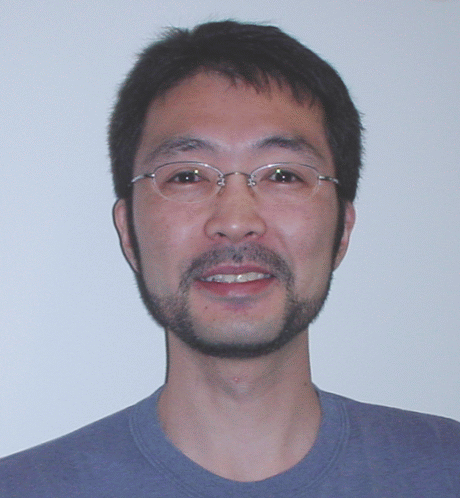 Shin’Ichi Konomi (木實新一)合作论文数Faculty of Arts and Science, Kyushu University2Sijie Xiong (熊思杰)合作论文数Laboratory for Image and Media Understanding, Kyushu University;Faculty of Information Science and Electrical Engineering, Kyushu University1Francisco Martinez-Contreras合作论文数1Hideaki Uchiyama合作论文数Kyushu University1
 Masanori Yamada合作论文数1
 Sergio A. Velastin合作论文数Department of Computer Science and Engineering, Universidad Carlos III de Madrid Leganés1
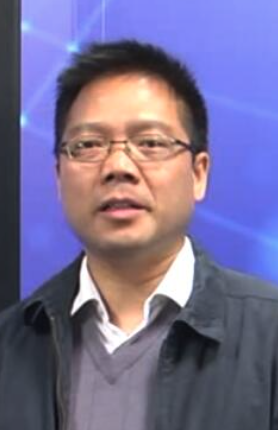 Yuncheng Jiang (蒋运承)合作论文数School of Computer Science, South China Normal University;School of Artificial Intelligence, South China Normal University1
 Hossein Ragheb合作论文数Renishaw PLC;Renishaw1
 Pavel Celeda合作论文数Masaryk University1
 Carlos Orrite合作论文数Centro Politecnico Superior, University of Zaragoza1
 Jan Vykopal合作论文数Masaryk University1
 Elias Herrero Jaraba合作论文数Aragon Institute for Engineering Research, University of Zaragoza1




