In agent-based social simulation, crowd models are used to generate agent behaviors that should correspond closely to human crowds. Despite significant progress in this area, many existing crowd models do not yet account for important cultural factors in crowd behavior, and even more so, for mixed-culture crowds. Moreover, evaluation of crowd models accounting for culture is particularly difficult, e.g., as controlled experiments are more difficult to set up, due to lack of subjects from different cultures. In this paper we examine the impact of cultural differences on crowd dynamics in pedestrian and evacuation domains. We account for micro-level cultural attributes: personal spaces, speed, pedestrian avoidance side and group formations. We then quantitatively validate the macro-level predictions of an agent-based simulation utilizing these against data from web-cam movies of human pedestrian crowds recorded in five different countries: Iraq, Israel, England, Canada and France. Using the validated simulations, we investigate the impact of each micro-level attribute on the resulting macro level behavior. We also examine the impact of mixed cultures on macro-level behavior. In the evacuation domain, we use an established simulation system to investigate cultural differences reported in the literature, and additionally explore the resulting macro level behavior.
In this paper we describe a method for modeling social behavior of large groups, and apply it to the problem of predicting potential violence during demonstrations. We use qualitative reasoning techniques which to our knowledge have never been applied to modeling crowd behaviors, nor in particular to demonstrations. Such modeling may not only contribute to the police decision making process, but can also provide a great opportunity to test existing theories in social science. We incrementally present and compare three qualitative models, based on social science theories. The results show that while two of these models fail to predict the outcomes of real-world events reported and analyzed in the literature, one model provide a good results. Moreover, in this paper we examine whether machine learning techniques such as decision trees may provide better predictions than QR models. While the results show that the machine learning techniques provide accurate predictions, a slightly better prediction than our QR model, we claim that QR approach is sensitive to changes in contrast to decision tree, and can account for what if scenarios. Thus, using QR approach is better for reasoning regarding the potential violence level to improve the police decision making process.
In creating an evacuation simulation for training and planning, realistic agents that reproduce known phenomenon are required. Evacuation simulation in the airport domain requires additional features beyond most simulations, including the unique behaviors of first-time visitors who have incomplete knowledge of the area and families that do not necessarily adhere to often-assumed pedestrian behaviors. Evacuation simulations not customized for the airport domain do not incorporate the factors important to it, leading to inaccuracies when applied to it. In this paper, we describe ESCAPES, a multiagent evacuation simulation tool that incorporates four key features: (i) different agent types; (ii) emotional interactions; (iii) informational interactions; (iv) behavioral interactions. Our simulator reproduces phenomena observed in existing studies on evacuation scenarios and the features we incorporate substantially impact escape time. We use ESCAPES to model the International Terminal at Los Angeles International Airport (LAX) and receive high praise from security officials.
Team BURST was founded in 2009. It consists mostly of un- dergraduate students, whose participation is a part of a robotics course at the Computer Science department at the university. Team BURST which competed in the RoboCup 2009 standard platform league, is first RoboCup senior team from Israel, ever. Our main research interests within the scope of the SPL are robust, realtime vision, machine learn- ing for gait generation and adaptation and architectures for humanoid decision-making (including teamwork).
 Gal A. Kaminka合作论文数Department of Computer Science, Bar Ilan University;Gonda Brain Research Center, Bar Ilan University4
 Natalie Fridman合作论文数The MAVERICK Group, Bar Ilan University3
 Alon Levy合作论文数1
 Xuezhi Wang合作论文数1
 Matthew Brown合作论文数1
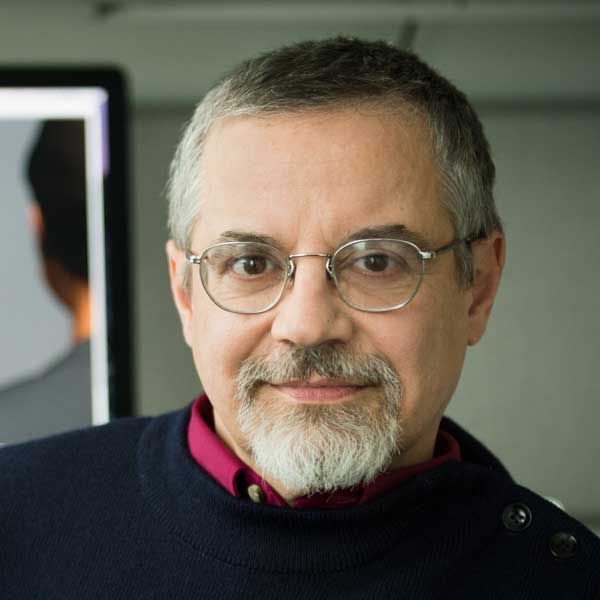 Stacy Marsella合作论文数Khoury College of Computer Sciences, Northeastern University;College of Science, Northeastern University1
 Matthew E. Taylor合作论文数Department of Computing Science, Faculty of Science, University of Alberta1
 Dikla Ramati合作论文数1Inbal Rika合作论文数1
 Milind Tambe合作论文数Center for Research in Computation and Society, Harvard University;John A Paulson School of Engineering and Applied Sciences, Harvard University;Google Research1Shira Epstein合作论文数1
 Matan Keidar合作论文数1Eran Polosetski合作论文数1Danielle Barda合作论文数1Emma Bowring合作论文数University of Southern California1
 Eli Kolberg合作论文数1Jeremy Shoshan合作论文数1Jason Tsai合作论文数University of Southern California1Ari Yakir合作论文数1Ankur Sheel合作论文数1Inbar Aharon合作论文数1Andrew Ogden合作论文数1Lior Shlomov合作论文数1




