Sample efficiency is one of the main bottlenecks for optimal decision making via reinforcement learning. Pretraining a policy to maximize the entropy of the state visitation can substantially speedup reinforcement learning of downstream tasks. It is still an open question how to maximize the state entropy in POMDPs, where the true states of the environment, or their entropy, are not observed. In this work, we propose to maximize the entropy of a sufficient statistic of the history, which is called an information state. First, we show that a recursive latent model that predicts future observations is an information state in this setting. Then, we provide a practical algorithm, called LatEnt, to simultaneously learn the latent model and a latent-based policy maximizing the corresponding entropy objective from reward-free interactions with the POMDP. We empirically show that our approach induces higher state entropy than existing methods, which translates to better performance on downstream tasks. As a byproduct, we open-source PROBE, the first benchmark to test reward-free pretraining in POMDPs.
We introduce Latent Particle World Model (LPWM), a self-supervised object-centric world model scaled to real-world multi-object datasets and applicable in decision-making. LPWM autonomously discovers keypoints, bounding boxes, and object masks directly from video data, enabling it to learn rich scene decompositions without supervision. Our architecture is trained end-to-end purely from videos and supports flexible conditioning on actions, language, and image goals. LPWM models stochastic particle dynamics via a novel latent action module and achieves state-of-the-art results on diverse real-world and synthetic datasets. Beyond stochastic video modeling, LPWM is readily applicable to decision-making, including goal-conditioned imitation learning, as we demonstrate in the paper. Code, and pre-trained models will be made publicly available. Video rollouts are available: https://sites.google.com/view/lpwm
Blockchain security is threatened by selfish mining, where a miner (operator) deviates from the protocol to increase their revenue. Selfish mining is exacerbated by adverse conditions: rushing (network propagation advantage for the selfish miner), varying block rewards due to block contents, called miner extractable value (MEV), and petty-compliant miners who accept bribes from the selfish miner. The state-of-the-art selfish-mining-resistant blockchain protocol, Colordag, does not treat these adverse conditions and was proven secure only when its latency is impractically high. We present MAD-DAG, Mutually-Assured-Destruction Directed-Acyclic-Graph, the first practical protocol to counter selfish mining under adverse conditions. MAD-DAG achieves this thanks to its novel ledger function, which discards the contents of equal-length chains competing to be the longest. We analyze selfish mining in both Colordag and MAD-DAG by modeling a rational miner using a Markov Decision Process (MDP). We obtain a tractable model for both by developing conservative reward rules that favor the selfish miner to yield an upper bound on selfish mining revenue. To the best of our knowledge, this is the first tractable model of selfish mining in a practical DAG-based blockchain. This enables us to obtain a lower bound on the security threshold, the minimum fraction of computational power a miner needs in order to profit from selfish mining. MAD-DAG withstands adverse conditions under which Colordag and Bitcoin fail, while otherwise maintaining comparable security. For example, with petty-compliant miners and high levels of block reward variability, MAD-DAG's security threshold ranges from 11
Recent advances in vision-language-action (VLA) models for robotics have highlighted the importance of reliable uncertainty quantification in sequential tasks. However, assessing and improving calibration in such settings remains mostly unexplored, especially when only partial trajectories are observed. In this work, we formulate for episodic tasks, where task-success confidence is produced along an episode, while success is determined at the end of it. We introduce a sequential extension of the Brier score and show that, for binary outcomes, its risk minimizer coincides with the VLA policy’s value function. This connection bridges uncertainty calibration and reinforcement learning, enabling the use of temporal-difference (TD) value estimation as a principled calibration mechanism over time. We empirically show that TD calibration improves performance relative to the state-of-the-art on simulated and real-robot data. Interestingly, we show that when calibrated using TD, the VLA's single-step action probabilities can yield competitive uncertainty estimates, in contrast to recent findings that employed different calibration techniques.
We propose a hierarchical entity-centric framework for offline Goal-Conditioned Reinforcement Learning (GCRL) that combines subgoal decomposition with factored structure to solve long-horizon tasks in domains with multiple entities. Achieving long-horizon goals in complex environments remains a core challenge in Reinforcement Learning (RL). Domains with multiple entities are particularly difficult due to their combinatorial complexity. GCRL facilitates generalization across goals and the use of subgoal structure, but struggles with high-dimensional observations and combinatorial state-spaces, especially under sparse reward. We employ a two-level hierarchy composed of a value-based GCRL agent and a factored subgoal-generating conditional diffusion model. The RL agent and subgoal generator are trained independently and composed post hoc through selective subgoal generation based on the value function, making the approach modular and compatible with existing GCRL algorithms. We introduce new variations to benchmark tasks that highlight the challenges of multi-entity domains, and show that our method consistently boosts performance of the underlying RL agent on image-based long-horizon tasks with sparse rewards, achieving over $150$% higher success rates on the hardest task in our suite and generalizing to increasing horizons and numbers of entities. Rollout videos are provided at: https://sites.google.com/view/hecrl.
Tactile imaging seeks to reconstruct the internal structure of soft objects through touch sensing, with applications in medical diagnosis and robotic manipulation. Recent self-supervised learning approaches have shown promising results, but rely on global, unstructured representations and robot-controlled sensing, limiting generalization and practical use. We propose Local Encoder for Spatial Sensing (LESS), an object-centric tactile representation that exploits the local nature of touch. The tactile scene is modeled as a grid of recurrent encoders with local receptive fields, whose states are fused to reconstruct 2D or 3D images of internal structure. This compositional design enables strong generalization: models trained on single-inclusion phantoms accurately image objects with multiple inclusions and varying sizes. The local structure further supports spatial uncertainty estimation. In addition, we enable hand-held tactile imaging via external pose tracking and human-like palpation data, and extend tactile imaging to full 3D reconstruction.
Flow optimization is fundamental to computer science, and particularly to computer networks. A prominent example is flow optimization in the global “backbone networks” that interconnect service providers’ datacenters. We tackle a major gap between theory and practice: While in theoretical models upcoming traffic demands are typically known, in real-world networks such information is rarely available a priori. In practice, addressing this gap often involves predicting upcoming demands and optimizing for these. Using data from production networks, we show that this approach can produce solutions that deviate significantly from the optimum. We propose a novel approach: leveraging empirical data to directly learn flow configurations that deliver robustly high performance, bypassing the need for explicit demand prediction. We prove the optimality of our methodology. We further show that by building on recent advances in large-scale optimization and deep learning, our approach enables efficient training on extensive data, picking out intricate patterns in real-world traffic. Through extensive empirical evaluation, we demonstrate that our approach significantly outperforms the state of the art in terms of both solution quality and online runtimes.
Behavioral cloning is a simple yet effective technique for learning sequential decision-making from demonstrations. Recently, it has gained prominence as the core of foundation models for the physical world, where achieving generalization requires countless demonstrations of a multitude of tasks. Typically, a human expert with full information on the task demonstrates a (nearly) optimal behavior. In this paper, we propose to hide some of the task's information from the demonstrator. This ``blindfolded'' expert is compelled to employ non-trivial *exploration* to solve the task. We show that cloning the blindfolded expert generalizes better to unseen tasks than its fully-informed counterpart. We conduct experiments of real-world robot peg insertion tasks with (limited) human demonstrations, alongside videogames from the Procgen benchmark. Additionally, we support our findings with theoretical analysis, which confirms that the generalization error scales with $\sqrt{I/m}$, where $I$ measures the amount of task information available to the demonstrator, and $m$ is the number of demonstrated tasks. Both theory and practice indicate that cloning blindfolded experts generalizes better with fewer demonstrated tasks. Project page with videos and code: [https://sites.google.com/view/blindfoldedexperts/home](https://sites.google.com/view/blindfoldedexperts/home)
Palpation, the use of touch in medical examination, is almost exclusively performed by humans. We investigate a proof of concept for an artificial palpation method based on self-supervised learning. Our key idea is that an encoder-decoder framework can learn a **representation** from a sequence of tactile measurements that contains all the relevant information about the palpated object. We conjecture that such a representation can be used for downstream tasks such as tactile imaging and change detection. With enough training data, it should capture intricate patterns in the tactile measurements that go beyond a simple map of forces -- the current state of the art. To validate our approach, we both develop a simulation environment and collect a real-world dataset of soft objects and corresponding ground truth images obtained by magnetic resonance imaging (MRI). We collect palpation sequences using a robot equipped with a tactile sensor, and train a model that predicts sensory readings at different positions on the object. We investigate the representation learned in this process, and demonstrate its use in imaging and change detection.
Contextual multi-armed bandits are a popular choice to model sequential decision-making. E.g., in a healthcare application we may perform various tests to asses a patient condition (exploration) and then decide on the best treatment to give (exploitation). When humans design strategies, they aim for the exploration to be fast, since the patient's health is at stake, and easy to interpret for a physician overseeing the process. However, common bandit algorithms are nothing like that: The regret caused by exploration scales with $\sqrt{H}$ over $H$ rounds and decision strategies are based on opaque statistical considerations. In this paper, we use an original classification view to meta learn interpretable and fast exploration plans for a fixed collection of bandits $\mathbb{M}$. The plan is prescribed by an interpretable decision tree probing decisions' payoff to classify the test bandit. The test regret of the plan in the stochastic and contextual setting scales with $O (\lambda^{-2} C_{\lambda} (\mathbb{M}) \log^2 (MH))$, being $M$ the size of $\mathbb{M}$, $\lambda$ a separation parameter over the bandits, and $C_\lambda (\mathbb{M})$ a novel classification-coefficient that fundamentally links meta learning bandits with classification. Through a nearly matching lower bound, we show that $C_\lambda (\mathbb{M})$ inherently captures the complexity of the setting.
Object manipulation is a common component of everyday tasks, but learning to manipulate objects from high-dimensional observations presents significant challenges. These challenges are heightened in multi-object environments due to the combinatorial complexity of the state space as well as of the desired behaviors. While recent approaches have utilized large-scale offline data to train models from pixel observations, achieving performance gains through scaling, these methods struggle with compositional generalization in unseen object configurations with constrained network and dataset sizes. To address these issues, we propose a novel behavioral cloning (BC) approach that leverages object-centric representations and an entity-centric Transformer with diffusion-based optimization, enabling efficient learning from offline image data. Our method first decomposes observations into Deep Latent Particles (DLP), which are then processed by our entity-centric Transformer that computes attention at the particle level, simultaneously predicting object dynamics and the agent's actions. Combined with the ability of diffusion models to capture multi-modal behavior distributions, this results in substantial performance improvements in multi-object tasks and, more importantly, enables compositional generalization. We present BC agents capable of zero-shot generalization to perform tasks with novel compositions of objects and goals, including larger numbers of objects than seen during training. We provide video rollouts on our webpage: https://sites.google.com/view/ec-diffuser.
Motion planning is a central challenge in robotics, with learning-based approaches gaining significant attention in recent years. Our work focuses on a specific aspect of these approaches: using machine-learning techniques, particularly Support Vector Machines (SVM), to evaluate whether robot configurations are collision free, an operation termed “collision detection”. Despite the growing popularity of these methods, there is a lack of theory supporting their efficiency and prediction accuracy. This is in stark contrast to the rich theoretical results of machine-learning methods in general and of SVMs in particular. Our work bridges this gap by analyzing the sample complexity of an SVM classifier for learning-based collision detection in motion planning. We bound the number of samples needed to achieve a specified accuracy at a given confidence level. This result is stated in terms relevant to robot motion-planning such as the system's clearance. Building on these theoretical results, we propose a collision-detection algorithm that can also provide statistical guarantees on the algorithm's error in classifying robot configurations as collision-free or not.
Diffusion models have been used effectively in sequential tasks such as video prediction and robot trajectory generation. Existing approaches typically predict sequence segments autoregressively by denoising Gaussian noise. This iterative denoising process is time-consuming, a problem compounded by the autoregressive nature of sequence prediction. In this paper, we aim to expedite inference by leveraging the properties of the sequence prediction task. Drawing on recent work on deterministic denoising diffusion, we initialize the denoising process with a non-Gaussian source distribution obtained using the context available when predicting sequence elements. Our main insight is that starting from a distribution more closely resembling the target enables inference with fewer iterations, leading to quicker generation. We demonstrate the effectiveness of our method on diffusion for video prediction and in robot control using diffusion policies. Our method attains faster sequence generation with minimal loss of prediction quality, in some cases even improving performance over existing methods.
We present RoboArm-NMP, a learning and evaluation environment that allows simple and thorough evaluations of Neural Motion Planning (NMP) algorithms, focused on robotic manipulators. Our Python-based environment provides baseline implementations for learning control policies (either supervised or reinforcement learning based), a simulator based on PyBullet, data of solved instances using a classical motion planning solver, various representation learning methods for encoding the obstacles, and a clean interface between the learning and planning frameworks. Using RoboArm-NMP, we compare several prominent NMP design points, and demonstrate that the best methods mostly succeed in generalizing to unseen goals in a scene with fixed obstacles, but have difficulty in generalizing to unseen obstacle configurations, suggesting focus points for future research.
Manipulating objects is a hallmark of human intelligence, and an important task in domains such as robotics. In principle, Reinforcement Learning (RL) offers a general approach to learn object manipulation. In practice, however, domains with more than a few objects are difficult for RL agents due to the curse of dimensionality, especially when learning from raw image observations. In this work we propose a structured approach for visual RL that is suitable for representing multiple objects and their interaction, and use it to learn goal-conditioned manipulation of several objects. Key to our method is the ability to handle goals with dependencies between the objects (e.g., moving objects in a certain order). We further relate our architecture to the generalization capability of the trained agent, based on a theoretical result for compositional generalization, and demonstrate agents that learn with 3 objects but generalize to similar tasks with over 10 objects. Videos and code are available on the project website: https://sites.google.com/view/entity-centric-rl
Thermal soaring, a technique used by birds and gliders to utilize updrafts of hot air, is an appealing model-problem for studying motion control and how it is learned by animals and engineered autonomous systems. Thermal soaring has rich dynamics and nontrivial constraints, yet it uses few control parameters and is becoming experimentally accessible. Following recent developments in applying reinforcement learning methods for training deep neural-network (deep-RL) models to soar autonomously both in simulation and real gliders, here we develop a simulation-based deep-RL system to study the learning process of thermal soaring. We find that this process has learning bottlenecks, we define a new efficiency metric and use it to characterize learning robustness, we compare the learned policy to data from soaring vultures, and find that the neurons of the trained network divide into function clusters that evolve during learning. These results pose thermal soaring as a rich yet tractable model-problem for the learning of motion control.
The combination of Monte Carlo tree search and neural networks has revolutionized online planning. As neural network approximations are often imperfect, we ask whether uncertainty estimates about the network outputs could be used to improve planning. We develop a Bayesian planning approach that facilitates such uncertainty quantification, inspired by classical ideas from the meta-reasoning literature. We propose a Thompson sampling based algorithm for searching the tree of possible actions, for which we prove the first (to our knowledge) finite time Bayesian regret bound, and propose an efficient implementation for a restricted family of posterior distributions. In addition we propose a variant of the Bayes-UCB method applied to trees. Empirically, we demonstrate that on the ProcGen Maze and Leaper environments, when the uncertainty estimates are accurate but the neural network output is inaccurate, our Bayesian approach searches the tree much more effectively. In addition, we investigate whether popular uncertainty estimation methods are accurate enough to yield significant gains in planning.
We propose a new object-centric video prediction algorithm based on the deep latent particle (DLP) representation. In comparison to existing slot- or patch-based representations, DLPs model the scene using a set of keypoints with learned parameters for properties such as position and size, and are both efficient and interpretable. Our method, deep dynamic latent particles (DDLP), yields state-of-the-art object-centric video prediction results on several challenging datasets. The interpretable nature of DDLP allows us to perform ``what-if'' generation -- predict the consequence of changing properties of objects in the initial frames, and DLP's compact structure enables efficient diffusion-based unconditional video generation. Videos, code and pre-trained models are available: https://taldatech.github.io/ddlp-web
Meta reinforcement learning sets a distribution over a set of tasks on which the agent can train at will, then is asked to learn an optimal policy for any test task efficiently. In this paper, we consider a finite set of tasks modeled through Markov decision processes with various dynamics. We assume to have endured a long training phase, from which the set of tasks is perfectly recovered, and we focus on regret minimization against the optimal policy in the unknown test task. Under a separation condition that states the existence of a state-action pair revealing a task against another, Chen et al. (2022) show that $O(M^2 \log(H))$ regret can be achieved, where $M, H$ are the number of tasks in the set and test episodes, respectively. In our first contribution, we demonstrate that the latter rate is nearly optimal by developing a novel lower bound for test-time regret minimization under separation, showing that a linear dependence with $M$ is unavoidable. Then, we present a family of stronger yet reasonable assumptions beyond separation, which we call strong identifiability, enabling algorithms achieving fast rates $\log (H)$ and sublinear dependence with $M$ simultaneously. Our paper provides a new understanding of the statistical barriers of test-time regret minimization and when fast rates can be achieved.
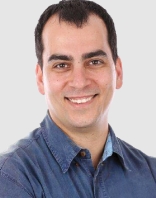 Shie Mannor合作论文数Jether Energy;Department of Electrical Engineering, Faculty of Electrical Engineering, Technion-Israel Institute of Technology;Machine Learning Center, Technion-Israel Institute of Technology;NVIDIA;Cornell-Tech23
 Pieter Abbeel合作论文数Department of Electrical Engineering and Computer Sciences, University of California, Berkeley;Amazon13
 Michael Schapira合作论文数Federmann Cyber Security Research Center, The Hebrew University of Jerusalem;Rachel and Selim Benin School of Computer Science and Engineering, Hebrew University of Jerusalem10
 Jurgenson Tom合作论文数Technion8
 Tal Daniel合作论文数Department of Electrical and Computer Engineering, Technion - Israel Institute of Technology8
 Dotan Di Castro合作论文数Yahoo Research6
 Mirco Mutti合作论文数Technion – Israel Institute of Technology5
 Thanard Kurutach合作论文数Cruise LLC5
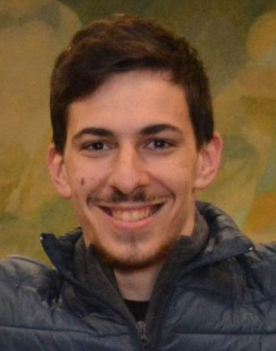 Zohar Rimon合作论文数Technion – Israel Institute of Technology4
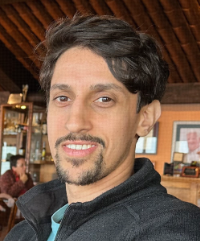 Dan Haramati合作论文数Computer Science Department, Brown University4
 Ev Zisselman合作论文数Department of Electrical & Computer Engineering, Technion - Israel Institute of Technology4Orr Krupnik合作论文数4
 Noga H Rotman合作论文数Hebrew University of Jerusalem4
 Ishai Menache合作论文数Microsoft Research4
 Yi Wu (吴翼)合作论文数4
 Srikanth Kandula合作论文数Microsoft Research4
 Ittay Eyal合作论文数The Andrew and Erna Viterbi Faculty of Electrical & Computer Engineering, Technion – Israel Institute of Technology;The Initiative For Cryptocurrencies & Contracts4
 Stuart Russell (斯图尔特·罗素)合作论文数Computer Science Division, Department of Electrical Engineering and Computer Sciences, University of California, Berkeley4
 Ron Dorfman合作论文数Electrical and Computer Engineering Department, Technion - Israel Institute of Technology4
 Yinlam Chow (周彥霖)合作论文数Google DeepMind4Roi Bar-Zur合作论文数3
 Juan Luis Aparicio Ojea合作论文数Reshape Automation3
 Gal Leibovich合作论文数Intel Corporation3
 Idan Shenfeld合作论文数Massachusetts Institute of Technology3
 Edward Groshev合作论文数3Guy Jacob合作论文数Intel Labs3
 Carmel Rabinovitz合作论文数Dept Elect Engn, Technion3Gal Novik合作论文数3
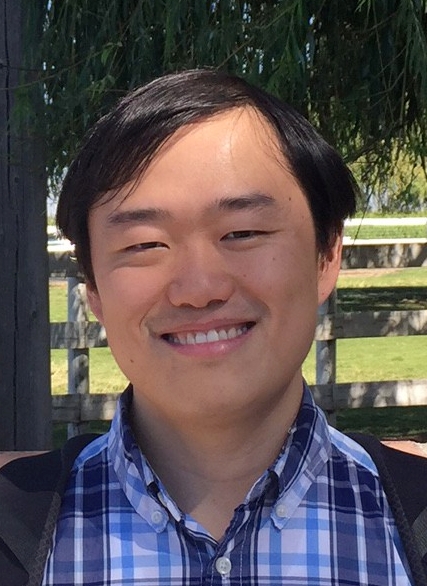 Yuandong Tian (田渊栋)合作论文数Recursive Superintelligence Inc.3
 Daniel J Mankowitz合作论文数Ethos3
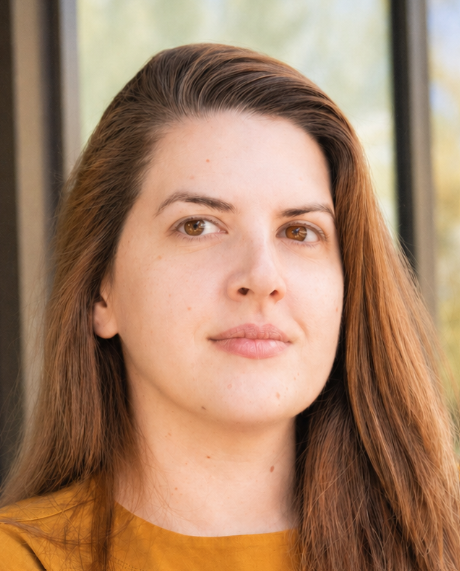 Georgia Gkioxari合作论文数Computing + Mathematical Sciences Department, Division of Engineering and Applied Science, California Institute of Technology3
 Mohammad Ghavamzadeh合作论文数Amazon3
 Yuxin Wu (吴育昕)合作论文数3
 Yonatan Glassner合作论文数3
 Ron Meir合作论文数Viterbi Faculty of Electrical Engineering, Technion Israel Institute of Technology3
 Garrett Thomas合作论文数Stanford University3Or Avner合作论文数2Gilad Adler合作论文数2Chaim Hoch合作论文数2Yarin Perry合作论文数2Carl Qi合作论文数2Shadi Endrawis合作论文数2
 Assaf Hallak合作论文数2
 Matan Sudry合作论文数Technion2
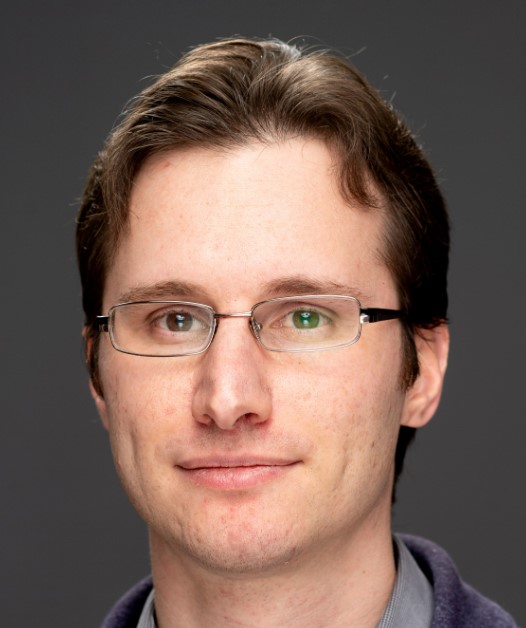 Sergey Levine合作论文数Department of Electrical Engineering and Computer Sciences, University of California, Berkeley2
 Daniel Soudry合作论文数Department of Electrical Engineering, Technion - Israel Institute of Technology2
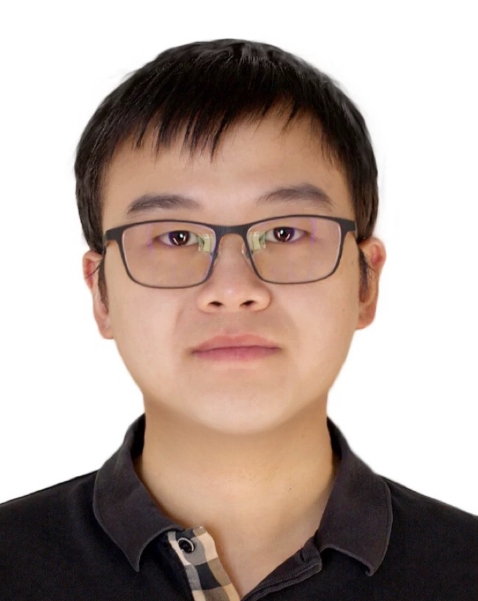 Jianlan Luo (罗剑岚)合作论文数Shanghai Innovation Institute2
 Angelina Wang合作论文数Department of Information Science, Cornell University;Cornell Tech2
 Felipe Vieira Frujeri合作论文数Microsoft Research2