A new type of a neutron velocity selector (nvs) is described, aiming at low costs and very low gamma-ray production. The first point was realized by using commercially available components, the second point was solved by using a new alloy containing Li-6 as absorbing material for the rotor. The nvs was granted a letters patent of the FRG with the number 19904562.
Ultra-small angle (U-SANS) and small angle neutron scattering (SANS) experiments are performed by two different types of instruments to cover a combined Q-range from ≈10−5Å−1 up to ≈1Å−1. Bonse-Hart cameras (double crystal diffractometers) are used for U-SANS experiments, whereas the "standard" SANS experiment is performed using a pinhole camera. In principle, the Q-range of both instrument classes overlaps. Typical U-SANS instruments like S18 (ILL), PCD (NIST), or DKD (FZJ) may reach maximum Q-vectors of ≈5 × 10⁻³. The disadvantage of these instruments is that they do not allow taking a full area image on a 2D position sensitive detector. On the other hand, the well-known pinhole instrument D11 at Institut Laue-Langevin (France) reaches a minimum Q-vector of 5 × 10⁻⁴Å−1 by use of large wavelengths and sample-to-detector distances (≈40m).
In Julich, a new high-resolution small-angle neutron scattering (SANS) instrument and reflectometer has been built. The principle of this instrument is a one-to-one image of an entrance aperture on a 2D position-sensitive detector by neutron reflection on a double-focusing toroidal mirror. It permits to perform SANS studies with a scattering wave vector resolution between 10(-3) and 10(-4) angstrom(-1) with considerable intensity advantages over pinhole-SANS instruments. To date, KWS-3 is the worldwide unique SANS instrument running on this principle. We present here the characterization of the image produced by the mirror and a measurement of the scattering from a diffraction grating. (C) 2004 Elsevier B.V. All rights reserved.
A neutron reflectometer with polarization analysis is being built on the basis of the HADAS spectrometer in the neutron guide hall at the research reactor FRJ-2 (DIDO) in Julich. The new instrument is optimized for reflectivity and diffuse scattering measurements under grazing incidence on layered magnetic structures with thicknesses in the nm range. In order to measure diffuse scattering with polarization analysis, the 2D position-sensitive detector has been equipped with a polarization analyser that consists of a stack of supermirrors parallel to the scattering plane. First tests have revealed that the resolution of the instrument is not reduced by the polarization analyser. A flipping ratio of 20 has been achieved already during the first experiment. (C) 2001 Elsevier Science B.V. All rights reserved.
A reflectometer with polarization analysis is being built on the basis of the HADAS spectrometer in the neutron guide hall at the research reactor FRJ-2 (DIDO) in Julich. The new instrument is optimized for reflectivity and diffuse magnetic scattering measurements with small incident angles on magnetic films with thicknesses in the nm range. The polarization analyser consists of a stack of supermirrors parallel to the scattering plane. The instrument contains a position sensitive detector with 1 mm spatial resolution, it covers a momentum transfer range 0.003 Angstrom(-1) < q < 2 Angstrom(-1) with a resolution of 0.002 Angstrom(-1). Samples up to 17 mm height can be measured. (C) 2000 Elsevier Science B.V. All rights reserved.
A reflectometer with polarization analysis is being built on the basis of the HADAS spectrometer in the neutron guide hall at the research reactor FRJ-2 (DIDO) in Jülich. For obtaining the optimal flux at the sample position, the performances of several monochromator designs have been calculated, e.g. focusing mirrors, mosaic monochromator crystals and bent perfect crystal monochromators. Under the given geometrical limitations a double monochromator with bent perfect Si crystals and vertical focusing has the best performance.
We report on a structural and magnetic investigation of Fe/δ-Mn multilayers. In situ LEED shows that Mn grows epitaxially on BCC Fe with a good crystallinity up to 30 Å. Reflectivity and small-angle diffuse scattering of synchrotron radiation on Fe/Mn/Fe sandwiches reveal sharp interfaces with correlated roughness. From MOKE measurements, evidence for non-collinear coupling between the Fe layers was found for Mn spacer thicknesses below 13 Å. With polarized neutron reflectometry and high-angle neutron diffraction we could not detect any sign of magnetic order inside the Mn layers.
Presently high-resolution instruments for small-angle neutron scattering use the conventional pinhole collimation. For high resolution these instruments have to be extremely long (80 m for D11). Much shorter instruments with high resolution and better intensity can be built with focusing mirrors. The high-quality mirrors, which were developed for the X-ray telescope ROSAT, served as prototypes for our neutron imaging mirrors. Recently we succeeded in building a 20 m Long focusing instrument at the ILL in Grenoble. The image has a very low parasitic hare. Aberrations are mainly due to gravity. Test experiments on polymeric precipitates down to Q = 4 x 10(-4) Angstrom(-1) were successfully carried out. In Julich we now are building a focusing SANS-instrument and reflectometer with major geometrical improvements of the mirror design. For the SANS-instrument, a Q-range down to Q approximate to 10(-4) Angstrom(-1) is expected. For the reflectometer, a perpendicular QI-range between 10(-2) Angstrom(-1) < Q(perpendicular to) < 10(-1) Angstrom(-1) is envisaged, with a Delta Q(perpendicular to) resolution of about Delta Q(perpendicular to) approximate to 10(-2) A(-1). (C) 2000 Elsevier Science B.V. All rights reserved.
In Jülich, a small-angle neutron scattering instrument and neutron reflectometer will be built, both of them use a double-focusing mirror, which produces an one-to-one image of the entrance on the detector. This neutron focusing technique, known since 50 years, has become practicable only recently, since very smooth mirror surfaces were produced for X-ray space telescopes. The neutron mirrors are produced by the same technique. The focusing is especially good for high-resolution experiments (with the momentum transfer Q<10−3Å−1). Compared to pinhole collimation, the focusing technique in this region has intensity advantages of several orders of magnitude. In this contribution mainly the influence of the shape of the mirror and the influence of gravity on the quality of the image is discussed. We explain, how these effects can be minimized.
The first neutron backscattering instrument was developed about 30 years ago, and since this time, mainly silicon wafers were used as monochromator- and analyser-crystals. GaAs is another candidate for backscattering. The internal strains of GaAs wafers with a diameter of 10 cm were studied at five points of the diameter and reached a value Δa/a≈2.5×10−5. These strains could be removed by cutting the wafer in pieces of 8mm×8mm, giving a homogenous lattice constant within an experimental accuracy of Δa/a=±10−6. The experimental value of the integrated reflectivity of the (200)-reflex was determined to be R=0.2cm/s, which is in excellent agreement with the width of the plateau of the Ewald reflection curve. The energy resolution of GaAs is expected to be ten times better than that of silicon.
The invention relates to a velocity selector comprising a drive unit which has a horizontally disposed shaft. The velocity selector also comprises a rotor which is mounted on said shaft. Twisted fins are arranged in an interspaced manner on the longitudinal axis of said rotor and form through slots for neutrons. The inventive velocity selector is characterized in that the fins are comprised of an alloy which absorbs neutrons, especially of an Mg-Li alloy.
A new ultra-high-resolution neutron spin-echo spectrometer at the ILL, Grenoble, extends the time range for measurements of the intermediate scattering function S(q,t) far beyond what has previously been possible. This new dynamic range approaching the microsecond opens up the possibility for exploring dynamic phenomena which have been previously unobservable. The various design ideas for the three operational modes (standard, neutron optical focusing, and time of flight) will be presented. The standard and focusing configurations are currently operational. In the normal mode, Fourier times between 0.03 and 360ns and momentum transfers q between 0.01 and 0.6 Å−1 are accessible. Under focusing conditions, the smallest attainable q is about 0.002Å−1, and closes the gap to light scattering. Two examples of experiments will be presented: the reptation dynamics in an entangled linear polymer melt, and the superparamagnetic fluctuations of magnetic monodomain nano-particles.
A new ultra-high resolution neutron spin-echo spectrometer at the ILL (Grenoble) extends the time range for measurements of the intermediate scattering function S(Q,t) far beyond what has previously been possible. The spectrometer design is traditional, utilizing long neutron wavelengths (8–25 Å) and large, homogeneous precession coils to reach Fourier times approaching the microsecond. The standard operational mode is currently functional, providing a Fourier time range of 0.03–180 ns, and a momentum transfer between 0.01 and 0.2 Å−1. The other two operational modes (neutron optical focusing and time of flight) are also discussed.
Presently, high-resolution instruments for small-angle neutron scattering (SANS) use the conventional pinhole cameras. Far high resolution they have to be extremely long (80 m for D11). Much shorter instruments can be built with focusing mirrors [1-3]. So far, however, this principle was not successful because of the insufficient quality of conventional optical mirrors. Recently, we succeeded in building a 20 m long focusing instrument at the NSE spectrometer IN15 in the ILL Grenoble. It uses a 4 m long, high-quality mirror as developed for X-ray telescopes. The image has a sufficiently low parasitic halo. Test experiments on polymeric precipitates down to Q=4x10(-4) Angstrom(-1) were successfully carried out. We expect that the Q-range can be extended to approximate to 10(-4) Angstrom(-1).
Neutron small angle scatteiing is an efficient method to investigate mesoscopic structures in condensed matter physics, material science and biology, for dimensions between 1 and 103 nm, or Q-values between 10-2 and 10-5 A-I.The most common instrument is the slit hole camera [IJ with very long distances between entrance slit, sample and detector, e.g. up to 80 m for the well-known D 11 at the ILL in Grenoble.For very high resolution, the Bonse Hart camera covers a Q-range between l 0-4 and 10-5 A-I using a pair of parallel ideal silicon crystals as collimator [21.By multi-slit crystals the analyser can be multiplexed.Recently, we succeeded to build a prototype of a focusing camera [3] with a 4 m long copper-covered glass minor of very high quality; the entrance slit is imaged in the detector plane.For the first time, Q-values down to a few 10-4 A-I were reached, with a very low parasitic background.This instrument is well suited for pulsed sources because the detector is ojj'tl1e ptimary bean1, and the length is relatively small.
MUSICAL represents a concept for a neutron backscattering instrument designed to be used on a pulsed neutron source. By using many crystals as monochromators, the multiplexing effect should give an intensity gain compared to a conventional single monochromator spectrometer, which is proportional to the number of crystals. A novel multiple silicon crystal is used as the monochromator. Test experiments were performed using 21 unpolished silicon crystals each separated by 4.7 cm and temperature differences δT of 10 °C or 20 °C between neighbouring crystals. As expected the resolution function has a complicated structure. The energy width is estimated to be 400 neV which is close to the best energy resolution available on current backscattering spectrometers.
In the first part the principles of the neutron backscattering method are described and some simple considerations about the energy resolution and the intensity are presented. A prototype of a backscattering instrument, the first Julich instrument, is explained in some detail and a representative measurement is shown which was performed on the backscattering instrument IN10 at the ILL in Grenoble.In the second part a backscattering instrument designed for a pulsed neutron source is proposed. It is shown that a rather simple modification, which consists in the replacement of the Doppler drive of the conventional backscattering instrument by a multi silicon monochromator crystal (MUSICAL) leads to a very effective instrument, benefitting from the peak flux of the pulsed source.
Intensity distributions of the output beam of a perfect-crystal neutron interferometer recorded by a high-resolution position-sensitive detector are analysed. It was found that the interference pattern visibility is determined by an incoherent foundation of constant amplitude (no Moiré fringes were observed). A hypothesis about vibrations of the interferometer plates is presented. A modification of the setup following from this supposition increases the interference pattern visibility from 40% to 65–70%.
 A. Heidemann合作论文数Institut Laue-Langevin10
 L. Dohmen合作论文数9
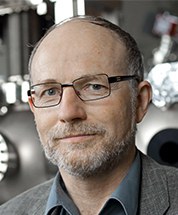 Thomas Brückel合作论文数Jülich Centre for Neutron Science, Forschungszentrum Jülich GmbH;University Aachen;Peter Grünberg Institute, Forschungszentrum Jülich GmbH8
 Dieter Richter合作论文数Forschungszentrum Julich8Emmanuel Kentzinger合作论文数8A. Kollmar合作论文数8T. Springer合作论文数7Ulrich Rücker合作论文数7P. Mikula合作论文数6
 Petr Lukas合作论文数6J. Töpler合作论文数4Miroslav Vrana合作论文数4
 Alexander Ioffe合作论文数Forschungszentrum Julich, MLZ3Volker Wagner合作论文数3H.J. Fabian合作论文数3M. Birr合作论文数3Dietmar Schwahn合作论文数3
 J. Saroun合作论文数3Klaus W Kehr合作论文数3Jörg Stellbrink合作论文数3C Hayes合作论文数3J.F Barthelemy合作论文数2C Lartigue合作论文数2s nerger合作论文数2N. Wakabayashi合作论文数2F. Mezei合作论文数2
 Bela Farago合作论文数343, ILL 4 3rd Floor2
 Georg Ehlers合作论文数Neutron Technologies Division, Oak Ridge National Laboratory2Günter Goerigk合作论文数2
 Claude Fermon合作论文数Nanomagnetism and Oxide Laboratory, Saclay Institute of Matter and Radiation, CEA2P. Schleger合作论文数2
 Gerald Badurek合作论文数Technische Universität Wien - Karlsplatz2Ian Anderson合作论文数St Joseph Heritage Healthcare2
 J. Voigt合作论文数2R. Kosfeld合作论文数2P Giraud合作论文数2Werner Schmatz合作论文数2V. Lottner合作论文数2W. Bergs合作论文数2Helmut Rauch合作论文数2B.A. Dasannacharya合作论文数2H.B. Brom合作论文数2Reinhard H Scherm合作论文数2H. Den Adel合作论文数2A. Heim合作论文数2Günter Siegfried Bauer合作论文数2H.-H. Grapengeter合作论文数2Wolfgang Buhrer合作论文数2




