We present a long-term multiwavelength spectrophotometric study of two representative Galactic luminous blue variables (LBVs), AG Carinae and HR Carinae. We find that the assumption of bolometric constancy leads independently to an extinction of E(B - V) = 0.65+/-0.05 mag for AG Car and 1.0+/-0.1 mag for HR Car. We derive a luminosity for AG Car, of order 10(6) L. for a distance of 6 kpc, that is consistent with model atmosphere analyses. During outburst, the wavelength at which antiphase continuum variability occurs steadily increases as the optical depth of the envelope increases. The star is now in the largest outburst of the last 20 years and we suggest that it may be in the process of forming dust. For HR Car, we derive a similar luminosity to AG Car, of order 10(6) L. for a distance of 6 kpc. The optical depth in the circumstellar environment appears to be greater, with the entire ultraviolet varying in antiphase with the visual. Both variables are characterized by similar ultraviolet behavior during quiescence and similar timescales, of about one decade, between outbursts. Finally, we present evidence for dust formation in the AG Car wind during the most recent outburst, which shows similar physical conditions to those encountered in classical dust-forming novae, and discuss the nature of the dust in the circumstellar reflection nebula. (C) 1996 American Astronomical Society.
This report summarizes the final results of an IUE investigation to search for signs of evolutionary changes in high-mass central stars of planetary nuclei, as evidenced by UV-optical fading over the lifetime of the satellite. The program is a continuation of an earlier investigation, expanding the target list to include more types of hot central stars and to obtain more spectra of previously observed stars. In order to compare the IUE fluxes of a central star obtained over a more-than-ten-year timespan, several steps were necessary, including reprocessing of very early spectra and correction for the sensitivity degradation of the SWP camera over time. The results indicate that while a few stars appear to have diminished UV fluxes compared to earlier IUE observations, the evidence for this is less than overwhelming due to the sparseness of the data. Those stars which emerge from this study as viable candidates for having faded are the cooler Of-type stars (O6f-O7f), i.e., those for which the change in spectral energy with increasing temperature is greatest. The report describes the data analysis steps and discusses the uncertainties in both the data and in the resulting fading rates. Estimates of stellar mass based on theoretical evolutionary rates are also provided.
Wind variability in OB stars may be ubiquitous, and a connection between projected stellar rotation velocity and wind activity is well established. However, the origin of this connection is unknown. To probe the nature of the rotation connection, several of the attendees at the workshop on Instability and Variability of Hot-Star Winds drafted an IUE observing proposal. The goal of this program was to follow three stars for several rotations to determine whether the rotation connection is correlative or causal. The stars selected for monitoring all have rotation periods ≤5 days. They were HD 50896 (WN5), HD 64760 (B0.5 Ib), and HD 66811 [ζ Pup; O4 If(n)]. During 16 days of nearly continuous observations in 1995 January (dubbed the "MEGA" campaign), 444 high-dispersion IUE spectra of these stars were obtained. This Letter presents an overview of the results of the MEGA campaign and provides an introduction to the three following Letters, which discuss the results for each star.
We model the evolution of a density shell propagating through the stellar wind of an early-type star, in order to investigate the effects of such shells on UV P Cygni line profiles. Unlike previous treatments, we solve the mass, momentum, and energy conservation equations, using an explicit time-differencing scheme, and present a parametric study of the density, velocity, and temperature response. Under the assumed conditions, relatively large spatial scale, large-amplitude density shells propagate as stable waves through the supersonic portion of the wind. Their dynamical behavior appears to mimic propagating ''solitary waves,'' and they are found to accelerate at the same rate as the underlying steady state stellar wind (i.e., the shell rides the wind). These hydrodynamically stable structures quantitatively reproduce the anomalous ''discrete absorption component'' (DAC) behavior observed in the winds of luminous early-type stars, as illustrated by comparisons of model predictions to an extensive IUE time series of spectra of zeta Puppis (O4f). From these comparisons, we find no conclusive evidence indicative of DACs accelerating at a significantly slower rate than the underlying stellar wind, contrary to earlier reports. In addition, these density shells are found to be consistent within the constraints set by the IR observations. We conclude that the concept of propagating density shells should be seriously reconsidered as a possible explanation of the DAC phenomenon in early-type stars.
AG Carinae is one of the prototypes of the class of Luminous Blue Variables. Since 1990 the star has continuously brightened in its visual continuum. We report on a multi-instrument and -wavelength observing campaign to monitor the current activity phase of AG Car. Ground-based photometry, polarimetry, spectroscopy, and space-ultraviolet spectroscopy and spectropolarimetry have been obtained.From the variability of the polarization at ultraviolet and optical wavelengths we detect significant intrinsic polarization. P(int) greater-than-or-equal-to 0.5% is a large value for a hot, luminous star, suggesting departures from spherical symmetry in the wind of AG Car. The intrinsic polarization is variable on a timescale of 2 months or less. The measured ultraviolet polarization (intrinsic + interstellar) dropped to 0.5% in 1992 May and returned to 1% in 1992 July. The results are interpreted in terms of a variable outflow with a density enhancement in the equatorial plane. A similar model was suggested for the related object R127 in the Large Magellanic Cloud. This geometry is reminiscent of the large-scale morphology of the gas nebula and dust ''jet'' surrounding AG Car. It is therefore likely that physical conditions close to the stellar surface are responsible for the geometry of the spatially resolved circumstellar material around AG Car.The line spectrum in the optical and ultraviolet is dominated by the effects of a massive stellar wind. Two wind components are detected: a slow dense wind, where the bulk of recombination radiation is emitted, and a faster, less dense wind, visible in the absorption components of ultraviolet P Cygni profiles. This wind structure is consistent with the geometry suggested by the spectropolarimetric observations, and it is reminiscent of the wind conditions prevailing in B[e] stars.An analysis of the photospheric and wind parameters has been performed using an expanding, spherically extended non-LTE model atmosphere. The temperature of AG Car decreased from 21,000 to 14,000 K over approximately 1 yr, with a corresponding increase of the photospheric radius by a factor of 2. Helium is found to be significantly overabundant, supporting the very evolved state of AG Car. Comparison with evolutionary models leads to an estimate for the zero-age main-sequence mass of (50 +/- 10) M.. Therefore the possibility cannot entirely be excluded that AG Car is in a post-red supergiant phase.Despite the drastic change of the photospheric conditions, the mass-loss rate did not increase. We find no evidence for a positive correlation between wind density and stellar radius. This makes models that explain the radius increase by opacity effects in the outflow unlikely. The mechanism responsible for the temperature and radius variations is still unknown but most likely has its origin in subphotospheric regions.
We derive estimates of the masses of planetary nebulae central stars (CSPN), based on their rate of optical-UV fading.
We report the observation of transient narrow absorption components (NACs) in the stellar wind of the O giant xi Per. Two sets of GHRS observations of the Si IV ultraviolet resonance doublet have been obtained. These features are extremely weak, with column densities of approximately 10(12) cm-2 and optical depths of order 0. 1. The features are narrow, less-than-or-equal-to 30 km s-1, and seem to occur in groups. If the NACs are due to the 1393 angstrom component, they represent previously undetected low-velocity discrete absorption components at v(rad) < -600 km s-1. If they are high-velocity features on the 1402 angstrom doublet component, they may represent the decay phase of the discrete absorption components at the terminal velocity. In either case, they are a new aspect of the NAC phenomenon that could not have been detected with previous ultraviolet spectrographs.
We continue the trend of finding discrepancies in the values of central star masses derived from photospheric line profile fitting and other methods in our analyses of ground-based and UV spectra of the nucleus of NGC 6826.
As part of an observing program using the International Ultraviolet Explorer (IUE) satellite to investigate the properties of stars within the cores of Galactic globular clusters, we have obtained three spectra of the cluster NGC 1904 (M79). All three were long-integration-time, short-wavelength (SWP) spectra obtained at the so-called ''center-of-light,'' and all three showed evidence of multiple sources within the IUE large aperture (21.''4 x 10''). We describe the analysis of these spectra and present evidence that the UV sources represent individual hot stars in the post-horizontal-branch stage of evolution. We see more UV-bright objects in the core of this cluster than expected from surveys of similar objects discovered in the outer regions of other globulars, leading us to conclude that dynamical effects in the core may significantly alter the path of evolution off the horizontal branch. The spectra also appear to be fitted more closely by models using Population I metal abundances than by Population II abundance models.
Recently a subgroup of SO galaxies has been identified with external gas rotating in retrograde motion with respect to the stars (e.g. NGC 1216, NGC 4546 and NGC 7007). All of these galaxies are seen almost edge-on and present an excellent testing ground for studying the connection between the stellar formation and the counterrotating (non-primordial) gas. Recently, the almost face-on and gas-rich SBO galaxy NGC 2217 was added to this list (Bettoni et al. 1990, AJ, 99, 1789), which presents a more favorable orientation for spectroscopic studies to determine its stellar population. We present three IUE long-wavelength region (LWP) observations of NGC 2217 taken at different orientations of the aperture centered on the galaxy nucleus. We have taken full advantage of the IUE spatial resolution capability to map the nuclear and bulge region. In addition, our multicolor CCD imagery obtained at CTIO allows us to identify some faint, but spatially resolved, dust extinction patterns which correlate with the weak IRAS fluxes.
 Sara Heap合作论文数NASA Goddard Space Flight Center14
 Ivan Hubeny合作论文数Department of Astronomy and Steward Observatory, University of Arizona9
 steven n shore合作论文数5Derck Massa合作论文数5sally r heap合作论文数4W. L. Waldron合作论文数3A. S. Endal合作论文数3olivia l lupie合作论文数2HJGLM LAMERS合作论文数2y kondo合作论文数2
 Charles Thomas Bolton合作论文数University of Toronto2Thierry Lanz合作论文数Department of Astronomy;University of Maryland;Department of Astronomy, University of Maryland2
 John Hutchings合作论文数National Research Council of Canada2
 Claus Leitherer合作论文数Space Telescope Science Institute2Dennis C. Ebbets合作论文数2K.L. Hallam合作论文数2Frederick C. Bruhweiler合作论文数2
 Robert Stencel合作论文数Univ. of Denver2Laurent Drissen合作论文数2
 Jo Puls合作论文数2
 Werner K Schmutz合作论文数Institut fur Astronomie2
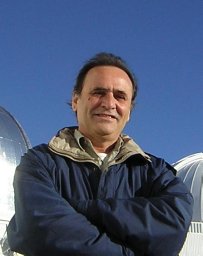 Augusto Damineli合作论文数Instituto de Astronomia, Geofísica e Ciências Atmosféricas da Universidade de São Paulo2Terry A. Matilsky合作论文数2Carmelle Robert合作论文数2RE SCHULTELADBECK合作论文数1RE Stencel合作论文数1S. Marchenko合作论文数1A. Nota合作论文数1Aj Willis合作论文数1m a smith合作论文数1M Perez合作论文数1LJ SMITH合作论文数1charles h robert合作论文数1SA Voels合作论文数1Keith Butler合作论文数1T Idiart合作论文数1Steven N. Shore合作论文数1Sr Heap合作论文数1J. P. Cassinelli合作论文数1
 David H. Cohen合作论文数Dept Phys & Astron, Swarthmore Coll1
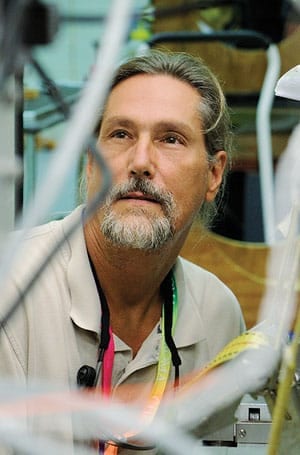 Stephan McCandliss合作论文数Department of Physics & Astronomy, Krieger School of Arts & Sciences, Johns Hopkins University1george sonneborn合作论文数1
 Richard L. White合作论文数Space Telescope Science Institute1
 Robert P. Kirshner合作论文数Department of Astronomy, Faculty of Arts and Sciences, Harvard University1
 Lex Kaper合作论文数Anton Pannekoek Institute, University of Amsterdam;Faculty of Science, University of Amsterdam;Department of Physics & Astronomy, Vrije Universiteit Amsterdam1
 Anthony F. J. Moffat合作论文数Département de Physique, Faculté des Arts et des Sciences, Université de Montréal1Alexander William Fullerton合作论文数1
 Richard Allen合作论文数Kimberly Research and Extension Center, University of Idaho;Department of Soil and Water Systems, College of Agricultural and Life Sciences, University of Idaho1K. Q. Truong合作论文数1




