We present characterization results from a photon counting imaging detector consisting of one microchannel plate (MCP) and an array of two readout integrated circuits (ROIC) that record photon position. The ROICs used in the position readout are the high event rate ROIC (HEROIC) devices designed to handle event rates up to 1 MHz per pixel, recently developed by the Ball Aerospace and Technologies Corporation in collaboration with the University of Colorado. An opaque cesium iodide (CsI) photocathode sensitive in the far-ultraviolet (FUV; 122-200 nm), is deposited on the upper surface of the MCP. The detector is characterized in a chamber developed by CU Boulder that is capable of illumination with vacuum-ultraviolet (VUV) monochromatic light and measurement of absolute ux with a calibrated photodiode. Testing includes investigation of the effects of adjustment of internal settings of the HEROIC devices including charge threshold, gain, and amplifier bias. The detector response to high count rates is tested. We report initial results including background, uniformity, and quantum detection efficiency (QDE) as a function of wavelength.
The next generation of astronomical photocathode / microchannel plate based UV photon counting detectors will overcome existing count rate limitations by replacing the anode arrays and external cabled electronics with anode arrays integrated into imaging Read Out Integrated Circuits (ROICs). We have fabricated a High Event Rate ROIC (HEROIC) consisting of a 32 by 32 array of 55 μm square pixels on a 60 μm pitch. The pixel sensitivity (threshold) has been designed to be globally programmable between 1 × 10³ and 1 × 10⁶ electrons. To achieve the sensitivity of 1 × 10³ electrons, parasitic capacitances had to be minimized and this was achieved by fabricating the ROIC in a 65 nm CMOS process. The ROIC has been designed to support pixel counts up to 4096 events per integration period at rates up to 1 MHz per pixel. Integration time periods can be controlled via an external signal with a time resolution of less than 1 microsecond enabling temporally resolved imaging and spectroscopy of astronomical sources. An electrical injection port is provided to verify functionality and performance of each ROIC prior to vacuum integration with a photocathode and microchannel plate amplifier. Test results on the first ROICs using the electrical injection port demonstrate sensitivities between 3 × 10³ and 4 × 10⁵ electrons are achieved. A number of fixes are identified for a re-spin of this ROIC.
We present a conceptual design for a high-resolution optical spectrograph appropriate for mounting at Cassegrain on a large aperture telescope. The design is based on our work for the Gemini High Resolution Optical Spectrograph (CUGHOS) project. Our design places the spectrograph at Cassegrain focus to maximize throughput and blue wavelength coverage, delivering R=40,000 resolving power over a continuous 320–1050 nm waveband with throughputs twice those of current instruments. The optical design uses a two-arm, cross-dispersed echelle format with each arm optimized to maximize efficiency. A fixed image slicer is used to minimize optics sizes. The principal challenge for the instrument design is to minimize flexure and degradation of the optical image. To ensure image stability, our opto-mechanical design combines a cost-effective, passively stable bench employing a honeycomb aluminum structure with active flexure control. The active flexure compensation consists of hexapod mounts for each focal plane with full 6-axis range of motion capability to correct for focus and beam displacement. We verified instrument performance using an integrated model that couples the optical and mechanical design to image performance. The full end-to-end modeling of the system under gravitational, thermal, and vibrational perturbations shows that deflections of the optical beam at the focal plane are <29 μm per exposure under the worst case scenario (<10 μm for most orientations), with final correction to 5 μm or better using open-loop active control to meet the stability requirement. The design elements and high fidelity modeling process are generally applicable to instruments requiring high stability under a varying gravity vector.
Traditional mirror manufacturing, particularly for astronomical purposes, requires substantial lead time, due to the nature of the materials and the grinding/polishing process. We propose a new technique for rapid, low-cost production of large, lightweight precision optics by fusing several technologies which in combination we call frozen membrane mirror technology (FMMT). FMMT combines well-understood subsystem technologies, including electrostatic control of membrane mirrors, adaptive optics, wavefront sensing and control, and inflatable structures technology to shorten production time. The basic technique is to control the surface of a reflective coated membrane mirror with electrostatic actuation and wavefront sensor feedback and freeze the membrane shape. We discuss the details of the concept and present results of early lab testing. We focus on the optical regime, but this technology has applicability from the microwave to x-ray spectral bands. Starting with a flexible membrane mirror, one can envision techniques for deployment of large apertures in space. (C) The Authors. Published by SPIE under a Creative Commons Attribution 3.0 Unported License. Distribution or reproduction of this work in whole or in part requires full attribution of the original publication, including its DOI.
WFIRST is the highest priority space mission of the Decadal review, however, it is unlikely to begin in this decade primarily due to a anticipated NASA budget that is unlikely to have sufficient resources to fund such a mission. For this reason we present a lower cost mission that accomplishes all of the WFIRST science as described in the Design Reference Mission 1 with a probe class design. This is effort is motivated by a desire to begin WFIRST in a timely manner and within a budget that can fit within the assets available to NASA on a realistic basis. The design utilizes dichroics to form four focal planes all having the same field of view to use the majority of available photons from a 1.2 meter telescope.
Kepler is NASA's first space mission dedicated to the study of exoplanets. The primary scientific goal is statistical-to estimate the frequency of planetary systems associated with sun-like stars, especially the detection of earth-size planets in the habitable zones. Kepler was launched into an Earth-trailing heliocentric "drift-away"orbit (period 372 days) in March 2009. The instrument detects the faint photometric signals of transits of planets across the stellar disks of those systems with orbital planes fortuitously oriented in our line of sight. Since the probability of such alignments is small, Kepler must observe a large number of stars. In fact, Kepler is monitoring approximately 150,000 stars with a 30-min cadence. The scientific goals led to the choice of a classical Schmidt telescope, and requirements on field-of-view, throughput, spectral bandpass, image quality, scattered light, thermal and opto-mechanical stability, and in-flight adjustment authority. We review the measurement requirements, telescope design, prelaunch integration, alignment, and test program, and we describe the in-flight commissioning that optimized the performance. The stability of the flight system has enabled increasing recognition of small effects and sophistication in data processing algorithms. Astrophysical noise arising from intrinsic stellar variability is now the dominant term in the photometric error budget. (C) The Authors. Published by SPIE under a Creative Commons Attribution 3.0 Unported License. Distribution or reproduction of this work in whole or in part requires full attribution of the original publication, including its DOI.
Few scientific discoveries have captured the public imagination like the explosion of exoplanetary science during the past two decades. This work has fundamentally changed our picture of Earth's place in the Universe and led NASA to make significant investments towards understanding the demographics of exoplanetary systems and the conditions that lead to their formation. The story of the formation and evolution of exoplanetary systems is essentially the story of the circumstellar gas and dust that are initially present in the protostellar environment; in order to understand the variety of planetary systems observed, we need to understand the life cycle of circumstellar gas from its initial conditions in protoplanetary disks to its endpoint as planets and their atmospheres. In this white paper response to NASA's Request for Information "Science Objectives and Requirements for the Next NASA UV/Visible Astrophysics Mission Concepts (NNH12ZDA008L)", we describe scientific programs that would use the unique capabilities of a future NASA ultraviolet (UV)/visible space observatory to make order-of-magnitude advances in our understanding of the life cycle of circumstellar gas.
Silicon immersion gratings (SIGs) offer several advantages over the commercial echelle gratings for high resolution infrared (IR) spectroscopy: 3.4 times the gain in dispersion or similar to 10 times the reduction in the instrument volume, a multiplex gain for a large continuous wavelength coverage and low cost. We present results from lab characterization of a large format SIG of astronomical observation quality. This SIG, with a 54.74 degree blaze angle (R1.4), 16.1 l/mm groove density, and 50x86 mm(2) grating area, was developed for high resolution IR spectroscopy (R similar to 70,000) in the near IR (1.1-2.5 mu m). Its entrance surface was coated with a single layer of silicon nitride antireflection (AR) coating and its grating surface was coated with a thin layer of gold to increase its throughput at 1.1-2.5 mu m. The lab measurements have shown that the SIG delivered a spectral resolution of R=114,000 at 1.55 mu m with a lab testing spectrograph with a 20 mm diameter pupil. The measured peak grating efficiency is 72% at 1.55 mu m, which is consistent with the measurements in the optical wavelengths from the grating surface at the air side. This SIG is being implemented in a new generation cryogenic IR spectrograph, called the Florida IR Silicon immersion grating spectromeTer (FIRST), to offer broad-band high resolution IR spectroscopy with R=72,000 at 1.4-1.8 um under a typical seeing condition in a single exposure with a 2kx2k H2RG IR array at the robotically controlled Tennessee State University 2-meter Automatic Spectroscopic Telescope (AST) at Fairborn Observatory in Arizona. FIRST is designed to provide high precision Doppler measurements (similar to 4 m/s) for the identification and characterization of extrasolar planets, especially rocky planets in habitable zones, orbiting low mass M dwarf stars. It will also be used for other high resolution IR spectroscopic observations of such as young stars, brown dwarfs, magnetic fields, star formation and interstellar mediums. An optimally designed SIG of the similar size can be used in the Silicon Immersion Grating Spectrometer (SIGS) to fill the need for high resolution spectroscopy at mid IR to far IR (similar to 25-300 um) for the NASA SOFIA airborne mission in the future.
Kepler is NASA's first space mission dedicated to the study of exoplanets. The primary scientific goal is statistical - to estimate the frequency of planetary systems associated with sun-like stars, especially the detection of earth-size planets in the Habitable Zones. Kepler was launched into an Earth-trailing heliocentric "drift-away" orbit (period = 372 days) in March 2009. The instrument detects the faint photometric signals of transits of planets across the stellar disks of those systems with orbital planes fortuitously oriented in our line-of-sight. Since the probability of such alignments is small Kepler must observe a large number of stars. In fact, Kepler is monitoring approximately 150,000 stars with a 30-minute cadence. These scientific requirements led to the choice of a classical Schmidt telescope, and requirements on field-of-view (FOV), throughput, spectral bandpass, image quality, scattered light, thermal and opto-mechanical stability and in-flight adjustment authority. We review the pre-launch integration, alignment and test program, and we describe the in-flight commissioning that optimized the optical performance of the observatory. The stability of the flight system has enabled increasing recognition of small effects and increasing sophistication in data processing algorithms. Astrophysical noise arising from intrinsic stellar variability is now the dominant term in the photometric error budget.
The Cosmic Origins Spectrograph (COS) was installed in the Hubble Space Telescope in May, 2009 as part of Servicing Mission 4 to provide high sensitivity, medium and low resolution spectroscopy at far- and near-ultraviolet wavelengths (FUV, NUV). COS is the most sensitive FUV/NUV spectrograph flown to date, spanning the wavelength range from 900{\AA} to 3200{\AA} with peak effective area approaching 3000 cm^2. This paper describes instrument design, the results of the Servicing Mission Orbital Verification (SMOV), and the ongoing performance monitoring program.
Kepler is NASA's first space mission dedicated to the study of exoplanets. The primary scientific goal is statistical - to estimate the frequency of planetary systems associated with sun-like stars. Kepler was launched into an Earth-trailing heliocentric "drift-away" orbit in March 2009, and is monitoring 150,000 stars. The instrument detects the faint photometric signals of transits of those systems whose orbital planes are oriented in our line-of-sight. An Earth-Sun analog will produce a transit depth of 80 parts per million (ppm), lasting for at most a few tens of hours, and repeating once per "year". The instrumentation was designed to provide photometric data with a precision of 20 parts per million in 6.5 hours for 12th magnitude stars, resulting in a signal-to-noise ratio of 4 for an Earth-Sun transit. The stability of the flight system enables the precision of the data that reveal subtle instrumental and astrophysical effects that in turn allow a deeper understanding of the performance of the hardware, to enhanced operational procedures, and to novel post-processing of the data. The data are approaching the sensitivity needed to detect transits of terrestrial planets. Intrinsic stellar variability is now the most significant component of the photometric error budget.
We present results of a study of a deployable version of the Advanced Technology Large-Aperture Space Telescope (ATLAST), designed to operate in a Sun-Earth L2 orbit. The primary mirror of the segmented 9.2-meter aperture has 36 hexagonal 1.315 m (flat-to-flat) glass mirrors. The architecture and folding of the telescope is similar to JWST, allowing it to fit into the 6.5 m fairing of a modest upgrade to the Delta-IV Heavy version of the Evolved Expendable Launch Vehicle (EELV). We discuss the overall observatory design, optical design, instruments, stray light, wavefront sensing and control, pointing and thermal control, and in-space servicing options.
 Sara Heap合作论文数NASA Goddard Space Flight Center21
 James C. Green合作论文数Department of Astrophysical & Planetary Sciences, College of Arts and Sciences, University of Colorado Boulder18
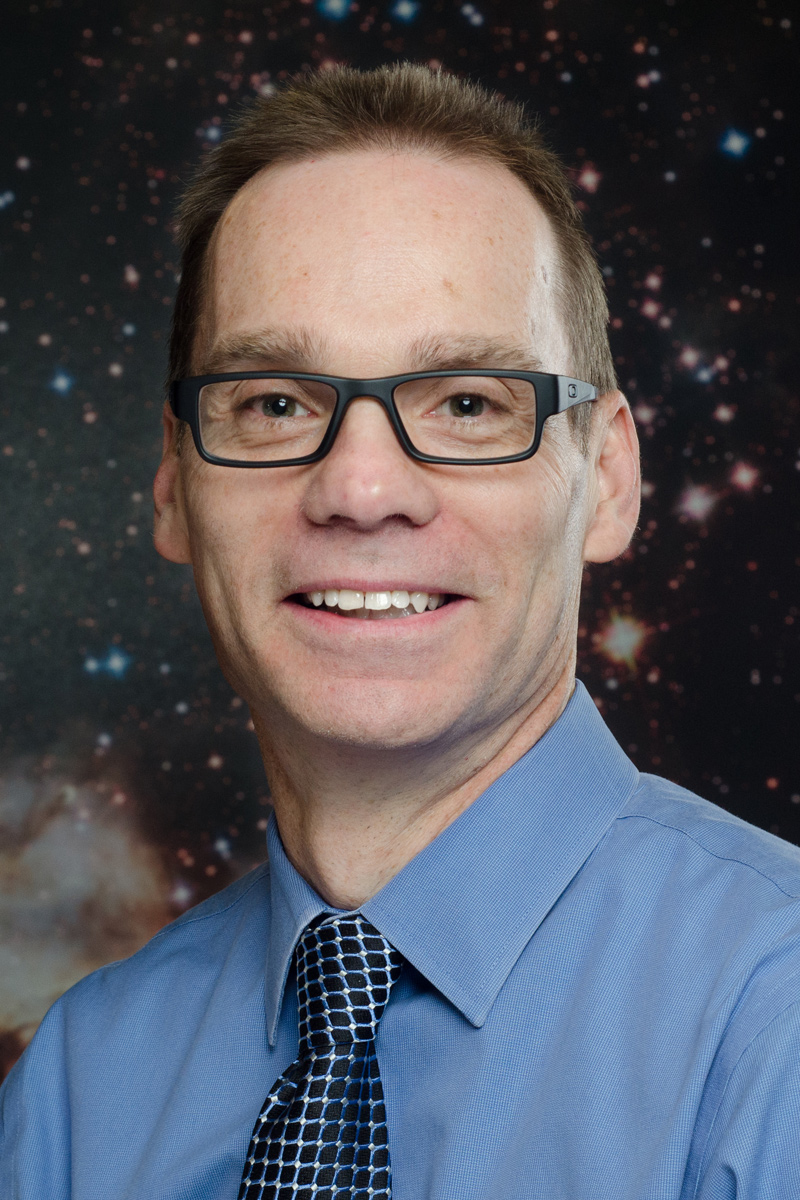 Kenneth Sembach合作论文数Space Telescope Science Institute14
 Jon Morse合作论文数14
 John C. Brandt合作论文数11harry w garner合作论文数10
 Blair D. Savage合作论文数University of Wisconsin-Madison10Eliot M. Malumuth合作论文数10Kris Davidson合作论文数9
 John Hutchings合作论文数National Research Council of Canada8
 Jeffrey L. Linsky合作论文数Department of Astrophysical and Planetary Sciences, College of Arts and Sciences, University of Colorado Boulder8
 J. Michael Shull合作论文数Department of Astrophysical and Planetary Sciences, College of Arts and Sciences, University of Colorado Boulder;Center for Astrophysics and Space Astronomy, College of Arts and Sciences, University of Colorado Boulder8Nolan R. Walborn合作论文数8
 Oswald Siegmund合作论文数Space Sciences Laboratory, University of California, Berkeley7Bruce E. Woodgate合作论文数7Frederick C. Bruhweiler合作论文数7Erik Wilkinson合作论文数7kenneth g carpenter合作论文数6Matthew Beasley合作论文数6Jason A. Cardelli合作论文数6Don J Lindler合作论文数6
 Kenneth G. Carpenter合作论文数6
 Morley M. Blouke合作论文数6Richard D. Robinson合作论文数5
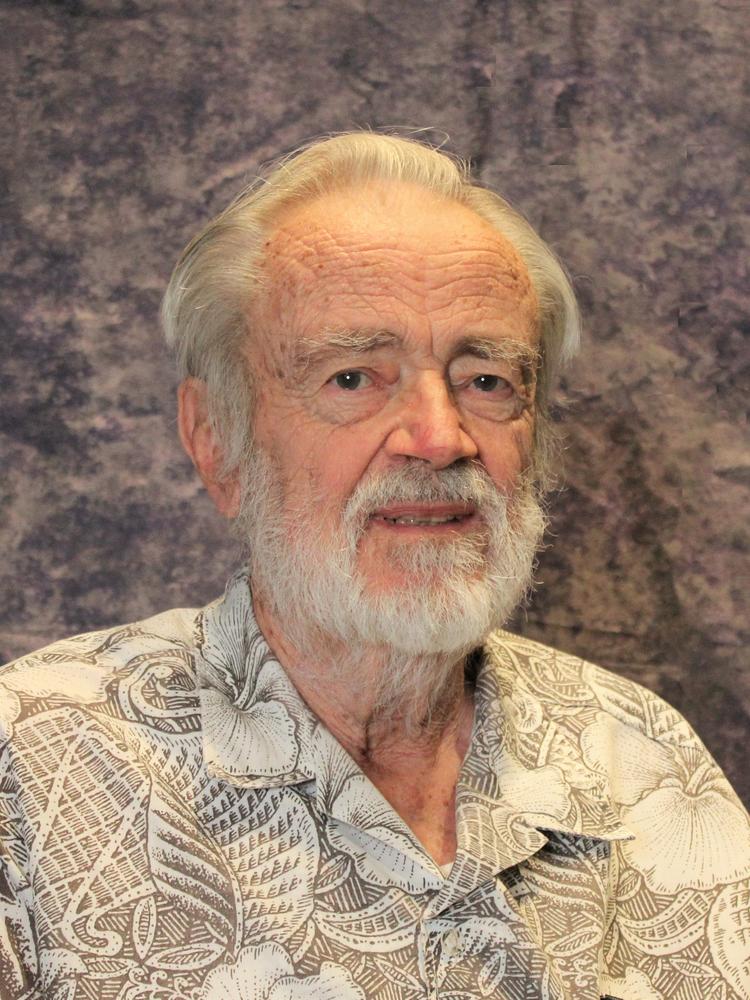 Edward Jenkins合作论文数Department of Astrophysical Sciences, Princeton University5
 Bruce Balick合作论文数Department of Astronomy, College of Arts and Sciences, University of Washington5
 Robert A. Woodruff合作论文数5A. Boggess合作论文数5Randy A. Kimble合作论文数5
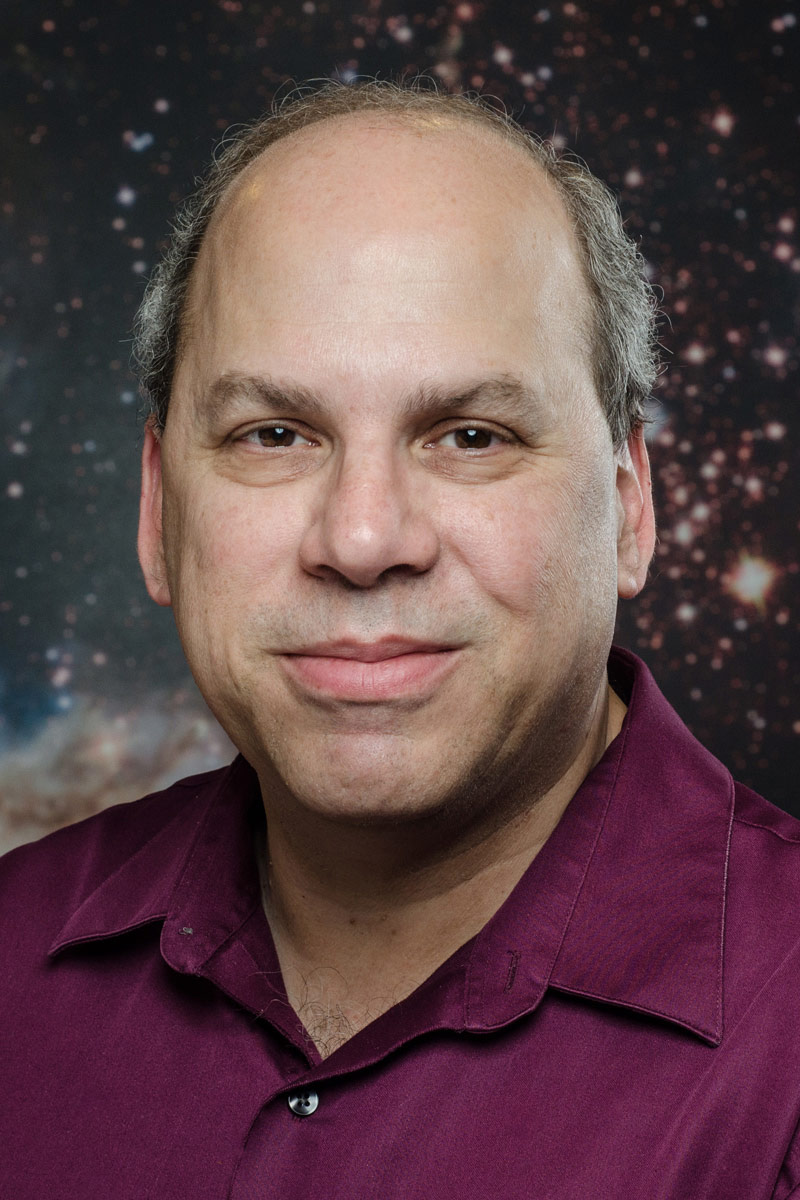 Marc Postman合作论文数Science Mission Office, Space Telescope Science Institute5William R. Oegerle合作论文数5
 John Bally合作论文数Department of Astrophysical and Planetary Sciences, College of Arts and Sciences, University of Colorado at Boulder;Center for Astrophysics and Space Astronomy, University of Colorado at Boulder5George F Hartig合作论文数5Steve Kilston合作论文数4sally r heap合作论文数4james decino合作论文数4alex harwit合作论文数4Stephen E. Kendrick合作论文数4steven kilston合作论文数4
 Paul A. Scowen合作论文数Arizona State University4Kenneth L Davidson合作论文数4
 Claus Leitherer合作论文数Space Telescope Science Institute4Eliot M Malumuth合作论文数4Lee Feinberg合作论文数4
 Roberta Humphreys合作论文数School of Physics and Astronomy, College of Science and Engineering, University of Minnesota4
 Adam Frank合作论文数Department of Physics and Astronomy, University of Rochester4Paul D. Atcheson合作论文数4Vic S. Argabright合作论文数4




