This paper develops an adaptive version of Mallat's scattering transform for signals on graphs. The main results are norm bounds for the layers of the transform, obtained from a version of a Beurling-Deny inequality that permits to remove the nonlinear steps in the scattering transform. Under statistical assumptions on the input signal, the norm bounds can be refined. The concepts presented here are illustrated with an application to traffic counts which exhibit characteristic daily and weekly periodicities. Anomalous traffic patterns which deviate from these expected periodicities produce a response in the scattering transform.
The main challenge addressed in this paper is to identify individual terms in a superposition of heat kernels on a graph. We establish geometric conditions on the vertices at which these heat kernels are centered and find bounds on the time parameter governing the evolution under the heat semigroup that guarantee a successful recovery. This result can be viewed as a type of deconvolution on a graph.
Phase retrieval in real or complex Hilbert spaces is the task of recovering a vector, up to an overall unimodular multiplicative constant, from magnitudes of linear measurements. In this paper, we assume that the vector is normalized, but retain only qualitative, binary information about the measured magnitudes by comparing them with a threshold. In more specific, geometric terms, we choose a sequence of subspaces in a real or complex Hilbert space and only record whether a given vector is closer to the subspace than to the complementary subspace. The subspaces have half the dimension of the Hilbert space and are independent, uniformly distributed with respect to the action of the orthogonal or unitary groups. The main goal of this paper is to find a feasible algorithm for approximate recovery based on the information gained about the vector from these binary questions and to establish error bounds for its approximate recovery. We provide a pointwise bound for fixed input vectors and a uniform bound that controls the worst-case scenario among all inputs. Both bounds hold with high probability with respect to the choice of the subspaces. For real or complex vectors of dimension n, the pointwise bound requires $$m \ge C \delta ^{-2} n \log (n)$$ and the uniform bound $$m \ge C \delta ^{-2} n^2 \log (\delta ^{-1} n)$$ binary questions in order to achieve an accuracy of $$\delta $$ . The accuracy $$\delta $$ is measured by the operator norm of the difference between the rank-one orthogonal projections corresponding to the normalized input vector and its approximate recovery.
We study the recovery of a finitely supported distribution, a complex linear combination of Dirac measures, from intensity measurements. The distribution μ=∑_j=1^sc_jδ_t_j is given by a coefficient vector c∈ℂ^s and its support {t_1, t_2, …, t_s} is contained in [0,Λ] for some Λ>0. The intensity measurements evaluate (squared) magnitudes of a set of linear functionals applied to μ, obtained by sampling μ̂, the Fourier transform of μ, or by evaluating differences between modulated samples. Following a strategy by Alexeev et al., the structure of the linear functionals, and hence of the non-linear magnitude measurement, is encoded with a graph, where the vertices represent point evaluations of μ̂ at {v_1, v_2, …, v_n}⊂ [-Ω,Ω] and each edge represents a (modulated) difference between vertices incident with it. We show that a Ramanujan graph with degree d ≥ 3 and n>6(1 + 6 /ln(s/ΛΩ)) s/1-2√(d-1)/d vertices provides M=(d+1)n magnitudes that are sufficient for identifying the complex measure up to an overall unimodular multiplicative constant. At the cost of including an additional oversampling step and with an additional requirement that n-1 is prime, we construct an explicit recovery algorithm that is based on the Prony method.
We answer a number of open problems in frame theory concerning the decomposition of frames into linearly independent and/or spanning sets. We prove that in finite dimensional Hilbert spaces, Parseval frames with norms bounded away from 1 can be decomposed into a number of sets whose complements are spanning, where the number of these sets only depends on the norm bound. We also prove, assuming the Kadison-Singer conjecture is true, that this holds for infinite dimensional Hilbert spaces. Further, we prove a stronger result for Parseval frames whose norms are uniformly small, which shows that in addition to the spanning property, the sets can be chosen to be independent, and the complement of each set to contain a number of disjoint, spanning sets.
This paper presents a novel approach to understanding the role of harmonic dynamics and gaining a deeper appreciation for its impact within and outside of quantum mechanics. This includes consequences of harmonic dynamics and the uncertainty principle for anomalous diffusion and for the time-frequency analysis of chirp signals. In this approach, we consider a contact transformation to view a system of canonical variables with coordinate $x$ and momentum $p_x$ in the context of a new system of "generalized" coordinates and momentum. This new system is first studied in the context of non-relativistic quantum mechanics. The classical analog is then explored by use of the Poisson bracket equation. From this, new implications are demonstrated in classical phenomena. One is for a new model of Anomalous and Normal Diffusion. In another, we introduce the concept of the "Mixed Fourier Transform" which explores a new Gaussian Fourier Transform kernel in terms of the generalized variables. This has the ultimate objective of "harmonizing" chirp signals or producing a harmonic signal from an otherwise non-harmonic chirp.
In this survey, we relate frame theory and quantum information theory, focusing on quantum 2-designs. These are arrangements of weighted subspaces which are in a specific sense optimal for quantum state tomography. After a brief introduction, we discuss the role of POVMs in quantum theory, developing the importance of quantum 2-designs. In the final section, we collect many if not most known examples of quantum-2 designs to date.
We consider sets of trace-normalized non-negative operators in Hilbert-Schmidt balls that maximize their mutual Hilbert-Schmidt distance; these are optimal arrangements in the sets of purity-limited classical or quantum states on a finite-dimensional Hilbert space. Classical states are understood to be represented by diagonal matrices, with the diagonal entries forming a probability vector. We also introduce the concept of spectrahedron arrangements which provides a unified framework for classical and quantum arrangements and the flexibility to define new types of optimal packings. Continuing a prior work, we combine combinatorial structures and line packings associated with frames to arrive at optimal arrangements of higher-rank quantum states. One new construction that is presented involves generating an optimal arrangement we call a Gabor-Steiner equiangular tight frame as the orbit of a projective representation of the Weyl-Heisenberg group over any finite abelian group. The minimal sets of linearly dependent vectors, the so-called binder, of the Gabor-Steiner equiangular tight frames are then characterized; under certain conditions these form combinatorial block designs and in one case generate a new class of block designs. The projections onto the span of minimal linearly dependent sets in the Gabor-Steiner equiangular tight frame are then used to generate further optimal spectrahedron arrangements.
Region-of-interest computed tomography (ROI CT) aims at reconstructing a region within the field of view by using only ROI-focused projections. The solution of this inverse problem is challenging and methods of tomographic reconstruction that are designed to work with full projection data may perform poorly or fail when applied to this setting. In this work, we study the ROI CT problem in the presence of measurement noise and formulate the reconstruction problem by relaxing data fidelity and consistency requirements. Under the assumption of a robust width prior that provides a form of stability for data satisfying appropriate sparsity-inducing norms, we derive reconstruction performance guarantees and controllable error bounds. Based on this theoretical setting, we introduce a novel iterative reconstruction algorithm from ROI-focused projection data that is guaranteed to converge with controllable error while satisfying predetermined fidelity and consistency tolerances. Numerical tests on experimental data show that our algorithm for ROI CT is competitive with state-of-the-art methods especially when the ROI radius is small.
We study the minimum mean-squared error for 2-means clustering when the outcomes of the vector-valued random variable to be clustered are on two touching spheres of unit radius in n-dimensional Euclidean space and the underlying probability distribution is the normalized surface measure. For simplicity, we only consider the asymptotics of large sample sizes and replace empirical samples by the probability measure. The concrete question addressed here is whether a minimizer for the mean-squared error identifies the two individual spheres as clusters. Indeed, in dimensions n ≥ 3, the minimum of the mean-squared error is achieved by a partition that separates the two spheres and has unit distance between the points in each cluster and the respective mean. In dimension n=2, however, the minimizer fails to identify the individual spheres; an optimal partition is obtained by a separating hyperplane that does not contain the point at which the spheres touch.
Smooth orthogonal projections with good localization properties were originally studied in the wavelet literature as a way to both understand and generalize the construction of smooth wavelet bases on $L^{2}(\mathbb {R})$. Smoothness plays a critical role in the construction of wavelet bases and their generalizations as it is instrumental to achieve excellent approximation properties. In this paper, we extend the construction of smooth orthogonal projections to higher dimensions, a challenging problem in general for which relatively few results are found in the literature. Our investigation is motivated by the study of multidimensional nonseparable multiscale systems such as shearlets. Using our new class of smooth orthogonal projections, we construct new smooth Parseval frames of shearlets in $L^{2}(\mathbb {R}^{2})$ and $L^{2}(\mathbb {R}^{3})$.
Overview. This workshop focused on open problems in frame theory whose formulation contains a significant component from algebraic geometry. Bringing researchers in frame theory and algebraic geometry together spawned significant progress and generated additional topics of interest. The two main topics of the workshop were the construction of real and complex equiangular tight frames and phase retrieval, that is, the reconstruction of a vector, up to an overall unimodular factor, from the magnitudes of frame coefficients. The first topic, the construction of equiangular tight frames has a long history. Frames are families of vectors {fj}j∈J in a real or complex Hilbert space H which allow stable expansions. This is usually phrased in terms of frame bounds A,B > 0,
We present new connections among anomalous diffusion (AD), normal diffusion (ND) and the Central Limit Theorem. This is done by defining a point transformation to a new position variable, which we postulate to be Cartesian, motivated by considerations from super-symmetric quantum mechanics. Canonically quantizing in the new position and momentum variables according to Dirac gives rise to generalized negative semi-definite and self-adjoint Laplacian operators. These lead to new generalized Fourier transformations and associated probability distributions, which are form invariant under the corresponding transform. The new Laplacians also lead us to generalized diffusion equations, which imply a connection to the CLT. We show that the derived diffusion equations capture all of the Fractal and Non-Fractal Diffusion equations of O'Shaughnessy and Procaccia. However, we also obtain new equations that cannot (so far as we are able to tell) be expressed as examples of the O'Shaughnessy and Procaccia equations. These equations also possess asymptotics that are related to a CLT but with bi-modal distributions as limits. The results show, in part, that experimentally measuring the diffusion scaling law can determine the point transformation (for monomial point transformations). We also show that AD in the original, physical position is actually ND when viewed in terms of displacements in an appropriately transformed position variable. Finally, we show that there is a new, anomalous diffusion possible for bi-modal probability distributions that also display attractor behavior which is the consequence of an underlying CLT.
We aim to compute the first few moments of a high-dimensional random vector from the first few moments of a number of its low-dimensional projections. To this end, we identify algebraic conditions on the set of low-dimensional projectors that yield explicit reconstruction formulas. We also provide a computational framework, with which suitable projectors can be derived by solving an optimization problem. Finally, we show that randomized projections permit approximate recovery.
This paper examines the construction and properties of binary Parseval frames. We address two questions: When does a binary Parseval frame have a complementary Parseval frame? Which binary symmetric idempotent matrices are Gram matrices of binary Parseval frames? In contrast to the case of real or complex Parseval frames, the answer to these questions is not always affirmative. The key to our understanding comes from an algorithm that constructs binary orthonormal sequences that span a given subspace, whenever possible. Special regard is given to binary frames whose Gram matrices are circulants.
The construction of optimal line packings in real or complex Euclidean spaces has shown to be a tantalizingly difficult task, because it includes the problem of finding maximal sets of equiangular lines. In the regime where equiangular lines are not possible, some optimal packings are known, for example, those achieving the orthoplex bound related to maximal sets of mutually unbiased bases. In this paper, we investigate the packing of subspaces instead of lines and determine the implications of maximality in this context. We leverage the existence of real or complex maximal mutually unbiased bases with a combinatorial design strategy in order to find optimal subspace packings that achieve the orthoplex bound. We also show that maximal sets of mutually unbiased bases convert between coordinate projections associated with certain balanced incomplete block designs and Grassmannian 2-designs. Examples of maximal orthoplectic fusion frames already appeared in the works by Shor, Sloane and by Zauner. They are realized in dimensions that are a power of four in the real case or a power of two in the complex case.
The development of supersymmetric (SUSY) quantum mechanics has shown that some of the insights based on the algebraic properties of ladder operators related to the quantum mechanical harmonic oscillator carry over to the study of more general systems. At this level of generality, pairs of eigenfunctions of so-called partner Hamiltonians are transformed into each other, but the entire spectrum of any one of them cannot be deduced from this intertwining relationship in general -- except in special cases. In this paper, we present a more general structure that provides all eigenvalues for a class of Hamiltonians that do not factor into a pair of operators satisfying canonical commutation relations. Instead of a pair of partner Hamiltonians, we consider two pairs that differ by an overall shift in their spectrum. This is called coupled supersymmetry. In that case, we also develop coherent states and present some uncertainty principles which generalize the Heisenberg uncertainty principle. Coupled SUSY is explicitly realized by an infinite family of differential operators which admit orthonormal bases of eigenfunctions of generalized harmonic oscillators.
Binary Parseval frames share many structural properties with real and complex ones. On the other hand, there are subtle differences, for example that the Gramian of a binary Parseval frame is characterized as a symmetric idempotent whose range contains at least one odd vector. Here, we study binary Parseval frames obtained from the orbit of a vector under a group representation, in short, binary Parseval group frames. In this case, the Gramian of the frame is in the algebra generated by the right regular representation. We identify equivalence classes of such Parseval frames with binary functions on the group that satisfy a convolution identity. This allows us to find structural constraints for such frames. We use these constraints to catalogue equivalence classes of binary Parseval frames obtained from group representations. As an application, we study the performance of binary Parseval frames generated with abelian groups for purposes of error correction. We show that $Z_p^q$ is always preferable to $Z_{p^q}$ when searching for best performing codes associated with binary Parseval group frames.
Region-of-Interest (ROI) tomography aims at reconstructing a region of interest $C$ inside a body using only x-ray projections intersecting $C$ with the goal to reduce overall radiation exposure when only a small specific region of the body needs to be examined. We consider x-ray acquisition from sources located on a smooth curve $\Gamma$ in $\mathbb{R}^3$ verifying classical Tuy's condition. In this situation, the {\it non-trucated} cone-beam transform $D f$ of smooth densities $f$ admits an explicit inverse $Z$; however $Z$ cannot directly reconstruct $f$ from ROI-truncated projections. To deal with the ROI tomography problem, we introduce a novel reconstruction approach. For densities $f$ in $L^{\infty}(B)$ where $B$ is a bounded ball in $\mathbb{R}^3$, our method iterates an operator $U$ combining ROI-truncated projections, inversion by the operator $Z$ and appropriate regularization operators. Assuming only knowledge of projections corresponding to a spherical ROI $C \subset B$, given $\epsilon >0$, we prove that if $C$ is sufficiently large our iterative reconstruction algorithm converges uniformly to an $\epsilon$-accurate approximation of $f$, where the accuracy depends on the regularity of $f$ quantified in the Sobolev norm $W^5(B)$. This result shows the existence of a critical ROI radius ensuring the convergence of the ROI reconstruction algorithm to $\epsilon$-accurate approximations of $f$. We numerically verified these theoretical results using simulated acquisition of ROI-truncated cone-beam projection data for multiple acquisition geometries. Numerical experiments indicate that the critical ROI radius is fairly small with respect to the support region~$B$.
The development of supersymmetric (SUSY) quantum mechanics has shown that some of the insights based on the algebraic properties of ladder operators related to the quantum mechanical harmonic oscillator carry over to the study of more general systems. At this level of generality, pairs of eigenfunctions of so-called partner Hamiltonians are transformed into each other, but the entire spectrum of any one of them cannot be deduced from this intertwining relationship in general---except in special cases. In this paper, we present a more general structure that provides all eigenvalues for a class of Hamiltonians that do not factor into a pair of operators satisfying canonical commutation relations. Instead of a pair of partner Hamiltonians, we consider two pairs that differ by an overall shift in their spectrum. This is called coupled supersymmetry. In that case, we also develop coherent states and present some uncertainty principles which generalize the Heisenberg uncertainty principle. Coupled SUSY is explicitly realized by an infinite family of differential operators.
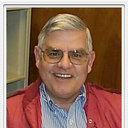 Donald J. Kouri合作论文数19
 Peter G. Casazza合作论文数Department of Mathematics, University of Missouri;Frame Research Center in Columbia15
 Manos Papadakis合作论文数Department of Mathematics, University of Houston12
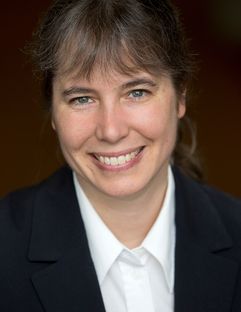 Gitta Kutyniok合作论文数Department of Mathematics, Faculty of Mathematics Informatics and Statistics, Ludwig-Maximilians Universität München11
 Vern Ival Paulsen合作论文数Department of Pure Mathematics, University of Waterloo;Institute for Quantum Computing, University of Waterloo8S. David Gertz合作论文数8Ibrahim Aboshady合作论文数7samuel ward casscells合作论文数6Jodie L. Conyers合作论文数6
 Gregory W Gladish合作论文数6Cameron Williams合作论文数5
 John Haas合作论文数5
 James T. Willerson合作论文数University of Texas Health5Deborah Vela合作论文数5
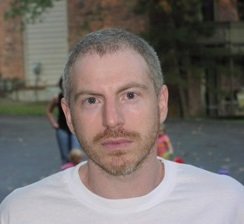 Demetrio Labate合作论文数North Carolina State University5
 Alireza Zarrabi合作论文数5
 Paul Cherukuri合作论文数Department of Surgical Oncology, MD Anderson Cancer Center5
 Mohammad Madjid合作论文数and Texas Heart Institute, University of Texas-Houston Health Science Center5Robert Azencott合作论文数University of Houston, USA5Reza M. Mazraeshahi合作论文数4Jie Yao合作论文数Dept Mech Engn, Texas Tech Univ4Dianna D. Cody合作论文数4Serhiy Lukovenkov合作论文数4Lorraine Frazier合作论文数4
 Wayne T. Wilner合作论文数Burroughs Corp.4D Vela合作论文数3Nikhil N. Pandya合作论文数3
 Simone Warzel合作论文数Department of Mathematics, School of Computation, Information and Technology, Technische Universitat Munchen3
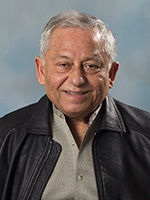 Fazle Hussain合作论文数Department of Mechanical Engineering, Whitacre College of Engineering, Texas Tech University3Christopher L. Liner合作论文数3Simon K. Alexander合作论文数3Amany Ahmed合作论文数University of Texas Health Sciences Center3
 Anando Sen合作论文数Translational and Clinical Research Institute, Faculty of Medical Sciences, Newcastle University;John Walton Muscular Dystrophy Research Centre, Newcastle University3Lilach Gavish合作论文数3
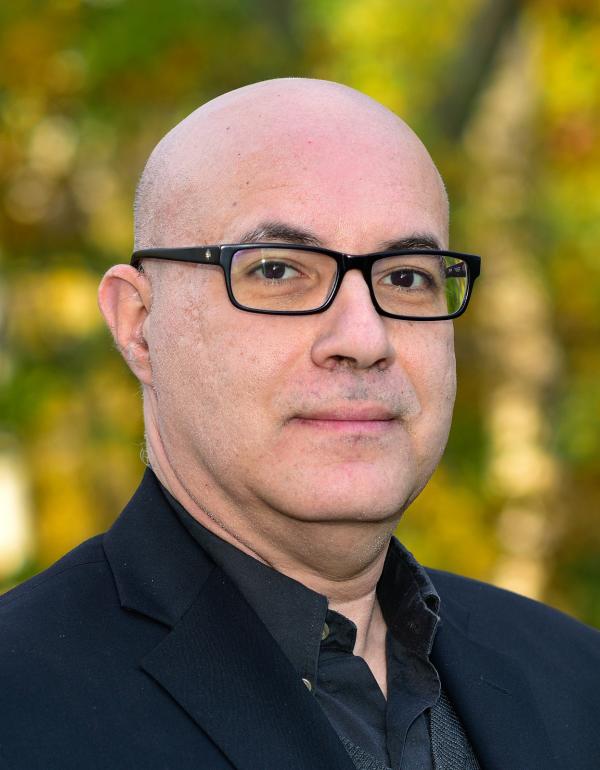 Radu Balan合作论文数Department of Mathematics, University of Maryland;Center for Scientific Computation and Mathematical Modeling, University of Maryland;Norbert Wiener Center for Harmonic Analysis and Applications, University of Maryland;Institute for Systems Research, University of Maryland;Info-Metrics Institute, American University3
 Anne-Cecile Lesage合作论文数Barcelona Supercomputing Center3
 Donald Kouri合作论文数Department of Physics, University of Houston;Institute for Digital Informatics and Analysis, University of Houston;Texas Heart Institute2P Cherukuri合作论文数2Zachery J. Baker合作论文数2Jacob E. McLaney合作论文数2paul ledbetter合作论文数2
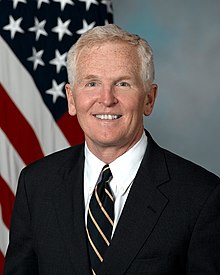 S. Ward Casscells合作论文数The University of Texas Health Science Center at Houston2Nathaniel Hammen合作论文数2
 Anupam Hazra合作论文数Department of Neuroscience, Thomas Jefferson University;Farber Institute for Neurosciences, Thomas Jefferson University;Thomas Jefferson University, Thomas Jefferson University2
 P. K. Singh合作论文数2
 Cesar Zen Vasconcellos合作论文数2Stanley P. Lipshitz合作论文数2Shikha Baid合作论文数2
 Xiaosheng Zhuang (庄晓生)合作论文数Department of Mathematics, College of Science, City University of Hong Kong2




