Larson’s problem Larson (2007, Problem 3) asks “Must the support of the Fourier transform of a wavelet contain a wavelet set?”. We give an affirmative answer to a non-measurable variant of this question by proving that the Fourier transform of a wavelet must contain a possibly non-measurable wavelet set. We also provide background results on Larson’s problem and propose two new related problems.
We solve the wavelet set existence problem. That is, we characterize the full-rank lattices Gamma C R-n and invertible n & times; n matrices A for which there exists a measurable set W such that {W +gamma : gamma is an element of Gamma} and {A(j)(W) : j is an element of Z} are tilings of R-n. The characterization is a non-obvious generalization of the one found by Ionascu and Wang (2006), which solved the problem in the case n = 2. As an application of our condition and a theorem of Margulis, we also strengthen a result of Dai, Larson, and the second author on the existence of wavelet sets by showing that wavelet sets exist for matrix dilations, all of whose eigenvalues lambda satisfy |lambda|>= 1. As another application, we extend the Ionascu-Wang characterization to higher dimensions for dilations whose product of two smallest eigenvalues in absolute value is >= 1. Finally, we show the existence of wavelet sets for all dilations A with integer entries satisfying |detA| =/ 1.
We generalize a theorem of Isbell asserting that every countably infinite doubly stochastic matrix has a positive generalized diagonal. As an application, we prove a support-reduction theorem for simultaneous lattice tilings. Namely, if a nonnegative measurable function bounded above by one tiles Euclidean space by translations along two full-rank lattices with integer multiplicities, then its pointwise support contains a possibly nonmeasurable set whose indicator function satisfies the same two tiling identities. The proof reduces the problem on each orbit of the group generated by the two lattices to an infinite matrix rounding theorem with integer row and column margins. This matrix theorem gives a \(0\)-\(1\) matrix with prescribed integer margins and support contained in the support of the original matrix. The result is motivated by simultaneous tiling questions arising in harmonic analysis and wavelet-set constructions.
If A is an integer valued, strictly expansive matrix, then there exists an orthonormal A-wavelet whose Fourier transform is compactly supported and smooth. We show that strongly connected diagonally dominant integer matrices are strictly expansive, and that integer matrices with determinant two are not strictly expansive with respect to particularly nice sets.
We answer a number of open problems in frame theory concerning the decomposition of frames into linearly independent and/or spanning sets. We prove that in finite dimensional Hilbert spaces, Parseval frames with norms bounded away from 1 can be decomposed into a number of sets whose complements are spanning, where the number of these sets only depends on the norm bound. We also prove, assuming the Kadison-Singer conjecture is true, that this holds for infinite dimensional Hilbert spaces. Further, we prove a stronger result for Parseval frames whose norms are uniformly small, which shows that in addition to the spanning property, the sets can be chosen to be independent, and the complement of each set to contain a number of disjoint, spanning sets.
We characterize when a coherent state or continuous frame for a Hilbert space may be sampled to obtain a frame, which solves the discretization problem for continuous frames. In particular, we prove that every bounded continuous frame for a Hilbert space may be sampled to obtain a frame.
We sharpen the constant in the $KS_2$ conjecture of Weaver \cite{We}, which was validated by Marcus, Spielman, and Srivastava \cite{MSS} in their solution of the Kadison--Singer problem. We then apply this result to prove optimal asymptotic bounds on the size of partitions in the Feichtinger conjecture.
INTRODUCTION:The visual search patterns of dentists and the areas that attract their attention when interpreting dental periapical radiographs are currently unknown. This research identifies areas and patterns of visual fixation when observing dental periapical radiographs.METHODS:In an observational study using eye tracking technology and a convenience sample of 44 observers, the interpretations of 4 dental periapical radiographs were recorded using Camtasia Software (TechSmith, Okemos, MI) with a gaze tracking "bubble" denoting where within the radiograph the observers' eyes gazed. The recorded observations included the scanning pattern, the area of first fixation, and revisits of areas. Also noted was whether the area of first fixation or revisit was radiopaque, radiolucent, or of normal radiodensity and whether it was a coronal or radicular area.RESULTS:The first fixation is more likely to be an area of high contrast that is either radiopaque or radiolucent compared with areas that were normal or of average gray scale. Significantly more revisits occurred on areas that were radiopaque and located in the radicular area. Of the 4 categorized scanning patterns, tooth by tooth scanning predominated.CONCLUSIONS:When interpreting dental periapical radiographs, significantly more observers initially fixated on areas of the radiograph that were of high contrast (ie, radiopaque or radiolucent) compared with "normal areas." A tooth by tooth scanning pattern was most commonly used.
OBJECTIVE: The main objective of this paper is to create a model to predict the amount of trauma experience at a level 1 trauma center a visiting surgeon can expect to obtain with near certainty, in a specific amount of time, to maintain trauma skills. DESIGN: The trauma database of level 1 trauma center (Saint Louis University Hospital, a military civilian partnership site) was examined to identify all urgent trauma cases between 1 October 2015 and 30 September 2017. Using retrospective data, a prospective hypothesis of a mixture of various case exposures a visiting surgeon may experience was made using Monte Carlo statistical methods, various probabilities for wartime relevant specialties were examined. SETTING: Saint Louis University Hospital, a level 1 trauma and tertiary referral center. PARTICIPANTS: Trauma patients between the dates October 1, 2015 and September 30, 2017 that under-went an operation at Saint Louis University Hospital. RESULTS: Orthopedics and general/trauma surgery had the largest number of urgent trauma cases with an average daily amount of 1.03 and 0.49 cases, respectively. Using Monte Carlo methods, various scenarios and probabilities were tabulated. For example, a general surgeon on shift for 10 days could expect to experience 4.9 (95% confidence interval 1-11) urgent cases or a visiting surgeon would require twenty-six 24-hour shifts in the summer to have a 95% certainty to experience at least 10 cases. CONCLUSIONS: Other than for orthopedics, prolonged training timelines would be required to expose a visiting surgeon to multiple operative trauma cases. Though a specific number of cases to achieve "readiness" is undefined, a visiting-surgeon model may be unacceptable if a large number of cases are required prior to military deployment. This predictive model could be extrapolated to other centers and assist in identifying adequate settings and durations of trauma training sites. Published by Elsevier Inc. on behalf of Association of Program Directors in Surgery.
We establish the linear independence of time-frequency translates for functions \(f\) on \(\mathbb {R}^d\) having one-sided decay \(\lim _{x \in H,\ |x|\rightarrow \infty } |f(x)| e^{c|x| \log |x|} = 0\) for all \(c>0\), which do not vanish on an affine half-space \(H \subset \mathbb {R}^d\).
This chapter reports on the current status of the HRT Conjecture (also known as the linear independence of time–frequency shifts conjecture), and discusses its relationship with a longstanding conjecture in algebra known as the zero divisor conjecture.
We propose a semiparametric approach to infer the existence of and estimate the location of a statistical change-point to a nonlinear high dimensional time series contaminated with an additive noise component. In particular, we consider a p dimensional stochastic process of independent multivariate normal observations where the mean function varies smoothly except at a single change-point. Our approach first involves a dimension reduction of the original time series through a random matrix multiplication. Next, we conduct a Bayesian analysis on the empirical detail coefficients of this dimensionally reduced time series after a wavelet transform. We also present a means to associate confidence bounds to the conclusions of our results. Aside from being computationally efficient and straight forward to implement, the primary advantage of our methods is seen in how these methods apply to a much larger class of time series whose mean functions are subject to only general smoothness conditions.
We establish the linear independence of time-frequency translates for functions f having one-sided decay lim (x ->infinity) vertical bar f(x)vertical bar e(cx log x)=0 for all c > 0. We also prove such results for functions with faster than exponential decay, that is, lim (x ->infinity) vertical bar f(x)vertical bar e(cx)=0 for all c > 0, under some additional restrictions.
We answer a number of open problems in frame theory concerning the decomposition of frames into linearly independent and/or spanning sets. We prove that in finite dimensional Hilbert spaces, Parseval frames with norms bounded away from 1 can be decomposed into a number of sets whose complements are spanning, where the number of these sets only depends on the norm bound. We also prove, assuming the Kadison-Singer conjecture is true, that this holds for infinite dimensional Hilbert spaces. Further, we prove a stronger result for Parseval frames whose norms are uniformly small, which shows that in addition to the spanning property, the sets can be chosen to be independent, and the complement of each set to contain a number of disjoint, spanning sets.
The fundamental notion of frame theory is redundancy. It is this property which makes frames invaluable in so many diverse areas of research in mathematics, computer science and engineering because it allows accurate reconstruction after transmission losses, quantization, the introduction of additive noise and a host of other problems. This issue also arises in a number of famous problems in pure mathematics such as the Bourgain-Tzafriri Conjecture and its many equivalent formulations. As such, one of the most important problems in frame theory is to understand subsets the spanning and independence properties of sucsets of a frame. In particular, how many spanning sets does our frame contain? What is the smallest number of linearly independent subsets we can partition the frame into? What is the least number of Riesz basic sequences does the frame contain with universal lower Riesz bounds? Can we partition a frame into subsets which are nearly tight? This last question is equivalent to the infamous Kadison-Singer Problem. In this section we will present the state of the art on partitioning frames into linearly independent and spanning sets. A fundamental tool here is the famous Rado-Horn Theorem. We will give a new recent proof of this result along with some non-trivial generalizations of the theorem.
We establish dilation theorems for non-tight frames with additional structure, i.e., frames generated by unitary groups of operators and projective unitary representations. This generalizes previous dilation results for Parseval frames due to Han and Larson, and Gabardo and Han. We also extend the dilation theorem for Parseval wavelets due to Dutkay, Han, Picioroaga, and Sun by identifying the optimal class of frame wavelets for which dilation into an orthonormal wavelet is possible.
We establish several results yielding linear independence of the affine system generated by psi in exchange for conditions on the space V(psi) of negative dilates. A typical assumption yielding linear independence is that the space V(psi) is shift-invariant. In particular, the affine system generated by a Parseval wavelet is linearly independent. As an illustration of our techniques, we give an alternative proof of the theorem of Linnell (see Proc. Amer. Math. Soc. 127 (1999), 3269-3277) on linear independence of Gabor systems.
The Feichtinger conjecture, if true, would have as a corollary that for each set E⊂[0,1] and Λ⊂Z, there is a partition Λ1,…,ΛN of Z such that for each 1⩽i⩽N, {exp(2πixλ):λ∈Λi} is a Riesz sequence. In this paper, sufficient conditions on sets E⊂[0,1] and Λ⊂R are given so that {exp(2πixλ)1E:λ∈Λ} can be uniformly partitioned into Riesz sequences.
This is an introduction to the problems connecting frame the- ory and the Kadison-Singer Problem. 1. Overview For an extensive introduction to the aspects of frame theory needed for an understanding of the Kadison-Singer Problem we refer to the survey paper (3), which is posted in this section of the web page "The Kadison-Singer Problem". In the following section we will just give the basic definitions for the concepts we will be working with. In Section 3, we will then state several conjectures in frame theory, which are equivalent to the Kadison-Singer Problem. In Section 5, we will discuss the Rado-Horn Theorem as one tool to attack in particular algorithmic aspects of the Kadison-Singer Problem.
In this paper we study the Feichtinger Conjecture in frame theory, which was recently shown to be equivalent to the 1959 Kadison-Singer Problem in C ∗ C^{*} -Algebras. We will show that every bounded Bessel sequence can be decomposed into two subsets each of which is an arbitrarily small perturbation of a sequence with a finite orthogonal decomposition. This construction is then used to answer two open problems concerning the Feichtinger Conjecture: 1. The Feichtinger Conjecture is equivalent to the conjecture that every unit norm Bessel sequence is a finite union of frame sequences. 2. Every unit norm Bessel sequence is a finite union of sets each of which is ω \omega -independent for ℓ 2 \ell _2 -sequences.
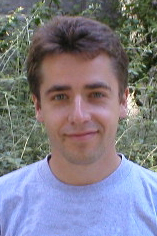 Marcin Bownik合作论文数Department of Mathematics, University of Oregon11
 Peter G. Casazza合作论文数Department of Mathematics, University of Missouri;Frame Research Center in Columbia9
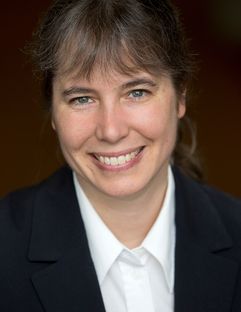 Gitta Kutyniok合作论文数Department of Mathematics, Faculty of Mathematics Informatics and Statistics, Ludwig-Maximilians Universität München7
 David R Larson合作论文数Department of Mathematics, Texas A&M University5
 Wojciech Czaja合作论文数Department of Mathematics, University of Maryland2
 Xingde Dai合作论文数2
 Vern Ival Paulsen合作论文数Department of Pure Mathematics, University of Waterloo;Institute for Quantum Computing, University of Waterloo2Z. Rzeszotnik合作论文数2
 Bernhard Bodmann合作论文数2
 Gestur Olafsson合作论文数Mathematisches Institut der Universität Göttingen2D Labate合作论文数1WQ Lim合作论文数1G Wu合作论文数1Maj Andrew Hall合作论文数1B. Lv合作论文数1M Wang合作论文数1Z. Zhang合作论文数1Xiuhong Yang合作论文数1
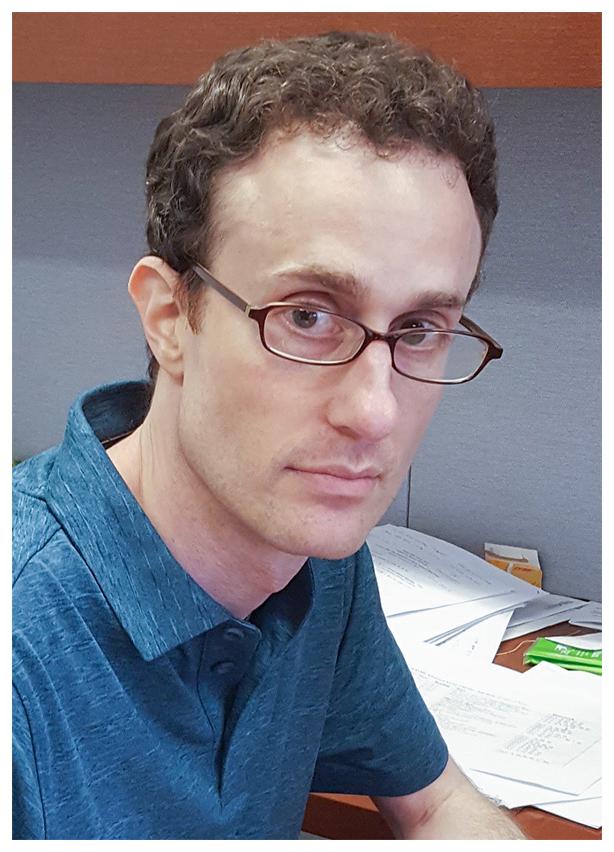 Adam W. Marcus合作论文数Institute of Mathematics, School of Basic Sciences, École Polytechnique Fédérale de Lausanne1Robert M. Steward合作论文数1
 Huamei Xiao合作论文数1Woodmansey Karl合作论文数1Glaser Jacob J合作论文数1
 Charles Fefferman合作论文数Department of Mathematics, Princeton University1
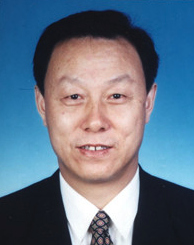 Defa Li (李德发)合作论文数College of Animal Science and Technology, China Agricultural University1
 Christopher Heil合作论文数School of Mathematics, College of Sciences, Georgia Institute of Technology1
 Daniel Freeman合作论文数1
 Kai Guo (郭凯)合作论文数School of Materials Science and Engineering, Shanghai University1Stephan Dahlke合作论文数Institut für Geometrie und Praktische Mathematik, RWTH1Ying Xiao (肖瑛)合作论文数1Zixue Cheng合作论文数Department of Computer Engineering,TheUniversity of Aizu1Eckart Schulz合作论文数1
 Keith F. Taylor合作论文数Department of Mathematics and Statistics, Dalhousie University1John F. Hatton合作论文数1Xiu-Qi Huang合作论文数1
 Karlheinz Grochenig合作论文数Faculty of Mathematics, University of Vienna1
 Khaled Daqrouq合作论文数Department of Communication and Electronics, Philadelphia University1
 John Jasper合作论文数Woods Hole Oceanographic Institution1Gabriele Steidl合作论文数Faculty of Mathematics and Computer Science1
 Gerd Teschke合作论文数Universität Bremen1Janet C. Tremain合作论文数1




