The Heuristic Programming Project of the Stanford University Computer Science Department is a laboratory of about fifty people whose main goals are to model the nature of scientific reasoning processes in various types of scientific problems and various areas of science and medicine; and to construct expert systems — programs that achieve high levels of performance on tasks that normally require significant human expertise for their solution.
OBJECTIVE: To determine the effects of intensive training in attention regulation skills implemented via a training system that integrates game scenarios with trainer-led coaching. BACKGROUND: There is a need for improved training methods and tools that support the systematic and intensive strengthening of core attention, working memory and executive function abilities following brain injury. We designed and developed a training system to provide guided experiential learning of attention regulation skills across multiple contexts requiring goal-directed functional cognition. The system consists of 'game' scenarios unfolding in a narrative arc integrated into a trainer-led coaching protocol, with goals of (a) promoting experiential learning by providing opportunities for trained skills to be practiced across a range of well-calibrated cognitive contexts, and (b) enhancing generalization by fostering the application of skills learned in the 'game-world' to personal life goals. DESIGN/METHODS: In this case series, six participants with history of TBI (> 6 months post-injury) and chronic mild-to-moderate executive dysfunction completed 7 individual weekly trainings in person or by tele-video and approximately 30 minutes of daily practice over 6-8 weeks. Participants responded to in-session questionnaires, as well as pre- and post-training measures of neuropsychological and self-reported functioning. RESULTS: All participants reported subjective improvements across a range of cognitive abilities, as well as increasing success with applying trained skills and strategies in both 'game' and personal contexts. Quantitative changes in neuropsychological test performance were also observed (average effect sizes, (d ) ̅= 0.52 and 0.34, for working memory and attention/executive functions, respectively). CONCLUSION: Guided experiential learning incorporating game-assisted training may be useful for improving attention regulation skills. Interactive game scenarios provide valuable opportunities for coaching, including modeling and providing feedback on the application of trained skills across varying cognitive challenges. Trainers may also help promote generalization by extending lessons learned from the 'game-world' to personal life.
Publications that have influenced the growth of artificial intelligence are often difficult to obtain. We first collected titles of several thousand publications from many well‐known sources and then selected about 2,000 titles considered to be especially influential. We have identified, and in a few cases created, online versions of about half of these “classics in AI.” Searchable text of the documents enables additional analysis of trends and influences. Integration into the rest of the AITopics information portal contextualizes the classic publications.
This paper first uses new interview data to recheck the validity of a theoretical construct - a structure devised to classify and explain evaluative attitudes toward presidential performance. It then uses the revalidated schematic to update and extend earlier findings on the content (i.e., substance) of the standards driving judgments of presidents. Finally it examines the cross-time stability (i.e., the extent of change and continuity) in the importance of particular evaluative criteria. Each set of findings emerges from 779 coded interviews with ordinary citizens (recruited between 2005 and 2011 to demographically match and mimic random national samples). The full sample was used to update the structure and to identify the content of the most frequently mentioned standards across seven years of interviews. To assess stability samples interviewed during the presidencies George W. Bush and Barack Obama were separated for comparison. These sub samples identify and explain their criteria for assessing past presidents, then state and explain their overall and policy-specific judgments of the president in office when they were interviewed. Stability results highlight the dissimilar cross-time significance of various presidential traits, actions and outcomes. While the results presidents get are always important, they can be matched or overshadowed by other grounds for judgment according to the expectations of the times, the performance category in focus, and the agendas and styles of particular presidents
News Finder automates the steps involved in finding, selecting, categorizing, and publishing news stories that meet relevance criteria for the artificial intelligence community. The software combines a broad search of online news sources with topic-specific trained models and heuristics. Since August 2010, the program has been used to operate the AI in the News service that is part of the AAAI AITopics website.
It is relatively easy, albeit time-consuming, for a person to find and select news stories that meet subjective judgments of relevance and interest to a community. NewsFinder is an AI program that automates the steps involved in this task, from crawling the web to publishing the results.NewsFinder incorporates a learning program whose judgment of interestingness of stories can be trained by feedback from readers. Preliminary testing confirms the feasibility of automating the service to write AI in the News for the AAAI.
As AIM researchers began to develop techniques for allowing systems to explain their reasoning, some researchers became intrigued by the potential educational role of the developing methods. It became clear that advanced computer-aided instruction (CAl) programming techniques could be applied and extended in the medical setting. Intelligent computer-aided instruction (ICAI) differs from traditional CAl in its use of AI techniques for representing both subject material and teaching strategies. Among ICAI programs, Clancey's GUIDON system described in this chapter is one of the largest and most complex. It contains all of the knowledge of MYCIN (Chapter 5) and uses a variety of techniques for mixedinitiative dialogue, student modeling, and response to partial student solutions. As a Stanford graduate student, Clancey had been involved in much of the early work on MYCIN and also became interested in ICAI and the possibility of adapting MYCIN for educational purposes. Thus GUIDON reflects the tremendous effort that went into building MYCIN's knowledge base of infectious disease rules, as well as nearly a decade of research in building ICAI systems. MYCIN's good performance in reaching decisions and giving explanations made a tutoring application of the knowledge base attractive. GUIDON also demonstrates the value of representing knowledge so that it can be applied in multiple settings, here for both consultation and teaching. This is the main advantage of separating
Computers with intelligence can design and run experiments, but learning from the results to generate subsequent experiments requires even more intelligence.
Computers with intelligence can design and run experiments, but learning from the results to generate subsequent experiments requires even more intelligence.
Computers with intelligence can design and run experiments, but learning from the results to generate subsequent experiments requires even more intelligence.
We propose and evaluate an agendaand justifi cation-based architecture for discovery systems that selects the next tasks to perform, as well as heuristics for use in discovery systems. This framework has many desirable properties: (1) it selects its own tasks to perform based upon how plausible they are judged to be; (2) it facilit ates the encoding of general discovery strategies using a variety of background knowledge; and (3) it tailors its behavior toward a user’s interests. Many experiments with a prototype discovery program called HAMB demonstrate that both reasons and estimates of interestingness contribute to performance in the domains of protein crystalli zation and patient rehabilit ation data. The program’s heuristics provide good initial solutions to problems encountered when implementing full y autonomous discovery systems.
Many factors have been identified as essential to, or at least associated with, creative people and the creative process – from divine inspiration to diligent perspiration. Work in psychology and some AI programs suggest useful characteristics of creative ideas and mechanisms that are likely components of a model of creativity. An essential part of the model presented here is the ability to reason at the meta-level.
The AAAI video archive is a central source of information about videotapes and films with information about AI that are stored digitally on other sites or physically in institutional archives. For each video, the archive includes a brief description of the contents and personae, one or more representative short clips for classroom or individual use, and the location of the archival copy (for example, at a university library).
This article looks at the life of Joshua Lederberg (1925-2008).
The American College of Medical Informatics is an honorary society established to recognize those who have made sustained contributions to the field. Its highest award, for lifetime achievement and contributions to the discipline now known more inclusively as biomedical informatics, is the Morris F. Collen Award. Dr. Collen's own efforts as a pioneer in the field stand as the embodiment of creativity, intellectual rigor, perseverance, and personal integrity. At most once a year, the College gives its highest recognition to an individual whose attainments have, throughout a career, substantially advanced the science and art of biomedical informatics. In 2006, the College was proud to present the Collen Award to Edward Hance Shortliffe, M.D., Ph.D. (Figure 1). As a physician, computer scientist, researcher, educator, and eloquent spokesperson for the field, Dr. Shortliffe's career contributions make him most deserving of the recognition embodied in the Collen Award. Figure 1 Edward H. Shortliffe, M.D., Ph.D. Edward “Ted” Shortliffe was born on August 28th, 1947, in Edmonton, Alberta, Canada (see Figure 2). Ted's father was a physician and hospital administrator and his mother was a high school English teacher. The family moved to Connecticut while Ted was a youngster (1954), and in 1962 he became a U.S. citizen. Figure 2 Ted Shortliffe, circa 1948. After graduating from high school and spending a year as an exchange student in Great Britain, Ted entered Harvard in the fall of 1966. As an undergraduate, he sought a research project in applied mathematics, which was the concentration at Harvard at the time that included computer science. An advisor steered Ted to the Laboratory of Computer Science (LCS) at Massachusetts General Hospital (MGH). The LCS, directed by Octo Barnett, would become Ted's first contact with the burgeoning field that would later become biomedical informatics. On that first visit, Ted was introduced to Bob …
 Edward A Feigenbaum (爱德华·费根鲍姆)合作论文数Stanford University30
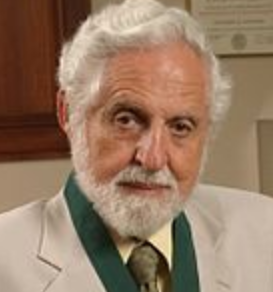 Carl Djerassi合作论文数Department of Chemistry, Stanford University18
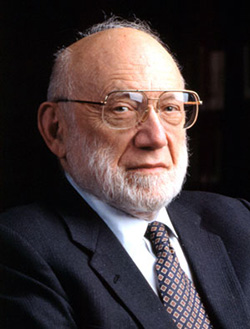 Joshua Lederberg合作论文数The Rockefeller University17
 Gregory Cooper合作论文数Department of Biomedical Informatics, University of Pittsburgh14
 Am Duffield合作论文数10
 Reid G. Smith合作论文数i2k Connect Inc.10
 Randall Davis合作论文数Department of Electrical Engineering and Computer Science, Massachusetts Institute of Technology9
 Tom Mitchell合作论文数Machine Learning Department, School of Computer Science, Carnegie Mellon University8
 Edward H. Shortliffe合作论文数Department of Biomedical Informatics, Vagelos College of Physicians and Surgeons, Columbia University8Gary Livingston合作论文数University of Massachusetts Lowell8
 Vanathi Gopalakrishnan合作论文数Center for Biomedical Informatics, University of Pittsburgh8georgia l sutherland合作论文数7Ea Feigenbaum合作论文数7
 William J. Clancey合作论文数Intelligent Systems Division, NASA Ames Research Center7Daniel N. Hennessy合作论文数7
 John Aronis合作论文数Department of Biomedical Informatics, School of Computing and Information, University of Pittsburgh7
 Oleg Jardetzky合作论文数School of Medicine, Stanford University6
 Constantin Aliferis合作论文数Institute for Health Informatics, University of Minnesota;Division of General Internal Medicine, University of Minnesota6
 Foster Provost合作论文数Technology Operations and Statistics Department, Leonard N. Stern School of Business, New York University;Fubon Center for Technology, Business and Innovation, Leonard N. Stern School of Business, New York University6
 Mel Rosenberg合作论文数Dept. of Human Microbiology, Goldscleger School of Dental Medicine, Sackler Faculty of Medicine, Tel Aviv University6Dh Smith合作论文数5
 Randolph A. Miller合作论文数Vanderbilt University Medical Center5
 Russ B. Altman合作论文数Department of Bioengineering, Schools of Engineering & Medicine, Stanford University5
 David C. Wilkins合作论文数Lemotion Therapeutics5Thomas C. Rindfleisch合作论文数4Leng, B.合作论文数4
 Mehmet Kayaalp合作论文数National Institutes of Health4Will Bridewell合作论文数The Institute for the Study of Learning and Expertise4Armand Buchs合作论文数4G. L. Sutherland合作论文数4
 Devika Subramanian合作论文数Department of Electrical and Computer Engineering, George R. Brown School of Engineering, Rice University4Alan M. Duffield合作论文数4
 Paul Hanbury合作论文数University of Pittsburgh Medical Center Pittsburgh4
 Johanna Moore合作论文数School of Informatics,University of Edinburgh4Craig Cornelius合作论文数4Alexander V. Robertson合作论文数3W.C. White合作论文数3De Forsythe合作论文数3Ambrosino R合作论文数3Giuse Nunzia B合作论文数3Barbara Hayes-Roth合作论文数3
 Michael Jonah Fine合作论文数Division of General Internal Medicine, Department of Medicine, School of Medicine, University of Pittsburgh;Center for Research on Health Care, Department of Medicine, University of Pittsburgh3Bruce S. Duncan合作论文数3Scott H. Clearwater合作论文数The University of Western Australia3
 Stanley N. Cohen合作论文数Department of Genetics, School of Medicine, Stanford University3
 Andrew C Scott合作论文数University of Arizona3
 James F. Brinkley合作论文数Structural Informatics Group;Department of Biological Structure;University of Washington;Structural Informatics Group, University of Washington3
 David L. Waltz合作论文数Center for Computational Learning Systems, Columbia University3




