Single-walled carbon nanotubes (SWCNTs) were synthesized using ethanol CVD to study the nucleation kinetics of nanotube growth. By counting the number density of SWCNTs, i.e., the number of nanotubes per unit area on the substrate, the nucleation process of SWCNT growth was studied extensively within a wide range of growth temperatures. A nucleation energy about 2.8 eV was obtained from the Arrhenius-like temperature dependence of the number density of SWCNTs. The big difference between nucleation energy and diffusion energy implies the growth route for ultralong SWCNTs, and our approach may afford control over nanotube structure. The novel approach of studying the influence of "measure length" on activation energy may open an opportunity to understand the physics behind growth of nanotubes.
We present a direct comparison of intensities of Raman scattering from the radial breathing mode of semiconducting single-walled carbon nanotubes under excitations resonant with different electronic transitions. Incident light frequency in our experiments is tuned to be resonant with either E(11) or E(22) transitions. We find that the difference in measured Raman intensities varies from one to several orders of magnitude, depending on the nanotube chiralities. The results are interpreted using the recently developed model for chirality dependence of the Raman cross section and taking into account the difference in decay rates for the exciton states excited by the E(11) and E(22) transitions. From our data it follows that the exciton state excited by the E(22) transition decays 3 to 10 times faster than the state excited by the E(11) transition. This conclusion is supported by the observation that E(22) Raman excitation profile linewidths are significantly broadened compared to those for E(11) excitation, which show a two-peak structure. These results provide additional evidence that dark excitonic states and trapping sites may contribute strongly to observed emission decay rates.
Biosensing applications of single-walled carbon nanotubes have been demonstrated in solid-state device structures 1 , 2 , 3 . Bioanalyte sensing schemes based on coupling of reversible nanotube fluorescence quenching to redox reactions paired to enzymatic peroxide generation have also been pursued 4 , 5 . Here we show a new approach to highly sensitive nanotube-based optical sensing. Single-walled carbon nanotubes interacting with dye–ligand conjugates—a redox-active dye molecule that is covalently bound to a biological receptor ligand (such as biotin in this case)—showed fluorescence quenching. Further interaction between the receptor ligand on the conjugates and target analytes (avidin in this case) induced the recovery of the quenched fluorescence, forming the basis of the sensing scheme. Nanomolar sensitivity was attained with high specificity for the target analyte. This is a versatile approach because a wide range of conjugation possibilities exists between the potential receptors and redox quenchers.
Electron beam induced structural transformations are investigated in single-wall carbon nanotubes (SWNTs), double-wall carbon nanotubes (DWNTs) and crossed nanotube junctions. The nanotubes studied here are synthesized by the chemical vapor deposition method. The response of the nanotubes to an electron beam is found to be influenced by the presence of coatings of amorphous carbon, graphene fragments and structural defects on the tube surface. The dependence of structural modifications on electron beam irradiation dose is measured. While nanotubes with amorphous carbon, graphene fragment coverage and/or defects undergo rapid transformation leading to structure disintegration, those without such coverage or defects are more resistant to beam damage. In addition, it is shown that the amorphous carbon coverage on the double-wall nanotubes can be transformed into graphene layers during electron beam irradiation of coated nanotubes. Finally, the relative stability of nanotube side-wall and end-walls are investigated through sub-threshold energy and above threshold energy irradiation of a model system, C60-filled nanotubes (Peapods). The data indicates that electron beams could be used to join nanotubes end-to-end without damaging the side-walls.
Based on the empirical nearest-neighbor tight-binding model, we predict that the dependence of the cross section of the resonance Raman scattering from the radial breathing mode of a carbon nanotube multiplied by the fourth power of the nanotube radius is a quadratic function of a newly introduced parameter characterizing nanotube chirality. This dependence reflects the dependence of the exciton-phonon coupling matrix element on the nanotube radius and chiral angle. We perform Raman scattering measurements on nanotubes in solution and confirm the predicted parabolic dependence assuming a close-to-uniform distribution of chiral angles in nanotube samples. The deviation of the experimental points from the parabola provides information about chirality distribution of nanotubes in a sample, which opens new horizons in characterization of samples containing nanotubes of different chiralities.
We present the results of Raman studies of the chirality dependence of electron-phonon coupling in carbon nanotubes. We demonstrate that a new parameter resulting from a tight binding derivation of the electron-phonon coupling is useful for analysing experimentally-determined radial breathing mode (RBM) intensities. We also provide a direct comparison of RBM intensities for 6 chiralities obtained with excitation of both the E,, and E,, transitions. Analysis of the observed intensity trends in terms of this new parameter demonstrates that the trend to weaker intensities as one excites at resonance with higher lying transitions results from differences in excited-state decay rates. Finally, we quantitate the magnitude of the matrix elements through modelling of RBM fundamental and overtone Raman excitation profiles using a time-dependent Raman formalism. Results for 5 chiralities show coupling in general to be weak. (c) 2006 WILEY-VCH Verlag GmbH & Co. KGaA, Weinheim.
Nanowires of magnetic metals (Fe, Co, Ho, Gd) have been synthesized inside the hollow interiors of single-wall carbon nanotubes (SWNTs) by filling SWNTs with precursor metal chlorides and subsequent reduction. SWNTs have been filled by either the melt-phase sealed-tube reaction or a solution-phase method. Among the metal chlorides investigated in this study, HoCl3 and GdCl3 filled the SWNTs to a significantly higher extent. The nanowires have been imaged by transmission electron microscopy (TEM), high-resolution transmission electron microscopy, and scanning transmission electron microscopy (STEM). X-ray energy dispersive spectroscopy carried out in conjunction with TEM and STEM confirmed the presence of metal chloride and metal nanowires.
Iron nanowires encapsulated in aligned carbon nanotube bundles show interesting magnetic properties. Besides the increased coercivity, Barkhausen jumps with 5 emu/g steps in magnetization are observed due to magnetization reversal or depinning of domains.
We report measurements of electrical resistivity, thermopower, and thermal conductivity of highly C60-filled single-wall carbon nanotubes and unfilled controls, from 1.5 to 300 K. The data suggest that the C60 chains provide additional conductive paths for charge carriers, increase the rate of phonon scattering, and block interior sites from sorbing other gas molecules.
Carbon nanotubes were discovered soon after the successful laboratory synthesis of fullerenes. Since their discovery in 1991, there has been intensive research activity in the area of carbon nanotubes, not only because of their fascinating structural features and properties, but also because of their potential technological applications. There is increasing experimental evidence to show that carbon nanotubes may find use in nanoelectronic devices, displays, and in hydrogen storage. In this article, we discuss various important aspects related to the synthesis, structure, characterization, and mechanism of formation of multi-walled and single-walled carbon nanotubes, followed by a presentation of the important electronic, mechanical, hydrogen storage, and other properties of the nanotubes. Doping, as well as other chemical manipulations with boron and nitrogen, bring about significant changes in the properties of the nanotubes. Carbon nanotubes also serve as useful templates to make other nanostructures. Layered metal chalcogenides, boron nitride, and other materials form nanotubes and provide considerable scope for study.
We encapsulate a number of fullerenes inside single-walled carbon nanotubes (SWNTs) including C60, La2@C80 and ErxSc3−xN@C80(x=0–3). In addition, a number of metallocenes are seen to form hybrid structures with SWNTs, filling the lumen. Ferrocene is used to show that a particular molecule can be induced to fill the lumen of nanotubes from either the liquid or vapor states. The structural properties of these nanoscopic hybrid materials are described using high-resolution transmission electron microscopy (HRTEM) and electron diffraction. It is found that the encapsulated fullerenes self-assemble into long, one-dimensional chains. In the case of C60@SWNT, room-temperature electron diffraction and HRTEM results are consistent with close-packed 1-D chains of equally-spaced monomers.
Carbon nanotubes were discovered soon after the successful laboratory synthesis of fullerenes. Since their discovery in 1991, there has been intensive research activity in the area of carbon nanotubes, not only because of their fascinating structural features and properties, but also because of their potential technological applications. There is increasing experimental evidence to show that carbon nanotubes may find use in nanoelectronic devices, displays, and in hydrogen storage. In this article, we discuss various important aspects related to the synthesis, structure, characterization, and mechanism of formation of multi-walled and single-walled carbon nanotubes, followed by a presentation of the important electronic, mechanical, hydrogen storage, and other properties of the nanotubes. Doping, as well as other chemical manipulations with boron and nitrogen, bring about significant changes in the properties of the nanotubes. Carbon nanotubes also serve as useful templates to make other nanostructures. Layered metal chalcogenides, boron nitride, and other materials form nanotubes and provide considerable scope for study.
We encapsulate a number of fullerenes inside single-walled carbon nanotubes (SWNTs) including La2@C80 and ErxSc3-xN@C80(x=0-3). The structural properties of these nanoscopic hybrid materials are described using high resolution transmission electron microscopy and electron diffraction. It is found that the encapsulated fullerenes self-assemble into long, one-dimensional chains. The thermal stability of these supramolecular assemblies are studied and large variations are found. The behavior is nominally consistent with the mass of the encapsulated metallofullerenes.
Nanowires of Au, Ag, Pt, and Pa (1.0-1.4nm diam) have been produced in the capillaries of single-walled carbon nanotubes (SWNTs). The nanowire is single;crystalline in some cases. Dispersions of the nanowires in alcohol show longitudinal plasmon absorption bands at different wavelengths, suggesting the presence of a distribution of aspect ratios. A novel phenomenon involving the intercalation of metal layers (similar to 0.5 nm thick) in the intertubular space of SWNT bundles has been observed. SWNTs decorated by metal nanoparticles are formed in some of the preparations.
Electrodes made of purified and open single walled carbon nanotubes behave like metal hydride electrodes in Ni–MH batteries, showing high electrochemical reversible charging capacity up to 800 mAh g−1 corresponding to a hydrogen storage capacity of 2.9 wt% compared to known AB5, AB2 metal hydride electrodes.
Carbon nanotubes with junctions are considered to be of potential value in nanoelectronics. A simple pyrolysis procedure for producing Y-junction carbon nanotubes is described. The method involves the pyrolysis of the organometallic precursor, nickelocene, along with thiophene at 1273 K. Tunneling conductance measurements showed that at the Y junction, the I-V characteristics are asymmetric with respect to zero bias as in a junction diode.
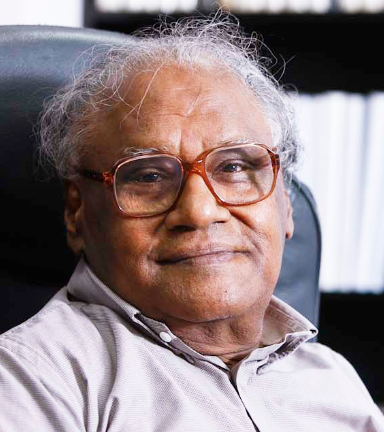 C.N.R. Rao (拉奥)合作论文数Jawaharlal Nehru Centre for Advanced Scientific Research29
 A. Govindaraj合作论文数Solid State and Structural Chemistry Unit, Indian Institute of Science26
 David Luzzi合作论文数George J. Kostas Research Institute for Homeland Security, Northeastern University;Advanced Cyber Security Center7
 Rahul Sen合作论文数6
 K. R. Harikumar合作论文数6
 Manashi Nath合作论文数Solid State and Structural Chemistry Unit, Indian Institute of Science6A. K. CHEETHAM合作论文数4
 Stephen K. Doorn合作论文数Center for Integrated Nanotechnologies, Los Alamos National Laboratory4Richard M Russo合作论文数3
 S. V. Goupalov合作论文数3Brian W. Smith合作论文数Department of Materials Science and Engineering, University of Pennsylvania3
 Gargi Raina合作论文数School of Ocean and Earth Science and Technology, University of Hawaii3R. Sumathy合作论文数2erasmus m vogl合作论文数2Jp Zhang合作论文数2J.E. Fischer合作论文数2Llaguno Marc C合作论文数2Jin-Ping Zhang合作论文数2
 P. John Thomas合作论文数2
 Harry Dorn合作论文数Department of Chemistry, College of Science, Virginia Polytechnic Institute and State University2GU Kulkarni合作论文数1J. Vavro合作论文数1A Kasuya合作论文数1harald eifert合作论文数1p v vanitha合作论文数1Rd Flores合作论文数1
 Ferenc Stercel合作论文数1Michael Ryan合作论文数1Gn Subbanna合作论文数1
 N. Rajalakshmi合作论文数1Martin Möller合作论文数1scott andrew paulson合作论文数Phys & Astron, James Madison Univ1Y. Nishina合作论文数1H. Hsu合作论文数1
 David Corr合作论文数NTERA Ltd1Shengqi Chen合作论文数1
 Karen I. Winey合作论文数Department of Chemical and Biomolecular Engineering, School of Engineering and Applied Science, University of Pennsylvania;Department of Materials Science & Engineering, School of Engineering and Applied Science, University of Pennsylvania1
 Qing Zhang合作论文数School of Electrical & Electronic Engineering, Nanyang Technological University1
 Lawrence E. Murr合作论文数Department of Metallurgical, Materials and Biomedical Engineering, College of Engineering, The University of Texas at El Paso1
 Ying Li (李英)合作论文数School of Materials Science and Engineering, Hebei University of Technology1
 Mark A. Mentzer合作论文数U.S. Army Research Laboratory, U.S. Army Research Laboratory1
 R. Bruce Weisman合作论文数Department of Chemistry, Rice University1
 Andreas Taubert合作论文数Institute of Chemistry, Universität Potsdam/African Center For Excellence In Water Research/Laboratory of Supramolecular & Materials Chemistry, Universität Potsdam1Michal Kruk合作论文数College of Staten Island, City University of New York1C.-J. Yu合作论文数1
 Joachim Baumeister合作论文数denkbares GmbH, Würzburg, Germany1
 Hsinglin Wang (王湘麟)合作论文数Department of Materials Science and Engineering, Southern University of Science and Technology1




