We propose a new type of 2-D electron gas field-effect transistor (TEGFET) in which the top gate is replaced by two lateral gates (LGs), separated on each side of the conducting channel by a trench. In the etched trenches, air acts as a dielectric. The presence of LGs changes the channel potential, which in turn shapes the drain current. Thus, the drain current can be adjusted by the gates’ bias. This LG-TEGFET avoids the reliability problems due to the top gate: suppression of the electric field perpendicular to the 2DEG plane, reduction of the in-plane electric field, very low leakage current through the LGs, and no gate/semiconductor interface, which means reduced interface defects and reduced degradation due to heavy ions or high-energy particles and electromagnetic irradiation. Throughout the 1.5–300 K temperature range, the system exhibits very flat and stable saturations of the current–voltage characteristics, which are satisfactorily modified when a ${V}_{\text {GS}}$ gate bias is applied to both LGs, or between the LGs. Our study suggests that this new TEGFET could be used in a wide range of applications involving III-V, III-V-N, and other devices.
We study the low frequency admittance of a quantum Hall bar of size much larger than the electronic coherence length. We find that this macroscopic conductor behaves as an ideal quantum conductor with vanishing longitudinal resistance and purely inductive behavior up to f<1MHz. Using several measurement configurations, we study the dependence of this inductance on the length of the edge channel and on the integer quantum Hall filling fraction. The experimental data are well described by a scattering model for edge magnetoplasmons taking into account effective long range Coulomb interactions within the sample. This demonstrates that the inductance's dependence on the filling fraction arises from the effective quantum inertia of charge carriers induced by Coulomb interactions within an ungated macroscopic quantum Hall bar.
We study experimentally low-temperature current-voltage characteristics of n-type GaAs/GaAlAs modulation doped quantum wells under the influence of an external magnetic field. In particular, we use samples additionally doped in the well with Be acceptors. As showed previously, negatively charged acceptor ions can localize conduction electrons by a joint effect of a quantum well and an external magnetic field. It is found that, in the acceptor-doped samples, the Hall electric field resulting from the presence of magnetic field plays the role of the gate voltage. At sufficiently high magnetic fields, the drain current has a constant value independent of the drain voltage. It is argued that the above phenomenon is due to the electron localization with the resulting decrease of conducting electron density in the crossed-field configuration. We propose to exploit the observed unusual behaviour as a device called “magnetic two-dimensional electron gas field effect transistor” operating at low temperatures.
We study the room-temperature performance of micro-Hall magnetic sensors based on pseudomorphic InGaAs quantum wells. Active areas of our sensors range from 1 to 80 μm. We focus on the smallest detectable magnetic fields in small sensors and perform a systematic study of noise at room temperature in the frequency range between 1 Hz and 100 kHz. Our data are interpreted by the mobility fluctuation model. The Hooge parameter is determined for the applied technology. We show that, independently of the experimental frequency, the ratio of sensitivity to noise is proportional to characteristic length of the sensor. The resolution of 1 mG/Hz is achievable in a 3μm sensor at room temperature.
We present an experimental study on the performance of nano-Hall sensors made on the two dimensional electron gaz of a pseudo morphic GaAlAs/GaInAs heterostructures. The active area of the sensor is from sub-micronic scale (down to 500 nm) to 5 microns. Ohmic contacts have micronic size, and a reference sample of 80 micron width has been caracterized as well, as a reference. In our process, we have improved the contacts technology to limit the thermal Shottky noise. Thus although ohmic contacts have small dimensions they have low resistance and do not limit the sensitivity of our nano-sensors. Extensive caracterization of those devices demonstrate a diffusive transport at 300 K, and a magnetic field sensitivity up to 1000 V/T/A. We have focused our attention on the smallest detectable magnetic field in the smallest sensor, and performed a systematic study of the noise measurements. We have measured the excess noise in both the longitudinal configuration and the Hall configuration, as a function of the current. Our noise measurements performed at room temperature in the range [1 Hz-100 kHz] show, at low frequency, an 1/f noise spectrum whose intensity is proportional to the square of the current. We understand our data by the conductivity fluctuations model and we obtain the Hooge parameter for this technology. We demonstrate that the noise intensity is inversely proportional to area of the sensor. Of course reducing the dimensions induces physical limitations but we demonstrate that a magnetic field of few μT can be measured with a micron scale sensor at low frequencies; at higher frequencies, when the thermal noise limits the resolution, the measurement of 300 nT is achievable.
We report on Terahertz wireless communications and fast imaging experiments at 300 GHz, using nanometer-sized transistors as detectors. The physical mechanism of the detection is related to the overdamped plasma waves in the transistor channel.
The direct closure of the quantum metrological triangle consists in achieving Ohm's law with the three effects used and investigated in quantum electrical metrology: the Josephson effect (JE), the quantum Hall effect (QHE) and the single-electron tunnelling effect (SET). The aim is to check the consistency of the phenomenological constants KJ, RK and QX associated with these effects and theoretically expressed with the fundamental constants e and h (elementary charge and Planck constant, respectively). Such an experiment is a contribution to a future redefinition of the International System of units (SI). In this paper, the experimental setup developed at LNE is described and the main obtained results are given. From a set of four measurements, agreement at a level of 1.3 parts in 105 was found between the quantum charge involved in the SET, i.e. QX, and the CODATA value of the elementary charge. The best measurement has shown a relative type-A uncertainty of 1.9 parts in 106, while the amplitude of the current generated by a metallic electron pump was as low as 3.6 pA.
Cyclotron resonance spectra of 2D electrons in HgTe/CdxHg1−xTe (0 1 3) quantum well (QW) heterostructures with inverted band structure have been thoroughly studied in quasiclassical magnetic fields versus the electron concentration varied using the persistent photoconductivity effect. The cyclotron mass is shown to increase with QW width in contrast to QWs with normal band structure. The measured values of cyclotron mass are shown to be systematically less than those calculated using the 8 × 8 Kane model with conventional set of HgTe and CdTe material parameters. In quantizing pulsed magnetic fields (Landau level filling factor less than unity) up to 45 T, both intraband (CR) and interband magnetoabsorption have been studied at radiation wavelengths 14.8 and 11.4 µm for the first time. The results obtained are compared with the allowed transition energies between Landau levels in the valence and conduction bands calculated within the same model, the calculated energies being again systematically less (by 3–14%) than the observed optical transition energies.
Nous presentons les principaux resultats obtenus dans le cadre du projet ANR-TRIMET dont l'objectif etait la fermeture du triangle metrologique quantique (TMQ) a un niveau d'incertitude relative de 10 -6 . L'experience du TMQ consiste a realiser une loi d'Ohm en utilisant les trois effets quantiques impliques en metrologie electrique: l'effet Josephson (EJ), l'effet Hall quantique (EHQ) et l'effet tunnel a un electron (SET). Le but est de verifier la coherence des constantes phenomenologiques K J , R K , Q X , associees respectivement a ces trois effets et theoriquement exprimees en fonctions des deux constantes fondamentales, h et e (constante de Planck et charge elementaire). Cette experience est une contribution importante a une redefinition du Systeme international d'unites (SI). Nous montrons aussi que la fermeture du TMQ permettra la mise en œuvre d'une nouvelle determination de la charge elementaire, e.
In this work we review the most important results concerning the physics and applications of FETs as Terahertz detectors. We present two experiments showing: i) Terahertz detection based on low cost 130 nm silicon technology Field Effect Transistors in the sub-THz range (0.2 THz up to 1.1 THz) and ii) first results on detection by FETs of emission from 3.1 THz Quantum Cascade Lasers.
We report on the resonant detection of a 3.1 THz radiation produced by a quantum cascade laser using a 250 nm gate length GaAs/AlGaAs field effect transistor at liquid nitrogen temperature. We show that the physical mechanism of the detection is related to the plasma waves excited in the transistor channel. The detection is enhanced by increasing the drain current and driving the transistor into saturation regime. These results clearly show that plasma wave nanometer-size transistors can be used as detectors in all-solid-state terahertz systems where quantum cascade lasers act as sources.
Cyclotron resonance spectra of 2D electrons in HgTe/CdxHg1-xTe (0 1 3) quantum well (QW) heterostructures with inverted band structure have been thoroughly studied in quasiclassical magnetic fields versus the electron concentration varied using the persistent photoconductivity effect. The cyclotron mass is shown to increase with QW width in contrast to QWs with normal band structure. The measured values of cyclotron mass are shown to be systematically less than those calculated using the 8 x 8 Kane model with conventional set of HgTe and CdTe material parameters. In quantizing pulsed magnetic fields (Landau level filling factor less than unity) up to 45 T, both intraband (CR) and interband magnetoabsorption have been studied at radiation wavelengths 14.8 and 11.4 mu m for the first time. The results obtained are compared with the allowed transition energies between Landau levels in the valence and conduction bands calculated within the same model, the calculated energies being again systematically less (by 3-14%) than the observed optical transition energies.
We present our experimental set-up and discuss the results obtained with the quantum metrological triangle (QMT) experiment. This experiment consists in realizing Ohm's law with the three effects used and investigated in quantum electrical metrology: the Josephson effect (JE), the quantum Hall effect (QHE) and the single electron tunneling effect (SET). The aim is to check the consistency of the phenomenological constants K J, R K and Q X associated with these effects and theoretically expressed with the fundamental constants e and h (elementary charge and Planck constant, respectively). Such an experiment is a contribution for a new definition of electrical units in the International System (SI)
We present our experimental set-up and discuss the results obtained with the quantum metrological triangle (QMT) experiment. This experiment consists in realizing Ohm's law with the three effects used and investigated in quantum electrical metrology: the Josephson effect (JE), the quantum Hall effect (QHE) and the single electron tunneling effect (SET). The aim is to check the consistency of the phenomenological constants KJ, RK and QX associated with these effects and theoretically expressed with the fundamental constants e and h (elementary charge and Planck constant, respectively). Such an experiment is a contribution for a new definition of the International System of Units (SI). Also, the obtained results are a first step towards a determination of e.
The quantum metrological triangle experiment (QMTE) consists in realizing Ohm's law with Josephson (JE), quantum Hall (QHE) and single electron tunneling (SET) effects. The aim is to check the consistency of the link among the phenomenological constants K-J, R-K and Q(X) involved in these effects and theoretically expressed with the fundamental constants e and h. Such an experiment could be a contribution for a new definition of the systeme international d'unites (SI) base units.In the QMTE, a current generated by a SET device flows through a resistor calibrated against QHE standard and the voltage induced at its terminals is compared to the metrological voltage generated by a Josephson junctions array. At LNE, the studied SET devices are 3 junctions single electron pumps with on chip resistors. The quantized current generated by this pump is theoretically equal to ef (f is the frequency of the driving signals applied on the gates) and is measured through a cryogenic current comparator (CCC), which allows to amplify the low pumping current with a metrological accuracy.We will present and discuss the experimental set-up developed at LNE and the first results. In addition to the main aim of QMTE described above, these preliminary results are also a first step towards a determination of e.
The plasma, waves in gated two-dimensional electron gas have a linear dispersion law, similar to the sound waves. The transistor channel is acting as a resonator cavity for the plasma waves, which can reach frequencies in the THz range for a sufficiently short gate length field effect transistors. A variety of possible applications of field effect transistor operating as a THz device were suggested. In particular, it was shown that the nonlinear properties of plasma oscillations can be utilized for THz tunable detectors. During the last few years THz detection related to plasma wave instabilities in nanometer size field effect transistors was demonstrated experimentally. In this work we review our recent experimental results on the resonant plasma wave detection at cryogenic and room temperatures.
We describe the experimental set-up used at LNE for closing the quantum metrological triangle (QMT) experiment and also testing the quantization of a current generated by a single electron device. Our present device is an R-electron pump composed of 3 tunnel junctions. The influence of the pumping frequency on the noise and on the current stability is firstly investigated. Then preliminary results are given about the quantized cur-rent measured with the complete QMT set-up. A relative random uncertainty of a few parts in 106 has been found for a 100 MHz pumping frequency.
We present study of edge channels in high magnetic field by direct contrast interference measurement. We model our measures and we estimate geometrical characteristic for edge states. We find relevant parameter, even in plateaus regime, for the existence or not of the dialogue between opposite edge states which allows interference effect.
 Christophe Chaubet合作论文数Groupe d'Etudes des Semiconducteurs, Universite Montpellier II11
 Nicolas Feltin合作论文数8
 Christophe Consejo合作论文数7
 Frederic Teppe合作论文数Centre National de la Recherche Scientifique7b steck合作论文数6
 Olivier Séron合作论文数6
 Wojciech Knap合作论文数Center for Terahertz Technology Research and Applications;Instytut Wysokich Cisnien UNIPRESS PAN;Laboratoire Charles Coulomb, CNRS Délégation Languedoc-Roussillon6Laurent Devoille合作论文数6
 Wilfrid Poirier合作论文数5
 Dominique Mailly合作论文数5
 Antonella Cavanna合作论文数5
 Félicien Schopfer合作论文数5A. Delgard合作论文数4p solignac合作论文数4s djordjevic合作论文数4Sassine, S.合作论文数4
 Francois Piquemal合作论文数4
 Jérémi Torres合作论文数Institut d'Electronique et des Systemes-IES, Univ. de Montpellier4Giancarlo Faini合作论文数4
 Benoit Jouault合作论文数Laboratoire Charles Coulomb, Pôle de Recherche Mathématiques, Informatique, Physique, Systèmes, Universite de Montpellier4Maksim Zholudev合作论文数4N Diakonova合作论文数3n dyakonova合作论文数3Wlodek Zawadzki合作论文数3
 A. El Fatimy合作论文数Centre de Physique Moléculaire Optique et Hertzienne, Université de Bordeaux 13
 Laurent Saminadayar合作论文数Centre de Recherches3D. Coquillat合作论文数GES UMR 5650, Université Montpellier 2 and CNRS3
 Sergey V. Lotkhov合作论文数3Agustín González-Cano合作论文数2p buzatu合作论文数2
 S. A. Dvoretskii合作论文数2A. Raymond合作论文数2Michel Goiran合作论文数2F. Pascal合作论文数2
 Alain Hoffmann合作论文数2V. Ya. Aleshkin合作论文数2Kirill E. Spirin合作论文数2
 Manfred Helm合作论文数Institut fur Ionenstrahlphysik und Materialforschung, Helmholtz-Zentrum Dresden-Rossendorf;Institut für Angewandte Physik, Technische Universität Dresden2
 Michal Baj合作论文数2
 Joachim Wosnitza合作论文数Dresden High Magnetic Field Laboratory, Helmholtz-Zentrum Dresden-Rossendorf;University of Technology Dresden2Oleksiy Drachenko合作论文数2K. V. Maremyanin合作论文数2
 F. Piquemal合作论文数CENBG, IN2P3-CNRS et Université de Bordeaux I2
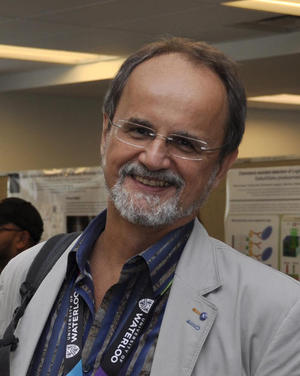 Zbigniew Wasilewski合作论文数Department of Physics and Astronomy, University of Waterloo2
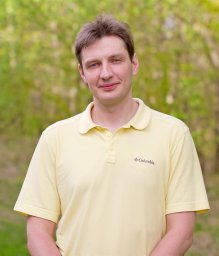 A. V. Ikonnikov合作论文数Institute for Physics of Microstructures, Russian Academy of Sciences2Hisatake, S.合作论文数1M. Gryglas合作论文数1s boubanga合作论文数1
 Artem Lastovkin合作论文数1




