This study investigated the neural correlates of virtual reality analgesia. Virtual reality significantly reduced subjective pain ratings (i.e. analgesia). Using fMRI, pain-related brain activity was measured for each participant during conditions of no virtual reality and during virtual reality (order randomized). As predicted, virtual reality significantly reduced pain-related brain activity in all five regions of interest; the anterior cingulate cortex, primary and secondary somatosensory cortex, insula, and thalamus (p<0.002, corrected). Results showed direct modulation of human brain pain responses by virtual reality distraction.
Introduction Entrained flow gasification is one of the most promising technologies to convert biomass streams for large-scale applications aimed at (integrated) production of power, hydrogen and chemicals (e.g. Fischer-Tropsch diesel fuels). Application of biomass streams in entrained-flow gasifiers similar to those employed in coal gasification (e.g. slagging gasifiers) requires R&D concerning fuel feeding and ash behavior, especially with regard to ash slagging tendencies. This paper present results related to characterization of slag behaviour of selected wood streams beech, willow, wood mixture under simulated (pressurized, oxygen blown) entrained-flow gasification conditions. Wood ash in the fuel is very low (about 1% fuel weight), and characterized by high alkaline-earth and alkali metals content. Therefore its application upon conditions typical of slagging gasifiers requires careful adaptation, since the latter are designed for higher fuel ash content (typically > 6% fuel weight) and operate at a temperature where coal ash can form a molten slag (typically 1300-1500 °C).
Excessive pain during medical procedures performed in unanesthetized patients is frequently reported, but can be reduced with virtual reality (VR) distraction. Increasing the person's illusion of going into the virtual world may increase how effectively VR distracts pain. Healthy volunteers aged 18-20 years participated in a double-blind between-groups design. Each subject received a brief baseline thermal pain stimulus, and the same stimulus again minutes later with either a Low Tech or a High Tech VR distraction. Each subject provided subjective 0-10 ratings of cognitive, sensory and affective components of pain, and rated their illusion of going inside the virtual world. Subjects in the High Tech VR group reported a stronger illusion of going into the virtual world (VR presence) than subjects in the Low Tech VR group, (4.2 vs. 2.5, respectively, P = 0.009) and more pain reduction (reduction of worst pain is 3.1 for High Tech VR vs. 0.7 for Low Tech VR, P < 0.001). Across groups, the amount of pain reduction was positively and significantly correlated with VR presence levels reported by subjects ( r = 0.48 for 'worst pain', P < 0.005).
The paper deals with the current status of a European Project named “Tar Measurement Standard”, started in begin 2003, which focuses on the Standardisation at a European level (CEN) of a Guideline for the measurement of organic contaminant (called ‘tar’). The Guideline, which was developed in a previous EU project, provides a set of procedures for the measurement of organic contaminants and particles in producer gases from biomass gasifiers. The procedures are designed to cover different air or oxygen blown gasifier types (updraft or downdraft/fixed bed or fluidised bed gasifiers), operating conditions (0 900°C and 0.6 60 bars), and concentration ranges (1 mg/mn to 300 g/mn). Although several institutes have now used this Guideline, it does not have the status of an international standard yet. The overall objective of the project is to remove this obstacle by standardising the Guideline. The paper deals with the overall standardisation activity and the R&D necessary to gather data on accuracy and reproducibility of the method.
The objectives of the work have been twofold: firstly, to identify and elucidate the mechanisms responsible for the occurrence of ash-related operational problems when co-gasifying sewage sludge with coal upon (pressurised, oxygen-blown) entrained-flow gasification conditions, by characterising the ash-formation and ash-deposition behaviour for selected fuel blends (diagnostic phase); secondly, to individuate and test possible alleviation measures to reduce the burden of fouling, identified as the main operational problem during sewage sludge co-firing (operational phase). For this purpose, several experimental and modelling activities have been performed. Among others, detailed characterisation of fly ash samples and fuel samples using Scanning Electron Microscopy coupled to Energy Dispersive X-ray Analysis (SEM-EDX), ash-formation and ash deposition experiments in entrained-flow gasification simulators (operating under atmospheric and pressurised conditions), Differential Thermal Analysis (DTA) and thermodynamic equilibrium calculations have been carried out. These activities consistently pointed out the critical role of specific sewage sludge elements in enhancing syngas cooler fouling upon co-firing. In particular, formation of low-temperature melting phases due to phosphor encapsulation in the slag has been identified as the main mechanism for enhanced fouling. The results of the investigations are consistent with the operational experiences of co-firing sewage sludge at the NUON Buggenum power plant. Several fouling alleviation measures have been tested successfully in lab-scale facilities. They are based on the principle of tackling the fate of phosphor with the addition of Ca-based streams, favouring in this way the formation of less sticky, high-temperature melting compounds (such as apatite). In general, the project has contributed to increasing the knowledge of ash formation and ash deposition mechanisms upon biomass (co-) gasification in entrained-flow gasification based systems. The results, describing in detail the role of critical biomass components, such as phosphor and alkaline metals, will be directly useful not only for coal-fired IGCC plants, such as the Buggenum power plant in the Netherlands, but also applicable to other high-temperature, biomass-fired gasification installations.
S ECN BIOMASS TO THE “2ND WORLD CONFERENCE AND TECHNOLOGY EXHIBITION ON BIOMASS FOR ENERGY AND INDUSTRY” 10-14 May 2004, Rome, Italy P.C.A. Bergman L.W.M. Beurskens H. Boerrigter A.R. Boersma A. Bos M.K. Cieplik B. Coda E.P. Deurwaarder A. van der Drift R. Egging K. Hemmes F.H. Horlings J.C. Jansen J.H.A. Kiel R. Korbee T.J. de Lange C.M. van der Meijden M. Mozaffarian A.B.J. Oudhuis J.P. Ouweltjes S.V.B. van Paasen J.R. Pels L.P.L.M. Rabou R. van Ree J.H. Reith G. Rietveld E. van Thuijl H. den Uil M.A. Uyterlinde F. Verhoeff R.W.A Wilberink E. van Zessen R.W.R. Zwart with contributions of: R. Emmen, J.W. Könemann : Dahlman Industrial Group H. Klein Teeselink, H. Ratering : HoSt Engineering G. Dongyan, S. Li : Shandong Academy of Sciences J. Balke, H.C.P. Matthijs, L.R. Mur, E. Snelder : Universiteit van Amsterdam K. van Kilsdonk : IVAM Research and Consultancy on Sustainability BV S.J.J. Lips : Agrotechnology and Food Innovations B.V. A.B. van der Giesen : GIPEC B.V M.J. Prins, K.J. Ptasinski, F.J.J.G. Janssen : Eindhoven University of Technology R. Bär : BETH J. Good : Verenum H.A.M. Knoef : BTG Biomass Technology Group T. Liliedhal : Kungl Tekniska Högskolan (KTH) J.P.A. Neeft : Novem I. Summerfield : Casella Group M. Suomalainen : Technical Research Centre of Finland (VTT) C. Unger : Fraunhofer UMSICHT U. Zielke : Danish Technological Institute Checked/Approved/Issued by: H.J. Veringa ECN Biomass
The essence of immersive virtual reality (VR) is the illusion it gives users that they are inside the computer-generated virtual environment. This unusually strong illusion is theorized to contribute to the successful pain reduction observed in burn patients who go into VR during woundcare (www.vrpain.com) and to successful VR exposure therapy for phobias and post-traumatic stress disorder (PTSD). The present study demonstrated for the first time that subjects could experience a strong illusion of presence during an fMRI despite the constraints of the fMRI magnet bore (i.e., immobilized head and loud ambient noise).
High contents of chlorine and alkalies restrict the use of biomass in energy production. Alkali chlorides vaporize during combustion. Chlorine tends to produce corrosive deposits and unacceptably high emissions of HCl and dioxins. Chlorine recovery and enrichment of Cl, Na, K, Ca, Al, and Si in coarse and fine fly ash were studied experimentally with two electrically stabilized bubbling fluidized bed (BFB) reactors capable of reproducing the particle residence times existing in full-scale BFB plants. Feedstocks were fir (mixture of heartwood and bark), paper sludge, and blends; of fir with agricultural waste or plastic waste. Sulfur concentrations of feed components were low (<0.5 wt %), while chlorine and potassium concentrations ranged widely (0.02-3.2 wt % for Cl and 0.07-3.1 wt % for K). Aluminum-containing additives (kaolin, bauxite and fly ash from a pulverized coal plant) and limestone were added to the feedstocks at various dosages to evaluate their influence on Cl behavior and enrichment of the elements of interest. HCl was measured by FTIR and wet-absorption methods. Different ash samples (bed, cyclone and filter ash) were characterized for their Cl content and the major ash-forming constituents. CI was completely volatilized from bed ash and recovered only in coarse (cyclone) and fine (filter) fly ash fractions. AZ-containing additives increased HCl formation and decreased Cl concentration in the fly ash. In the case of AI-Si based additives, evidence was found of the formation of alkali aluminum silicates from alkali chlorides. The aluminum silicates were transferred mainly to the-coarse fly ash fraction. AI-based additives also seemed to liberate CI from alkali chlorides with reactions forming water-soluble alkali compounds. Limestone had the opposite effect to the AI-containing additives by binding CI from gas phase to fly ash, but mainly to the coarse fly ash fraction. The results will be useful in optimizing the behavior of chlorine in bubbling bed combustion of Cl- and alkali-containing biomass.
The scope of the paper is the assessment of the technical feasibility of fluidized bed combustion technology for thermal utilization of paper sludge in combined combustion with coal and with a high alkali-biomass content like straw. An experimental program at a fluidised bed, electrically stabilised, test facility (30 kW) has been carried out in order to establish the range of conditions for which co-combustion of paper sludge is environmentally acceptable without affecting the combustion efficiency. Different fuel blends were tested by gradually replacing coal with an equivalent share on an energy basis of paper sludge. Both coal-based blends and coal-straw based blends were investigated. Tests were effected under both bubbling and circulating fludised bed conditions. Main focus of the research was to study the impact of the addition of paper sludge on the toxic emissions and on the fate of mineral matter constituents, with emphasis on bed agglomeration tendencies. Also the impact of addition of paper sludge on the fate and the partitioning of heavy metals in different ash output streams was evaluated. The aim was not only to assess the potential problems associated to the harmful elements under co-combustion, but also to ascertain whether and how paper sludge could affect the reaction environment. The results show that the properties of the main fuel in the blend have a relevant impact on the observed trends.
The optimisation of numerical methods applied to the description of char combustion behaviour is required in order to achieve a good prediction of the amount of unburned carbon in fly ash from pulverised coal fired boilers. A question that arises is whether it is necessary to take into account the distribution of the coal properties and reactivity and how to describe them in such a simplified way in order to be handled in a simulation code. The reliability of a simple model for char heterogeneous oxidation describing the burning of single char particles has been assessed through the use of available experimental data for a high volatile bituminous coal in a pilot plant, under single stage and staged combustion conditions. Experiments in an electrodynamic chamber effected on the char particles collected in the pilot plant, showed the heterogeneity of particles properties, evaluated by fitting the temperature-time histories of single burning particles. The model was later used to predict kinetics data at high heating rate to be used in comprehensive code: the results of the prediction provide a reactivity distribution expressed in the form of a pre-exponential factor as a function of particle size.
Experiments on an electrically heated entrained flow combustion reactor were carried out in order to test the air-staging behavior of four bituminous coals of industrial interest. Through measurements of gaseous nitrogen-containing species profiles (NO, HCN) and sampling of char particles at different conversion levels, a study was elaborated about the impact of process parameters and coal type on NO formation and reduction, as well as on the nitrogen fate during the course of combustion. While the air-staging abatement efficiency was observed to be correlated with the volatile-nitrogen release from the coal, the presented analysis reveals that the contribution of char-nitrogen release cannot be neglected. This study shows that nitrogen release rates change significantly during the various phases of combustion, also revealing the effect of the operating conditions on the release rates. A simple computational modeling has been carried out in order to estimate the relative influence of the process parameters on char-nitrogen conversion into NO in the burnout zone. The results exhibit the influence of the NO concentration level in the gas phase as one possible explanation of the differences exhibited by the coals. The comparison of experimental data and the computational modeling also displays the necessity of a more detailed kinetic approach to describe char-nitrogen evolution by computer codes for the optimization of staged combustion processes.
BACKGROUND AND OBJECTIVES:Although 2-chloroprocaine continues to be a useful drug for epidural anesthesia in obstetrics, it has the anomalous action of decreasing the analgesic effectiveness of subsequently administered epidural fentanyl. Some investigators have suggested that 2-chloroprocaine may act at an opioid receptor site to antagonize the effects of fentanyl. The purpose of our studies was to investigate this hypothesis. METHODS:Radioligand binding assays using the mu and kappa opioid receptor-selective radioligands [3H]-DAMGO and [3H]-U69,593, respectively, were performed to determine the potencies of lidocaine, 2-chloroprocaine, and 2-chloroprocaine metabolites at the mu and kappa opioid receptor sites. Electrophysiologic experiments in in vitro hippocampal slice preparations were then used to examine the effects of 2-chloroprocaine at these opioid receptor subtypes. RESULTS:Lidocaine caused a partial reduction of [3H]-DAMGO binding, which was dose-limited owing to the solubility of lidocaine. 2-Chloroprocaine caused complete displacement of [3H]-DAMGO binding, with a median effective concentration of 1.44 +/- 0.36 mM. The EC50 values for [3H]-U69,593 displacement were 177 +/- 47 microM for 2-chloroprocaine and 2.53 +/- 0.48 mM for lidocaine. Assuming a competitive interaction between anesthetic and opioid, the Ki value for 2-chloroprocaine was 435 microM at mu receptors and 49 microM at kappa receptors. In the mu activity bioassay, 2-chloroprocaine reversed the increased neuronal excitability caused by fentanyl, but this effect was further reduced by naloxone. In addition, 2-chloroprocaine did not reverse the after depolarization caused by fentanyl. In the kappa activity bioassay, 2-chloroprocaine produced effects similar to the kappa agonist U69, 593, but these were not antagonized by naloxone. CONCLUSIONS:Although 2-chloroprocaine has binding affinity at mu and kappa opioid receptor sites, it does not appear to act through an opioid receptor to antagonize the physiologic effects of fentanyl.
BACKGROUND:Propofol and alfentanil frequently are administered together for intravenous sedation. This study investigated pharmacokinetic and pharmacodynamic interactions between propofol and alfentanil, at sedative concentrations, with specific regard to effects on ventilation, analgesia, sedation, and nausea. METHODS:Ten male volunteers underwent steady-state infusions on 3 separate days consisting of propofol alone, alfentanil alone, or a combination of the two. Target plasma concentrations for propofol were 150, 300, and 600 ng/ml for 1 h at each concentration; for alfentanil it was 40 ng/ml for 3 h. Assessment included serial measurements of (1) ventilatory function (minute ventilation, carbon dioxide production, end-tidal carbon dioxide, ventilatory response to rebreathing 7% CO2); (2) analgesia (subjective pain report in response to graded finger shock and evoked potential amplitude); (3) sedation (subjective rating, observer scores, and digit symbol substitution test); (4) nausea (visual analog scale, 0-100 mm). RESULTS:During combination treatment, propofol plasma concentration was 22% greater than during propofol alone using replicate infusion schemes (P < 0.009). End-tidal carbon dioxide was unchanged by propofol, and increased equally by alfentanil and alfentanil/propofol combined (delta end-tidal carbon dioxide 7.5 and 6.2 mmHg, respectively). Analgesia with propofol/alfentanil combined was greater than with alfentanil alone. (Pain report decreased 50% by PA vs. 28% for alfentanil, P < 0.05). Sedation was greater with propofol/alfentanil combined than with alfentanil or propofol alone (digit symbol substitution test 30 for propofol/alfentanil combined vs. 57 for alfentanil, and 46 for propofol, P < 0.05). Nausea occurred in 50% of subjects during alfentanil, but in none during propofol/alfentanil combination treatment. CONCLUSIONS:The combination of propofol and alfentanil produced greater sedation and analgesia than that with either drug alone. Propofol offset the emetic effects of alfentanil. Equivalent depression of the carbon dioxide response curve, and elevation of end-tidal carbon dioxide occurred with propofol/alfentanil combined and alfentanil.
 G DONALDSON合作论文数4R SCHAFFER合作论文数4
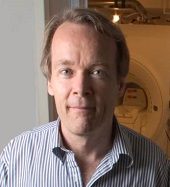 Hunter Hoffman合作论文数Department of Mechanical Engineering, University of Washington;Department of of Radiology, University of Washington;Department of of Psychology, University of Washington;Human Interface Technology Laboratory, Univerrsity of Washington4Sam R. Sharar合作论文数Department of Anesthesiology, University of Washington4Q Nguyen合作论文数3Richards Todd L合作论文数3
 J. H. A. Kiel合作论文数3B. Hautman合作论文数3M. K. Cieplik合作论文数3Harlan F. Hill合作论文数3
 Bram Van Der Drift合作论文数2DJ PAVLIN合作论文数2Mc Brown合作论文数2Bk Ross合作论文数2Krg Hein合作论文数2
 Anne Richards合作论文数2
 Hartmut Spliethoff合作论文数School of Engineering and Design, Technical University of Munich;Institute for Energy Systems, Technical University of Munich2
 JoAnn Tschanz合作论文数Emma Eccles Jones College of Education and Human Services, Utah State University2
 Leonardo Tognotti合作论文数Department of Chemical Engineering, Industrial Chemistry and Materials Science, University of Pisa2Martti Aho合作论文数2R. van Ree合作论文数1B KERR合作论文数1H. den Uil合作论文数1Mark Calogero合作论文数1J. Pavlin合作论文数1F Kluger合作论文数1Aric R Bills合作论文数1Jha Kiel合作论文数1HS CHADWICK合作论文数1J. Good合作论文数1JJ EVERETT合作论文数1Marjut Suomalainen合作论文数1
 Christiaan Van der Meijden合作论文数ECN1R Berger合作论文数1
 Charles Chavkin合作论文数Department of Pharmacology, School of Medicine, University of Washington1
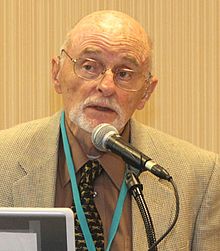 Earl B. Hunt合作论文数Department of Psychology, University of Washington1A. Bos合作论文数1D. Blough合作论文数1
 Harrie Knoef合作论文数1Janet Marvin合作论文数1
 John Neeft合作论文数1Suzanne B. Bausch合作论文数1Risto Oikari合作论文数1Kathleen Iverson合作论文数1Beth Glosten合作论文数1David K. Blough合作论文数Department of Agricultural Economics, University of Arizona1J.H. Reith合作论文数1Dieter Fortsch合作论文数1Luc P. L. M. Rabou合作论文数1




