nature of high brightness photocathode materials. This screening results in a diverse list of photocathode materials that exhibit intrinsic emittances that are up to 4x lower than currently used photocathodes. In a second effort, multiobjective screening is employed to identify the family of M2O (M = Na, K, Rb) that exhibits photoemission properties that are comparable to the current state-of-the-art photocathode materials, but with superior air stability. This family represents perhaps the first intrinsically bright, visible light photocathode materials that are resistant to reactions with oxygen, allowing for their transport and storage in dry air environments. Over 74 000 semiconducting materials are computationally screened to identify promising ultrahigh brightness photocathode materials for use in next-generation free-electron lasers. This broad search results in the identification of novel materials that are predicted to be considerably brighter and more resistant to oxidation than the current state-of-the-art photocathode materials.
a 400-r irradiation dose was used. The animais treated solely with the steroid showed a significant increase in wt which continued even after the end of treatment. The animals irradiated with 600 r died between the 5th and 10th day after treatment and showed a rapid loss in body wt. In the third group, eight died before the 12th day after a steady loss of wt; one died on the 18th day after.losing wt less rapidly than the animals which were only irradiated, and one died on the 32nd day after regaining initial wt. Haif of the animals irradiated with 400 r died between the 7th and 13th day after progressive loss of wt (intestinal death), while the other had a slight decrease in body wt and died between the 14th and 19th day (hemopoietic death). Those irradiated with 400 r and treated with the drug showed wt loss for three days; four of these died between the 7th and 12th days with progressive wt loss; three died between the 14th and 24th day, and two of these with greater than initial wt; and three survived with increased body wt. (BBB)
The high brightness, low emittance electron beams achieved in modern X-ray free-electron lasers (XFELs) have enabled powerful X-ray imaging tools, allowing molecular systems to be imaged at picosecond time scales and sub-nanometer length scales. One of the most promising directions for increasing the brightness of XFELs is through the development of novel photocathode materials. Whereas past efforts aimed at discovering photocathode materials have typically employed trial-and-error-based iterative approaches, this work represents the first data-driven screening for high brightness photocathode materials. Through screening over 74 000 semiconducting materials, a vast photocathode dataset is generated, resulting in statistically meaningful insights into the nature of high brightness photocathode materials. This screening results in a diverse list of photocathode materials that exhibit intrinsic emittances that are up to 4x lower than currently used photocathodes. In a second effort, multiobjective screening is employed to identify the family of M2 O (M = Na, K, Rb) that exhibits photoemission properties that are comparable to the current state-of-the-art photocathode materials, but with superior air stability. This family represents perhaps the first intrinsically bright, visible light photocathode materials that are resistant to reactions with oxygen, allowing for their transport and storage in dry air environments.
This report is a summary of two preparatory workshops, documenting the community vision for the national accelerator and beam physics research program. It identifies the Grand Challenges of accelerator and beam physics (ABP) field and documents research opportunities to address these Grand Challenges. This report will be used to develop a strategic research roadmap for the field of accelerator science.
In this work, we have developed an ab initio photoemission model that accurately describes the photoemission process for the most diverse range of photocathode materials to date. Compared to previous photoemission models, this is accomplished by considerably reducing the number of approximations and assumptions used in representing the photoemission process and the photoemitting material itself. Notably, our model directly includes the full electronic structure of the material, photoexcitation probabilities for all direct optical transitions, and an improved surface-vacuum barrier transmission probability. To test the performance of our model, we perform validations with experimental measurements for all photocathode materials studied in this work. Whereas previous models have often qualitatively disagreed with the measured photoemission properties of some materials, our model is found to provide quantitative agreement with experimental measurements for all tested materials. As an example, our method predicts the root-mean-square transverse momentum of electrons emitted from PbTe up to an excess energy of 1.0 eV with a mean absolute error that is similar to 5x less than from previously derived expressions. Perhaps more importantly, our model is able to match experimentally observed decreases in intrinsic emittance with increasing photon energy-a feat that current analytical models are unable to achieve. We expect that the broad applicability of our model will greatly accelerate the rate of discovery, characterization, and scientific understanding of photocathodes and other photonic devices.
Reducing the intrinsic emittance of photocathodes is one of the most promising routes to improving the brightness of electron sources. However, when emittance growth occurs during beam transport (for example, due to space charge), it is possible that this emittance growth overwhelms the contribution of the photocathode, and, thus, in this case source emittance improvements are not beneficial. Using multi-objective genetic optimization, we investigate the role intrinsic emittance plays in determining the final emittance of several space-charge-dominated photoinjectors, including those for high-repetition-rate free electron lasers and ultrafast electron diffraction. We introduce a new metric to predict the scale of photocathode emittance improvements that remain beneficial and explain how additional tuning is required to take full advantage of new photocathode technologies. Additionally, we determine the scale of emittance growth due to point-to-point Coulomb interactions with a fast tree-based space-charge solver. Our results show that, in the realistic high-brightness photoinjector applications under study, the reduction of thermal emittance to values as low as 50 pm/mu m (1 meV mean transverse energy) remains a viable option for the improvement of beam brightness.
A number of electron-ion collider facilities for nuclear physics research are under consid- eration in the United States. At Brookhaven National Lab (BNL), the eRHIC (electron Relativistic Heavy Ion Collider) facility would augment the existing ion/proton facility with an electron accelerator. Thomas Jefferson National Accelerator Facility (JLab) plans to use the existing CEBAF machine and add an ion/proton accelerator, as part of the Jefferson Lab Electron-Ion Collider (JLEIC). All such facilities require cooling of the ion beams in order to reach the luminosity goals. Different methods of cooling the ions using an electron beam are envisaged. BNL is pursuing coherent electron cooling and non-magnetized, bunched-beam cooling, while JLab is considering magnetized cooling. In addition to electron cooling, magnetized beams are of interest for other applica- tions, such as flat beam klystrons and novel means for producing bright beams for micro- undulators and compact X-ray sources. For example, flat beams generated from a mag- netized injector, in conjunction with low emittance, enable RF sources with frequencies above 100 GHz. While the market for high-performance injectors for electron cooling is limited, the market for high-frequency RF sources and compact X-ray systems is con- siderable. Thus, the design methodologies developed in this project have a wide range of applicability. In Phase I of this SBIR project, Xelera Research LLC performed simulations and calcu- lations to develop a prototype design for a magnetized electron injector that can be used as a source for cooling an ion beam. We developed general design methodologies and tech- niques that are applicable not only to specific machine designs but to other applications requiring magnetized injectors as well. In this Phase II SBIR project, Xelera Research LLC, in collaboration with a team at JLab, designed, built, and tested a thermionic elec- tron source for driving a magnetized electron cooler in a future electron-ion collider project. This device was delivered to JLab in July 2019 and achieved first beam in December 2019.
Linear electron accelerators and their applications such as ultrafast electron diffraction require compact high-brightness electron sources with high voltage and electric field at the photocathode to maximize the electron density and minimize space-charge induced emittance growth. Achieving high brightness from a compact source is a challenging task because it involves an often-conflicting interplay between various requirements imposed by photoemission, acceleration, and beam dynamics. Here we present a new design for a compact high voltage DC electron gun with a novel cryogenic photocathode system and report on its construction and commissioning process. This photoemission gun can operate at ∼200 kV at both room temperature and cryogenic temperature with a corresponding electric field of 10 MV/m, necessary for achieving high quality electron beams without requiring the complexity of guns, e.g., based on RF superconductivity. It hosts a compact photocathode plug compatible with that used in several other laboratories opening the possibility of generating and characterizing electron beam from photocathodes developed at other institutions.
The ability to produce short pulse X-rays on the scale of 1-10 ps fwhm in the SPEAR3 storage ring light source would enable enhanced timing mode studies of dynamic processes in materials as they occur. The crab cavity approach appears to be optimal for SPEAR3 to produce short pulse X-rays. Furthermore, by using a twofrequency crabbing scheme, SPEAR3 would be able to produce short-pulse bunches while supplying the high average flux needed for regular users. While superconducting RF (SCRF) technology could be a natural choice for the CW crab cavity, the deflecting voltage for SPEAR3 crabbing appears to be within reach of more affordable normal conducting RF (NCRF). In this paper, we present a preliminary NCRF CW crab cavity design for SPEAR3. INTRODUCTION Short pulse X-ray beams have vital application in the study of fast dynamic processes in many scientific research disciplines such as chemistry, material science, environmental science, and biology. High repetition rate, high flux, ~1-10 ps fwhm short pulse X-ray beams generated in storage rings are complementary to the high peak brightness, ultrafast photon pulses of order 100 fs fwhm or less produced by X-ray FELs in terms of many performance measures such as pulse duration, repetition rate, stability, flux and availability. After studying several techniques for producing short X-ray pulses in SPEAR3, the crab cavity approach appears to be optimal [1, 2]. Crab cavities produce a transverse tilt in the electron bunches and a correlation between radiation emission angle and longitudinal position along the bunch so that photons from only a short slice of the bunch propagates through a slit in the X-ray beam line as schematically shown in Fig. 1. The two-frequency crab cavity scheme, as shown in Fig. 2, is a newly proposed approach to generate intense short-pulse X-ray in storage rings while maintaining high average current in un-crabbed bunches [3,4]. For SPEAR3, two crab cavities with two different frequencies, the 6 and 6.5 harmonic of the main 476.3 MHz ring frequency, would be used to kick every other bunch in the ring. This approach enables operation with one or a few short-pulse bunches while simultaneously delivering many un-kicked bunches that supply the high average flux for non-timing mode users. While SCRF appears to be a natural choice for CW crab cavity operation [5], implementing such a system for SPEAR3 would be costly since an entirely new 2 K cyrogenic system would need to be installed. Since the kick voltage required for SPEAR3 is within reach of CW NCRF technology, this approach is more attractive. Figure 1: Schematic of using a crab cavity to generate a short photon pulse using a slicing slit in an X-ray beamline. Figure 2: Two-frequency scheme generating simultaneous short and normal length photon pulses. Table 1: Crab Cavity Specifications. Here x is Horizontal and y is Vertical Coordinate Parameter Value Unit Fundamental RF frequency f0 476.314 MHz Crab cavity frequency f1 2858 MHz Crab cavity frequency f2 3096 MHz Crab cavity voltage V1 1.0 MV Crab cavity voltage V2 0.93 MV Available space for crab cavities 4 m Bunch kick factor kd <1500 V/pC/m Sextupole field K2L < 0.2 1/m Longitudinal impedance < 8.3 kΩ at 3 GHz Transverse impedance 1.9/4.7 MΩ/m in y/x Beam aperture 12/36 mm in y/x RF power and cooling 30 kW/m_length DESIGN REQUIREMENTS The working frequencies of the two crab cavities chosen for SPEAR3 are 2857.80 MHz (6 harmonic of main RF) and 3095.95 MHz (6.5 harmonic). The required combined peak deflecting voltage for the two frequency cavities is about 2 MV. Use of lower crabbing frequency would result in a higher deflecting voltage and may cause a high rate of injected beam loss. A frequency much higher than 3 GHz may produce a thermal load on the cavity walls which is difficult to cool. Our simulations show that to maintain the beam quality, the deflecting field needs to be very uniform transversely within the beam aperture. In addition, the two-frequency kicks need to be symmetric about the center of the crab cavity system to minimize ___________________________________________ * Work supported by DOE Contract No. DE-AC02-76SF00515 † email address: lizh@slac.stanford.edu WEPAB115 Proceedings of IPAC2017, Copenhagen, Denmark ISBN 978-3-95450-182-3 2840 Co py rig ht © 20 17 CC -B Y3. 0 an d by th er es pe ct iv ea ut ho rs 02 Photon Sources and Electron Accelerators A05 Synchrotron Radiation Facilities vertical beam emittance; therefore 3 or 4 cavities are needed. The primary crab cavity specs are listed in Table 1. STRUCTURE TYPE The primary challenges of using NCRF for a CW cavity application are the CW power source and the cooling and temperature control of the cavity. The cavity has to be RF-efficient in order to reduce the RF power and cooling demand. Additional challenges include limiting shortrange wakefields and suppressing long-range wakefields. The NCRF structure must operate with relatively low fields due to constraints set by its cooling circuit. Thus multi-cell structures are needed, leading to an increase in short-range wakefields and the number higher order modes (HOMs) to be dealt with. Therefore a larger beam aperture and effective HOM damping are essential. As the two crabbing frequencies are very close, the design studies presented here are primarily for the 2.858 GHz cavity.
Electron beams ionize rest gas particles which then accumulate around them, disturbing beam dynamics and causing background radiation. While this effect has been predicted in the past, linacs have hitherto not suffered from it because of their rather small beam current. The effect of ions increases with larger currents and smaller cross sections of the beam, and it has clearly been observed in Cornell’s highbrightness ERL injector for the first time. This paper will show experimental evidence for ions, demonstrate strategies for their elimination, and will compare the experimental data to theories of beam-ion interactions.
The future Electron Ion Collider (EIC) LHeC will be able to collide electrons with protons/ions, while the eRHIC will have additional ability to collide polarized electron with polarized proton/He3+to study origin of the proton spin. Electron acceleration is based on a concept of Energy Recovery Linacs (ERL) with maximum energies of 60 GeV for LHeC and 20 GeV for eRHIC. It will almost completely recover electron energy during deceleration to the initial energy. We present: LHeC, eRHIC, an ERL at Cornell University the eRHIC prototype. An example of the LHeC with almost doubling a reduction in size of the linac, from 2 x 10 GeV to 2 x 5.345 GeV from the present LHeC solution, using two NS-FFAG’s beam lines. This would reduce the three beam lines to two, and raise the luminosity for 34% as the electron current of 6.6 mA 8.9 mA, due to the synchrotron radiation limit of 15 MW. For the LHeC FFAG solution with 2x5.345 GeV linacs the total synchrotron radiation loss for 25 mA is 36.4 MW. The eRHIC NS-FFAG is as well limited by the synchrotron radiation (limit set up to up to 3 MW). The Cornell ERL with the NS-FFAG should provide energy enhancement of four times. A Novel Use of FFAGs in ERLs in Colliders: eRHIC-LHeC and a Prototype at Cornell University Dejan Trbojevic Dejan Trbojevic, CYCLOTRON 2016 – Zurich September 12-16, 2016 1 LHeC-eRHIC and CBETA Relativistic Heavy Ion Collider Why to build eRHIC and LHeC What is NS-FFAG? LHeC design and NS-FFAG proposal eRHIC NS-FFAG ERL proposal NS-FFAG eRHIC Design Cornell as eRHIC Proof of Principle Conclusion CBETA: Cornell Brookhaven National Laboratory ERL Test Accelerator Dejan Trbojevic, CYCLOTRON 2016 – Zurich September 12-16, 2016 2
The Cornell-BNL ERL Test Accelerator (CBETA) is a 4-turn Energy Recovery Linac with a FFAG return arc that is being built at Cornell University in collaboration with BNL. Cornell University has prototyped technology essential for any high brightness electron ERL. This includes a DC gun and an SRF injector Linac with world-record current and normalized brightness in a bunch train, a high-current CW cryomodule, a high-power beam stop, and several diagnostics tools for high-current and high-brightness beams, e.g. slit measurements for 6-D phase-space densities, a fast wire scanner for beam profiles, and beam loss diagnostics. All these are now available to equip a one-cryomodule ERL, and laboratory space has been cleared out and is radiation shielded to install this ERL at Cornell. BNL has designed a multi-turn ERL for eRHIC, where beam is transported more than 20 times around the RHIC tunnel. The number of transport lines is minimized by using two non-scaling (NS) FFAG arcs. A collaboration between BNL and Cornell has been formed to investigate eRHIC’s NS-FFAG optics and its multiturn ERL by building a 4-turn, one-cryomodule ERL at Cornell. It has a NS-FFAG return loop built with permanent magnets and is meant to accelerate 40mA beam to 150MeV.
High voltage DC photocathode guns currently offer the most reliable path to electron beams with high current and brightness. The performance of a photocathode gun is directly dependent on its vacuum and high voltage capabilities, determined in large part by the ceramic insulators. The insulator must meet XHV standards, bear the load of pressurized SF6 on its exterior, support the massive electrode structures as well as holding off DC voltages up to 750 kV. The CornellFriatec insulator was designed collaboratively between the industrial and laboratory teams and has now been produced in quantity for projects at Cornell University and elsewhere. Stray electron tracking has guided the design of internal collector rings to ameliorate punch-through failures that have plagued earlier guns.
Cornell University has prototyped technology essential for any high brightness electron ERL. This includes a DC gun and an SRF injector Linac with world-record current and normalized brightness in a bunch train, a high-current CW cryomodule, a high-power beam stop, and several diagnostics tools for high-current and high-brightness beams, e.g. slid measurements for 6-D phase-space densities, a fast wire scanner for beam profiles, and beam loos diagnostics. All these are now available to equip a one-cryomodule ERL, and laboratory space has been cleared out and is radiation shielded to install this ERL at Cornell. BNL has designed a multi-turn ERL for eRHIC, where beam is transported more than 20 times around the RHIC tunnel. The number of transport lines is minimized by using two non-scaling (NS) FFAG arcs. A collaboration between BNL and Cornell has been formed to investigate the new NS-FFAG optics and the multi-turn eRHIC ERL design by building a 4-turn, one-cryomodule ERL at Cornell. It has a NS-FFAG return loop built with permanent magnets and is meant to accelerate 40mA beam to 200MeV.
 Ivan V. Bazarov合作论文数Department of Physics, College of Arts & Sciences, Cornell University65
 Karl W Smolenski合作论文数Laboratory for Elementary-Particle Physics;Cornell University;Laboratory for Elementary-Particle Physics, Cornell University36
 Adam Bartnik合作论文数Sch Appl & Engn Phys, Cornell Univ29
 Colwyn Gulliford合作论文数IVF Research;Xelera Research22
 L. Cultrera合作论文数University La Sapienza22
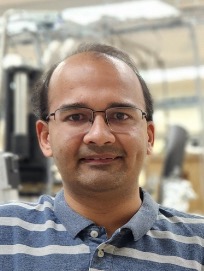 Siddharth Karkare合作论文数Department of Physics, Arizona State University19
 John Dobbins合作论文数19
 Georg Hoffstaetter De Torquat合作论文数Cornell Laboratory for Accelerator-based Sciences and Education, Department of Physics, College of Arts and Sciences, Cornell University18
 Matthias Liepe合作论文数Departments of Physics, College of Arts & Sciences, Cornell University16john scott price合作论文数15
 Jared Maxson合作论文数Department of Physics, College of Arts and Sciences, Cornell University15Liu Xianghong合作论文数14Ralf Eichhorn合作论文数13
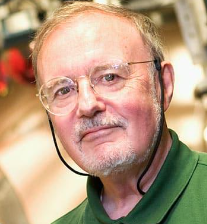 Maury Tigner合作论文数Department of Physics, The College of Arts & Sciences, Cornell University13C. K. Sinclair合作论文数13Vadim Veshcherevich合作论文数13
 Zhi Zhao (赵志)合作论文数Zhangjiang Laboratory, Shanghai Advanced Research Institute, Chinese Academy of Sciences;University of Chinese Academy of Sciences11Yulin Li合作论文数10Alexander B Temnykh合作论文数10D. Sagan合作论文数Cornell University10Christopher Mayes合作论文数9
 Frank Wise合作论文数School of Applied and Engineering Physics, Cornell University9Dimitre G. Ouzounov合作论文数9
 Sergey a Belomestnykh合作论文数Cornell University9
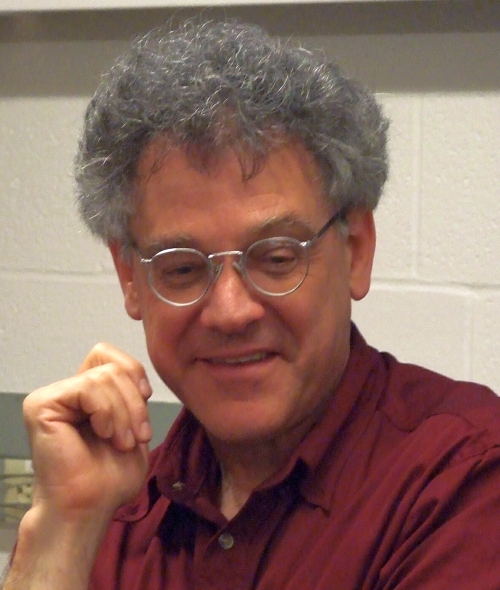 Sol M. Gruner合作论文数Department of Physics, Cornell University9Peter Quigley合作论文数8V. O. Kostroun合作论文数7colin richard wilson合作论文数7
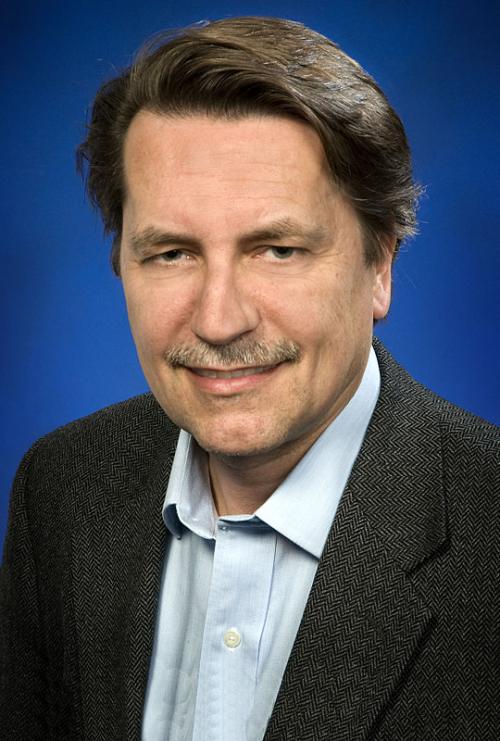 Thomas Roser合作论文数Brookhaven National Laboratory7J. Crittenden合作论文数7
 Michiko Minty合作论文数Department of Collider Accelerator, Brookhaven National Laboratory7
 Hasan Padamsee合作论文数7M. Billing合作论文数7Thomas L. Toth合作论文数7
 Donald H. Bilderback合作论文数Cornell High Energy Synchrotron Source, Cornell University;School of Applied and Engineering Physics, Cornell University7Vaclav Kostroun合作论文数7Joseph Conway合作论文数6R. Kazimi合作论文数6c mayes合作论文数6J. Scott Berg合作论文数6Theodore Vecchione合作论文数6Richard Kaplan合作论文数6
 Dejan Trbojevic合作论文数Collider Accelerator Department, Brookhaven National Laboratory6François Méot合作论文数6Charles K. Sinclair合作论文数6
 Steve Peggs合作论文数Department of Physics and Astronomy, College of Arts and Sciences, Stony Brook University;Collider Accelerator Department, Brookhaven National Laboratory6Michael Ehrlichman合作论文数6s full合作论文数5J. Barley合作论文数5




