The low-to-high-density transition in compressed silica glass is investigated using percolation theory. Large-scale molecular dynamics simulations of SiO_2 glasses, with system sizes of up to 10^6 atoms and pressures ranging from 0 to 35 GPa, were carried out to investigate the emergence of structural motifs and their growth to system-spanning length scales under compression. On this basis, we introduced long-range descriptors that complement conventional local and medium-range structural measures. The results reveal critical percolation transitions of SiO_Z-SiO_Z clusters with increasing coordination number Z. The critical exponents slightly deviate from the standard (random) correlation, a behavior that seems to be more pronounced for higher coordinated polyhedra than for tetrahedra, suggesting a possible rigidity percolation mechanism. SiSi_z-SiSi_z clusters were also analyzed using the non-bonded approach. Bonded and non-bonded approaches complement each other in a particularly illuminating way for describing pressure-induced structural transformations and common mechanisms shared by bonded glasses, such as SiO_2, and non-bonded glasses, such as amorphous ice.
Nexus-CAT (Cluster Analysis Toolkit) is an open-source Python package for cluster detection and percolation analysis of atomistic simulation trajectories. Standard structural tools, such as the pair distribution function or structure factor, fail to capture the long-range connectivity changes underlying amorphous-amorphous transitions in glassy materials. Nexus-CAT addresses this gap by reading extended XYZ trajectory files and identifying clusters via a Union-Find algorithm with path-compression. Four clustering strategies, i.e., distance-based, bonding, coordination-filtered, and shared-neighbor, are implemented through a Strategy Factory design pattern, enabling the treatment of diverse network topologies. The program computes key percolation properties with percolation detection based on a rigorous period vector algorithm. The package is validated against theoretical predictions and applied to glasses with different bonding environments, namely vitreous silica, vitreous ice, and amorphous silicon. One original result is the observation of a percolation transition prior to crystallization in the latter, indicating that pressure-induced crystallization is initially driven by an amorphous transformation with similar coordination number. The code is also designed to be readily extended to gels, cements, and other disordered materials. Nexus-CAT is fully available on GitHub and PyPI. PROGRAM SUMMARY/NEW VERSION PROGRAM SUMMARY Program Title: Nexus-CAT (Cluster Analysis Toolkit) CPC Library link to program files: https://doi.org/10.17632/9ms9gczfb5.1 Developer's repository link: https://github.com/jperradin/nexus Licensing provisions: MIT Programming language: Python Nature of problem: When analyzing the structure of disordered systems, standard structural analysis tools such as the pair distribution function, bond angular distribution, or structure factor provide local or reciprocal-space descriptions of the structure. However, owing to structural disorder, they fail to capture long-range emergent order, e.g., scale-invariant descriptors analogous to the order parameter of crystalline phase transitions. Recent studies have proposed percolation theory as a unified framework for describing amorphous-amorphous transformations, showing that the formation and breakdown of coordination-specific polyhedral networks follow universal scaling laws characteristic of percolation phase transitions [1-4]. This percolation-based description introduces a genuinely long-range view of system-spanning networks in glasses that extends beyond the reach of traditional short-and medium-range order analyses. However, to our knowledge, no flexible and dedicated tools currently exist for performing systematic cluster detection and percolation analysis on sequences of point like particle configurations, like atomistic trajectories generated by Monte Carlo or molecular dynamics simulations. Solution method: Nexus-CAT addresses this gap by providing an open-source Python framework that reads standard extended XYZ trajectory files and identifies atomic clusters using a high-performance Union-Find algorithm. The toolkit implements multiple clustering strategies, including distance-based, bonding, coordination-filtered, and shared-neighbor approaches, enabling the treatment of diverse disordered network topologies. This versatility makes Nexus-CAT applicable to a wide range of disordered systems, from network-forming to multicomponent oxide glasses, as well as chalcogenide and metallic glasses, amorphous semiconductors, amorphous ice, etc. The pipeline provides rigorous computation of percolation properties (e.g., correlation length, order parameter, average cluster size). Combined with finite-size scaling analyses over multiple system sizes, these quantities allow the characterization of the critical behavior and universality class governing amorphous-amorphous transitions, as recently demonstrated for vitreous silica and amorphous ice [2,3,5]. This framework can be readily extended to other systems, such as gels and cements [4,6], thereby enabling a systematic investigation of polyamorphic transitions responsible for macroscopic changes across a broad class of disordered materials.
Abstract Computational studies suggest that the maximum density of water at 277 K and the divergence from experimentally measured compressibility at 228 K at 1 bar arise from the competition between low and high-density molecular populations. However, the relationships among these anomalies, including the minimum density at 203 K, are still debated. Using molecular dynamics with the TIP4P/2005 model, we investigate the pressure–temperature behavior of metastable water along isothermal and isobaric lines to show that in both cases the density and compressibility anomalies result from the emergence, coexistence and extinction of low and high-density percolating clusters. We connect these behaviors with distinct stages of metastable water phase separation, which occur in regions of steep increase in sample density. Our results are consistent with liquid–liquid critical point scenarios while establishing a phenomenological percolation-based framework that systematically organizes water anomalies across diverse temperatures and pressures. This framework may explain percolation transitions observed in oxide and metallic glasses, providing a perspective to describe amorphous transformations in pure substances.
Hyper-Raman scattering is used to study the temperature dependence of the longitudinal optic (LO) modes of three prototypical ferroelectric relaxors in a broad temperature range from 20 to 800 K. The three LO bands observed in all spectra of the three materials are linked to the three transverse optic (TO) modes in cubic relaxors where LOi is linked to TOi, with i = 1 to 3. The Last, Slater, and Axe eigenvector pictures of the TO modes are consistent with our observations on LO1, LO2, and LO3, respectively. Within this framework, the splitting of LO2 would mostly be linked to a structural disorder on the site while the strength of an anomaly of LO1 near the freezing temperature Tf relies on the ability of the material to develop a long-range ordering. Moreover, the more pronounced the splitting, the more important the structural disorder and the lower the value of the dielectric constant. Published by the American Physical Society 2024
Polycrystalline samples of (Ba0.8Sr0.2)1-3x/2BixTi0.95(Zn1/3Nb2/3)0.05O3 (BixBSTBZN) (x = 0.00, 0.10), were prepared by the solid state reaction method. The dielectric impedance properties were studied over the range of frequency between 100 Hz and 1 MHz and in the temperature range of 420 degrees C-480 degrees C, using the modulus formalism. The impedance plot showed a first semicircle at high frequency which was assigned to the grain intrinsic effect and a second semicircle, at lower frequencies, which corresponds to grain boundary polarization (conduction phenomenon). A complex modulus spectrum was used to understand the mechanism of the electrical transport process, which indicates that a non-Debye type of multiple relaxations in the material. The values of the activation energy of the compound (calculated both from dc conductivity and the modulus spectrum) are very similar, suggesting that the relaxation process may be attributed to the same type of charge carriers. The frequency dependent conductivity plots exhibit double power law dependence suggesting three types of conduction mechanisms: low frequency conductivity owing to long range translational motion of electrons, mid-frequency conductivity due to short-range hopping, and high frequency conduction due to localized orientation hopping mechanism. Variation of ac conductivity as a function of frequency shows that the compound exhibits Arrhenius-type of electrical conductivity.
We report hyper-Raman scattering measurements of the lowest transverse optic (TO) phonon branch in the relaxor Bi-0.05-BSTZN in the paraelectric phase from 300 to 973 K. The results evidence a displacive-like behavior from a highly damped soft mode at high temperature to an overdamped (quasi-elastic-like) component on cooling close to T-c. A fit with a mean field law omega 0(>T=CT-T0 gives a temperature T-0 = 102 K significantly lower than T-0 = 188 K found by dielectric measurements. Reconciling the two experiments likely deserves considering a coupled modes analysis involving a second mode at slightly higher wavenumber. This behavior is very similar to that previously observed in PMN. Considering the rather complex chemical composition of the present compound as compared with PMN, these results emphasize a universal low-wavenumber dynamics of ferroelectric relaxors.
This article reports on more than a century of elastic and inelastic spectroscopies in vitreous silica, the prototypical glass former. The discovery of infrared spectroscopies, Raman and Brillouin scattering, and X-ray diffraction, opened a new field of science devoted to the description of matter at atomic scale. Theories describing the interaction of radiations with matter rapidely developed, as well as theories based on symmetries for the description of the vibrations. Silica, in its crystalline and vitreous form, has often been the reference material for testing new devices and new theories. As such they were the "witnesses" of the major spectroscopic breakthroughs. Owing to the difficulty to understand disorder, progresses in glasses occurred later than those in crystalline materials. For example, after Zachariasen famous paper in 1932, it was not until the 1960s that 3D random network models were built in support of experimental data. The invention of lasers and the construction of large facilities have also widely extended the range of glass properties accessible using spectroscopies. Concerning vitreous materials in general developments in the last decades of nonconventional techniques as well as numerical tools for the data analysis have opened perspectives for further investigations.
Atomic vibrations in perfect, slightly defective or mixed crystals are to a large extent well understood since many decades. Theoretical descriptions are thus in excellent agreement with the experiments. As a consequence, phonon-related properties like specific heat, thermal conductivity or sound attenuation are also well explained in these solids. This is not yet the case in glasses where the lack of periodicity generates enormous difficulties in theoretical treatments as well as in experiments or in numerical simulations. Thanks to recent developments along all these lines, comprehensive studies have emerged in the last decades and several decisive advances have been made. This chapter is thus devoted to a discussion of the nature of the vibrational properties in glasses with particular emphasis on the low-frequency part of the vibrational density of states, including the acoustic excitations, and of the experimental techniques used to their study.
The low frequency lattice vibrations and relaxations are investigated in single crystals of the four 3D hybrid organolead perovskites, MAPbBr 3 , FAPbBr 3 , MAPbI 3 , and α -FAPbI 3 , at the Brillouin zone center using Raman and Brillouin scattering and at the zone boundary using inelastic neutron scattering. The temperature dependence of the PbX 6 lattice modes in the four compounds can be renormalized into universal curves, highlighting a common vibrational dynamics at the cubic to tetragonal transition. In particular, no soft vibration is observed excluding a displacive-like transitional dynamics. The reorientational (pseudospin) motions of the molecular cations exhibit a seemingly order-disorder character recalling that of plastic crystals, but attributed to a secondary order-parameter. At ultra-low frequency, a quasi-elastic component evidenced by Brillouin scattering and associated to the unresolved central peak observed in neutron scattering, is attributed to center of mass anharmonic motions and rattling of the molecular cations in the perovskite cavities. Its partially unexpressed critical behavior at the transition points toward the general importance of defects in HOPs preventing the net divergence of order parameter correlations at the critical temperatures.
This deposit contains: 1) Configurations (XYZ format) for selected densities/pressures (~100 configurations) extracted from the corresponding DFTB trajectories. (see configs-2-deposit.zip). The file readme-configs-2-deposit.txt gives details on configuration file and corresponding box size, pressure and density. 2) xmgrace source files of the manuscript's figures (file figures.zip). Each .agr file contains the XY data of the plotted quantities.
Amorphous–amorphous transformations under pressure are generally explained by changes in the local structure from low- to higher-fold coordinated polyhedra 1 – 4 . However, as the notion of scale invariance at the critical thresholds has not been addressed, it is still unclear whether these transformations behave similarly to true phase transitions in related crystals and liquids. Here we report ab initio-based calculations of compressed silica (SiO 2 ) glasses, showing that the structural changes from low- to high-density amorphous structures occur through a sequence of percolation transitions. When the pressure is increased to 82 GPa, a series of long-range (‘infinite’) percolating clusters composed of corner- or edge-shared tetrahedra, pentahedra and eventually octahedra emerge at critical pressures and replace the previous ‘phase’ of lower-fold coordinated polyhedra and lower connectivity. This mechanism provides a natural explanation for the well-known mechanical anomaly around 3 GPa, as well as the structural irreversibility beyond 10 GPa, among other features. Some of the amorphous structures that have been discovered mimic those of coesite IV and V crystals reported recently 5 , 6 , highlighting the major role of SiO 5 pentahedron-based polyamorphs in the densification process of vitreous silica. Our results demonstrate that percolation theory provides a robust framework to understand the nature and pathway of amorphous–amorphous transformations and open a new avenue to predict unravelled amorphous solid states and related liquid phases 7 , 8 .
In glasses, atomic disorder combined with atomic connectivity makes understanding of the nature of the vibrations much more complex than in crystals or molecules. With a simple model, however, it is possible to show how disorder generates quasi-local modes on optic branches as well as on acoustic branches at low-frequency. The latter modes, possibly hybridizing with low-lying optic modes in real glasses, lead to the excess, low-frequency excitations known as {\it boson-peak modes}, which are lacking in crystals. The spatially quasi-localized vibrations also explain anomalies in thermal conductivity and the end of the acoustic branches, two other specific features of glasses. Together with the quasi-localization of the modes at the nanometric scale, structural disorder lifts the crystalline or molecular spectroscopic selection rules and makes interpretation of experiments difficult. Nevertheless, vibrations in simple glasses such as vitreous silica or vitreous boron oxide are nowadays rather well described. But a comprehensive understanding of the boson peak modes remains a highly debated issue as illustrated by three archetypal glass systems, vitreous SiO$_2$ and B$_2$O$_3$ and amorphous silicon.
 Eric Courtens合作论文数Groupe de Physique;Université Montpellier II;Groupe de Physique, Université Montpellier II35
 Ali Al-Zein合作论文数European Synchrotron Radiation Facility20
 Benoit Ruffle合作论文数Groupe Matière Condensée et Matériaux, Université de Rennes I15Rene Vacher合作论文数14
 Jerome Rouquette合作论文数12Currat Roland合作论文数11
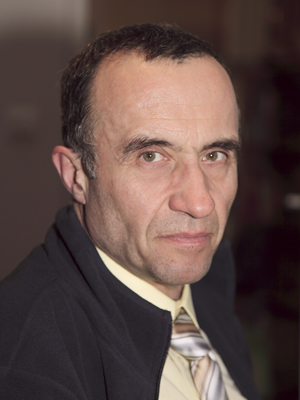 Alexander Tagantsev合作论文数École Polytechnique Fédérale de Lausanne;Ioffe Institute11
 Jiří Hlinka合作论文数Institute of Physics of the Czech Academy of Sciences11
 Ludovic Arzel合作论文数Institut des Matériaux Jean Rouxel (IMN),, CNRS10
 Hamadi Khemakhem合作论文数Laboratoire des Matériaux Ferroélectriques, Faculté des Sciences de Sfax, 3018 Sfax, Tunisia9M. Foret合作论文数9
 Guilhem Simon合作论文数8
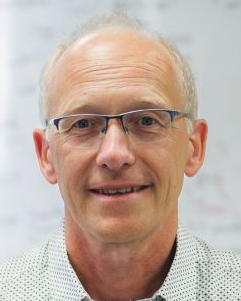 Jacky Even合作论文数Institut National des Sciences Appliquees de Rennes, Institut Universitaire de France8
 Dhifallah Nabil合作论文数7
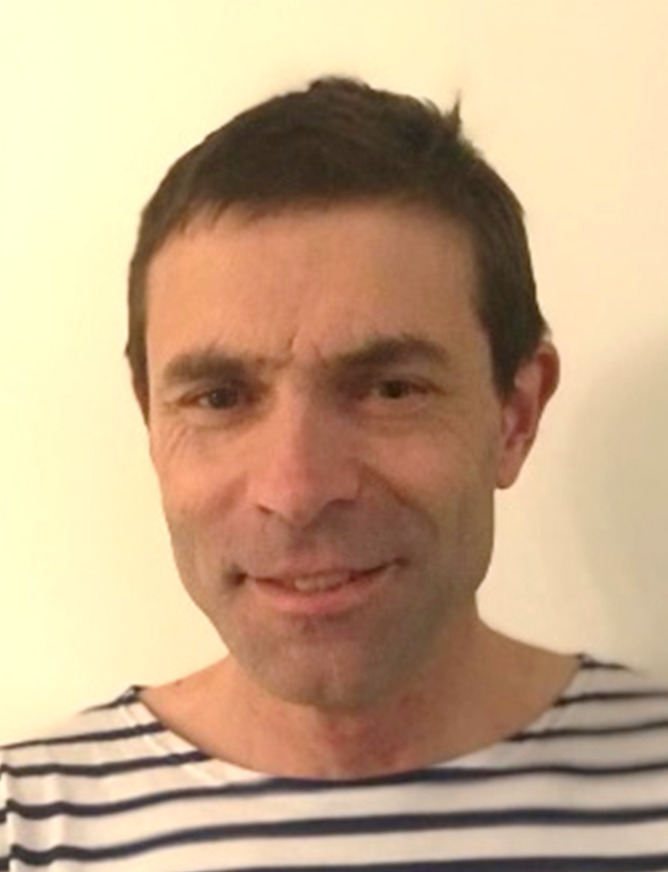 Antoine Letoublon合作论文数Institut Foton7A. Yamanaka合作论文数6
 Philippe Bourges合作论文数Laboratoire Leon Brillouin, Commissariat à l’Énergie Atomique6
 Christine Bogicevic合作论文数6
 Julien Haines合作论文数Institut Charles Gerhardt Montpellier6Simona Ispas合作论文数6Serge Paofai合作论文数5Keita Inoue合作论文数5Claire Levelut合作论文数Laboratoire des Verres, Université de Montpellier II5
 Claudine Katan合作论文数Institut des Sciences chimiques de Rennes;Centre national de la recherche scientifique5René Vacher合作论文数5
 Emmanuel Farhi合作论文数Institut Laue-Langevin5
 Anwar Hasmy合作论文数Laboratoire de Science des Materiaux Vitreux;Universite Montpellier II;Laboratoire de Science des Materiaux Vitreux, Universite Montpellier II5Y. Inaba合作论文数4J-M Kiat合作论文数4
 Sebastien Clement合作论文数4B Hennion合作论文数4H. Casalta合作论文数4
 Lynn A Boatner合作论文数Materials Science and Technology Division, Oak Ridge National Laboratory4
 Mohamed Dammak合作论文数Laboratoire de Physique Appliquée, Groupe de Physique Théorique, Département de Physique, Faculté des Sciences de Sfax, 3018 Sfax, Tunisie4
 Stéphane Cordier合作论文数Rennes Institute of Chemical Sciences, Universite de Rennes 14
 Antoni Kania合作论文数4c guillon合作论文数3A. Polian合作论文数3Mathieu Kint合作论文数3Pascale Gemeiner合作论文数3S. Raymond合作论文数3
 Klaus-Dieter Liss合作论文数The Bragg Institute, Australian Nuclear Science and Technology Organisation3Julien Burgin合作论文数Rutgers University;Medical University of South Carolina;Rutgers University, Medical University of South Carolina3
 Claude Ecolivet合作论文数Groupe Matière Condensée et Matériaux, Université de Rennes 1 – CNRS3B. Dorner合作论文数3
 Daniel R. Neuville合作论文数Centre National de la Recherche Scientifique, Institut de Physique du Globe de Paris, Universite de Paris3Francoise Denoyer合作论文数3Pierre Langot合作论文数3Coralie Weigel合作论文数Bayerisches Geoinstitut, Universität Bayreuth3




