Brillouin spectroscopy is a non-invasive method technique for visualizing the mechanical properties of biological samples with sub-micrometer resolution. However, to obtain 2D or even 3D maps, a high-contrast spectrometer is required to effectively reject spurious signals and isolate the signal of interest. In this work, we present an optimized two-stage virtually imaged phased array-based Brillouin spectrometer capable of achieving a contrast of at least 80 dB thanks to a new single diffraction mask, and thus with an unprecedentedly high overall transmission. Numerical simulations of the electric field propagation through the spectrometer and dedicated experiments validate the increase in contrast. We have used the newly developed Brillouin spectrometer coupled to a confocal microscope to obtain 1 h high-resolution 2D images of about 104 spectra of transparent dental pulp stem cells near a MgF2 interface as well as of the much less transparent porcine dentin material, demonstrating its overall stability and reliability.
Several theoretical approaches to disordered media predict that acoustic waves should undergo a quartic increase in their attenuation coefficient with increasing frequency in the sub-terahertz region. Such Rayleigh-type scattering would be related to the anomalous low-temperature plateau in the thermal conductivity and to the so-called boson peak, i.e. an excess of vibrational modes above the Debye density of states at around 1 THz. Brillouin scattering of light allows the measurement of sound absorption and velocity dispersion up to about 0.1 THz while inelastic x-ray scattering is limited to frequencies larger than about 1 THz. We take advantage of the advent of ultrafast optical techniques to explore the acoustical properties of amorphous SiO2 layers in the difficult but crucial frequency region within this gap. A quartic scaling law with frequency is clearly revealed between 0.2 and 0.9 THz, which is further shown to be independent of temperature. This strongly damped regime is accompanied by a decrease in the sound velocity already starting from about 0.5 THz, in line with theories. Our study assists to clarify the anomalous acoustical properties in glasses at frequencies entering the boson peak region.
OBJECTIVE:This study aimed to investigate the mechanical properties of porcine dentin using Brillouin confocal microscopy, focusing on its tubules and canaliculi. By mapping the Brillouin shift, we aimed to gain deeper insight into dentin biomechanics and assess how porcine dentin compares to human dentin as a model for dental research. DESIGN:Porcine molars were prepared by dehydration, precision cutting and polishing. A Brillouin microscope with a dual-VIPA configuration was used for spectral acquisition at 0.3 µm steps. Brillouin frequency shift, full width at half maximum (FWHM) and intensity were analyzed. RESULTS:Brillouin microscopy identified three distinct zones in porcine dentin: tubules, intertubular regions and branching areas, similar to human dentin. The Brillouin shifts ranged from 17 to 21.5 GHz, with an average around 19 GHz, lower than the 20-25 GHz typically found in human dentin. Mapping revealed branching tubules resembling tree trunks, with intricate branch-like structures in the intertubular regions. Peritubular areas exhibited higher frequency shifts, reaching around 21 GHz, distinguishing them from the more uniform intertubular zones. The dense branch networks surrounded by harder material provided insights into dentin's microstructure. However, challenges in refractive index and density measurements hindered direct conversion of frequency shifts to precise elastic longitudinal modulus values. CONCLUSION:This study demonstrated that Brillouin VIPA-based microscopy can effectively map the mechanical properties of porcine dentin. The results show its potential for non-contact, high-resolution mechanical histology in biological tissues, offering promise for studying healthy and diseased mineralized tissues. Further optimization is needed to adapt the technique for human samples, considering differences in optical and mechanical properties.
Objective: Dentin, enamel and the transition zone, called the dentin-enamel junction (DEJ), have an organization and properties that play a critical role in tooth resilience and in stopping the propagation of cracks. Understanding their chemical and micro-biomechanical properties is then of foremost importance. The aim of this study is to apply Brillouin microscopy on a complex biological structure, that is, the DEJ, and to compare these results with those obtained with Raman microscopy. Design: Both techniques allow noncontact measurements at the microscopic scale. Brillouin microscopy is based on the interaction between acoustic phonons and laser photons and gives a relation between the frequency shift of the scattered light and the stiffness of the sample. Raman spectra contain peaks related to specific chemical bonds. Results: Comparison of the Brillouin and Raman cartographies reveals correlations between mechanical and chemical properties. Indeed, the shapes of the phosphate content and stiffness curves are similar. The two spectroscopies give compatible values for the mean distance between two tubules, i.e., 4-6 & mu;m. Moreover, for the first time, the daily cross striations of enamel could be studied, indicating a relationship between the variation in the phosphate concentration and the variation in the rigidity within the enamel prisms. Conclusions: We demonstrate here the possibility of using Brillouin scattering microscopy to both study complex biological materials such as the enamel-dentin junction and visualize secondary structures. Correlations between the chemical composition and mechanical properties could help in better understanding the tissue histology.
We determine the structural origin of an "atomic-spring-like effect" in a glassy silica-helium composite, which exhibits this mechanical property that reversibly accumulates and restores energy at the subnanoscale based on a high-pressure experimental pair distribution function study combined with atom-scalemolecular simulations. These unexpected experimental results were obtained byusing a 3 mu m spot size 61 keV X-ray beam and large area detector and bysubtracting the scattered intensity due to helium outside the sample from the silicasignal at the same focal point for each pressure point. The compression behavior of the glassy silica-helium composite is characterized on a structural level by the change from a uni- to bimodal distribution in the inter-tetrahedral distances in the amorphous isotropic structure of silica. We propose a simple characterization of this atomic-spring-like glass property using impedance spectroscopy measurements
Atomic vibrations in perfect, slightly defective or mixed crystals are to a large extent well understood since many decades. Theoretical descriptions are thus in excellent agreement with the experiments. As a consequence, phonon-related properties like specific heat, thermal conductivity or sound attenuation are also well explained in these solids. This is not yet the case in glasses where the lack of periodicity generates enormous difficulties in theoretical treatments as well as in experiments or in numerical simulations. Thanks to recent developments along all these lines, comprehensive studies have emerged in the last decades and several decisive advances have been made. This chapter is thus devoted to a discussion of the nature of the vibrational properties in glasses with particular emphasis on the low-frequency part of the vibrational density of states, including the acoustic excitations, and of the experimental techniques used to their study.
The low frequency lattice vibrations and relaxations are investigated in single crystals of the four 3D hybrid organolead perovskites, MAPbBr 3 , FAPbBr 3 , MAPbI 3 , and α -FAPbI 3 , at the Brillouin zone center using Raman and Brillouin scattering and at the zone boundary using inelastic neutron scattering. The temperature dependence of the PbX 6 lattice modes in the four compounds can be renormalized into universal curves, highlighting a common vibrational dynamics at the cubic to tetragonal transition. In particular, no soft vibration is observed excluding a displacive-like transitional dynamics. The reorientational (pseudospin) motions of the molecular cations exhibit a seemingly order-disorder character recalling that of plastic crystals, but attributed to a secondary order-parameter. At ultra-low frequency, a quasi-elastic component evidenced by Brillouin scattering and associated to the unresolved central peak observed in neutron scattering, is attributed to center of mass anharmonic motions and rattling of the molecular cations in the perovskite cavities. Its partially unexpressed critical behavior at the transition points toward the general importance of defects in HOPs preventing the net divergence of order parameter correlations at the critical temperatures.
In glasses, atomic disorder combined with atomic connectivity makes understanding of the nature of the vibrations much more complex than in crystals or molecules. With a simple model, however, it is possible to show how disorder generates quasi-local modes on optic branches as well as on acoustic branches at low-frequency. The latter modes, possibly hybridizing with low-lying optic modes in real glasses, lead to the excess, low-frequency excitations known as {\it boson-peak modes}, which are lacking in crystals. The spatially quasi-localized vibrations also explain anomalies in thermal conductivity and the end of the acoustic branches, two other specific features of glasses. Together with the quasi-localization of the modes at the nanometric scale, structural disorder lifts the crystalline or molecular spectroscopic selection rules and makes interpretation of experiments difficult. Nevertheless, vibrations in simple glasses such as vitreous silica or vitreous boron oxide are nowadays rather well described. But a comprehensive understanding of the boson peak modes remains a highly debated issue as illustrated by three archetypal glass systems, vitreous SiO$_2$ and B$_2$O$_3$ and amorphous silicon.
Hybrid organolead perovskites (HOP) have started to establish themselves in the field of photovoltaics, mainly due to their great optoelectronic properties and steadily improving solar cell efficiency. Study of the lattice dynamics is key in understanding the electron-phonon interactions at play, responsible for such properties. Here, we investigate, via neutron and Raman spectroscopies, the optical phonon spectrum of four different HOP single crystals: MAPbBr 3 , FAPbBr 3 , MAPbI 3 , and α -FAPbI 3 . Low temperature spectra reveal weakly dispersive optical phonons, at energies as low as 2-5 meV, which seem to be the origin of the limit of the charge carriers mobilities in these materials. The temperature dependence of our neutron spectra shows as well a significant anharmonic behaviour, resulting in optical phonon overdamping at temperatures as low as 80 K, questionning the validity of the quasi-particle picture for the low energy optical modes at room temperature where the solar cells operate.
X-ray photon correlation spectroscopy is used to study the dynamics of the glass former across the glass transition temperature, . The obtained data confirm that while the structural relaxation drives the density rearrangements in the liquid phase, a beam-induced dynamics is the dominant effect around and below . The use of a hybrid photon counting detector allows us to obtain high-quality correlation functions with a characteristic decay time down to a second. The characteristic time of the induced dynamics displays a linear dependence on the inverse of the absorbed X-ray power over the whole observed range, i.e. up to powers of 0.2 eV/atom/s. Up to these values, then, an X-ray irradiated glass sample explores structurally equivalent configurations on a timescale dictated by the absorbed power.
The temperature dependence of the piezoelectric properties of trigonal α-GeO2 single crystals obtained by the high-temperature flux method was measured by the resonance technique of the electrical impedance in the 20 °C–600 °C range. To approach the values of the two independent piezoelectric coefficients d11 and d14, we first measured as a function of temperature the elastic coefficients S11, S14, and S66 and the dielectric permittivity ε11, which are involved in the coupling coefficient k of both the thickness shear mode and the transverse mode. A Y-cut plate with a simple +45° rotation [(YXtwl) +45°/0°/0°] was used to measure the coupling coefficient of the thickness shear mode, and two X-turned plates [(XYtwl) +45°/0°/0° and (XYtwl) −45°/0°/0°] were prepared to characterize the coupling coefficient of two transverse modes. From the whole experimental measurements, the piezoelectric coefficients of α-GeO2 were calculated up to 600 °C. They show that this crystal is one of the most efficient in regard to the α-quartz-like family at room temperature and that its thermal comportment retains large piezoelectric properties up to 600 °C.
In situ high-pressure Brillouin light scattering experiments along loading-unloading paths are used to investigate the compressibility of vitreous silica. Below 9 GPA, the equation of state obtained from the sound velocities corrected for dispersion agrees with volume measurements. Conversely, huge anelastic effects are observed in the range 10--60 GPa, unveiling the reversible transformation from the fourfold-coordinated structure to the sixfold one. The associated density changes correlate with the average Si coordination number. Decompression curves from above 20 GPa reveal abrupt backward coordination changes around 10--15 GPa and significant hysteresis. Contrary to common wisdom, the residual densification of the recovered silica samples can be figured out from changes in elastic properties along pressure cycles, ruling out a plastic description of the latter process.
 Rene Vacher合作论文数22Bernard Hehlen合作论文数Laboratoire des Collo;University of Montpellier II;Laboratoire des Collo, University of Montpellier II15Eric Courtens合作论文数Groupe de Physique;Université Montpellier II;Groupe de Physique, Université Montpellier II14Marie Foret合作论文数13
 Claude Ecolivet合作论文数Groupe Matière Condensée et Matériaux, Université de Rennes 1 – CNRS13Coralie Weigel合作论文数Bayerisches Geoinstitut, Universität Bayreuth13
 Jacky Even合作论文数Institut National des Sciences Appliquees de Rennes, Institut Universitaire de France12Vialla R合作论文数11M. Foret合作论文数11Mathieu Kint合作论文数9Serge Paofai合作论文数9
 Antoine Letoublon合作论文数Institut Foton9
 Philippe Bourges合作论文数Laboratoire Leon Brillouin, Commissariat à l’Énergie Atomique9Bertrand Toudic合作论文数8A. Polian合作论文数7
 Sebastien Clement合作论文数7Re Lechner合作论文数7
 Alban Desoutter合作论文数Biol Sante, Univ Montpellier7
 Stéphane Cordier合作论文数Rennes Institute of Chemical Sciences, Universite de Rennes 17
 Claudine Katan合作论文数Institut des Sciences chimiques de Rennes;Centre national de la recherche scientifique7
 Guillaume Guimbretiere合作论文数6
 Giulio Monaco合作论文数Department of Physics and Astronomy ‘Galileo Galilei’, University of Padua6
 Jacques Ollivier合作论文数Institut Laue Langevin6René Vacher合作论文数6
 Frédéric Cuisinier合作论文数LBN, Univ Montpellier5
 Emmanuel Rousseau合作论文数5
 Hamideh Salehi合作论文数5J. Etrillard合作论文数Groupe Matiere Condensee et Materiaux;University of Rennes5
 Simon Ayrinhac合作论文数5
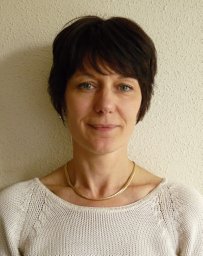 Sylvie Beaufils合作论文数CNRS-Université Rennes 1, Université Rennes 15R. Vialla合作论文数4S. Raymond合作论文数4Gerrit Coddens合作论文数4C Katan合作论文数3S. Longeville合作论文数3
 Andre Ferreira合作论文数Lab Immunopharmacol, Oswaldo Cruz Inst3
 Jerome Rouquette合作论文数3
 Pascale Armand合作论文数3
 Olivier Durand合作论文数Alcatel CRC3
 Jean H. Gallier合作论文数Computer and Information Science Department, School of Engineering and Applied Science, University of Pennsylvania3
 Julien Haines合作论文数Institut Charles Gerhardt Montpellier3
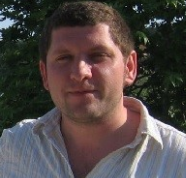 Benoit Coasne合作论文数Laboratoire Interdisciplinaire de Physique, CNRS and University Grenoble Alpes;ILL Theory Group, Institute Laue Langevin3
 Giacomo Baldi合作论文数European Synchrotron Radiat Facil3Sébastien Clément合作论文数Faculté de Médecine Vétérinaire, Université de Montréal3Bertrand Menaert合作论文数Laboratoire de Cristallographie, Centre National de la Recherche Scientifique3R. Marchand合作论文数3m kazan合作论文数2B. Ruta合作论文数2M. Goldammer合作论文数2




