The physical mechanism underlying the L–H transition in tokamaks has remained an open problem for over forty years. We present three-dimensional flux-driven two-fluid simulations in a diverted geometry that exhibit a confinement transition at lower power in the favourable toroidal-field configuration. The simulations show that electromagnetic drift-wave turbulence spontaneously generates a sheared E×B flow responsible for transport suppression. The toroidal-field-direction asymmetry arises from time-reversal symmetry breaking by finite collisionality, as demonstrated by a quasilinear calculation of the turbulent momentum flux. First-principles scaling laws are derived for the L–H power threshold in both density branches, the density minimum, and the minimum power, all matching or surpassing existing empirical scalings.
Results of the first gyrokinetic simulations of the TCV pedestal are presented. Two discharges at varying levels of gas puffing are considered as input parameters for the local GENE simulations. Linear and nonlinear simulations are carried out for electron scale turbulence to determine the role of the Electron Temperature Gradient (ETG) mode in the pedestal transport. The heat flux associated with ETG is found to be negligible compared to the total experimental electron heat flux at lower gas puff. At higher gas puff, computed heat flux was find to account for experimental values, demonstrating the importance of the ETG-driven transport in this case. Additional simulations are carried out with modified density profiles to investigate the difference between the two discharges. The change of the electron heat flux is found to be associated with the transition from slab- to toroidal-ETG due to the reduction of the normalized density gradient in the pedestal at the higher gas puffing.
A Doppler backscattering (DBS) diagnostic has recently been installed on the Tokamak à Configuration Variable (TCV) to facilitate the study of edge turbulence and flow shear in a versatile experimental environment. The dual channel V-band DBS system is coupled to TCV's quasi-optical diagnostic launcher, providing access to the upper low-field side region of the plasma cross-section. Verifications of the DBS measurements are presented. The DBS equilibrium v_⊥ profiles are found to compare favorably with gas puff imaging (GPI) measurements and to the E_r inferred from the radial force balance of the carbon impurity. The radial structure of the edge E_r × B equilibrium flow and its dependencies are investigated across a representative set of L-mode TCV discharges, by varying density, auxiliary heating and magnetic configuration.
The quasi-continuous exhaust (QCE) regime is a regime that is naturally type-I ELM-free. It combines the high density at the plasma edge needed for power exhaust with the high normalised energy confinement typical for H-mode operation. In the QCE regime large-scale ELMs are avoided and high-frequency, low-amplitude filaments are present leading to the name-giving quasi-continuous edge transport of particles and energy. This contribution reports that for the first time the QCE regime was successfully achieved in JET with a metal wall. Moreover, it was demonstrated in the recent JET deuterium-tritium campaign DTE3 that the regime is compatible with D-T operation. Porting the QCE regime to JET strongly benefited from the experimental and modelling efforts at the medium sized tokamaks ASDEX Upgrade and TCV. Using the physics picture developed from the ASDEX Upgrade experimental results, the route to the QCE regime in JET reported here is following closely the approach that was successful in ASDEX Upgrade. First, strong plasma shaping-large elongation and triangularity and the highly correlated closeness to double null-is developed. Second, sufficient fuelling to achieve high enough density at the pedestal foot, close to the separatrix, is applied. In addition, neon seeding proved to be very beneficial to avoid type-I ELMs when reducing the main ion fuelling.
Tokamak a configuration variable (TCV), recently celebrating 30 years of near-continual operation, continues in its missions to advance outstanding key physics and operational scenario issues for ITER and the design of future power plants such as DEMO. The main machine heating systems and operational changes are first described. Then follow five sections: plasma scenarios. ITER Base-Line (IBL) discharges, triangularity studies together with X3 heating and N2 seeding. Edge localised mode suppression, with a high radiation region near the X-point is reported with N-2 injection with and without divertor baffles in a snowflake configuration. Negative triangularity (NT) discharges attained record, albeit transient, beta(N) similar to 3 with lower turbulence, higher low-Z impurity transport, vertical stability and density limits and core transport better than the IBL. Positive triangularity L-Mode linear and saturated ohmic confinement confinement saturation, often-correlated with intrinsic toroidal rotation reversals, was probed for D, H and He working gases. H-mode confinement and pedestal studies were extended to low collisionality with electron cyclotron heating obtaining steady state electron iternal transport barrier with neutral beam heating (NBH), and NBH driven H-mode configurations with off-axis co-electron cyclotron current drive. Fast particle physics. The physics of disruptions, runaway electrons and fast ions (FIs) was developed using near-full current conversion at disruption with recombination thresholds characterised for impurity species (Ne, Ar, Kr). Different flushing gases (D2, H2) and pathways to trigger a benign disruption were explored. The 55 kV NBH II generated a rich Alfvenic spectrum modulating the FI fas ion loss detector signal. NT configurations showed less toroidal Alfven excitation activity preferentially affecting higher FI pitch angles. Scrape-off layer and edge physics. gas puff imaging systems characterised turbulent plasma ejection for several advanced divertor configurations, including NT. Combined diagnostic array divertor state analysis in detachment conditions was compared to modelling revealing an importance for molecular processes. Divertor physics. Internal gas baffles diversified to include shorter/longer structures on the high and/or low field side to probe compressive efficiency. Divertor studies concentrated upon mitigating target power, facilitating detachment and increasing the radiated power fraction employing alternative divertor geometries, optimised X-point radiator regimes and long-legged configurations. Smaller-than-expected improvements with total flux expansion were better modelled when including parallel flows. Peak outer target heat flux reduction was achieved (>50%) for high flux-expansion geometries, maintaining core performance (H-98 > 1). A reduction in target heat loads and facilitated detachment access at lower core densities is reported. Real-time control. TCV's real-time control upgrades employed MIMO gas injector control of stable, robust, partial detachment and plasma beta feedback control avoiding neoclassical tearing modes with plasma confinement changes. Machine-learning enhancements include trajectory tracking disruption proximity and avoidance as well as a first-of-its-kind reinforcement learning-based controller for the plasma equilibrium trained entirely on a free-boundary simulator. Finally, a short description of TCV's immediate future plans will be given.
In 2021 JET exploited its unique capabilities to operate with T and D-T fuel with an ITER-like Be/W wall (JET-ILW). This second major JET D-T campaign (DTE2), after DTE1 in 1997, represented the culmination of a series of JET enhancements-new fusion diagnostics, new T injection capabilities, refurbishment of the T plant, increased auxiliary heating, in-vessel calibration of 14 MeV neutron yield monitors-as well as significant advances in plasma theory and modelling in the fusion community. DTE2 was complemented by a sequence of isotope physics campaigns encompassing operation in pure tritium at high T-NBI power. Carefully conducted for safe operation with tritium, the new T and D-T experiments used 1 kg of T (vs 100 g in DTE1), yielding the most fusion reactor relevant D-T plasmas to date and expanding our understanding of isotopes and D-T mixture physics. Furthermore, since the JET T and DTE2 campaigns occurred almost 25 years after the last major D-T tokamak experiment, it was also a strategic goal of the European fusion programme to refresh operational experience of a nuclear tokamak to prepare staff for ITER operation. The key physics results of the JET T and DTE2 experiments, carried out within the EUROfusion JET1 work package, are reported in this paper. Progress in the technological exploitation of JET D-T operations, development and validation of nuclear codes, neutronic tools and techniques for ITER operations carried out by EUROfusion (started within the Horizon 2020 Framework Programme and continuing under the Horizon Europe FP) are reported in (Litaudon et al Nucl. Fusion accepted), while JET experience on T and D-T operations is presented in (King et al Nucl. Fusion submitted).
Within the 9th European Framework programme, since 2021 EUROfusion is operating five tokamaks under the auspices of a single Task Force called ‘Tokamak Exploitation’. The goal is to benefit from the complementary capabilities of each machine in a coordinated way and help in developing a scientific output scalable to future largre machines. The programme of this Task Force ensures that ASDEX Upgrade, MAST-U, TCV, WEST and JET (since 2022) work together to achieve the objectives of Missions 1 and 2 of the EUROfusion Roadmap: i) demonstrate plasma scenarios that increase the success margin of ITER and satisfy the requirements of DEMO and, ii) demonstrate an integrated approach that can handle the large power leaving ITER and DEMO plasmas. The Tokamak Exploitation task force has therefore organized experiments on these two missions with the goal to strengthen the physics and operational basis for the ITER baseline scenario and for exploiting the recent plasma exhaust enhancements in all four devices (PEX: Plasma EXhaust) for exploring the solution for handling heat and particle exhaust in ITER and develop the conceptual solutions for DEMO. The ITER Baseline scenario has been developed in a similar way in ASDEX Upgrade, TCV and JET. Key risks for ITER such as disruptions and run-aways have been also investigated in TCV, ASDEX Upgrade and JET. Experiments have explored successfully different divertor configurations (standard, super-X, snowflakes) in MAST-U and TCV and studied tungsten melting in WEST and ASDEX Upgrade. The input from the smaller devices to JET has also been proven successful to set-up novel control schemes on disruption avoidance and detachment.
For its initial operational phase, ITER has until recently considered using non-nuclear hydrogen (H) or helium (He) plasmas to keep nuclear activation at low levels. To this end, the Tokamak Exploitation Task Force of the EUROfusion Consortium carried out dedicated experimental campaigns in He on the ASDEX Upgrade (AUG) and JET tokamaks in 2022, with particular emphasis put on the ELMy H-mode operation and plasma-wall interaction processes as well as comparison to H or deuterium (D) plasmas. Both in pure He and mixed He + H plasmas, H-mode operation could be reached but more effort was needed to obtain a stable plasma scenario than in H or D. Even if the power threshold for the LH transition was lower in He, entering the type-I ELMy regime appeared to require equally much or even more heating power than in H. Suppression of ELMs by resonant magnetic perturbations was studied on AUG but was only possible in plasmas with a He content below 19%; the reason for this unexpected behaviour remains still unclear and various theoretical approaches are being pursued to properly understand the physics behind ELM suppression. The erosion rates of tungsten (W) plasma-facing components were an order of magnitude larger than what has been reported in hydrogenic plasmas, which can be attributed to the prominent role of He2+ ions in the plasma. For the first time, the formation of nanoscale structures (W fuzz) was unambiguously demonstrated in H-mode He plasmas on AUG. However, no direct evidence of fuzz creation on JET was obtained despite the main conditions for its occurrence being met. The reason could be a delicate balance between W erosion by ELMs, competition between the growth and annealing of the fuzz, and coverage of the surface with co-deposits.
Under the auspices of EUROfusion, the ITER baseline (IBL) scenario has been jointly investigated on AUG and TCV in the past years and this paper reports on the developments on TCV. Three ITER shapes, namely the JET, AUG and ITER IBL have been reproduced in TCV, illustrating that the higher the triangularity the larger the ELM perturbation and the more difficult it is to reach stationary states with q(95)< 3.6. It is found that the performance of TCV IBL is mainly limited by (neoclassical) tearing modes, in particular 2/1 modes which are triggered after a large ELM. It is demonstrated that the shorter the ELM period the larger beta(N) at the NTM onset. We show that these modes can be avoided with central X3 EC heating at relatively high q(95) and moderate beta(N). However, the lack of significant ECH at the high central densities obtained in TCV IBL scenario limits the duration of low q(95) cases to about four confinement times. During this time, density usually keeps peaking until (neoclassical) tearing modes are triggered. Nevertheless, the TCV IBL database covers the ITER target values (H-98y2 similar to 1, beta(N) similar to 1.8 at q(95 )similar to 3) and a slightly better confinement than requested for ITER is
Experiments on ASDEX Upgrade (AUG) in 2021 and 2022 have addressed a number of critical issues for ITER and EU DEMO. A major objective of the AUG programme is to shed light on the underlying physics of confinement, stability, and plasma exhaust in order to allow reliable extrapolation of results obtained on present day machines to these reactor-grade devices. Concerning pedestal physics, the mitigation of edge localised modes (ELMs) using resonant magnetic perturbations (RMPs) was found to be consistent with a reduction of the linear peeling-ballooning stability threshold due to the helical deformation of the plasma. Conversely, ELM suppression by RMPs is ascribed to an increased pedestal transport that keeps the plasma away from this boundary. Candidates for this increased transport are locally enhanced turbulence and a locked magnetic island in the pedestal. The enhanced D-alpha (EDA) and quasi-continuous exhaust (QCE) regimes have been established as promising ELM-free scenarios. Here, the pressure gradient at the foot of the H-mode pedestal is reduced by a quasi-coherent mode, consistent with violation of the high-n ballooning mode stability limit there. This is suggestive that the EDA and QCE regimes have a common underlying physics origin. In the area of transport physics, full radius models for both L- and H-modes have been developed. These models predict energy confinement in AUG better than the commonly used global scaling laws, representing a large step towards the goal of predictive capability. A new momentum transport analysis framework has been developed that provides access to the intrinsic torque in the plasma core. In the field of exhaust, the X-Point Radiator (XPR), a cold and dense plasma region on closed flux surfaces close to the X-point, was described by an analytical model that provides an understanding of its formation as well as its stability, i.e., the conditions under which it transitions into a deleterious MARFE with the potential to result in a disruptive termination. With the XPR close to the divertor target, a new detached divertor concept, the compact radiative divertor, was developed. Here, the exhaust power is radiated before reaching the target, allowing close proximity of the X-point to the target. No limitations by the shallow field line angle due to the large flux expansion were observed, and sufficient compression of neutral density was demonstrated. With respect to the pumping of non-recycling impurities, the divertor enrichment was found to mainly depend on the ionisation energy of the impurity under consideration. In the area of MHD physics, analysis of the hot plasma core motion in sawtooth crashes showed good agreement with nonlinear 2-fluid simulations. This indicates that the fast reconnection observed in these events is adequately described including the pressure gradient and the electron inertia in the parallel Ohm’s law. Concerning disruption physics, a shattered pellet injection system was installed in collaboration with the ITER International Organisation. Thanks to the ability to vary the shard size distribution independently of the injection velocity, as well as its impurity admixture, it was possible to tailor the current quench rate, which is an important requirement for future large devices such as ITER. Progress was also made modelling the force reduction of VDEs induced by massive gas injection on AUG. The H-mode density limit was characterised in terms of safe operational space with a newly developed active feedback control method that allowed the stability boundary to be probed several times within a single discharge without inducing a disruptive termination. Regarding integrated operation scenarios, the role of density peaking in the confinement of the ITER baseline scenario (high plasma current) was clarified. The usual energy confinement scaling ITER98( p,y ) does not capture this effect, but the more recent H20 scaling does, highlighting again the importance of developing adequate physics based models. Advanced tokamak scenarios, aiming at large non-inductive current fraction due to non-standard profiles of the safety factor in combination with high normalised plasma pressure were studied with a focus on their access conditions. A method to guide the approach of the targeted safety factor profiles was developed, and the conditions for achieving good confinement were clarified. Based on this, two types of advanced scenarios (‘hybrid’ and ‘elevated’ q -profile) were established on AUG and characterised concerning their plasma performance.
The impact of plasma shaping on the properties of high density H-mode scrape-off layer (SOL) profiles and transport at the outer midplane has been investigated on Tokamaka configuration variable. The experimental dataset has been acquired by evolving the upper triangularity while keeping the other parameters constant. The scan comprises delta up values between 0.0 and 0.6, excluding negative triangularity scenarios. Within this study, a transition from type-I edge localised modes to the quasi-continuous exhaust regime takes place from low to high delta up . The modification of the upstream SOL profiles has been assessed, in terms of separatrix quantities, within the alpha t turbulence control parameter theoretical framework (Eich et al 2020 Nucl. Fusion 60 056016). The target parallel heat load and the upstream near-SOL density profiles have been shown to broaden significantly for increasing alpha t . Correspondingly, in the far SOL a density shoulder formation is observed when moving from low to high delta up . These behaviours have been correlated with an enhancement of the SOL fluctuation level, as registered by wall-mounted Langmuir probes as well as the thermal helium beam diagnostic. Specifically, both the background and the filamentary-induced fluctuating parts of the first wall ion saturation current signal are larger at higher delta up , with filaments being ejected more frequently into the SOL. Comparison of two pulses at the extremes of the delta up scan range, but with otherwise same input parameters, shows that the midplane neutral pressure does not change much during the H-mode phase of the discharge. This indicates that indirect effects of the change in geometry, linked to first wall recycling sources, should not play a significant role. The total core radiation increases at high delta up , on account of a stronger plasma-wall interaction and resulting larger carbon impurity intake from the first wall. This is likely associated to the enhanced first wall fluctuations, as well as a smaller outer gap and the close-to-double-null magnetic topology at high shaping.
In magnetic fusion devices, undesired non-axisymmetric magnetic field perturbations, typically called error fields (EF), have been observed to have a detrimental effect on plasma stability and confinement and can lead to brute plasma terminations, i.e. plasma disruption events. The main strategies that can be adopted to minimize the effect of EFs on the plasma dynamics consist in a careful alignment of the coils, when assembling the fusion device, and, most commonly, in the use of EF correction coils which counteract the non-axisymmetric fields by prescribing properly designed correction currents. In this work, an assessment of the n=1 EF source in MAST-U is presented. When constructing the MAST-U device, an optimization of poloidal and divertor coil positions has been adopted to reduce the n=1 EF source. This optimization consisted in the application of coil shifts and tilts, of the order of mms and mrads, respectively. To investigate the presence of a residual n=1 EF dedicated studies have been performed during the first MAST-U campaign. The compass scan method was employed to identify the n=1 EF, relying on the detection of the locked mode (LM) onset, which proved to be a challenging task. Therefore, a methodology based on Transfer Functions (TFs) among each coil and the n=1 radial magnetic field has been developed which allows the detection of LM formation. Such method is described here, complemented with the experimental results achieved, which suggest that the intrinsic n=1 EF source on MAST-U is relatively small with respect to MAST. Indeed, the empirical correction currents for n=1 EF minimization are smaller, about 0.2 kA, than the ones used in MAST, 1 kA range. This proves that the optimal coil alignment for n=1 EF minimization has been a successful strategy in MAST-U.
Carbon impurity transport is studied in the TCV tokamak using a charge exchange recombination diagnostic. TCVs flexible shaping capabilities were exploited to extend previous impurity transport studies to negative triangularity (delta < 0). A practical way of studying light impurity transport (like C, TCVs main impurity species due to graphite tiled walls) is to investigate the correlations between the impurity ion gradients that, in this study, highlighted significant differences between positive (PT) and negative delta (NT) plasma configurations. delta scans ( - 0.6 < delta < + 0.6 ) were performed in limited configurations, but displayed little correlation between C temperature, rotation and density gradients for positive delta. This stiff response for delta > 0 changes for negative delta, where the evolution of del(vtor) was accompanied by variations of del(nC) over a range of negative delta, showing that transport, in NT, is affected by velocity gradients. Similar delta scans were performed with additional NBH (Neutral Beam Heating), with power steps ranging from 0.25 MW to 1.25 MW, highlighting increased momentum confinement in negative delta. Finally, the evolution of intrinsic plasma toroidal rotation across linear to saturated ohmic confinement regime (LOC/SOC) transitions was explored at delta < 0, expanding previous studies performed in TCV for delta > 0 (Bagnato et al 2023 Nucl. Fusion 63 056006). Toroidal rotation reversal was not observed for delta < 0, despite clear LOC/SOC transitions, confirming that these two phenomena occur concomitantly only in a restricted number of cases and under specific conditions.
JET, the world’s largest operating tokamak with unique Be/W wall and tritium handling capability, completed a Deuterium-Tritium (D-T) campaign in 2021 (Maggi et al 29th Fusion Energy Conf. ) following a decade of preparatory experiments, dedicated enhancements, technical rehearsals and training (Horton et al 2016 Fusion Eng. Des. 109–111 925). Operation with tritium raises significant technical, safety and scientific challenges not encountered in standard protium or deuterium operation. This contribution describes the tritium operational requirements, pulses and technical preparations, new operating procedures, lessons learned and details on the achieved operational availability and performance. The preparation and execution of the recent JET tritium experiments benefitted from the previous experience in 1991 (Preliminary Tritium Experiment), 1997 (DTE1 campaign) and 2003 (Trace Tritium Campaigns) and consisted of the following five phases: technical rehearsals and scenario preparation, tritium commissioning, 100% tritium campaign, D-T campaign (DTE2), tritium clean-up. Following the clean-up JET resumed normal operation and is currently undertaking a further D-T campaign (DTE3).
The quasi-continuous exhaust (QCE) regime, formerly known as either type-II ELM or small ELM regime is studied in ASDEX Upgrade. The regime is a natural type-I ELM-free H-mode. The operational space of QCE discharges in ASDEX Upgrade with respect to their separatrix conditions and their power exhaust capabilities are presented. A significant broadening of the power fall-off length is observed, correlating to an increased separatrix density and pressure. Moreover, the possible reactor relevance of this regime is demonstrated by expanding the operational space to low edge safety factor and demonstrating the benign tungsten impurity behaviour. A discharge without any type-I ELM from start to end reaching a partially detached divertor at high normalised energy confinement time is presented.
A forward modeling technique is developed for determining the characteristic features of observed MHD modes from the line-of-sight data of the soft x-ray (SXR) diagnostics with 64 vertical lines-of-sight in theTokamak à Configuration Variable tokamak. Using diagnostics with excellent spatial resolution, this technique is shown to evaluate the poloidal mode numbers m , radial location and ballooning character of the MHD modes. In the first stage, the poloidal mode structures are modeled by the radially localized Gaussian-shaped emission regions rotating along the magnetic flux surfaces. In the second stage, the space structures of observed 95–100 kHz toroidal Alfvén eigenmodes (TAEs) are investigated numerically using HELENA, CSCAS and MISHKA codes. The calculated TAE eigenfunctions are then used in our forward modeling similarly to the approach of contrast imaging diagnostics (Edlund et al 2009 Phys. Rev. Lett. 102 165003) and SXR diagnostics (Piovesan et al 2008 Nucl. Fusion 48 065001). A ballooning structure of the observed n = 1 TAE mode can be analyzed more easily due to the low poloidal mode number m in contrast to the high- m modes analyzed by a similar SXR technique in the W7-X stellarator (Dreval et al 2021 Plasma Phys. Control. Fusion 63 065006).
One of our grand challenges towards fusion energy is the achievement of a high-performance plasma core coupled to a boundary solution. The high confinement mode (H-mode) provides such a high-performance fusion core due to the build-up of an edge transport barrier leading to a pedestal. However, it usually features type-I edge localized modes (ELMs) which pose a threat for long-duration plasma operation in future fusion devices as they induce large energy fluences onto the plasma facing components and typically are projected to damage the first wall. For future fusion devices, the integration of a stationary no-ELM regime with a power exhaust solution is indispensable. Several no-ELM and small-ELM regimes have extended their operational space in the past years, with the ultimate goal of providing an alternative core–edge solution to ITER and EU-DEMO. Prominent no-ELM or small-ELM alternatives include the I-mode, QH-mode, EDA H-mode, quasi-continuous exhaust (QCE) and ‘grassy’ ELM regimes, X-point radiator scenarios and negative triangularity L-mode. The state-of-the-art, including access conditions and main signatures, of these alternative regimes is reviewed. Many of these regimes partly match the operational space of ITER and EU-DEMO, however, knowledge gaps remain. Besides compatibility with divertor detachment and a radiative mantle, these include extrapolations to high Q operations, low core collisionality, high Greenwald fractions, impurity transport, amongst others. The knowledge gaps and possible strategies to close these gaps to show their applicability to ITER and EU-DEMO are discussed.
The work describes the pedestal structure, transport and stability in an effective mass ( A _eff ) scan from pure deuterium to pure tritium plasmas using a type I ELMy H-mode dataset in which key parameters that affect the pedestal behaviour (normalized pressure, ratio of the separatrix density to the pedestal density, pedestal ion Larmor radius, pedestal collisionality and rotation) are kept as constant as possible. Experimental results show a significant increase of the density at the pedestal top with increasing A _eff , a modest reduction in the temperature and an increase in the pressure. The variations in the pedestal heights are mainly due to a change in the pedestal gradients while only small differences are observed in the pedestal width. A clear increase in the pedestal density and pressure gradients are observed from deuterium to tritium. The experimental results suggest a reduction of the pedestal inter-edge localized mode (inter-ELM) transport from deuterium to tritium. The reduction is likely in the pedestal inter-ELM particle transport, as suggested by the clear increase of the pedestal density gradients. The experimental results suggest also a possible reduction of the pedestal inter-ELM heat transport, however, the large experimental uncertainties do not allow conclusive claims on the heat diffusivity. The clear experimental reduction of η _e (the ratio between density and temperature gradient lengths) in the middle/top of the pedestal with increasing A _eff suggests that there may be a link between increasing A _eff and the reduction of electron scale turbulent transport. From the modelling point of view, an initial characterization of the behaviour of pedestal microinstabilities shows that the tritium plasma is characterized by growth rates lower than the deuterium plasmas. The pedestal stability of peeling-ballooning modes is assessed with both ideal and resistive magnetohydrodynamics (MHD). No significant effect of the isotope mass on the pedestal stability is observed using ideal MHD. Instead, resistive MHD shows a clear increase of the stability with increasing isotope mass. The resistive MHD results are in reasonable agreement with the experimental results of the normalized pedestal pressure gradient. The experimental and modelling results suggest that the main candidates to explain the change in the pedestal are a reduction in the inter-ELM transport and an improvement of the pedestal stability from deuterium to tritium.
Ion cyclotron (IC) wave assisted breakdown has the potential to increase the robustness of plasma initiation during the ITER pre-fusion operation phase. Studies were performed at JET at ITER relevant loop electric field, Eloop≲0.33 Vm−1 , and a range of toroidal fields, including at the low toroidal field of 1.7T for which breakdown had not been achieved previously on JET. The study covered a range of H2 and D2 gas prefill pressures and timings, pumping conditions, and residual impurity levels. IC assisted breakdown was achieved for a lower and wider range of gas prefill pressures. IC assisted breakdown works by activating wall pumping before the current rise, changing the relation between fuelling and torus pressure in this phase compared to Ohmic breakdown. IC assisted breakdown enables plasma initiation with a higher level and significantly wider range of injected plasma prefill gas. As the injected prefill gas is the controlled parameter, this significantly improves the robustness of plasma initiation operationally. IC assistance is found to be more robust at ITER-like Eloop , succeeding with higher low-Z impurity content. Moreover, it does not introduce an impurity source that may hamper the subsequent burn though and current ramp-up phase. For both the IC assisted and pure Ohmic breakdown, the initial current rise rate is found to scale with ne/Eloop . The results and implications for ITER are presented.
The favorable confinement properties of negative-triangularity (NT) tokamak configurations were discovered in the TCV tokamak in the late 1990s and were documented over the two following decades, through investigations of predominantly electron-heated plasmas in limited topologies. The most recent experimental campaign in TCV has marked a leap forward, characterized by the development of a variety of diverted NT shapes that are robustly stable with basic Ohmic heating. The application of auxiliary heating, directed now at both electrons and ions (using electron-cyclotron resonance heating as well as neutral-beam injection), has enabled the achievement of record performances for L-mode plasmas, with normalized β values reaching 2.8 transiently (as well as 2 in steady state, but reverting to a limited configuration) and with comparable ion and electron temperatures. The systematic confinement enhancement with NT is confirmed in these experiments. The L-mode existence space is broader than at positive triangularity, with only sporadic transitions to H-mode observed up to 1.4 MW heating power regardless of the magnetic-field-gradient direction relative to the X-point. These experiments are planned to be continued with even higher power following a heating-source upgrade.
 Christian Gabriel Theiler合作论文数Institute of Physics, School of Basic Sciences, Federal Institute of Technology in Lausanne90
 Basil Duval合作论文数École Polytechnique Fédérale de Lausanne84
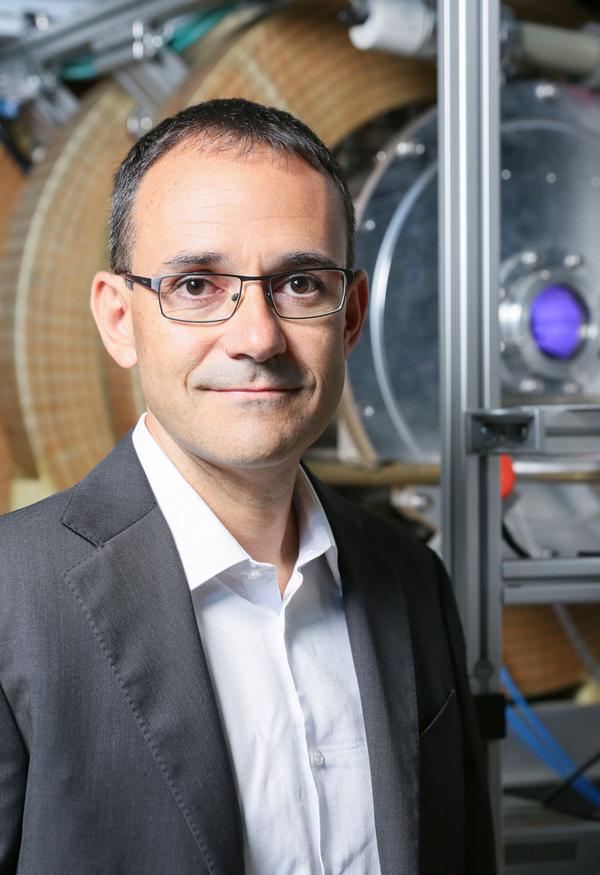 Ivo Furno合作论文数Swiss Plasma Center, School of Basic Sciences, Ecole Polytechnique Fédérale de Lausanne76
 A. Fasoli合作论文数73
 Holger Reimerdes合作论文数Institute of Physics, School of Basic Sciences, Federal Institute of Technology in Lausanne71
 Stefano Coda合作论文数Institute of Physics, School of Basic Sciences, Federal Institute of Technology in Lausanne64Podestá M合作论文数Princeton Plasma Phys Lab, Princeton, NJ 08543 USA54
 Paolo Ricci合作论文数Institute of Physics, School of Basic Sciences, Federal Institute of Technology in Lausanne52
 Umar A. Sheikh合作论文数See author list of H. Reimerdes et al. 2022 Nucl. Fusion 62 042018.50
 Olivier Sauter合作论文数Center for Research In Plasma Physics, Ecole Polytechnique Federale de Lausanne47
 Tsui C K合作论文数Toronto Institute for Aerospace Studies46
 Roberto Maurizio合作论文数General Atomics42
 Nicola Vianello合作论文数Alfvén Laboratory;Royal Institute of Technology;Alfvén Laboratory, Royal Institute of Technology39F. M. Poli合作论文数38O Février合作论文数Ecole Polytech Fed Lausanne, SPC, CH-1015 Lausanne, Switzerland38
 Bruce Lipschultz合作论文数School of Physics, Engineering and Technology, University of York36
 Wouter Vijvers合作论文数34
 Kevin Verhaegh合作论文数York Plasma Inst, Univ York34
 Tilmann Lunt合作论文数Plasma Edge and Wall Department, IPP Garching;Max Planck Institute for Plasma Physics34
 Ahmed Diallo合作论文数Princeton Plasma Physics Laboratory;Advanced Research Projects Agency - Energy33Matthias Bernert合作论文数Max-Planck-Institut für Plasmaphysik32
 Mike Dunne合作论文数31F. Nespoli合作论文数31A. Merle合作论文数28
 M. Faitsch合作论文数CIEMAT, Laboratorio Nacional de Fusion28J. Harrison合作论文数University of York28
 Gennady Plyushchev合作论文数Centre de Recherches en Physique;Ecole Polytechnique Federale de Lausanne28s h mueller合作论文数27
 Jose Boedo合作论文数Center for Energy Research, University of California, San Diego;General Atomics27
 Timothy Goodman合作论文数École Polytechnique Fédérale de Lausanne26
 Lorenzo Frassinetti合作论文数Division of Fusion Plasma Physics, Department of Electrical Engineering, School of Electrical Engineering and Computer Science, KTH Royal Institute of Technology26
 Marco Wischmeier合作论文数Max-Planck-Institut fur Plasmaphysik;Plasma Science Department, EUROfusion26
 Laurie Porte合作论文数25
 Jan Horácek合作论文数Centre de Recherches en Physique25
 Cristian Galperti合作论文数24
 Monica Spolaore合作论文数Unità di Padova24T. Eich合作论文数EURATOM Association24
 Yann Camenen合作论文数Centre National de la Recherche Scientifique24
 P. Blanchard合作论文数23Marc Maraschek合作论文数23B. Tál合作论文数KFKI RMKI, EURATOM-Association23
 Ondrej Ficker合作论文数Faculty of Nuclear Sciences and Physical Engineering, Czech Technical University in Prague22
 Gergely Papp合作论文数Max Planck Inst Plasma Phys22
 Massimo Nocente合作论文数21H. De Oliveira合作论文数21
 G. P. Canal合作论文数Inst Phys, Univ Sao Paulo21Sieglin, B.合作论文数max planck society21Antti Hakola合作论文数21
 Samuli Saarelma合作论文数EURATOM, UKAEA Fusion Association;Culham Science Centre;UKAEA Fusion Association, Culham Science Centre21




